
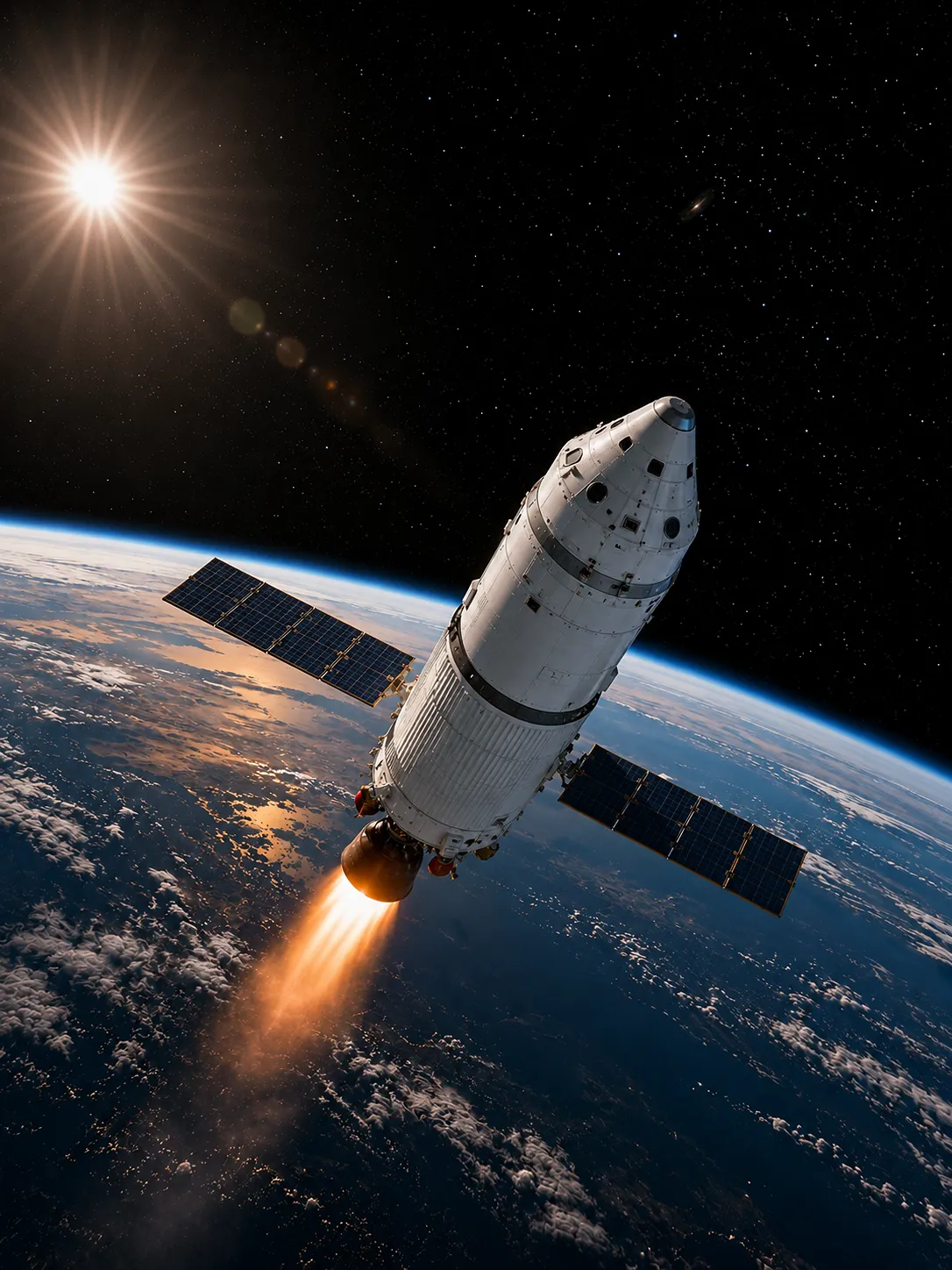
Have you ever wondered how a rocket knows which way it is pointing once it reaches space?
On Earth, we can easily tell up from down because of gravity. But in space, there is no obvious up, down, left, or right. A rocket floating above Earth could be facing almost any direction.
So how do rockets and spacecraft know where they are pointing?
The answer involves clever sensors, computers, stars, and a little bit of physics. Let’s explore how rockets determine their orientation in space!
What Does “Orientation” Mean?
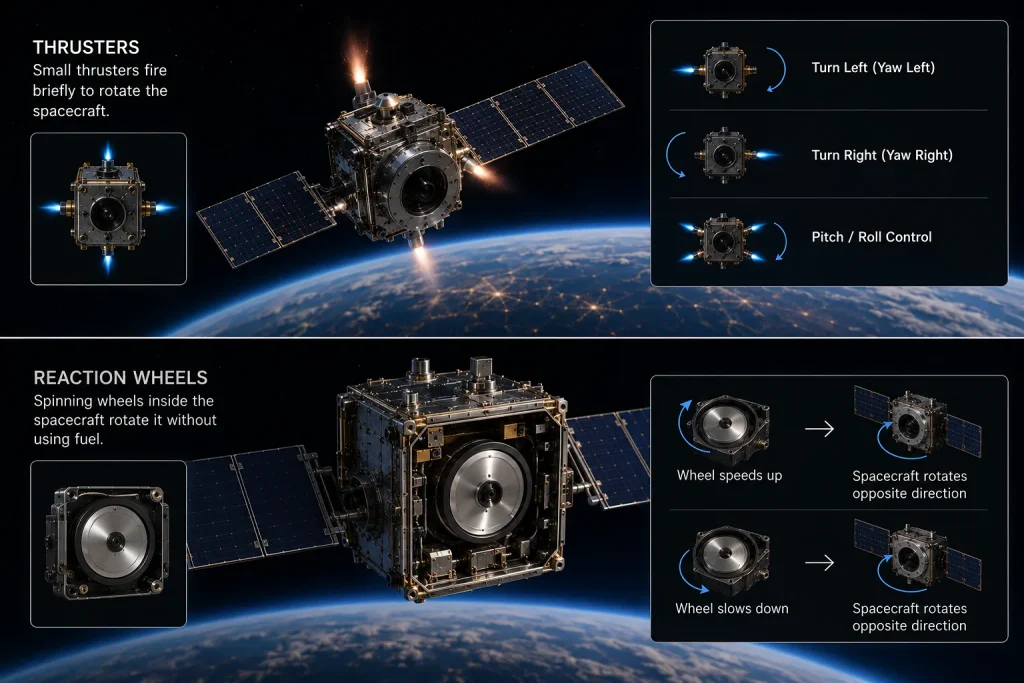
Orientation means the direction an object is facing.
Imagine holding a toy rocket in your hand. You can point its nose:
- Upwards
- Downwards
- Left
- Right
- Towards you
- Away from you
Each position is a different orientation.
For rockets and spacecraft, knowing their orientation is extremely important. If a spacecraft points the wrong way, it might:
- Miss its destination
- Lose communication with Earth
- Fail to collect scientific data
- Waste fuel
That is why spacecraft constantly monitor their orientation.
There Is No “Up” in Space
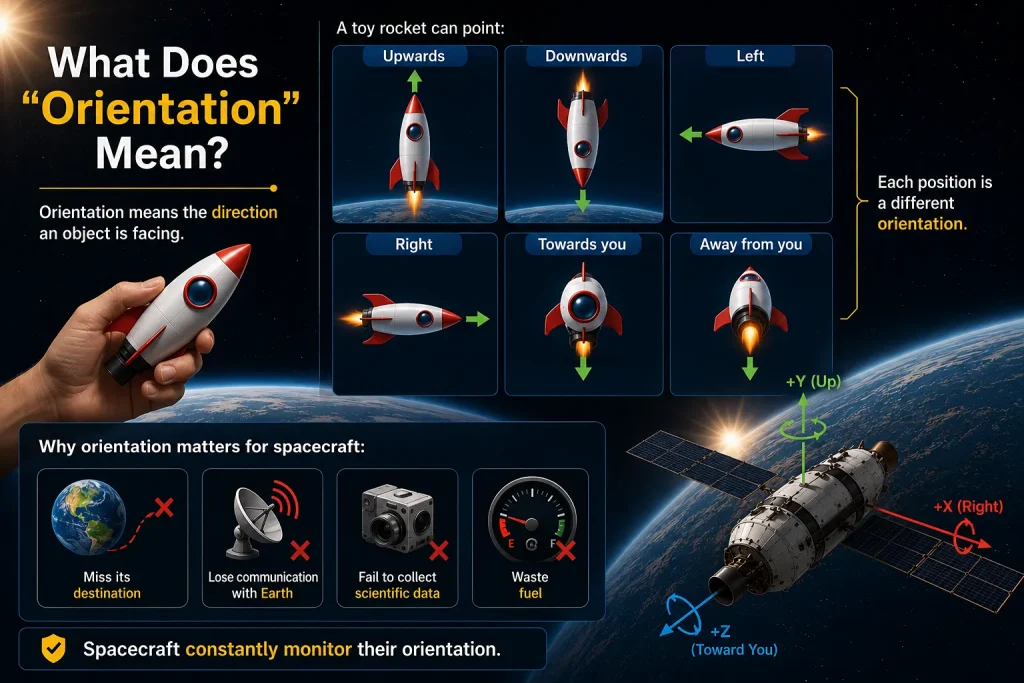
One of the strangest things about space is that there is no universal “up” or “down”.
On Earth, gravity pulls us towards the ground, so we naturally know which way is down.
In orbit, however, spacecraft are continuously falling around Earth. Everything inside experiences microgravity, making it difficult to determine direction solely by gravity.
This means spacecraft need other methods to figure out which way they are pointing.
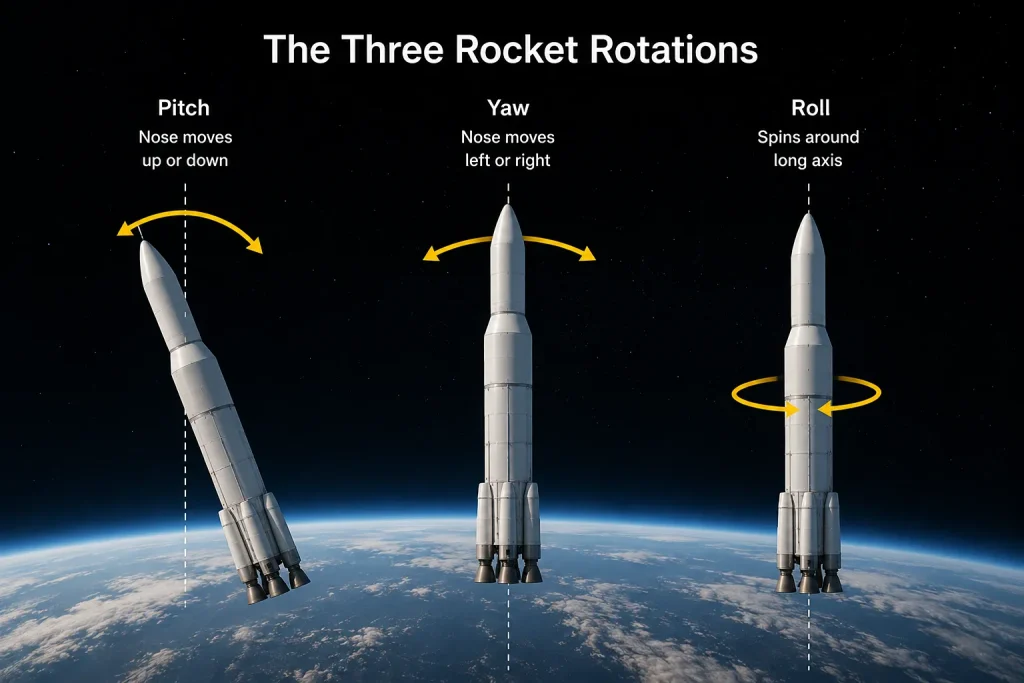
The Three Rocket Rotations
Just like an aeroplane, a rocket can rotate in three different ways.
Pitch
Pitch is the angle of the nose relative to the horizon.
Imagine nodding your head “yes”. That is similar to pitch movement.
Yaw
Yaw is when the nose moves left or right.
Imagine shaking your head “no”. That resembles yaw.
Roll
Roll is when the spacecraft spins around its long axis.
Think of a rolling pencil on a desk.
Together, pitch, yaw, and roll describe a spacecraft’s orientation.
How Does a Rocket Know Its Orientation?
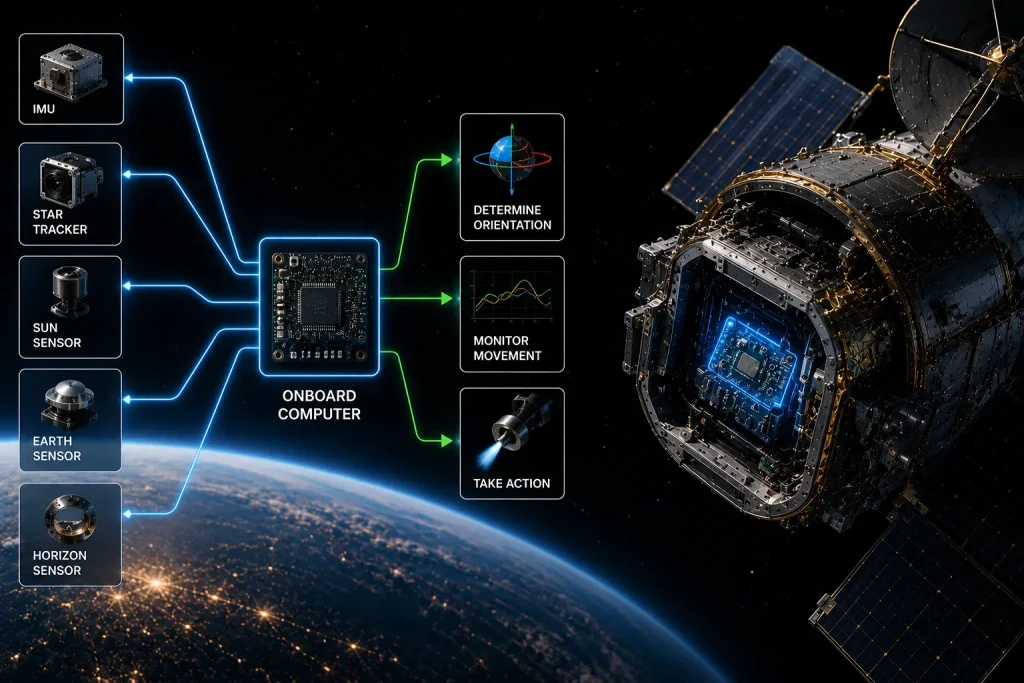
Spacecraft use several special instruments.
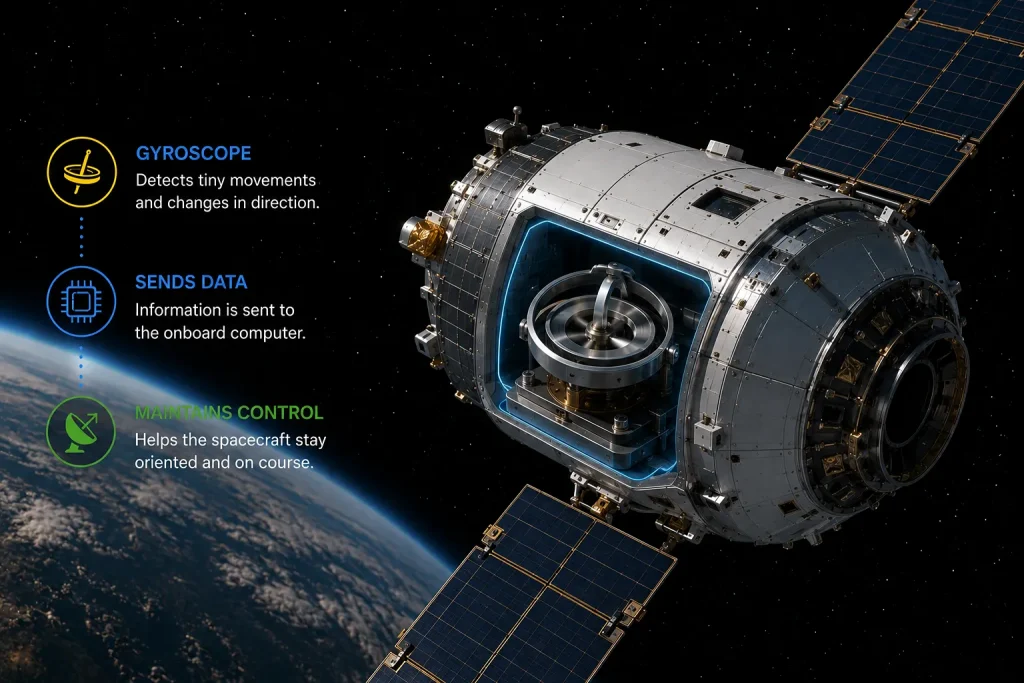
Gyroscopes
One of the most important tools is a gyroscope.
A gyroscope contains a spinning wheel or uses advanced laser technology. Because spinning objects resist changes in direction, gyroscopes can detect even tiny movements.
If the spacecraft turns slightly, the gyroscope notices the change and sends information to the onboard computer.
You can think of a gyroscope as the spacecraft’s sense of balance.
Inertial Measurement Units
Most modern spacecraft use devices called Inertial Measurement Units (IMUs).
An IMU combines:
- Gyroscopes
- Accelerometers
- Electronics
These instruments continuously measure movement and rotation.
The spacecraft’s computer uses this information to calculate exactly how the vehicle is oriented.
Many rockets use IMUs from launch through orbit.
Looking at the Stars
Have you ever used landmarks to find your way?
Spacecraft similarly use stars.
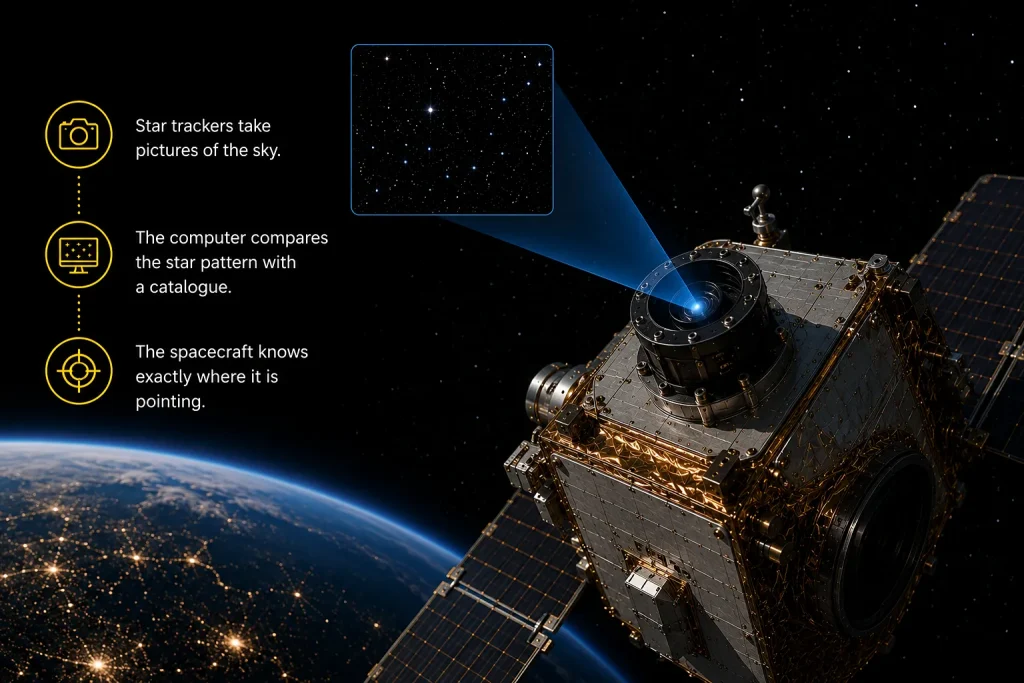
Special cameras called star trackers take pictures of the sky. The onboard computer compares the star patterns with a giant catalogue of known stars.
Because the positions of stars are well known, the spacecraft can determine exactly where it is pointing.
This method is incredibly accurate.
In fact, many satellites and deep-space probes rely heavily on star trackers for navigation.
Using the Sun and Earth
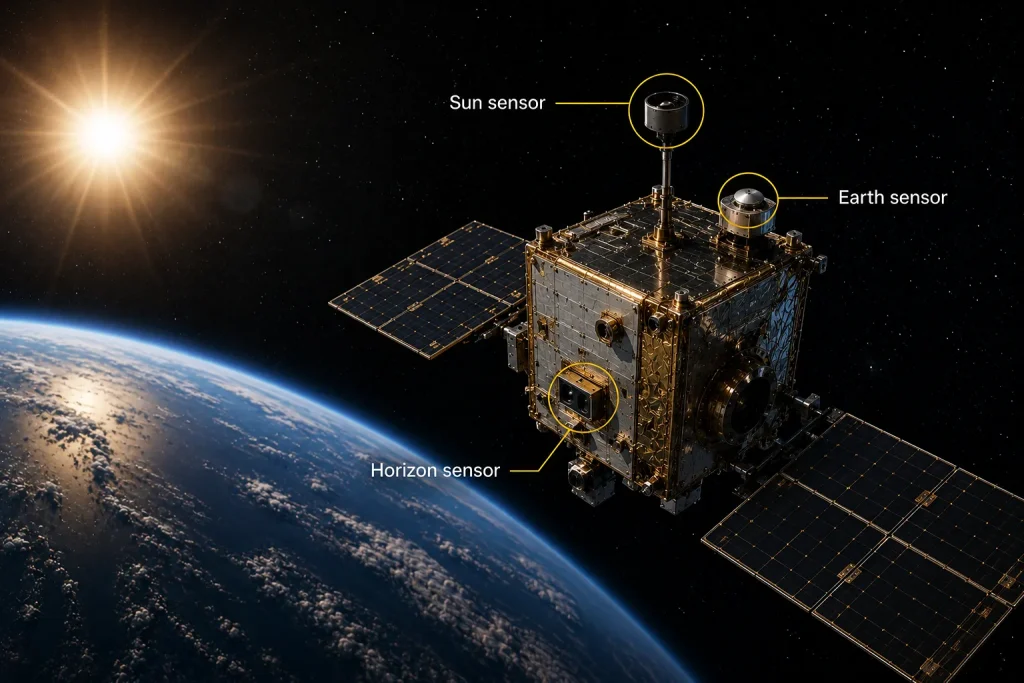
Sometimes spacecraft also use:
- Sun sensors
- Earth sensors
- Horizon sensors
A Sun sensor identifies the direction of the Sun.
An Earth sensor detects Earth below the spacecraft.
These sensors provide extra information that helps confirm the spacecraft’s orientation.
By combining several different measurements, the onboard computer can build a highly accurate picture of where the spacecraft is pointing.
The Spacecraft’s Brain
All of this information flows into powerful onboard computers.
The computer constantly asks questions such as:
- Where am I pointing?
- Where should I be pointing?
- Am I drifting off course?
If the spacecraft starts turning the wrong way, the computer immediately takes action.
This process happens automatically thousands of times every day.
How Do Rockets Change Their Orientation?
Knowing orientation is only half the challenge.
The spacecraft must also be able to change direction when necessary.
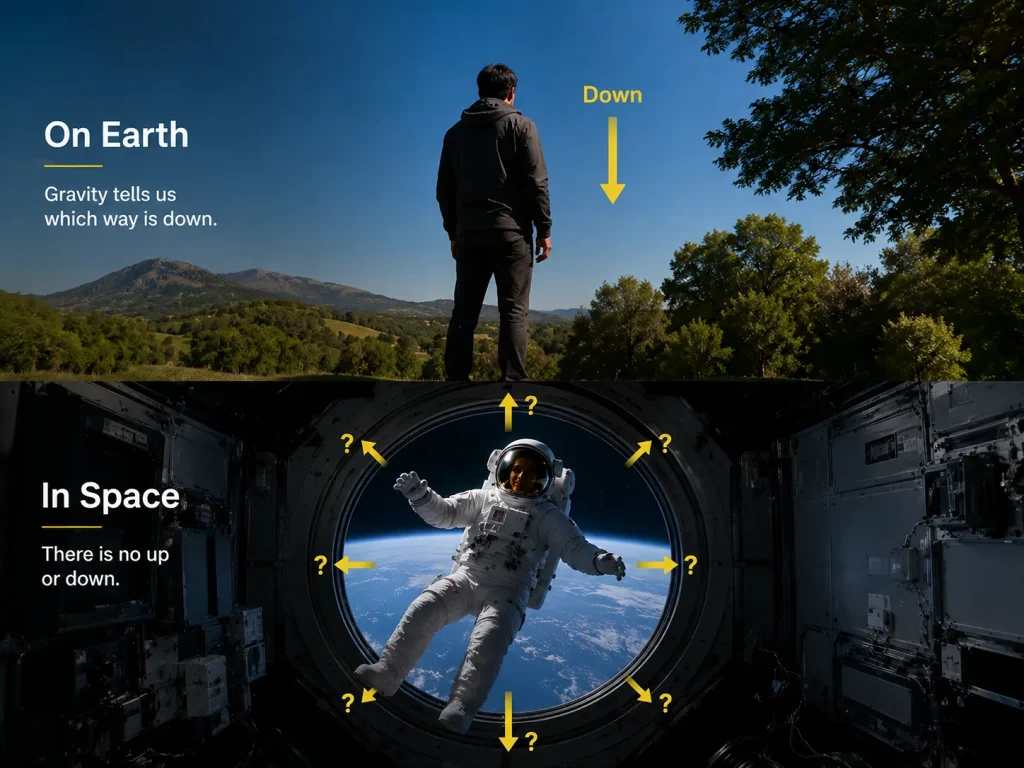
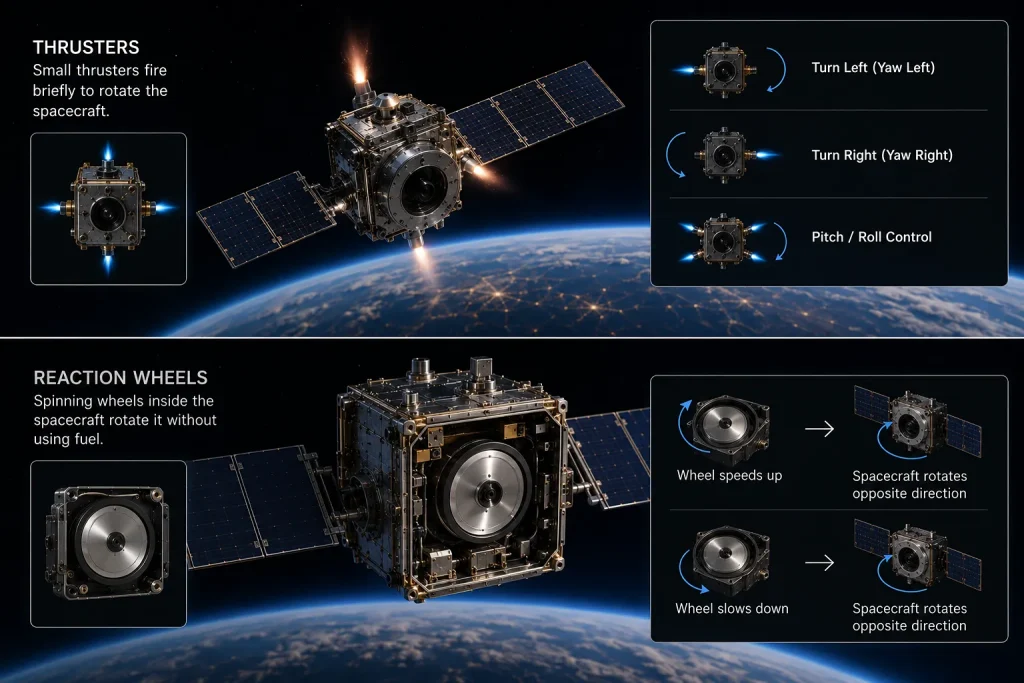
Small Thrusters
Many spacecraft use tiny rocket engines called thrusters.
When a thruster fires briefly, it pushes the spacecraft and causes it to rotate.
For example:
- A thruster on one side can make the spacecraft turn left.
- Another can make it turn right.
- Multiple thrusters can control pitch, yaw, and roll.
These adjustments are often very small but extremely precise.
Reaction Wheels
Many satellites use devices called reaction wheels.
A reaction wheel is a heavy wheel that spins inside the spacecraft.
When the wheel speeds up or slows down, the spacecraft rotates in the opposite direction.
This allows the spacecraft to turn without using fuel.
Reaction wheels are especially useful because fuel in space is limited.
Following the Correct Path
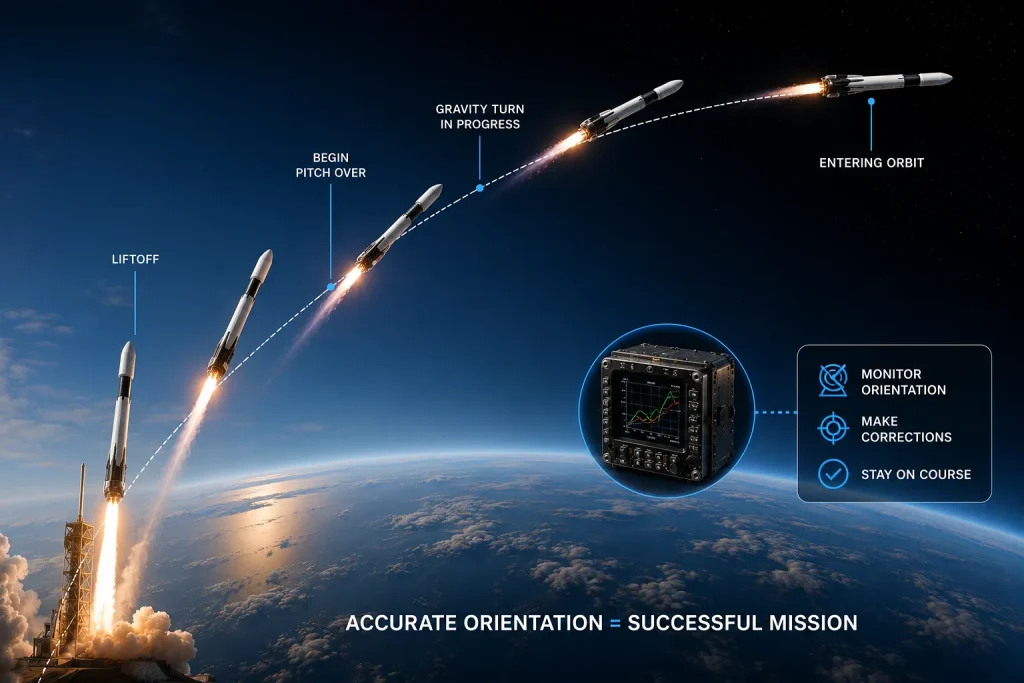
During launch, rockets follow carefully planned routes.
One important manoeuvre is called a gravity turn.
Soon after launch, the rocket gradually tilts from pointing straight up to travelling more to the side. This helps it enter orbit efficiently.
Throughout this journey, onboard guidance systems continuously monitor orientation and make corrections.
Without accurate orientation, the rocket could miss its intended orbit.
What Happens Far From Earth?
Spacecraft travelling to other planets face an even bigger challenge.
For example, missions to Mars or Jupiter may travel for months or even years.
During these long journeys, they continue using:
- Gyroscopes
- Star trackers
- Sun sensors
- Computers
- Thrusters
Together, these systems help keep the spacecraft correctly oriented across millions or even billions of kilometres.
Fun Facts About Spacecraft Orientation
- Some star trackers can identify thousands of stars.
- Modern spacecraft can determine their orientation with astonishing precision.
- The International Space Station constantly adjusts its orientation as it orbits Earth.
- Space telescopes must point very accurately to observe distant galaxies.
- Even tiny orientation errors can cause large navigation problems over long distances.
Conclusion
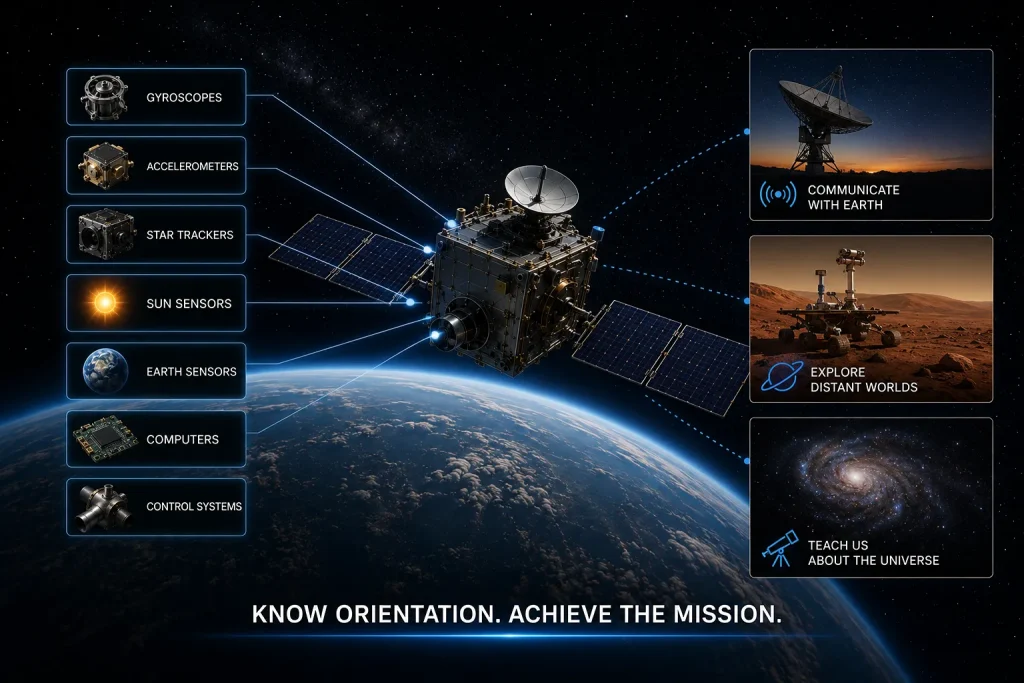
Although space has no obvious up or down, rockets and spacecraft are never completely lost. They use gyroscopes, accelerometers, star trackers, Sun sensors, Earth sensors, computers, and control systems to determine exactly where they are pointing.
These technologies work together like a sophisticated GPS, enabling spacecraft to communicate with Earth, explore distant planets, and conduct scientific missions with incredible accuracy.
The next time you see a rocket launch, remember that reaching space is only part of the challenge. Once there, the spacecraft must constantly know its orientation—and thanks to some remarkable engineering, it does exactly that.
For more interesting articles, please visit www.kidzherald.com