
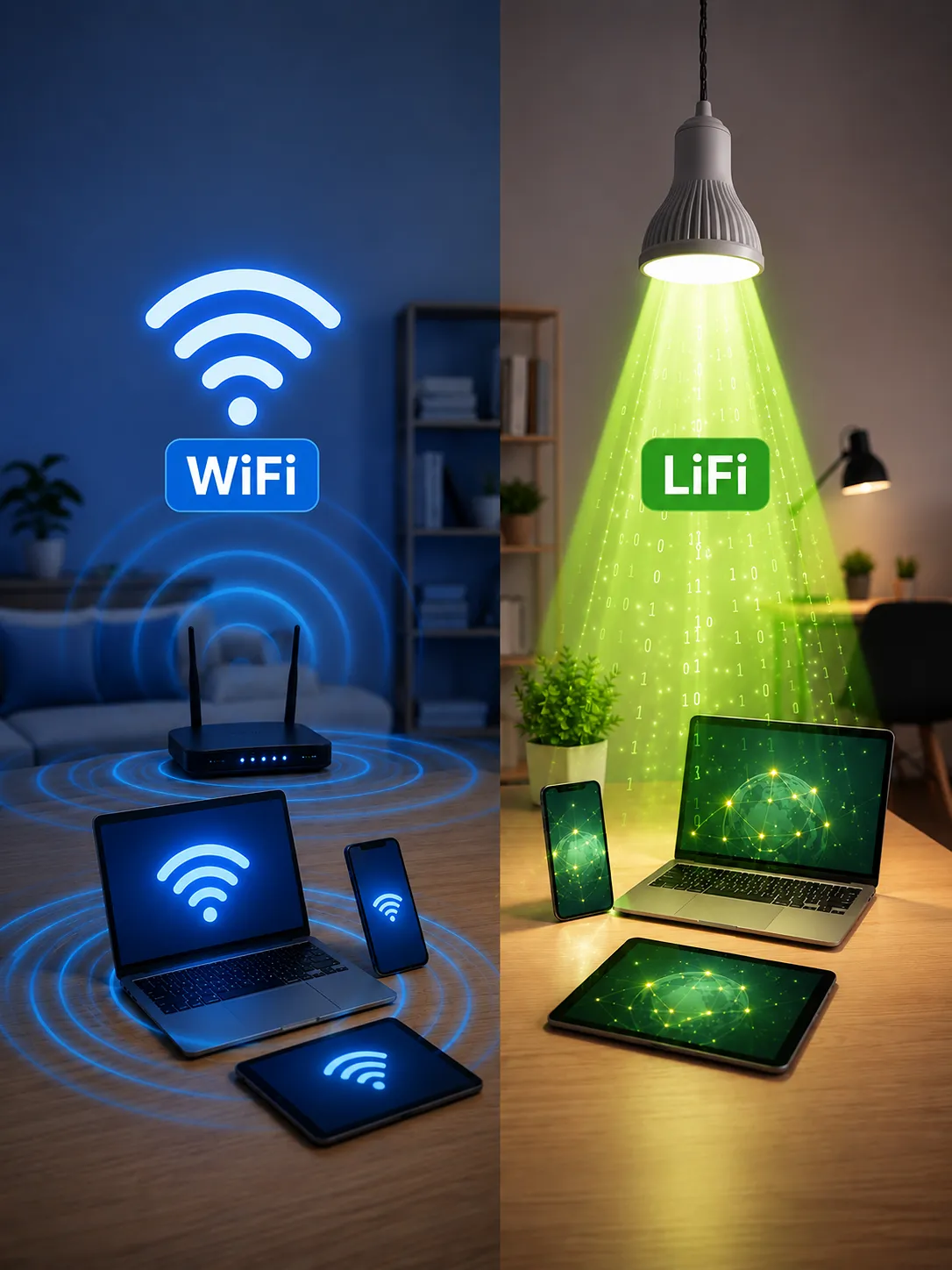
Have you ever connected a tablet, phone, or computer to the internet without using a cable?
If so, you have probably used WiFi. WiFi is one of the most common technologies in homes, schools, offices, and cafés around the world.
But did you know there is another technology called LiFi that can also send internet data wirelessly?
Although WiFi and LiFi have similar goals, they work in very different ways. Let’s explore how these fascinating technologies connect devices to the internet and discover what makes each one special.
What Is WiFi?
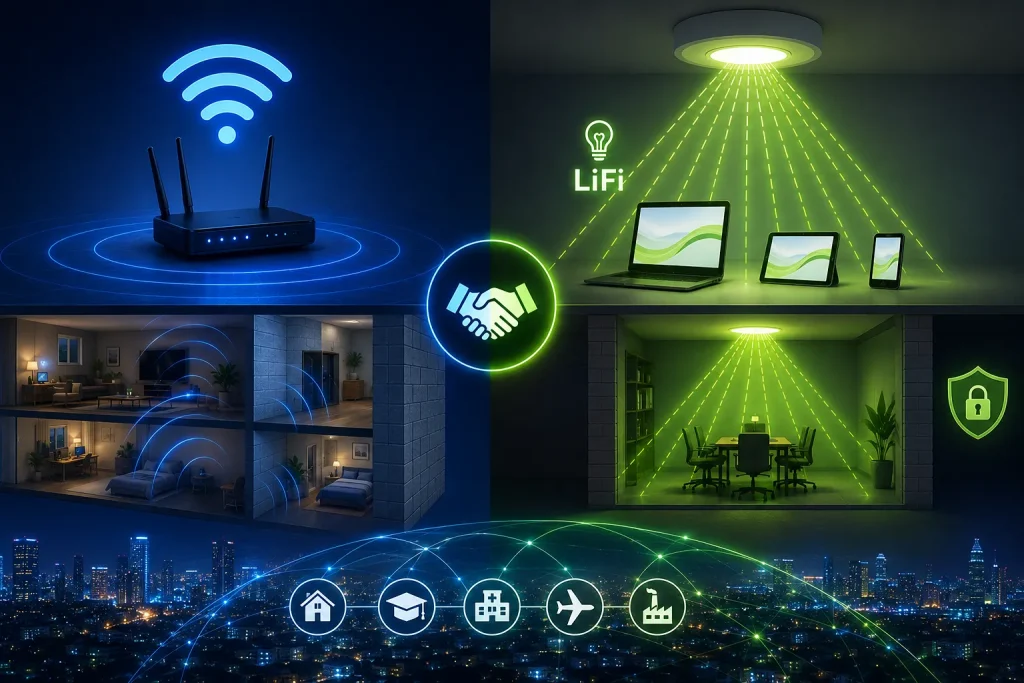
Wi‑Fi is a wireless technology that allows devices to connect to the internet using radio waves.
A WiFi router sends and receives radio signals. Your phone, laptop, tablet, smart TV, and gaming console can communicate with the router wirelessly.
WiFi is popular because it:
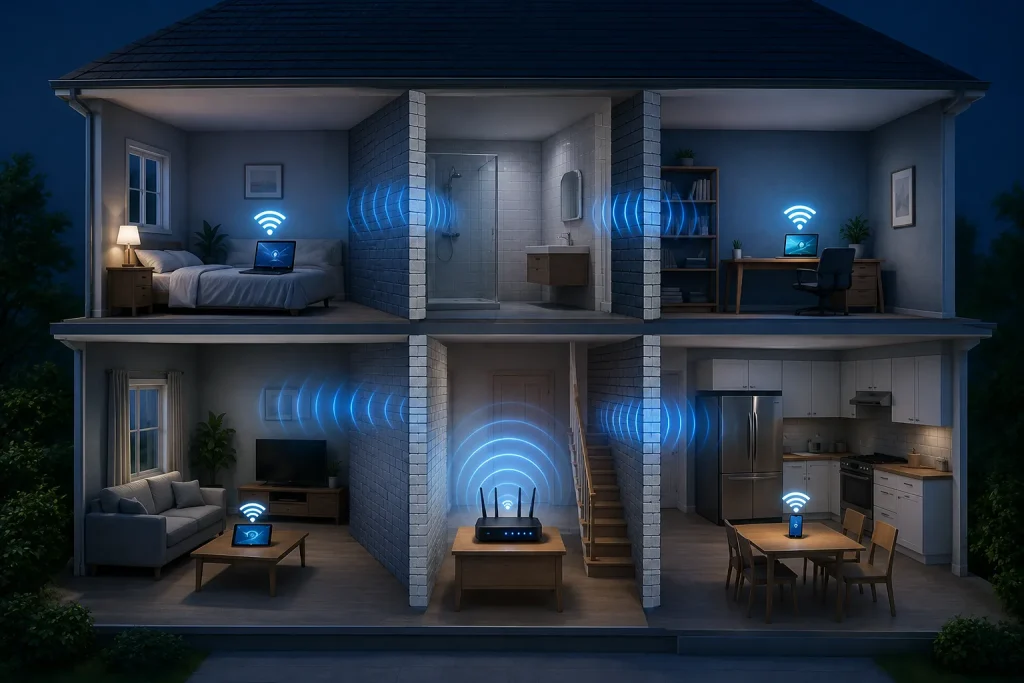
- Works through walls
- Covers large areas
- Connects many devices
- Is easy to install
Today, billions of devices worldwide use Wi-Fi.
What Is LiFi?
Li‑Fi stands for Light Fidelity.
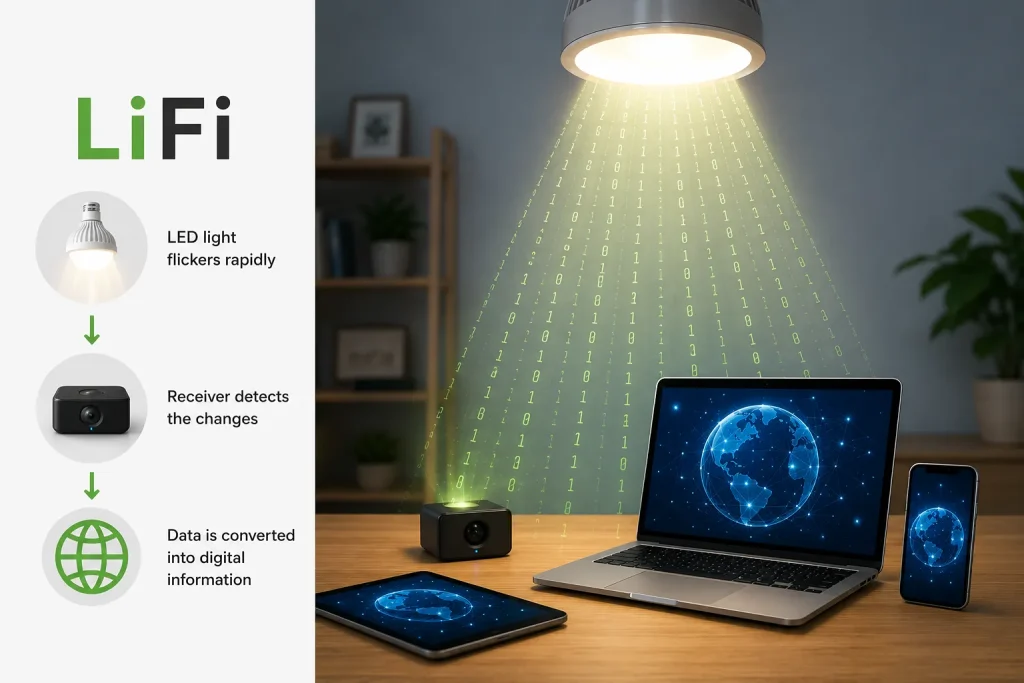
Instead of using radio waves like WiFi, LiFi uses light to transmit data.
This may sound surprising, but it works by making LED lights flicker extremely quickly. The flickering happens so fast that human eyes cannot see it.
A special receiver detects these tiny changes in light and converts them into digital information.
In simple terms, LiFi sends internet data through light.
How Do They Work?
Imagine you want to send a secret message.
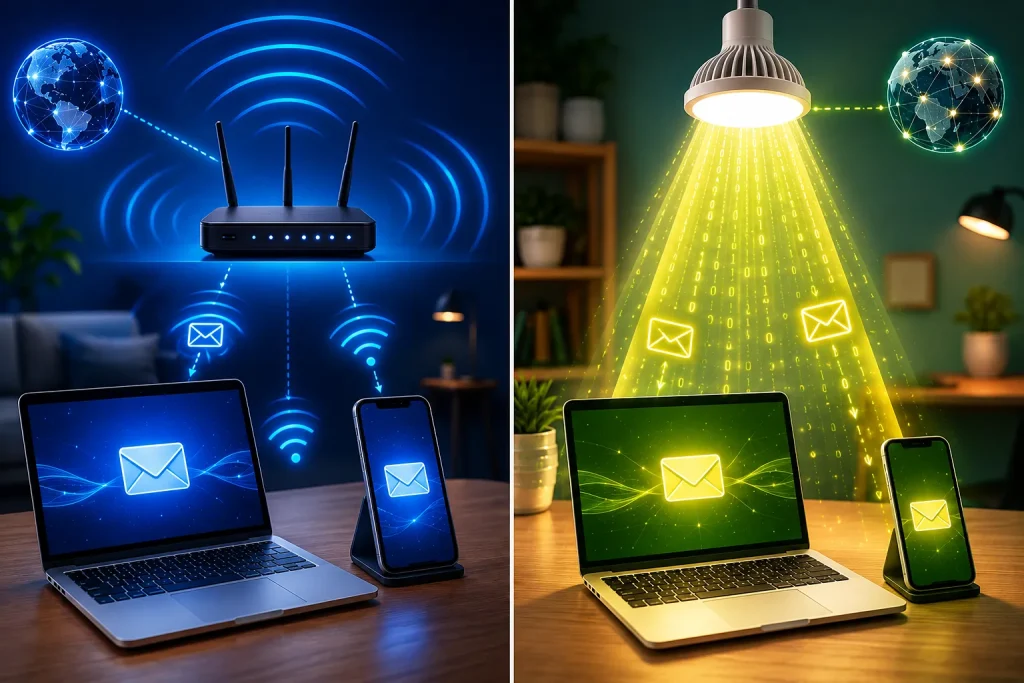
WiFi Method
WiFi uses invisible radio waves to carry the message through the air.
The waves travel from the router to your device and back again.
LiFi Method
LiFi uses light instead of radio waves.
The LED light flashes very rapidly, carrying information through those flashes.
Both methods send digital data, but they use different parts of the electromagnetic spectrum.
A Simple Comparison
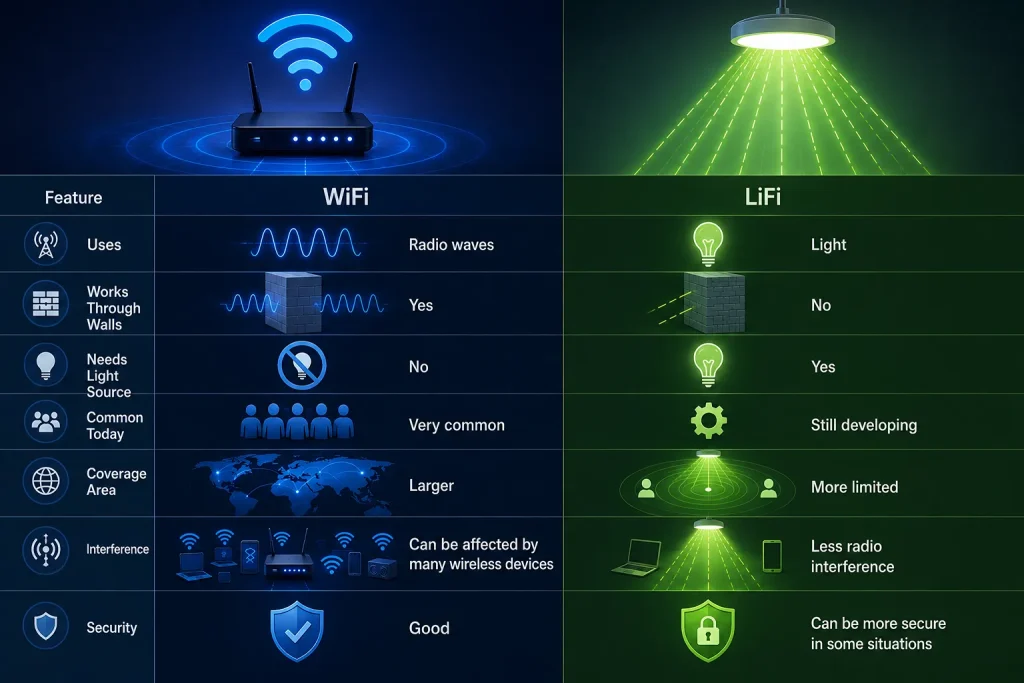
| Feature | WiFi | LiFi |
| Uses | Radio waves | Light |
| Works Through Walls | Yes | No |
| Needs Light Source | No | Yes |
| Common Today | Very common | Still developing |
| Coverage Area | Larger | More limited |
| Interference | Can be affected by many wireless devices | Less radio interference |
| Security | Good | Can be more secure in some situations |
Both technologies have strengths and weaknesses.
Why Can WiFi Work Through Walls?
Radio waves can pass through many materials such as walls, doors, and furniture.
This is why you can often use WiFi in different rooms of your house even if the router is in another room.
WiFi signals can travel quite far, making them useful for homes, schools, and public spaces.
Why Can’t LiFi Work Through Walls?
Light behaves differently from radio waves.
If you shine a torch at a wall, the light does not pass through it. LiFi works similarly.
For LiFi to function properly:
- The light source must be present.
- The receiver must detect the light.
- Obstacles can block the signal.
This limits LiFi’s range but also creates some interesting advantages.
Could LiFi Be Faster?
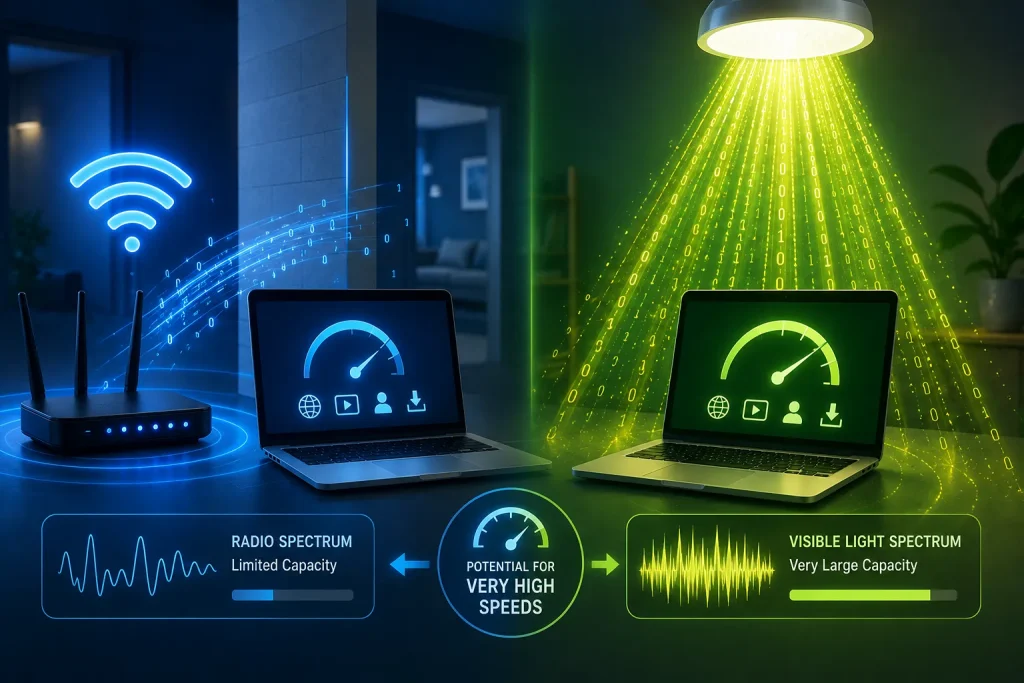
Scientists and engineers are excited about LiFi because light can potentially carry huge amounts of information.
Since the visible light spectrum is much larger than the radio spectrum used by WiFi, LiFi could support very high data speeds in certain situations.
Researchers continue to improve the technology, and future versions may become even faster.
However, speed depends on many factors, so both technologies continue to evolve.
Is LiFi More Secure?
One interesting advantage of LiFi is security.
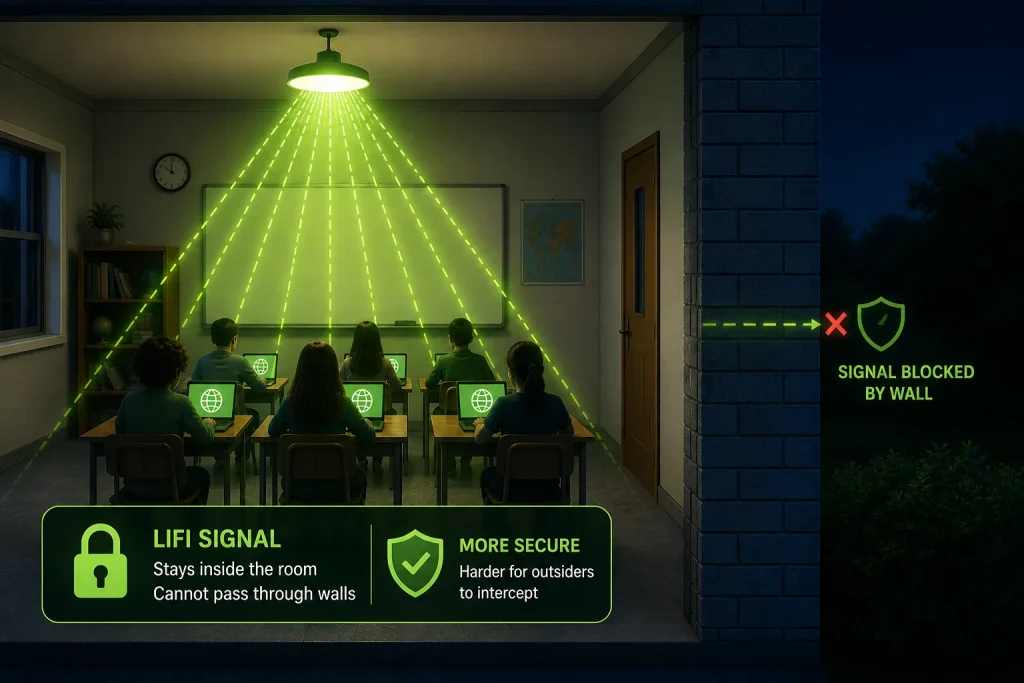
Because light usually stays inside a room and cannot pass through walls, it can be harder for people outside the room to access the signal.
Imagine a classroom using LiFi.
The internet signal would generally remain within that classroom because light cannot easily pass through walls.
This could make LiFi useful in places where extra security is important.
Where Might LiFi Be Used?
LiFi may be especially useful in places where radio signals are not ideal.
Examples include:
Hospitals
Some medical equipment can be sensitive to radio interference.
LiFi could help provide wireless communication using light instead.
Aircraft
LiFi might one day enable passengers to connect to entertainment systems via cabin lighting.
Smart Classrooms
Future classrooms could use ceiling lights to provide internet access.
Factories
LiFi could be useful in environments with lots of wireless equipment.
Although LiFi is still developing, many researchers believe it has exciting potential.

Will LiFi Replace WiFi?
Probably not completely.
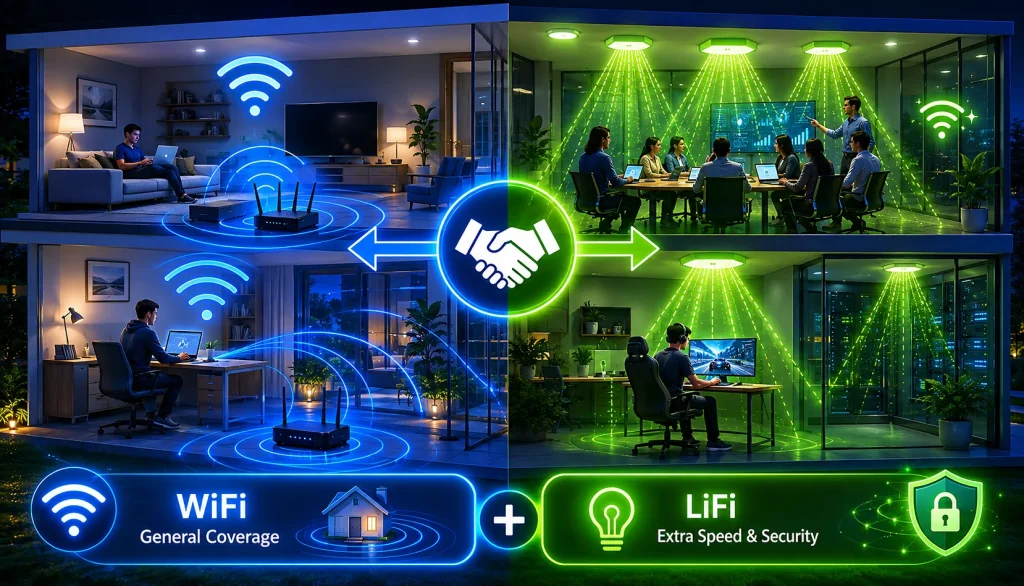
Instead, many experts think WiFi and LiFi will work together.
WiFi is already widely available and works very well in many situations.
LiFi could be added where its unique advantages are useful.
For example:
- WiFi could provide general coverage.
- LiFi could offer higher speeds or enhanced security in specific rooms.
The future may involve using both technologies side by side.
Fun Facts About WiFi and LiFi
- WiFi is used by billions of devices worldwide.
- LiFi can transmit data using LED lights.
- Human eyes cannot see the rapid flickering used by LiFi systems.
- WiFi signals can travel through walls.
- LiFi generally requires a direct light path.
- Both technologies are forms of wireless communication.
What Might the Future Look Like?
Imagine a future school where:
- Classroom lights provide LiFi connections.
- Hallways use WiFi coverage.
- Tablets automatically switch between the two systems.
- Internet connections become even faster and more reliable.
Scientists and engineers are constantly developing new ways to improve wireless communication, and LiFi is one of the exciting technologies being explored.

Conclusion
Both Wi‑Fi and Li‑Fi enable wireless connectivity, but they use different methods.
WiFi uses radio waves and can work through walls, making it ideal for everyday internet access. LiFi uses light signals and may offer advantages such as reduced interference, improved security, and potentially very high speeds.
While WiFi remains the most common wireless technology today, LiFi represents an exciting glimpse into the future of communication. Together, these technologies could help create faster, smarter, and more connected worlds for everyone.
For more interesting articles, please visit www.kidzherald.com