
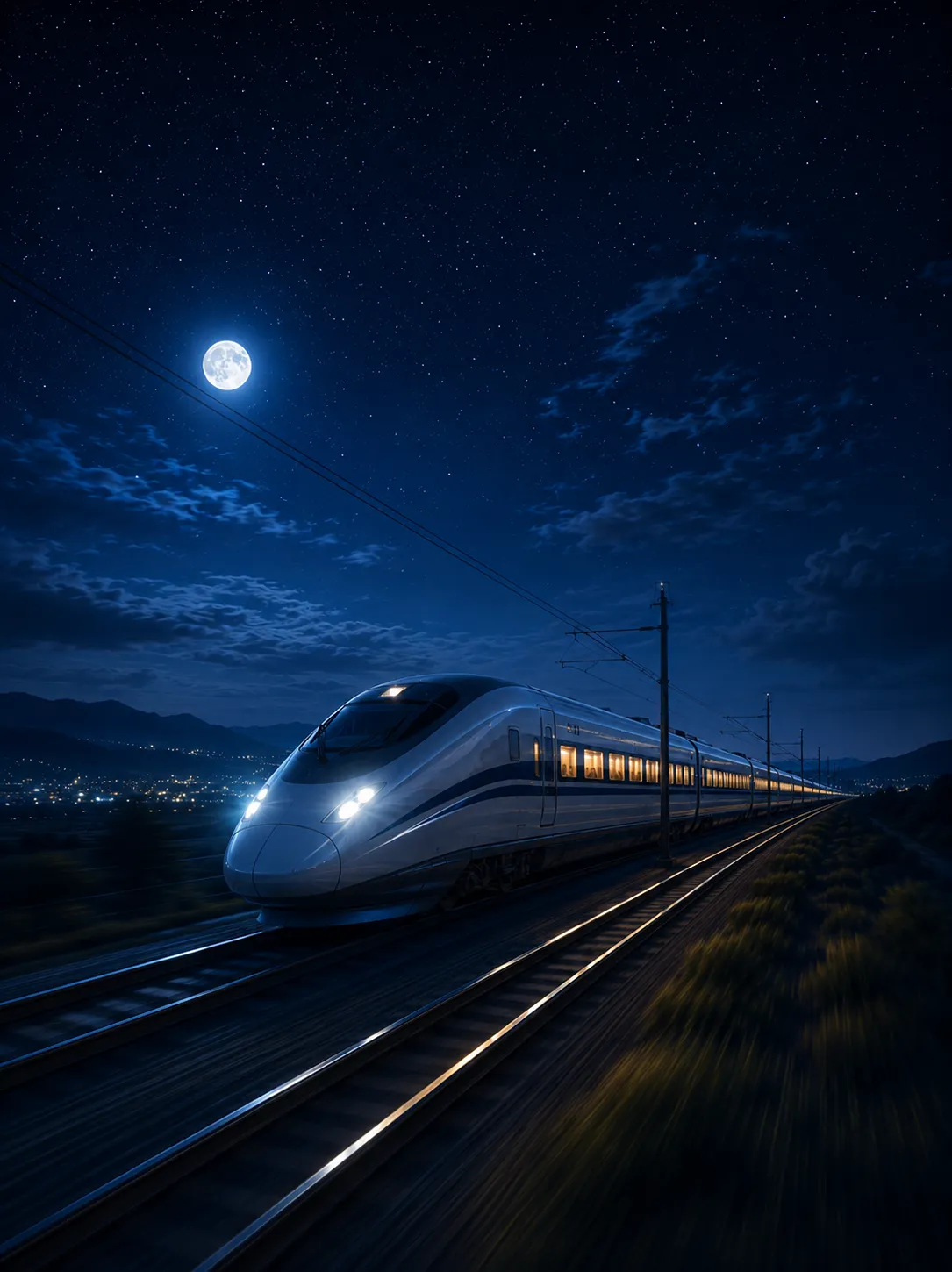
Have you ever travelled on a train at night and felt that it was moving faster than during the day?
Many passengers around the world, including those travelling on trains in India, have noticed this. Sometimes it seems as if trains glide more smoothly and reach destinations more quickly after sunset.
But is there really a secret to why trains run faster at night?
The answer is both yes and no. Most trains do not suddenly gain extra speed when darkness falls, but several factors can make night-time journeys smoother and more efficient. Let’s explore the fascinating science and railway operations behind this mystery!
What Are High-Speed Trains?
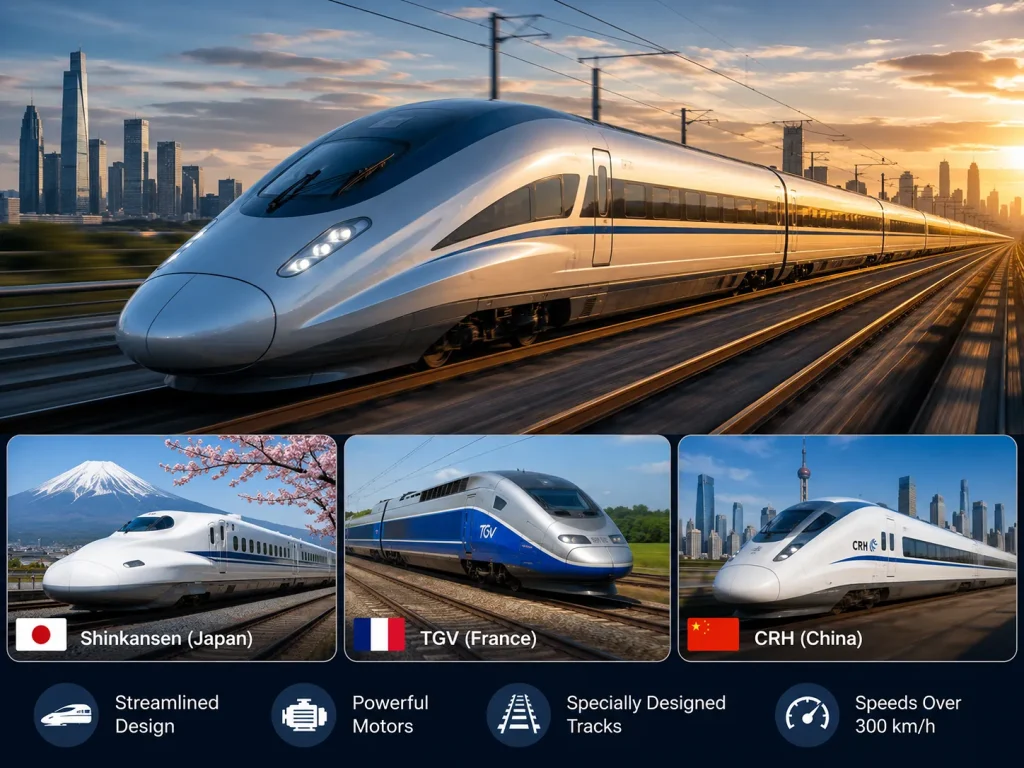
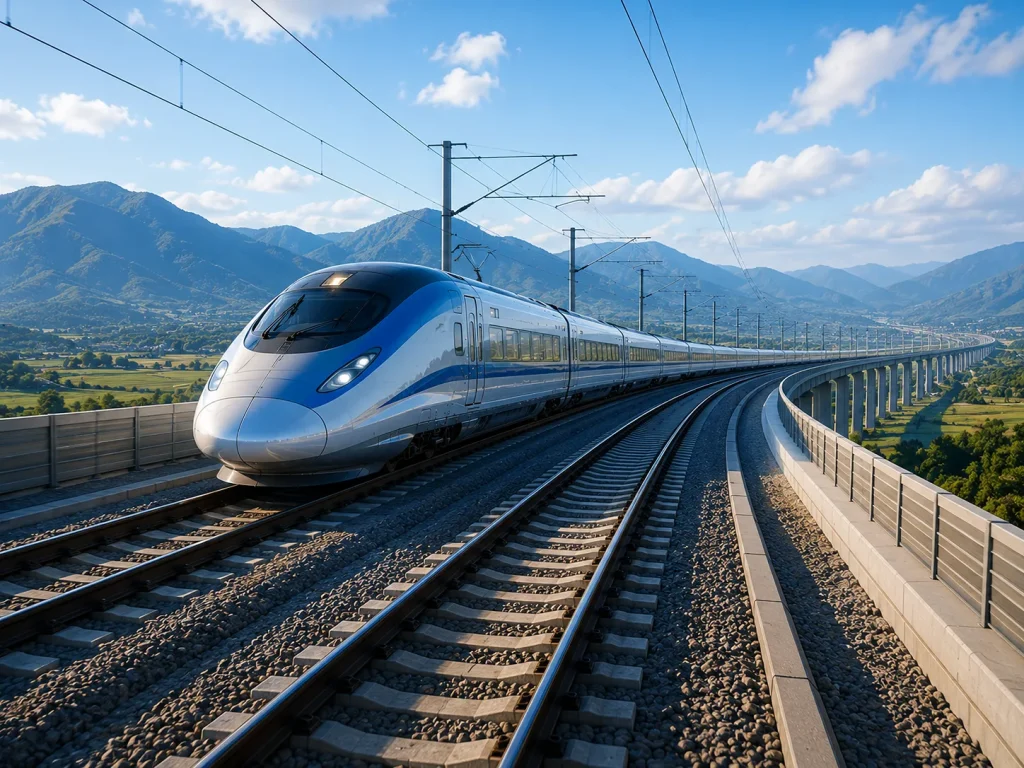
High-speed trains are specially designed trains that travel much faster than ordinary passenger trains.
Some famous examples include:
- Shinkansen in Japan
- TGV in France
- CRH in China
These trains can travel at speeds of over 300 kilometres per hour!
Their speed comes from advanced engineering, streamlined shapes, powerful motors, and specially designed tracks.
Do Trains Actually Run Faster at Night?
In most cases, a train’s maximum speed remains the same whether it is day or night.
However, many trains can maintain their planned speeds more easily at night because the railway network is often less crowded.
Imagine a busy road during rush hour compared with the same road late at night. Cars may not be allowed to drive faster, but they can travel more smoothly because traffic is lighter.
Railways work similarly.
Less Railway Traffic
One important reason trains may appear faster at night is reduced congestion.
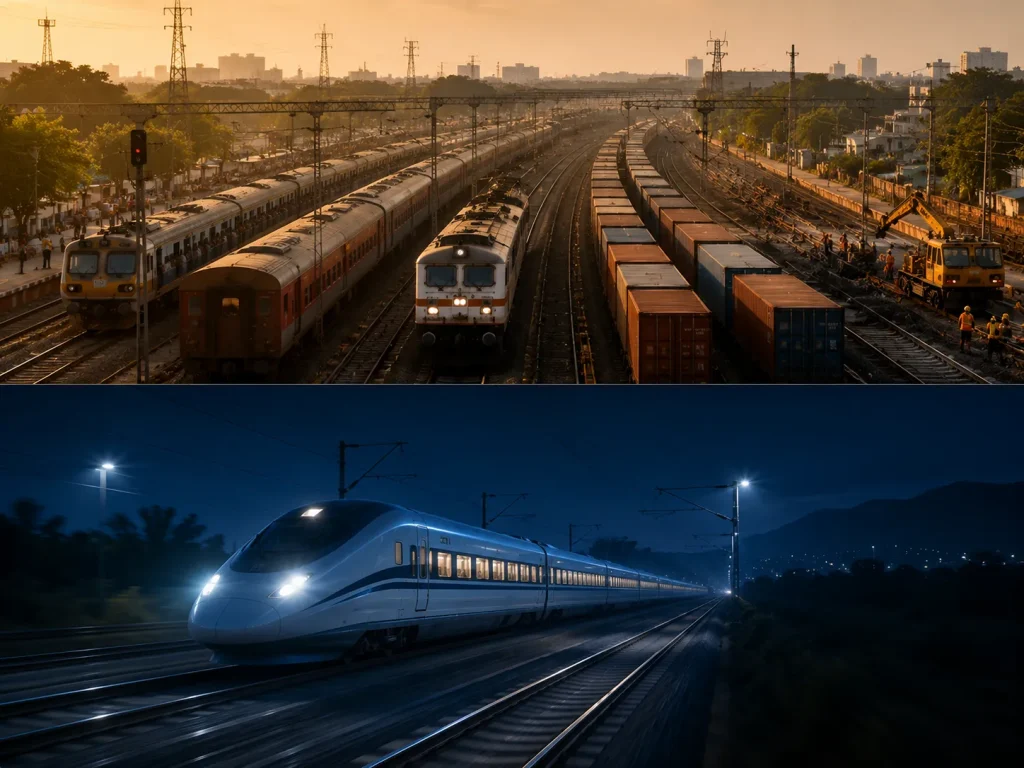
During the daytime, railways often have:
- Passenger trains
- Local commuter trains
- Freight trains
- Maintenance activities
All these services share parts of the railway network.
At night, there are often fewer trains competing for track space. This allows some trains to experience fewer delays and fewer stops while waiting for other services to pass.
Fewer Station Delays
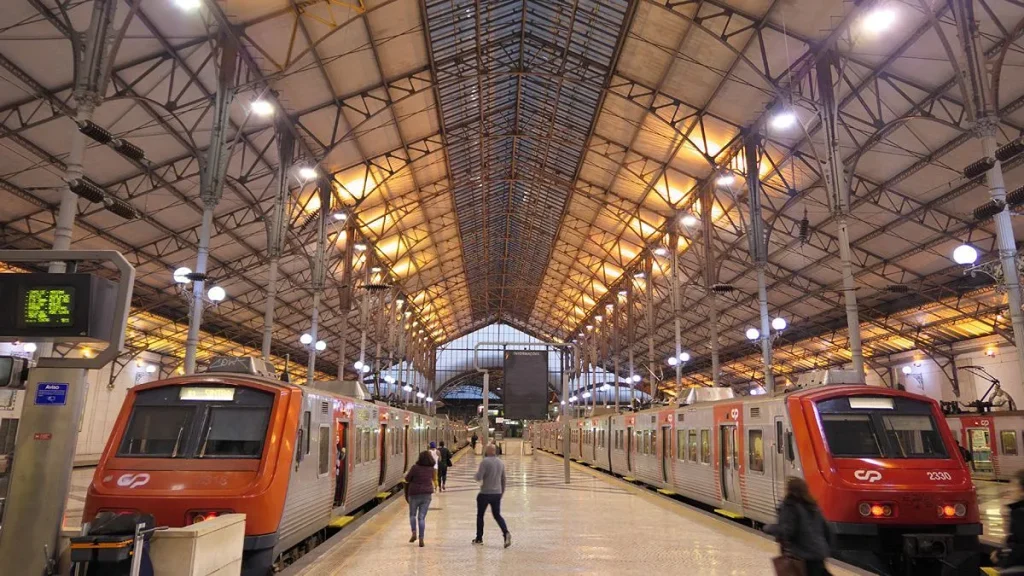
Busy stations can slow down train operations.
During the day:
- More passengers board and leave trains.
- Platforms can become crowded.
- Trains may need extra time for passenger boarding and alighting.
At night, stations are often quieter.
With fewer passengers and less crowding, trains may spend less time waiting at platforms, helping them stay closer to their timetable.
Cooler Temperatures Can Help
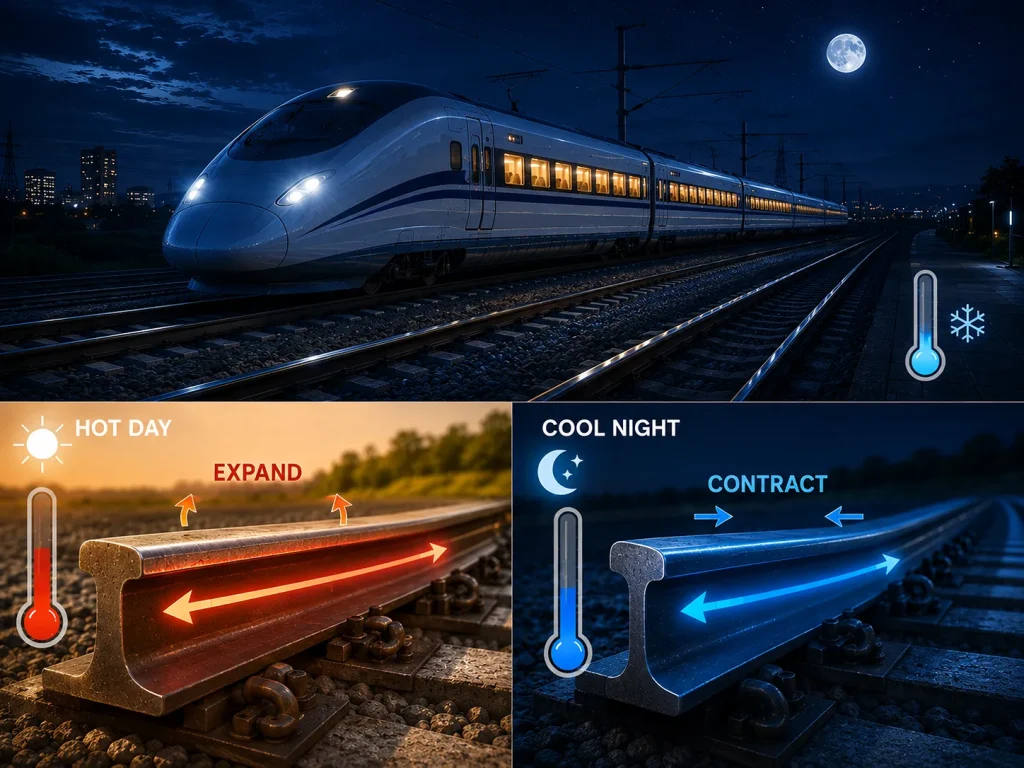
Did you know that railway tracks expand when they become hot?
Metal expands in warm temperatures and contracts when it cools.
On very hot days, railway operators sometimes take extra precautions to ensure safety. In some regions, speed restrictions may occasionally be introduced during extreme heat.
At night, temperatures are usually cooler. Cooler conditions can help railway equipment operate more comfortably, although safety always remains the top priority.
Smoother Operations
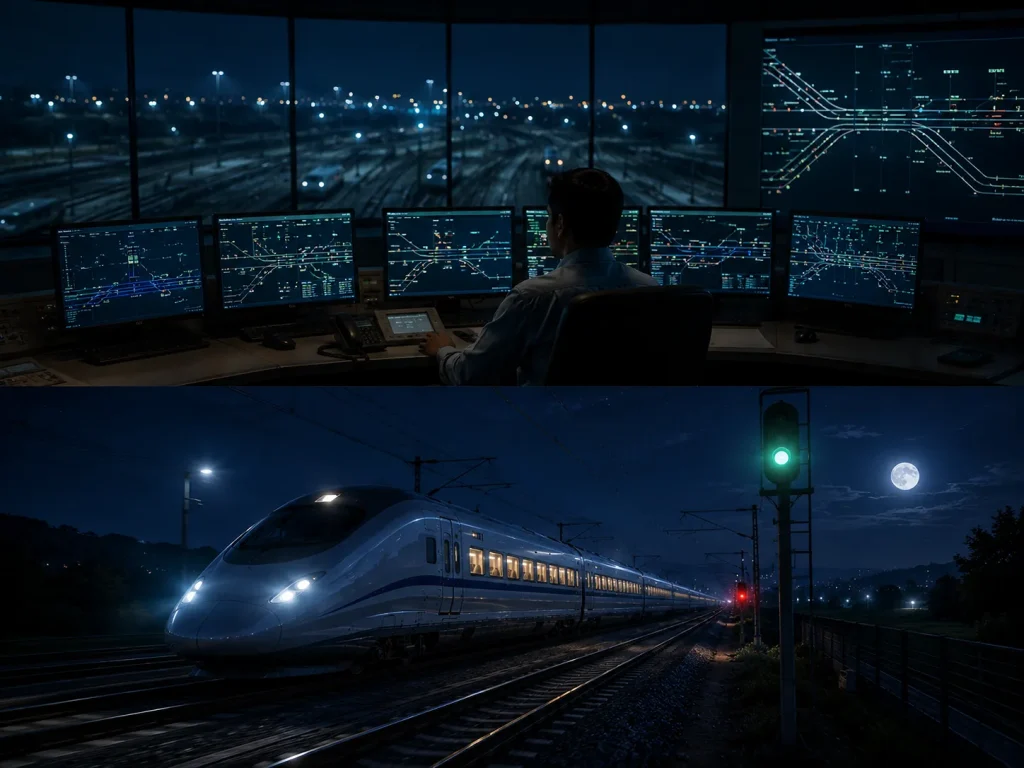
Railway controllers constantly monitor train movements.
At night, with fewer trains running, controllers may find it easier to manage traffic efficiently.
This can reduce situations where trains need to:
- Slow down unexpectedly
- Wait at signals
- Stop to allow another train through
As a result, journeys may feel smoother and faster.
Why Do High-Speed Trains Feel So Fast?
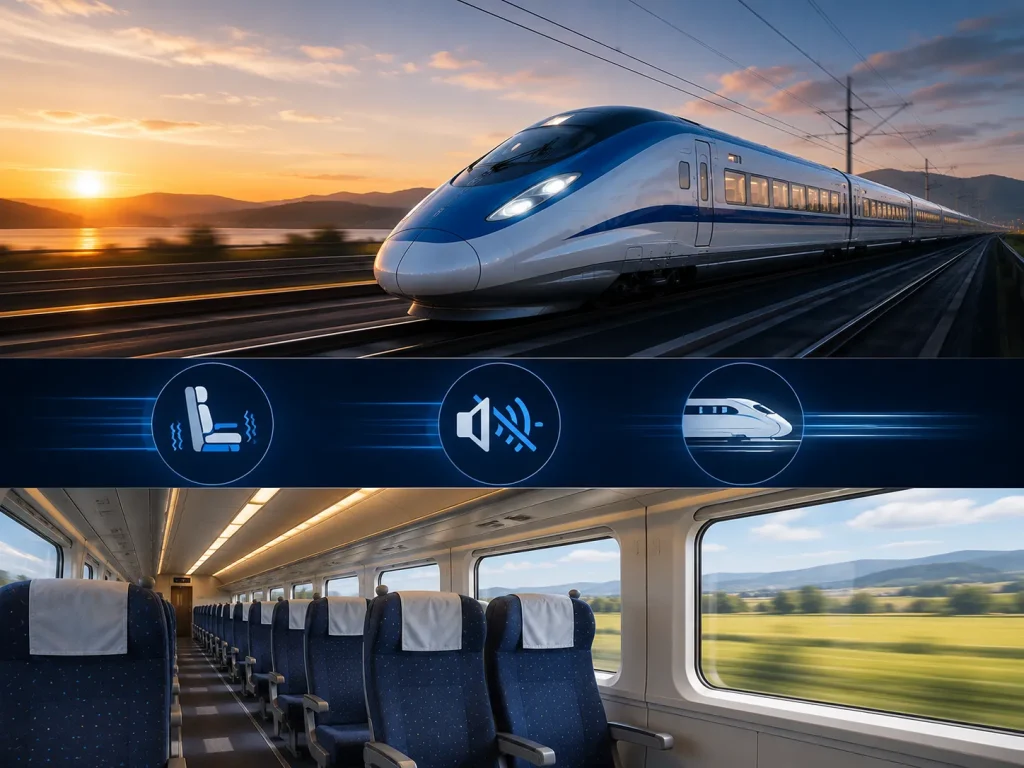
Even during the daytime, high-speed trains can feel surprisingly smooth.
Engineers use special designs to reduce:
- Vibrations
- Noise
- Air resistance
Many passengers are amazed when they discover how fast they are travelling because the ride feels so comfortable.
Large windows and smooth tracks also contribute to the experience.
The Science of Aerodynamics
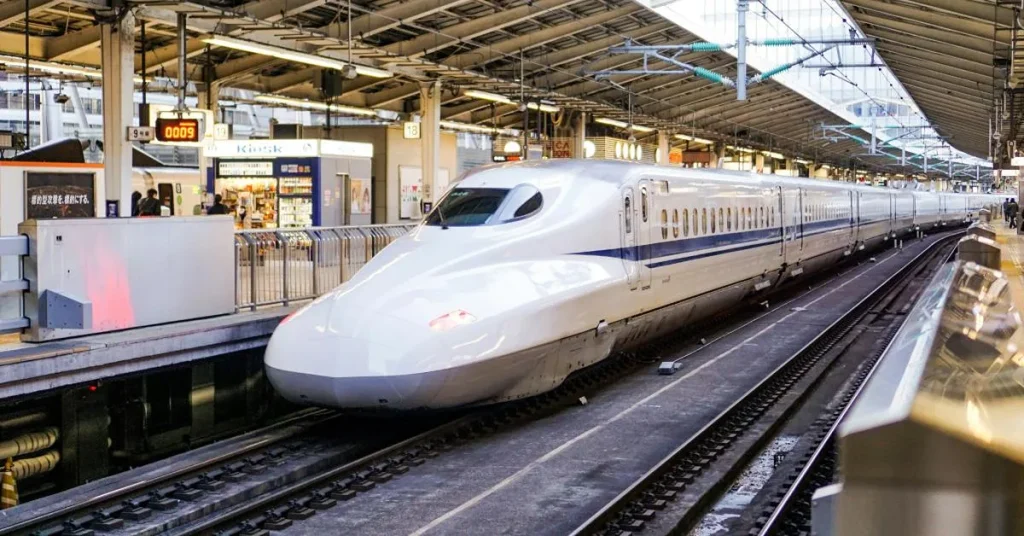
One secret behind high-speed trains is aerodynamics.
Aerodynamics is the study of how air moves around objects.
Modern high-speed trains often have long, pointed noses. These shapes help air flow smoothly around the train.
Benefits include:
- Less air resistance
- Lower energy use
- Reduced noise
- Higher efficiency
This is why many bullet trains look a little like the beaks of birds or the noses of aircraft.
Special Tracks for High Speeds
High-speed trains do not simply run on ordinary railway lines.
Many countries build dedicated high-speed rail tracks designed specifically for fast travel.
These tracks often feature:
- Gentle curves
- Strong foundations
- Advanced signalling systems
- High-quality rails
This infrastructure allows trains to travel safely at remarkable speeds.
Advanced Signalling Systems
At very high speeds, train drivers cannot always rely solely on trackside signs.
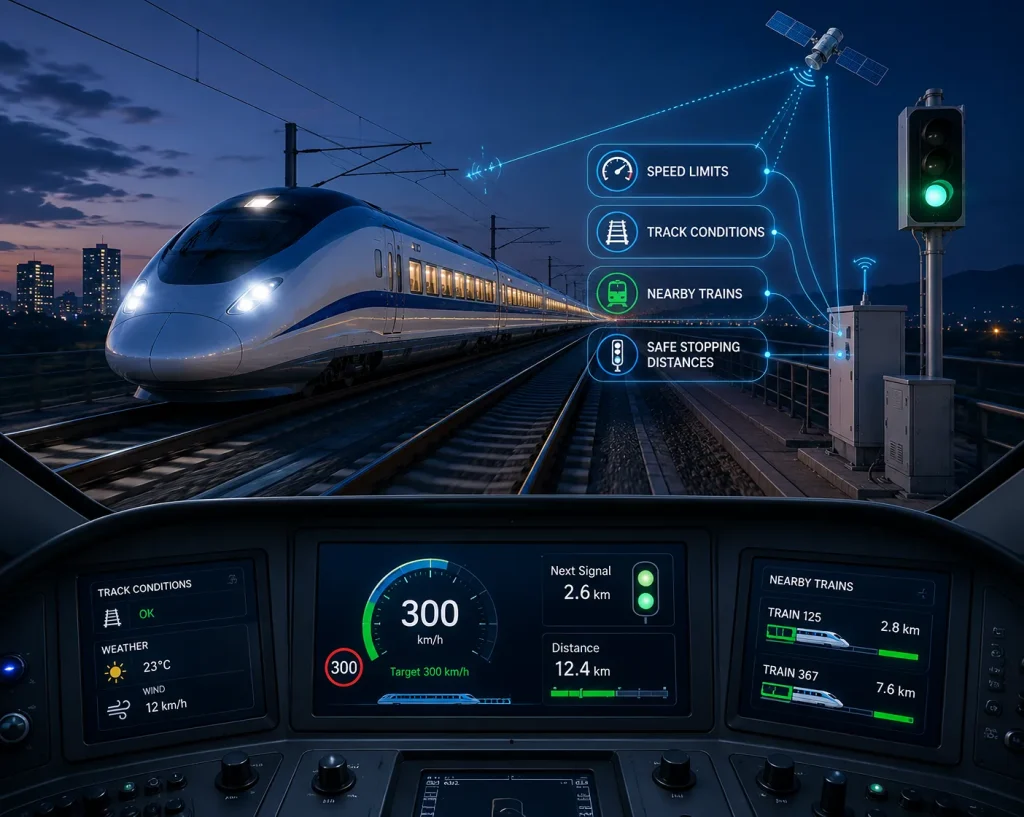
Instead, modern high-speed rail systems use sophisticated electronic signalling.
These systems continuously provide information about:
- Speed limits
- Track conditions
- Nearby trains
- Safe stopping distances
The technology helps trains operate safely and efficiently day and night.
Night-Time Trains and Passenger Comfort
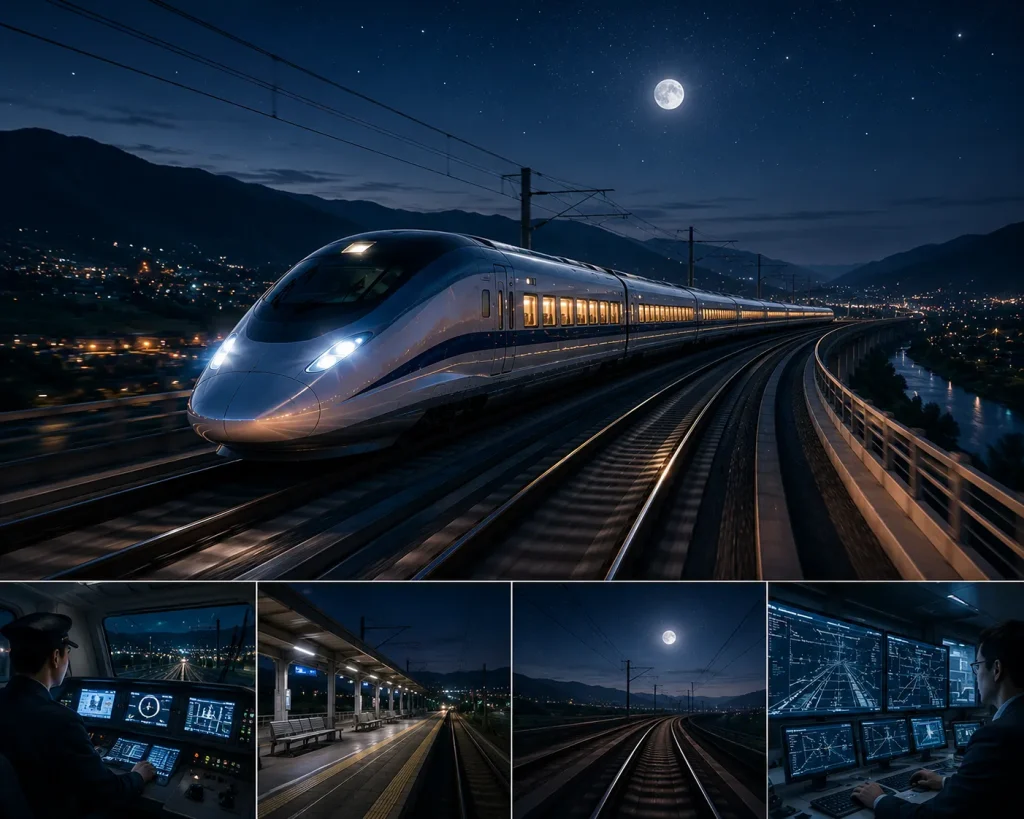
Many travellers enjoy overnight journeys because they can relax or sleep while travelling.
Night trains often feel calmer because:
- There are fewer passengers.
- Stations are quieter.
- Outside scenery is less distracting.
- Journeys may involve fewer interruptions.
These factors can create the impression that the train is moving faster, even when it is travelling at its normal speed.
Fun Facts About High-Speed Trains
- Some high-speed trains travel faster than 300 km/h.
- Japan introduced the first modern high-speed rail system in 1964.
- High-speed trains are among the safest forms of transport.
- Modern trains use advanced computers to monitor performance.
- Many bullet train designs are inspired by nature.
- Some trains can travel hundreds of kilometres in just a few hours.
Will Future Trains Be Even Faster?
Engineers are already working on exciting new technologies.
Some future possibilities include:
- Faster electric trains
- More energy-efficient designs
- Automated railway systems
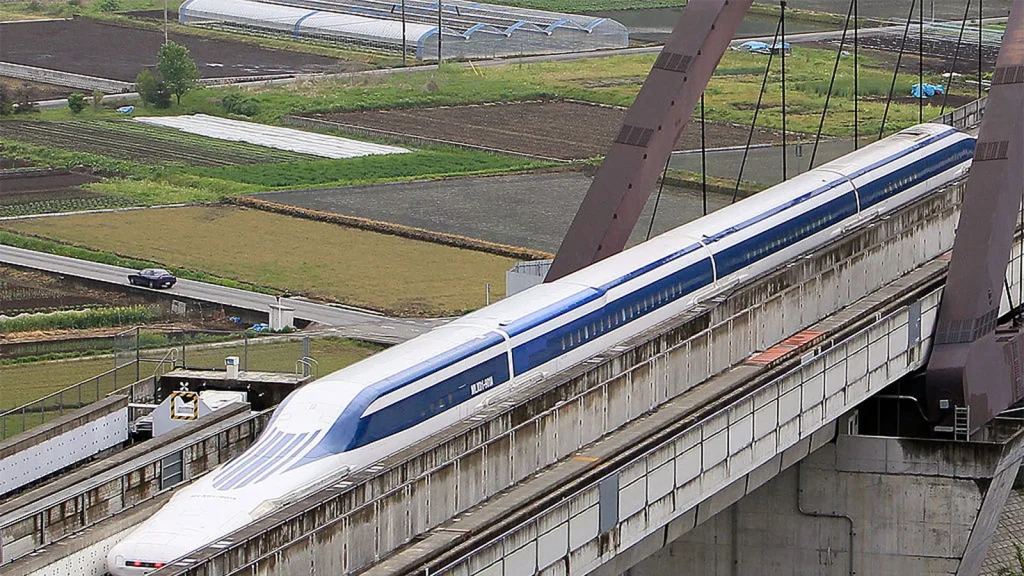
- Magnetic levitation (maglev) trains
For example, the Shanghai Maglev uses magnetic forces to lift the train slightly above the track, reducing friction and allowing extremely high speeds.
The future of rail travel could be even faster and more comfortable than today.
Conclusion
The secret behind trains seeming to go faster at night is usually not extra speed. Instead, it is often the result of smoother railway operations, less congestion, quieter stations, cooler temperatures, and fewer delays.
High-speed trains are already engineering marvels, using advanced aerodynamics, powerful motors, special tracks, and sophisticated signalling systems to travel at incredible speeds. At night, these trains may be less likely to experience interruptions.
So the next time you take a train journey after sunset, remember: the train may not actually be travelling faster, but the calmer conditions and smoother ride can certainly make it feel that way!
For more interesting articles, please visit www.kidzherald.com