

Have you ever been about to give a speech in front of your class and noticed that your palms suddenly felt wet?
Perhaps you were waiting for the result of an important test, meeting someone new, watching an exciting match, or getting ready for something that made you nervous. Suddenly, your hands seemed to produce sweat for no obvious reason!
This is completely normal. Your sweaty palms are actually part of a clever system that helps your body respond to strong emotions and stressful situations.
But why do your hands sweat when you are not even hot?
Let’s find out!
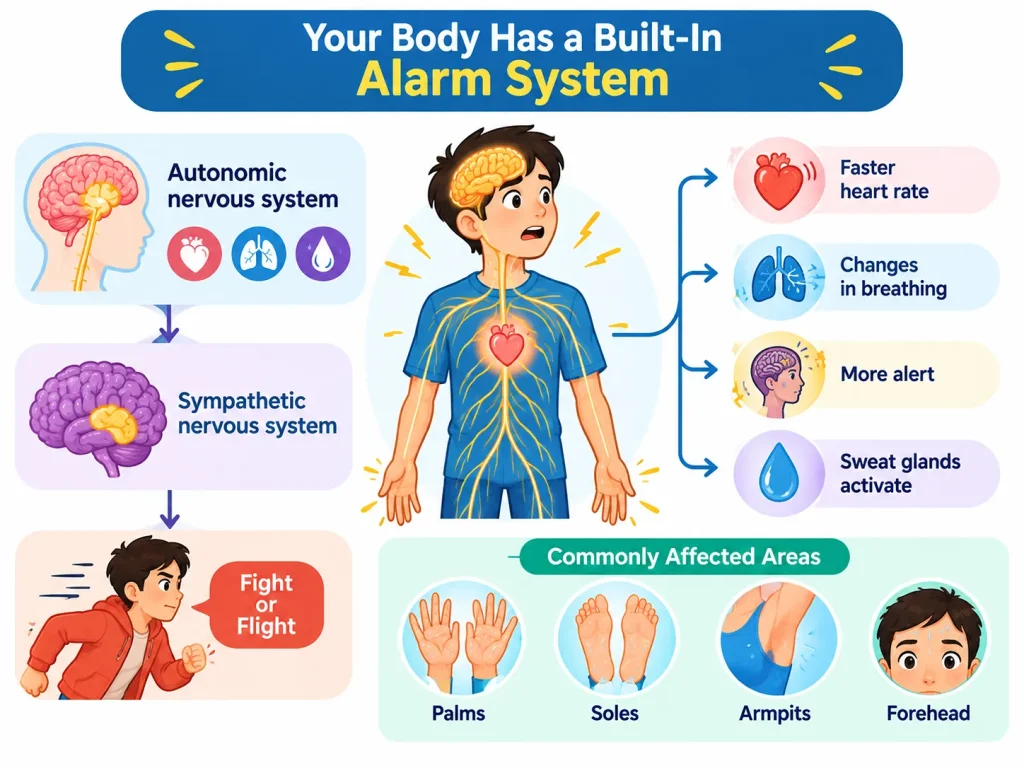
Your Body Has a Built-In Alarm System
Your body has an automatic system called the autonomic nervous system. It controls many things that happen without you having to think about them, such as your heartbeat, breathing and sweating.
One important part of this system is the sympathetic nervous system.
When you become frightened, nervous, excited or stressed, this system can switch into a state often described as the fight-or-flight response.
Your brain notices that something important is happening and sends signals around your body.
Your heart may beat faster.
Your breathing may change.
You may become more alert.
And your sweat glands can become active.
This emotional sweating commonly affects the palms, soles of the feet, armpits and forehead.
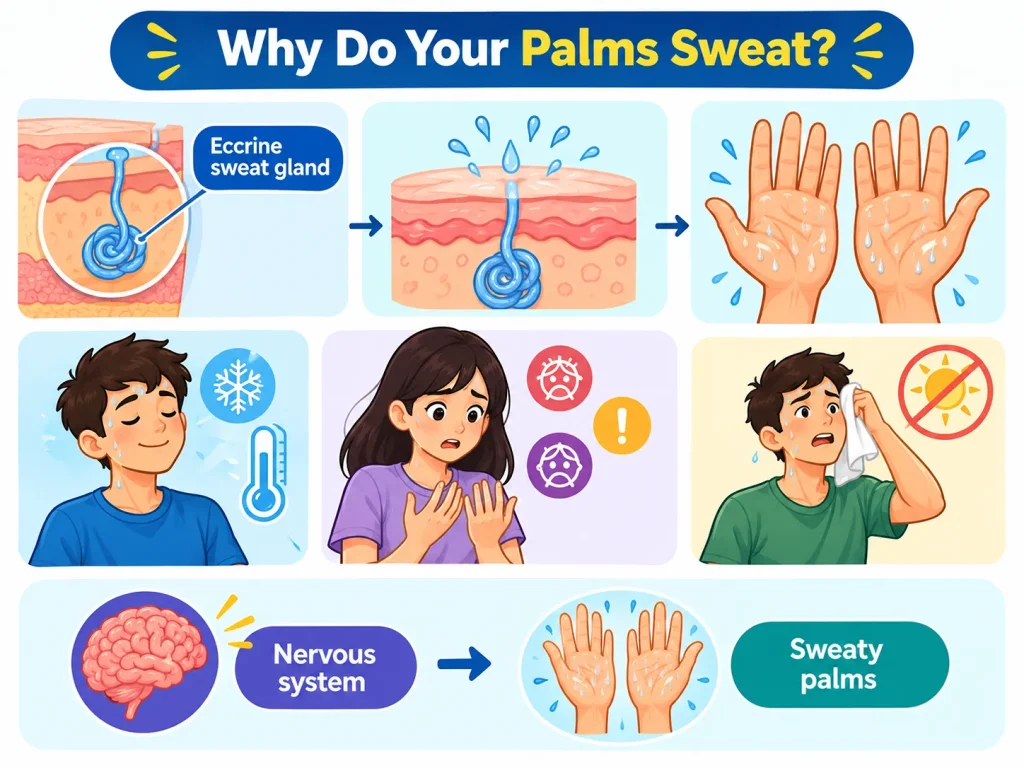
Why Do Your Palms Sweat?
Your skin contains millions of tiny sweat glands. One major type is called eccrine sweat glands.
These glands produce a watery fluid that reaches the surface of your skin.
Sweating normally helps your body cool down when you become too warm. But the sweat glands in your palms can also respond strongly to emotions, even when your body is not overheated.
So, when you are nervous before a presentation, your sweaty palms are not necessarily because you are too hot.
Your nervous system is simply reacting to the situation.
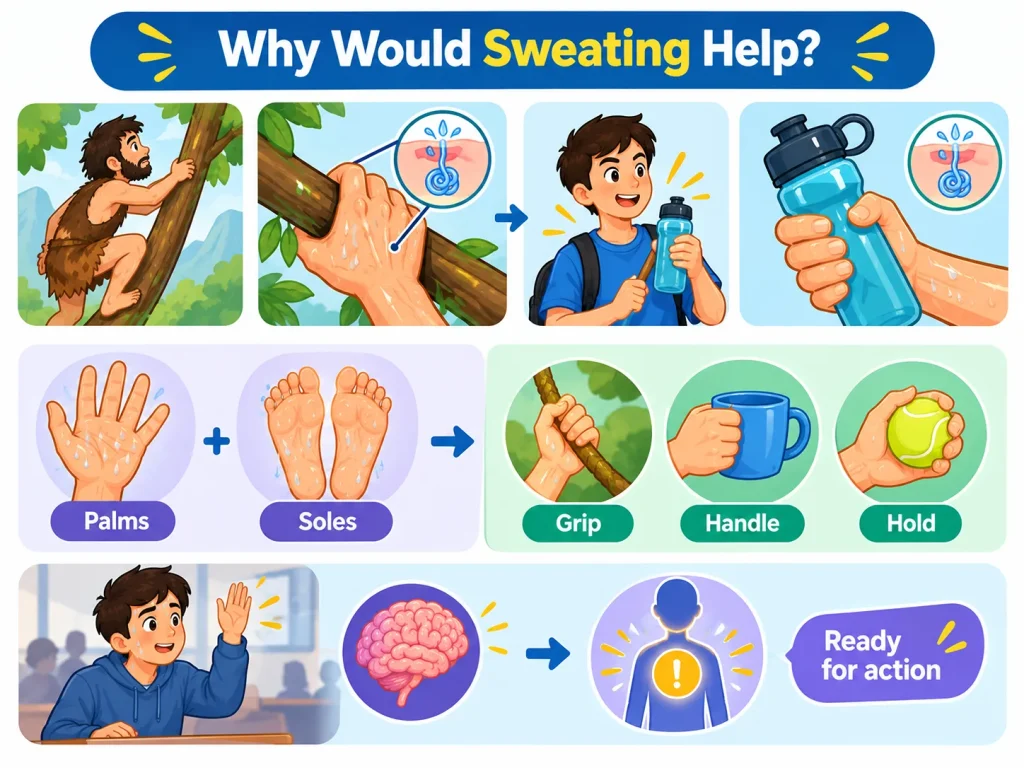
Why Would Sweating Help?
This is a fascinating question.
Scientists think that sweating on the palms and soles may have an important connection with gripping and handling objects.
Imagine that humans’ ancestors needed to climb, hold onto branches or handle things carefully. Slightly moist skin can sometimes improve friction and grip.
Research describes palm and sole sweating as a form of emotional sweating, which can occur during mental stress and may help prevent slipping while using the hands.
So your sweaty palms may be part of an ancient body response designed to prepare you for action.
Your body does not know that you are simply about to answer a question in a classroom. It just notices that something important is happening!
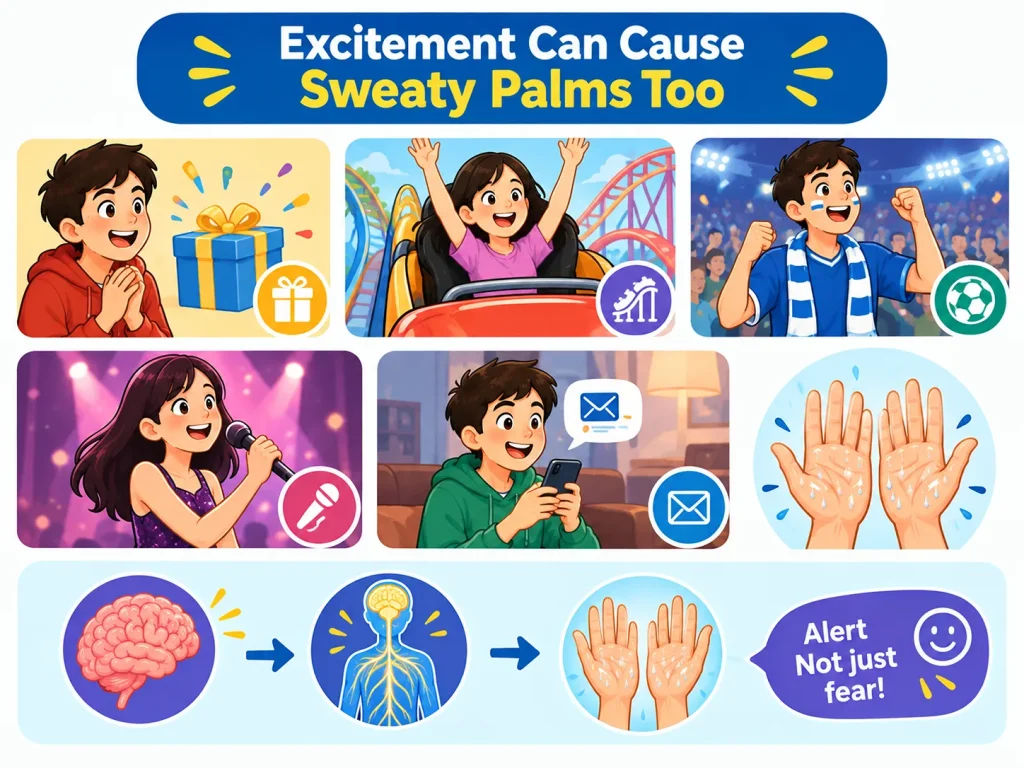
Excitement Can Cause Sweaty Palms Too
It is not only fear that can make your hands sweaty.
Excitement can do it as well.
For example, imagine that you are:
- Waiting for a fun surprise.
- About to go on an exciting ride.
- Watching the final moments of a sports match.
- Preparing to perform on stage.
- Waiting to hear exciting news.
Your body can react to excitement in a similar way to nervousness.
That is because both emotions can activate parts of the nervous system involved in the body’s response to important or stimulating events.
So sweaty palms do not always mean that you are frightened. They can simply mean that your body is highly alert.
What Happens Inside Your Body?
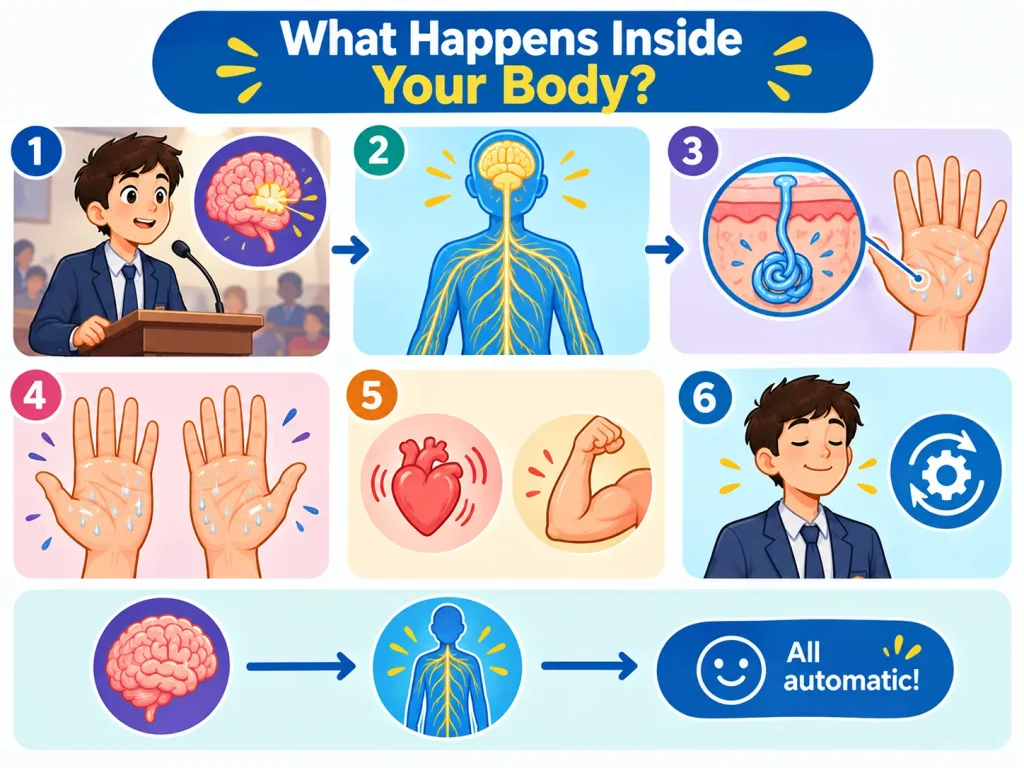
Let’s imagine you are about to give a speech at school.
First, your brain recognises that the moment is important.
Your nervous system then sends signals through the body.
Your sweat glands receive signals telling them to become active.
Tiny amounts of sweat begin reaching the surface of your palms.
At the same time, you might notice your heart beating faster or your muscles becoming more tense.
All of this can happen automatically.
You do not have to tell your body, “Start sweating now!”
Your nervous system handles it for you.
Why Are Palms Special?
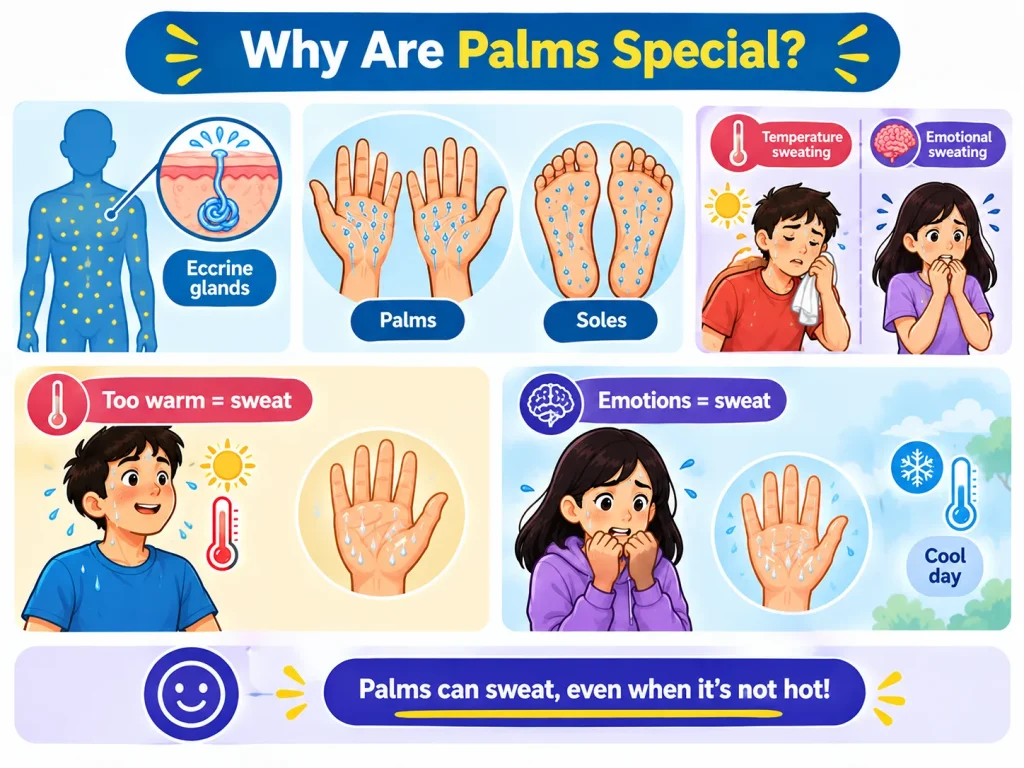
Sweat glands are found throughout your body, but the palms and soles have a particularly high concentration of eccrine glands.
There is also an interesting difference between temperature sweating and emotional sweating.
When your whole body becomes too warm, sweating helps release heat.
But your palms can sweat because of emotions even when the temperature around you is perfectly comfortable.
That is why you might have sweaty hands on a cool day when you are nervous about something.
What If Someone Sweats a Lot?
For most people, sweaty palms during exciting or stressful situations are simply a normal body response.
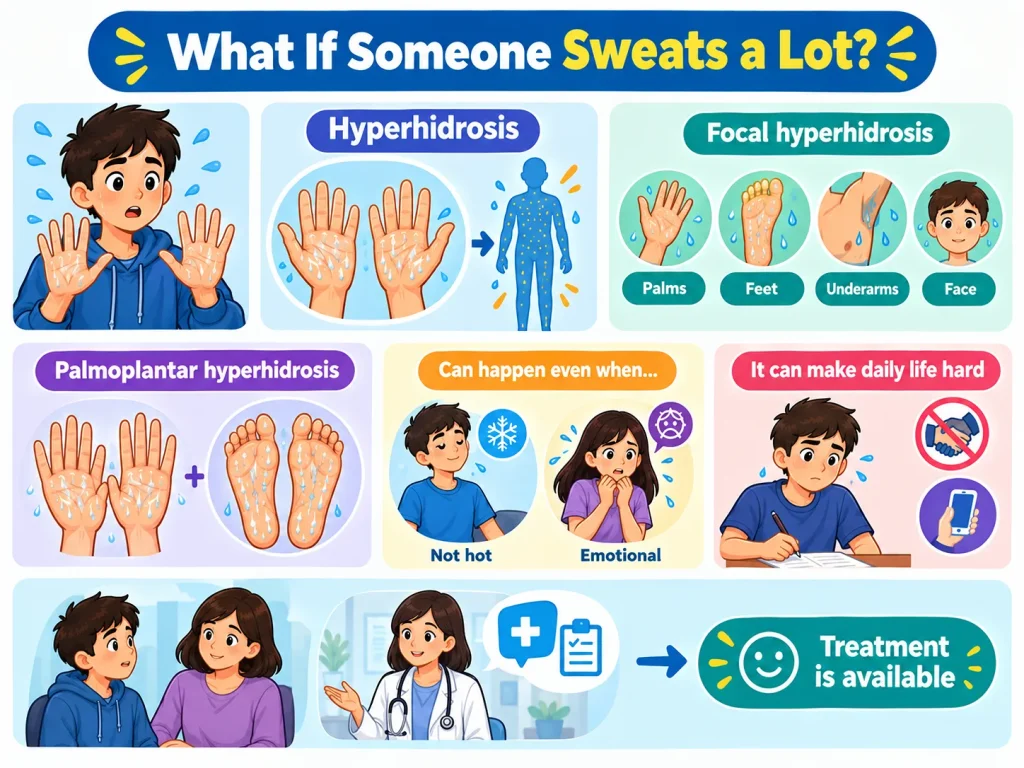
However, some people sweat much more than their bodies need for cooling. This condition is called hyperhidrosis.
One form is focal hyperhidrosis, where excessive sweating is concentrated in particular areas, such as the palms, feet, underarms or face.
Palmoplantar hyperhidrosis specifically refers to excessive sweating of the palms and soles.
For some people, the sweating can happen even when they are not hot or exercising. It may also become stronger during emotional situations.
If sweating is unusually heavy or regularly makes everyday activities difficult, it is a good idea to tell a parent, carer or trusted adult and speak with a healthcare professional. Excessive sweating can have different causes, and it is something doctors can assess and treat.
Why Does the Sweat Usually Stop?
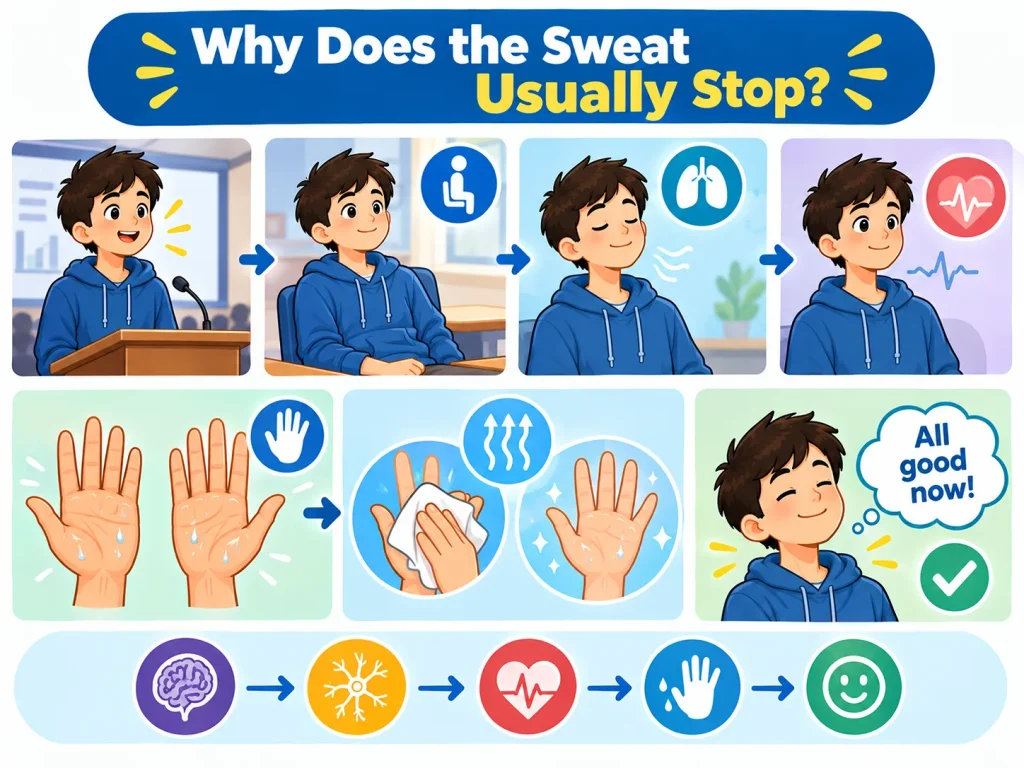
Once the exciting or stressful moment has passed, your nervous system begins to settle down.
Imagine you have finished your presentation.
You sit down.
Your breathing becomes calmer.
Your heart gradually returns to its usual rhythm.
And your palms stop producing as much sweat.
The sweat can then evaporate from your skin or be wiped away.
Your body has essentially decided:
“Everything is all right now.”
A Tiny Experiment
You can notice this effect yourself without doing anything complicated.
Think about a situation that makes you excited or nervous — perhaps speaking in front of a group or waiting for an important result.
Pay attention to how your hands feel.
Then take a few slow, comfortable breaths and relax for a while.
You may notice that your hands feel less sweaty as you become calmer.
This shows how closely your emotions and nervous system are connected.
Sweaty Palms Are Not Something to Be Embarrassed About
It can sometimes feel embarrassing when your palms get sweaty, especially if you need to shake someone’s hand, hold a pen or perform in front of others.
But remember: your body is not doing anything wrong.
Sweating is a normal and useful body function. Your nervous system is simply responding to a situation that your brain considers important.
Everyone’s body reacts differently. Some people notice sweaty palms, while others may feel their heart beating faster, get butterflies in their stomach or become more alert.
These are all examples of the fascinating ways the brain and body communicate.
The Big Idea
So, why do your palms get sweaty when you’re excited, scared or nervous?
The answer is your body’s automatic response to strong emotions.
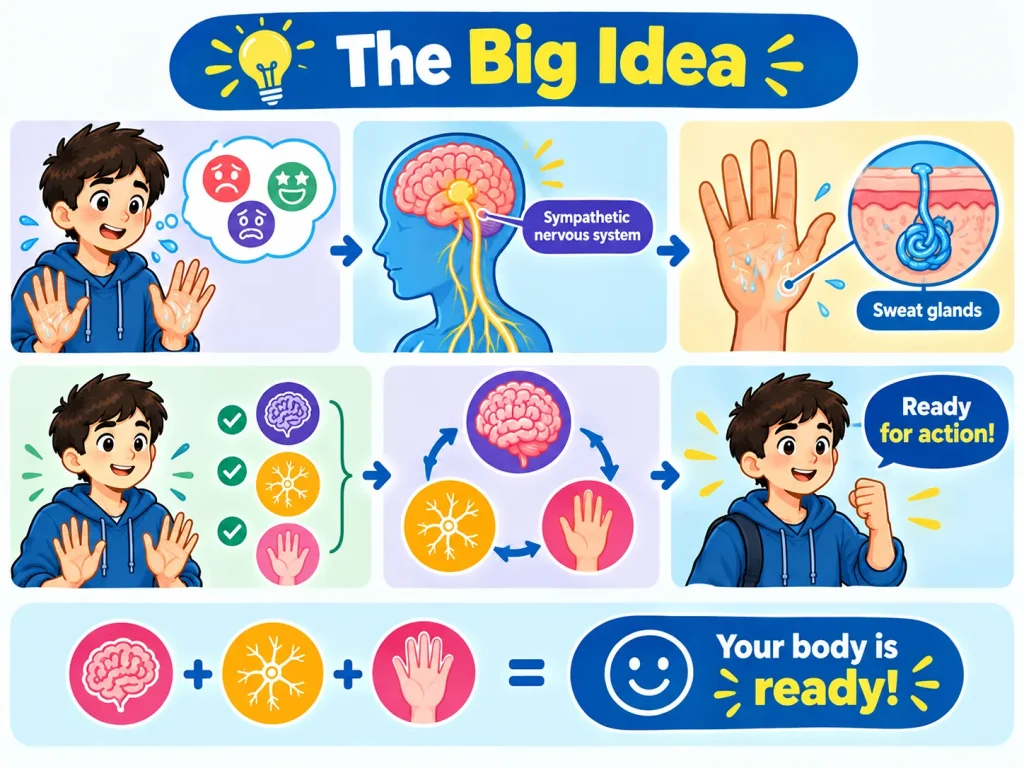
Your brain detects an exciting or stressful situation and activates parts of the sympathetic nervous system. This sends signals to sweat glands, including the eccrine glands in your palms. The result can be sweaty hands even when you are not hot.
It may seem annoying sometimes, but it is actually a brilliant example of how your brain, nerves and skin work together.
The next time your palms get sweaty before something important, you can remember:
Your body is simply getting ready for action!
For more interesting articles, please visit www.kidzherald.com