
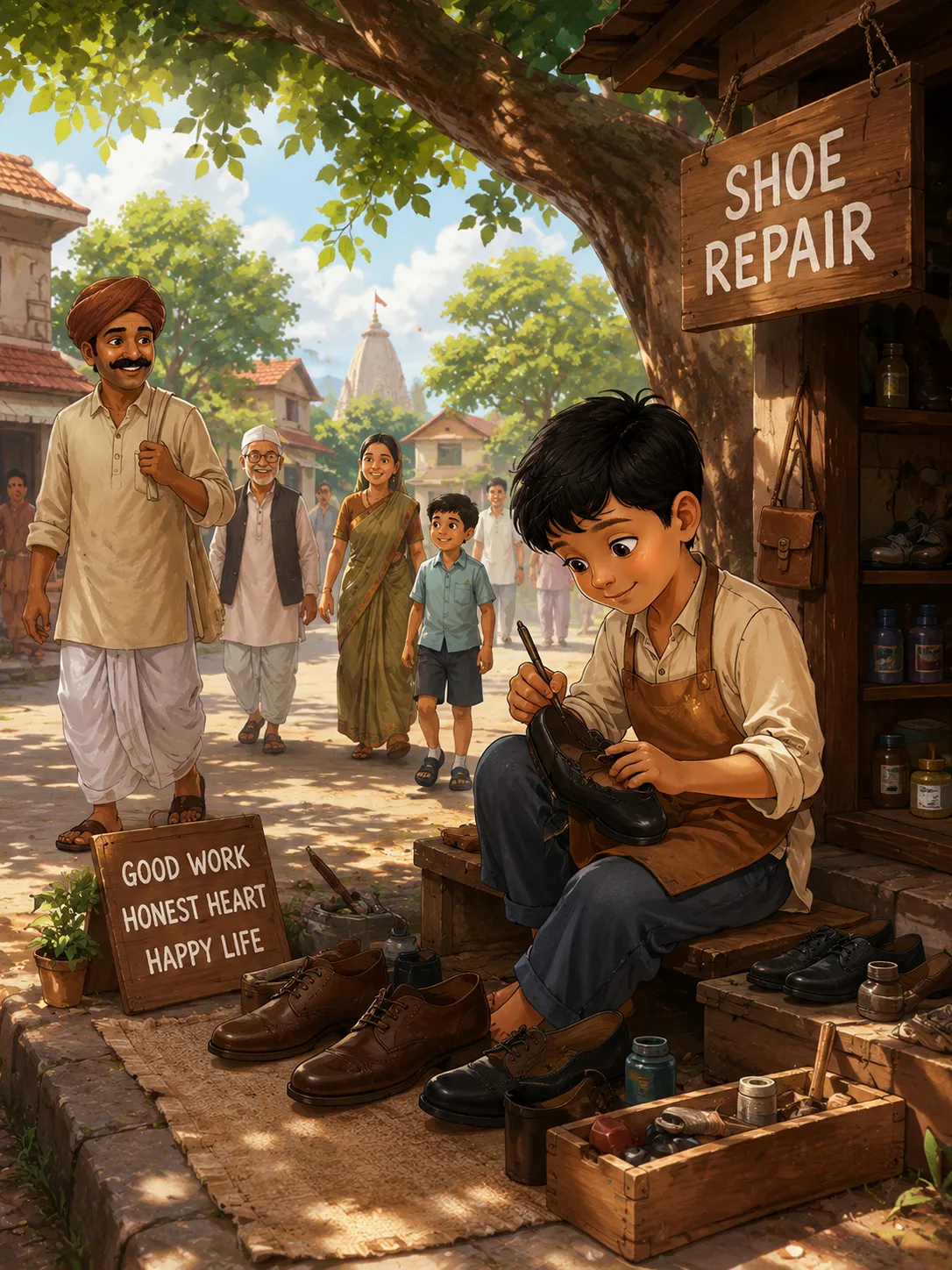
Young Aarav lived in a small town where his father repaired old shoes in a tiny roadside shop. Every day after school, Aarav helped stitch torn sandals and polish dusty boots. Some of his classmates laughed at him and called him ‘the cobbler’s son.’ Their words stung like tiny cactus needles.

One day, Aarav’s school announced a state-level science competition. The winner would receive a scholarship. Aarav wanted to participate, but he had no money for expensive materials.

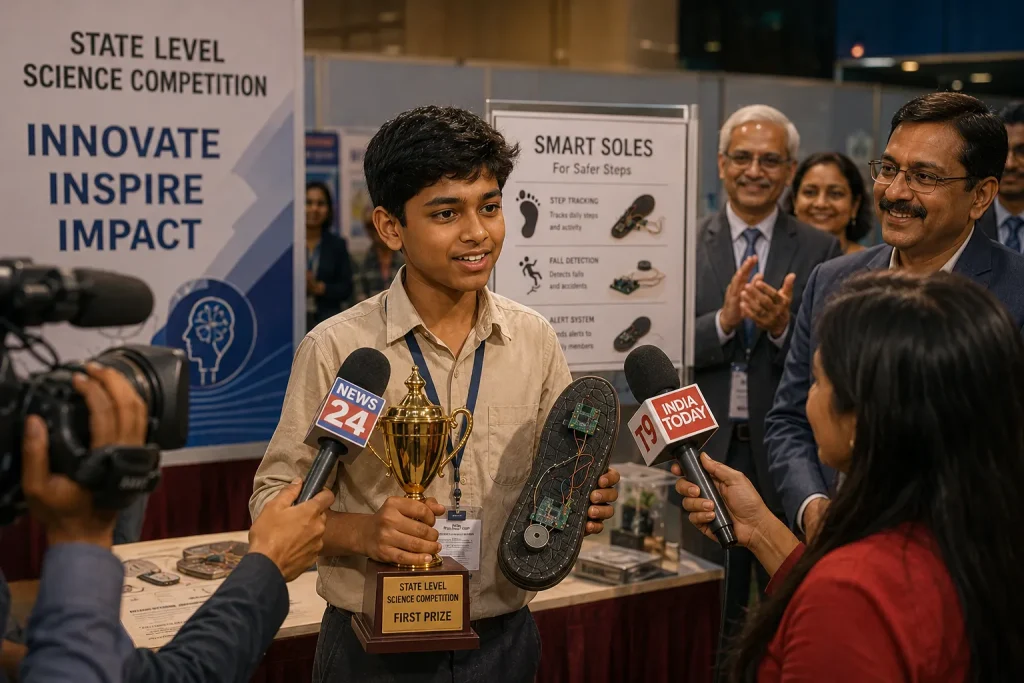
While working in the shop, he noticed how many shoes were thrown away just because their soles were damaged. An idea sparked in his mind like a match in darkness. Using old rubber, wires, and tiny sensors collected from broken gadgets, Aarav created ‘Smart Soles’ that could track steps and warn elderly people if they slipped or fell.
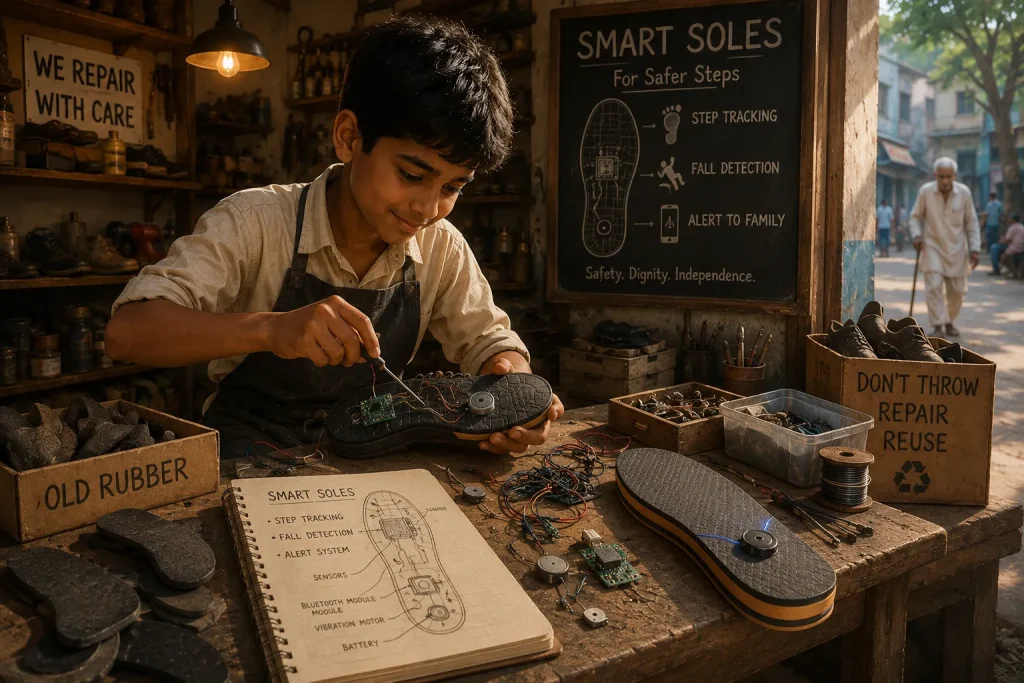
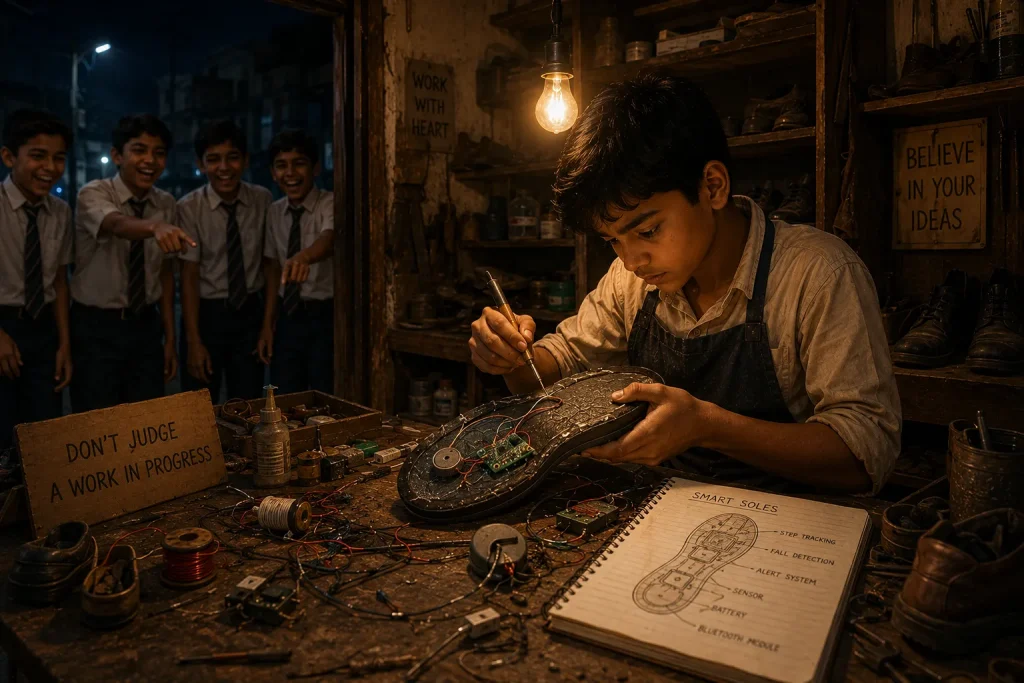
People doubted him. Some students even laughed at his homemade model covered with glue marks and uneven stitches. But Aarav continued working late into the night under a flickering bulb.
On the day of the competition, many projects looked shiny and expensive. Aarav felt nervous, yet he explained his invention with confidence and heart.
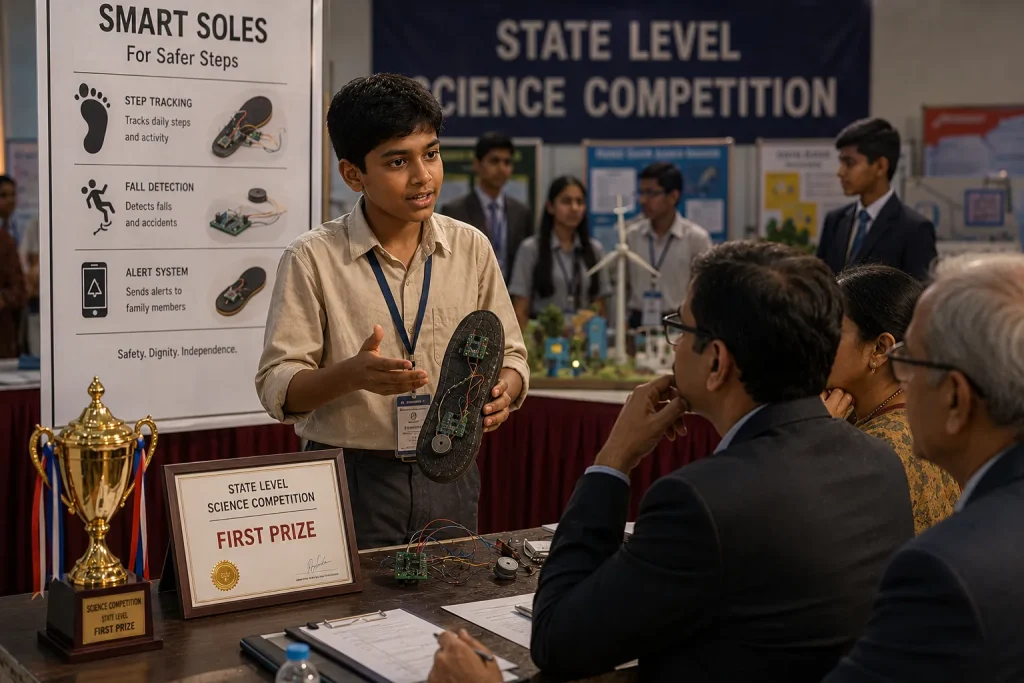
To everyone’s surprise, he won first prize.
When reporters asked him where he learned innovation, Aarav smiled and said, ‘From repairing things people thought were useless.’
His story spread across the town. The same hands that stitched old shoes had stitched together a new future.