
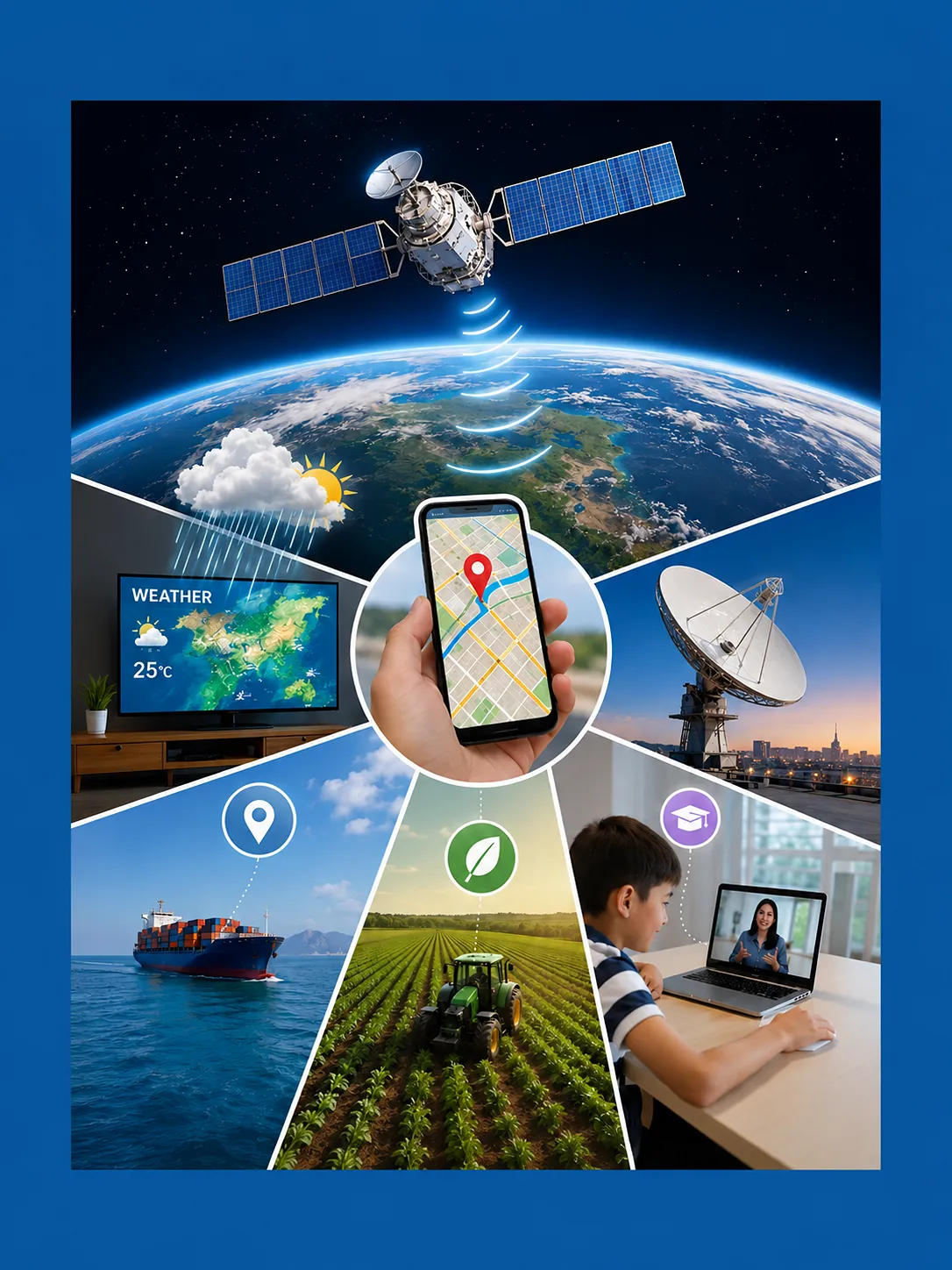
When you hear the word satellite, you might imagine a shiny machine floating far above Earth in space. Satellites may seem distant and mysterious, but they help us every single day.
From checking the weather forecast to using maps on a smartphone, satellites play an important role in modern life. Most people use satellite-based services without even realising it!
Let’s explore what satellites are and discover how these amazing machines make our daily lives easier, safer and more connected.
What Is a Satellite?
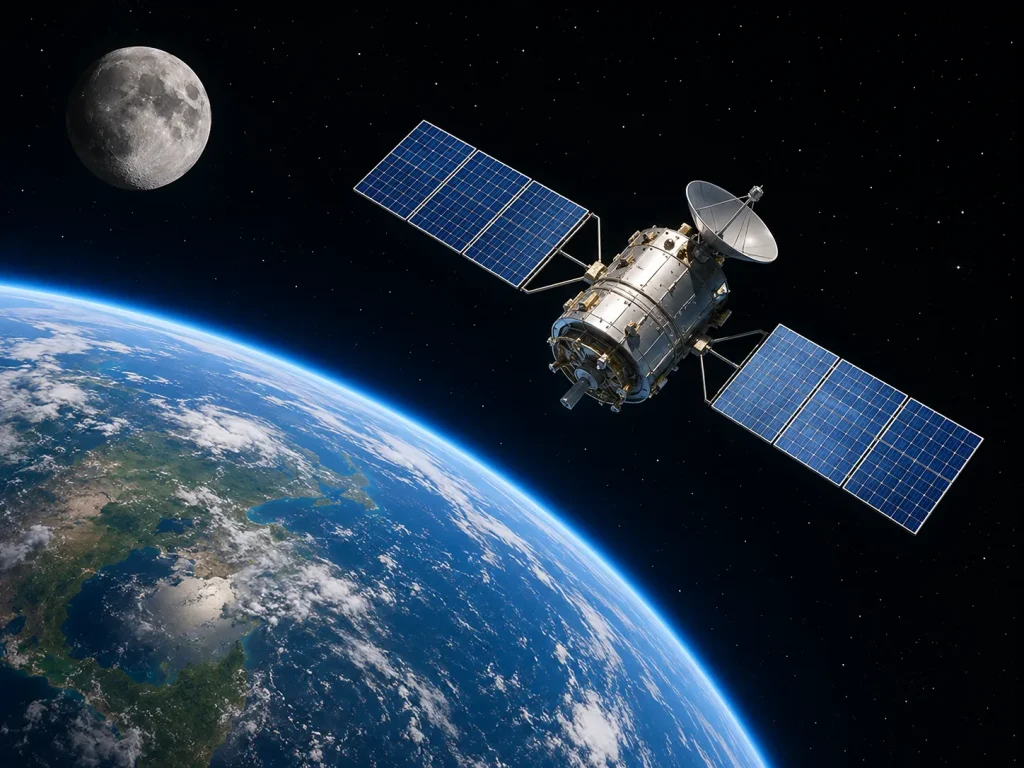
A satellite is an object that travels around another object in space.
Some satellites are natural satellites, such as Earth’s Moon.
Others are artificial satellites, human-made machines launched into space by rockets.
Artificial satellites orbit Earth and perform many different tasks. Some take photographs of our planet, while others support communication, navigation, and scientific research.
How Do Satellites Stay in Space?
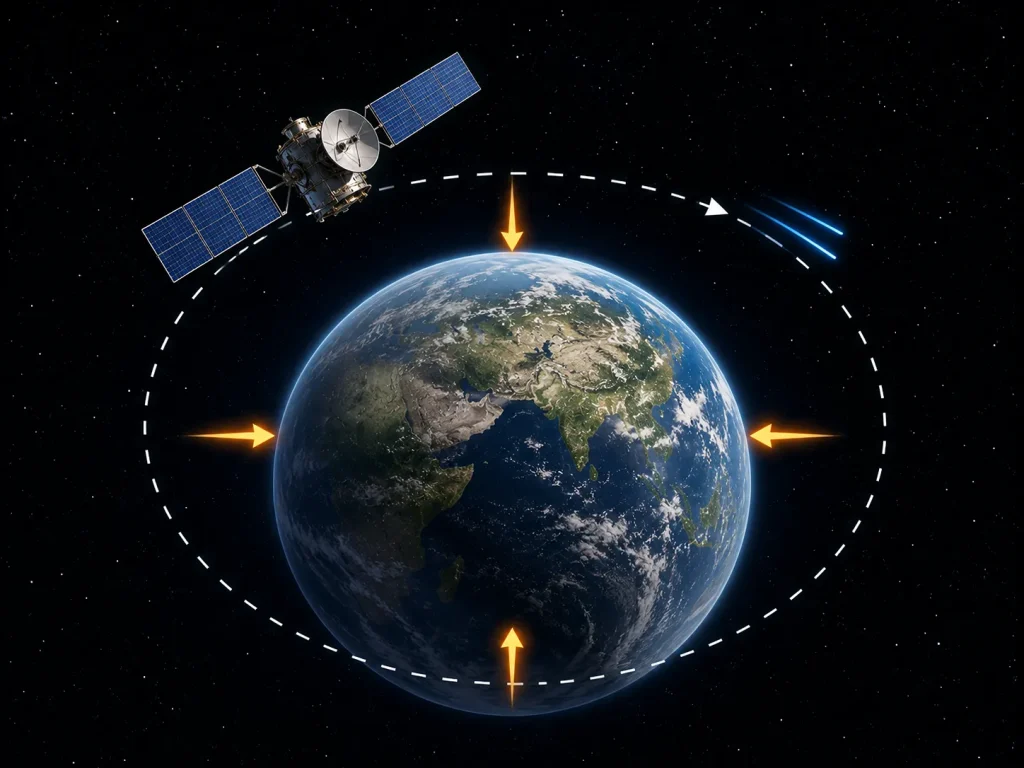
Satellites stay in orbit because of a balance between their speed and Earth’s gravity.
As a satellite moves forward very quickly, gravity continuously pulls it towards Earth. Instead of falling straight down, it keeps falling around the planet, creating an orbit.
This allows satellites to travel around Earth for years while carrying out their important missions.
Helping Us Predict the Weather
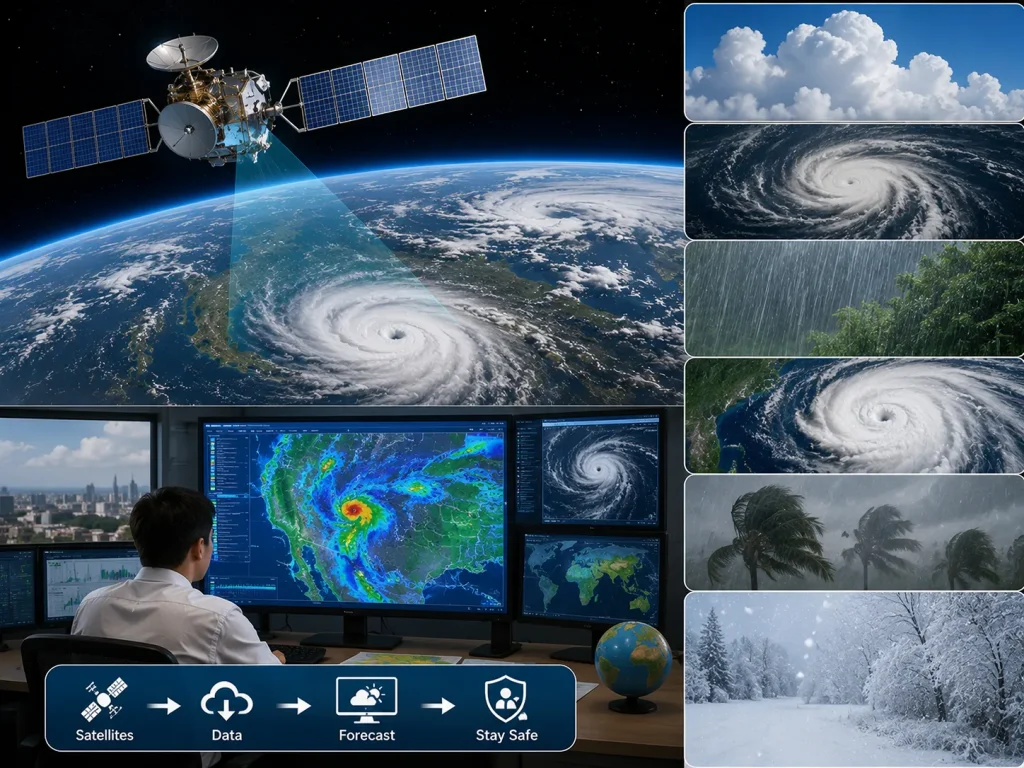
One of the most important jobs satellites perform is weather monitoring.
Weather satellites observe:
- Clouds
- Storms
- Rainfall
- Hurricanes
- Cyclones
- Snowfall
The images and data they collect help meteorologists create weather forecasts.
Thanks to satellites, people can prepare for severe weather and stay safer during storms and other natural events.
Imagine trying to predict tomorrow’s weather without being able to see Earth’s clouds from space!
Helping Us Use GPS and Maps
Have you ever used a map app on a smartphone?
If so, you’ve probably benefited from satellite technology.
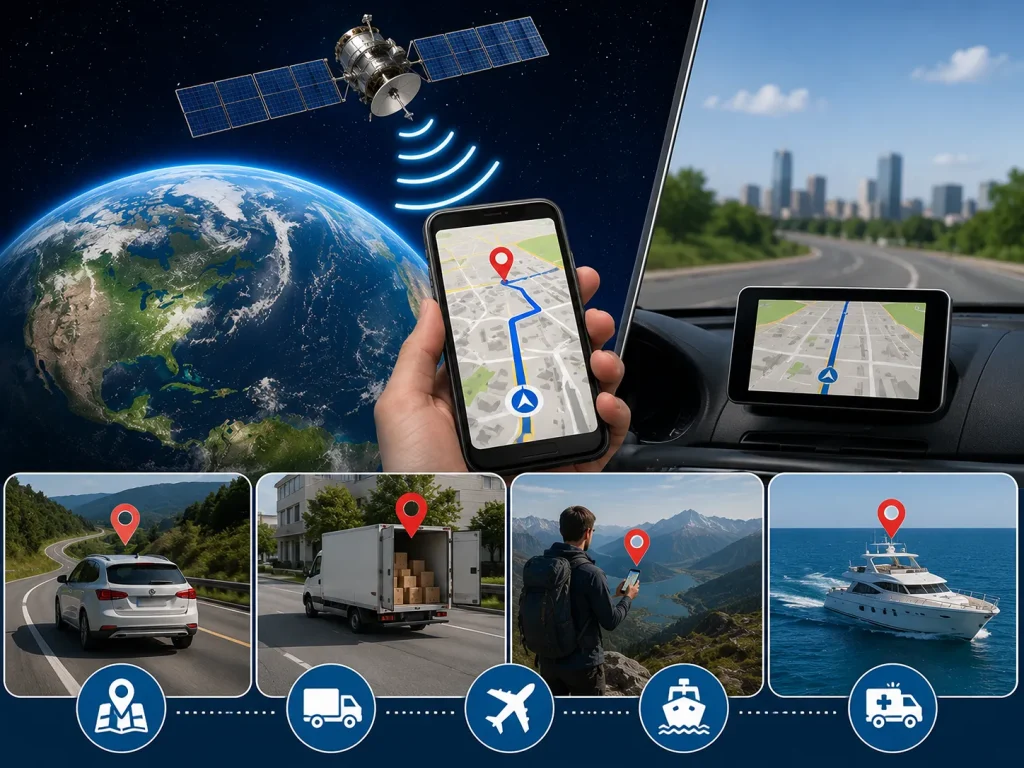
Navigation systems such as GPS use signals from satellites orbiting Earth. These signals help devices determine their location.
This technology helps people:
- Find directions
- Navigate roads
- Track deliveries
- Locate destinations
- Plan journeys
Pilots, sailors and emergency services also rely on satellite navigation every day.
Making Communication Possible
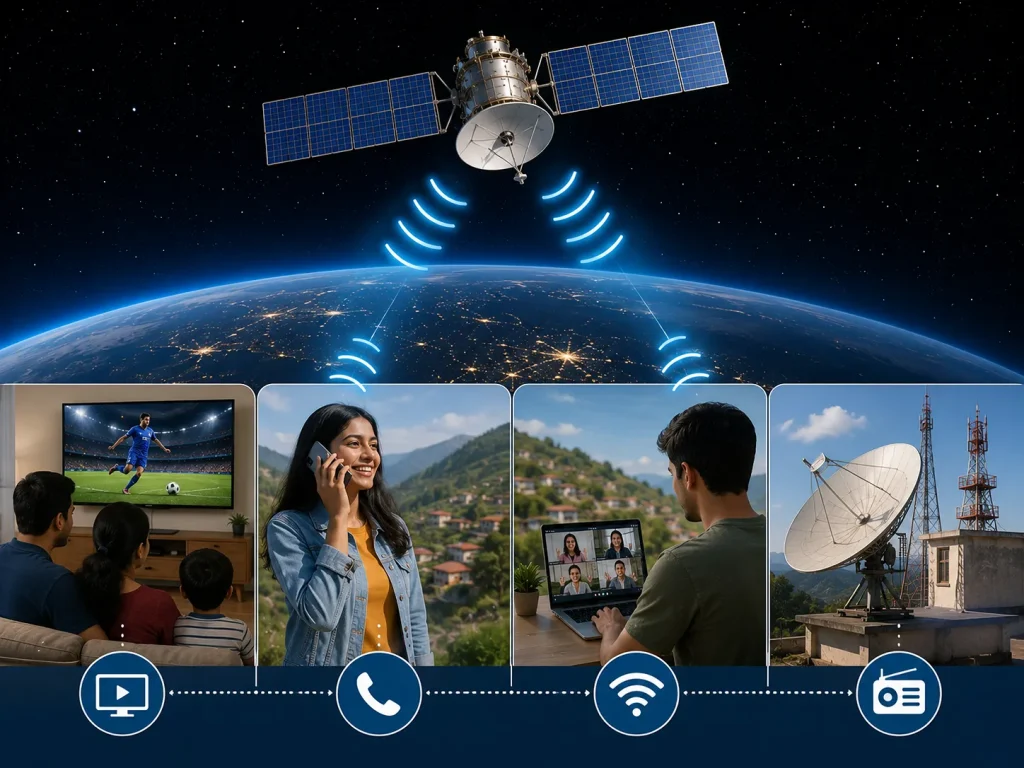
Satellites help people communicate across great distances.
Communication satellites can transmit:
- Television broadcasts
- Telephone calls
- Internet data
- Radio signals
This allows people in different parts of the world to stay connected.
In remote areas where installing cables may be difficult, satellites can provide communication services that would otherwise be unavailable.
Supporting Television Broadcasting
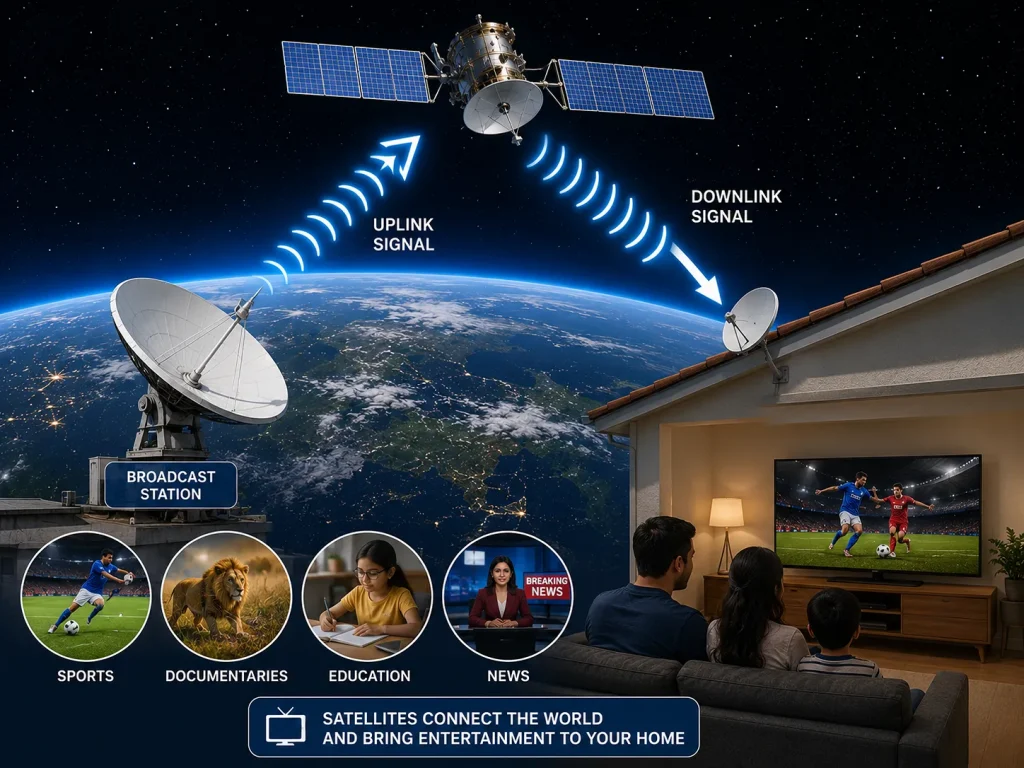
Millions of people watch television programmes delivered through satellites.
Sports events, documentaries, educational programmes and news broadcasts can be transmitted from one location to another using satellite networks.
Without communication satellites, global broadcasting would be much more difficult.
Whether you’re watching a football match or a nature programme, a satellite may be helping bring it to your screen.
Helping Scientists Study Earth
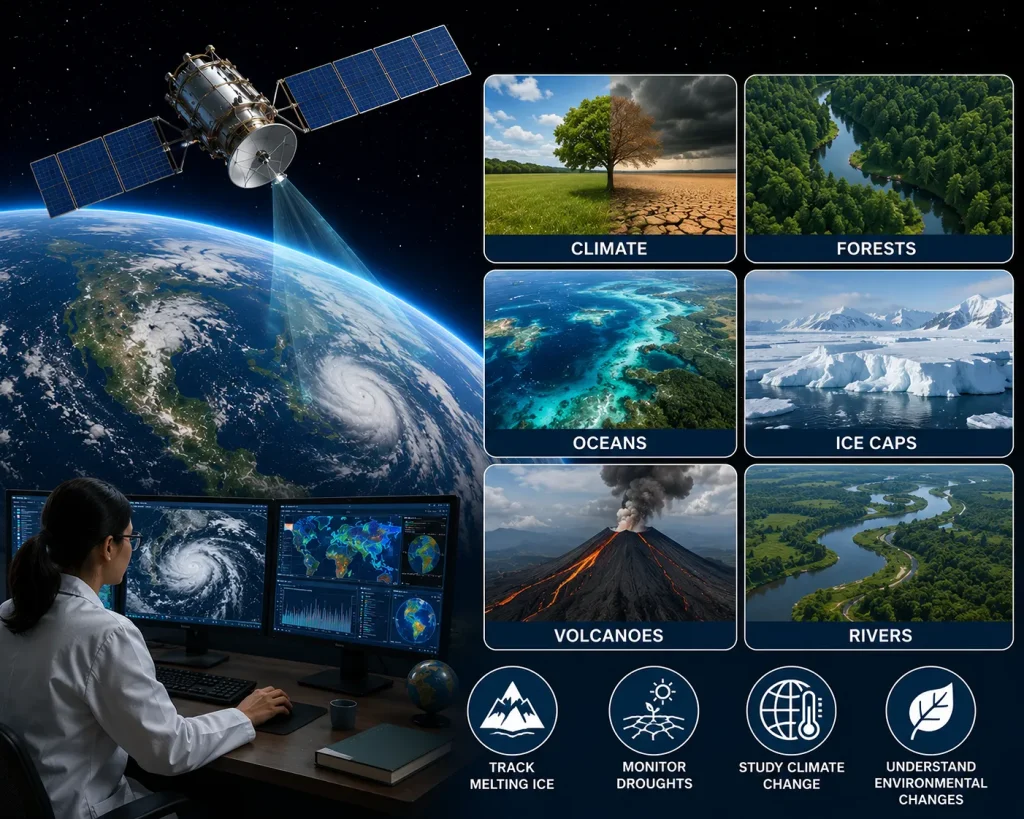
Satellites act like giant cameras in space.
They constantly photograph and monitor our planet, helping scientists learn about:
- Climate
- Forests
- Oceans
- Ice caps
- Volcanoes
- Rivers
These observations help researchers understand how Earth changes over time.
Scientists can track melting ice, monitor droughts and study environmental changes using satellite images.
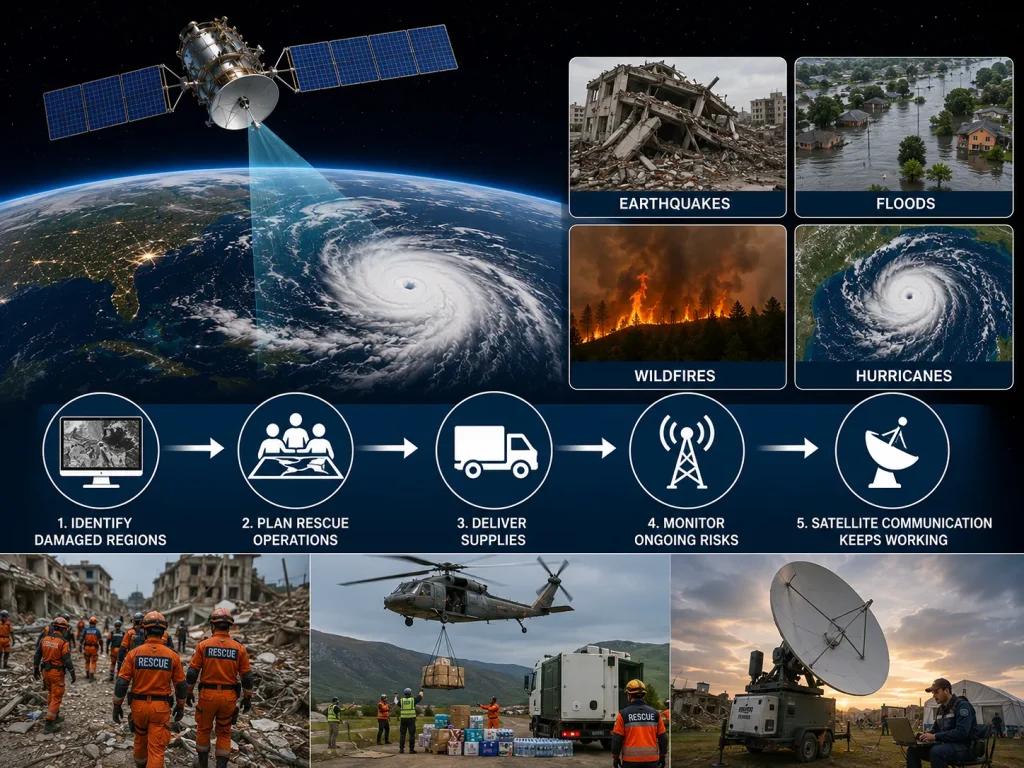
Assisting During Natural Disasters
Satellites are extremely valuable during emergencies.
After earthquakes, floods, wildfires or hurricanes, satellites can quickly capture images of affected areas.
Emergency teams use this information to:
- Identify damaged regions
- Plan rescue operations
- Deliver supplies
- Monitor ongoing risks
In some cases, satellite communication systems continue working even when ground-based systems are damaged.
This can help save lives during disasters.
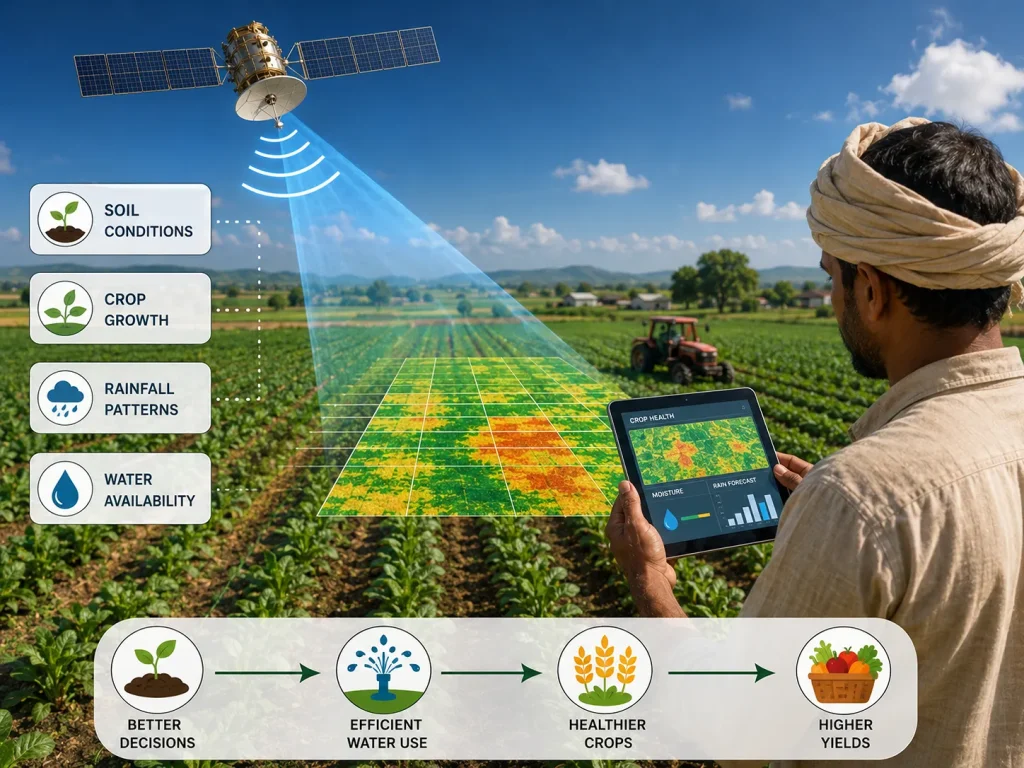
Helping Farmers Grow Food
Many farmers use satellite information to improve agriculture.
Satellites can help monitor:
- Soil conditions
- Crop growth
- Rainfall patterns
- Water availability
This information helps farmers make better decisions about planting, watering and harvesting crops.
As a result, satellites contribute to food production around the world.
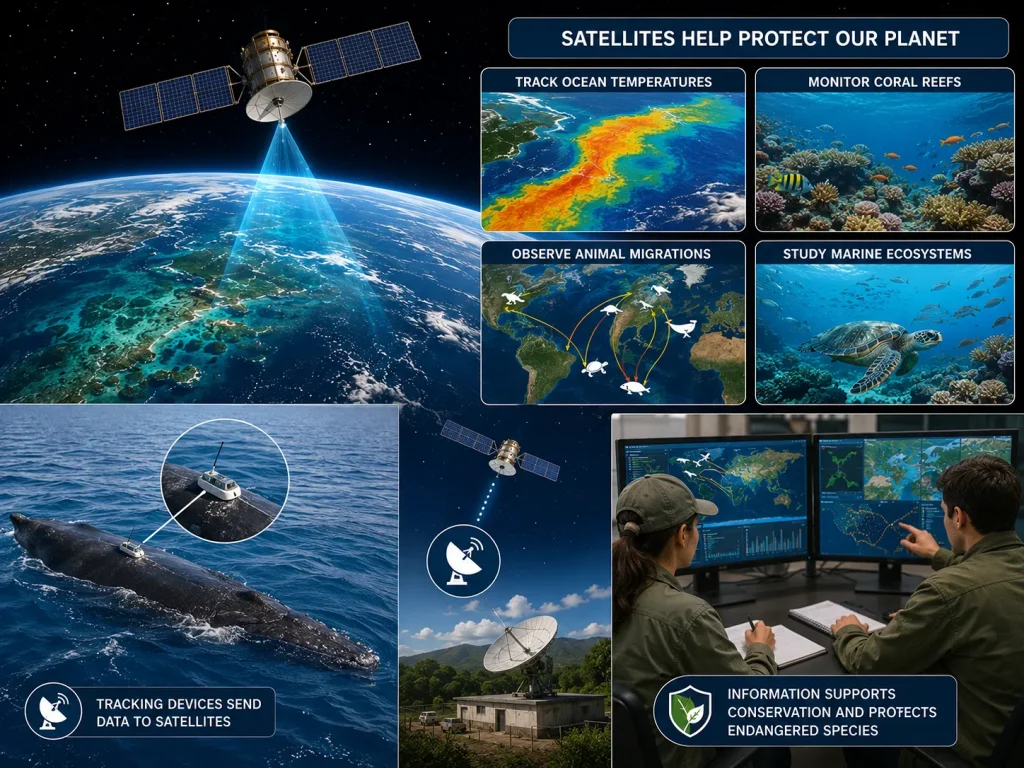
Monitoring Oceans and Wildlife
Satellites help scientists study the oceans and protect wildlife.
Researchers use satellite data to:
- Track ocean temperatures
- Monitor coral reefs
- Observe animal migrations
- Study marine ecosystems
Some animals are fitted with tracking devices that communicate with satellites, helping scientists understand where they travel and how they survive.
This information supports conservation efforts and helps protect endangered species.
Helping Aeroplanes and Ships Travel Safely
Modern transport depends heavily on satellites.
Pilots use satellite navigation systems to plan routes and improve safety.
Ships crossing vast oceans also rely on satellite technology for navigation and communication.
Without satellites, travelling across large distances would be much more challenging.
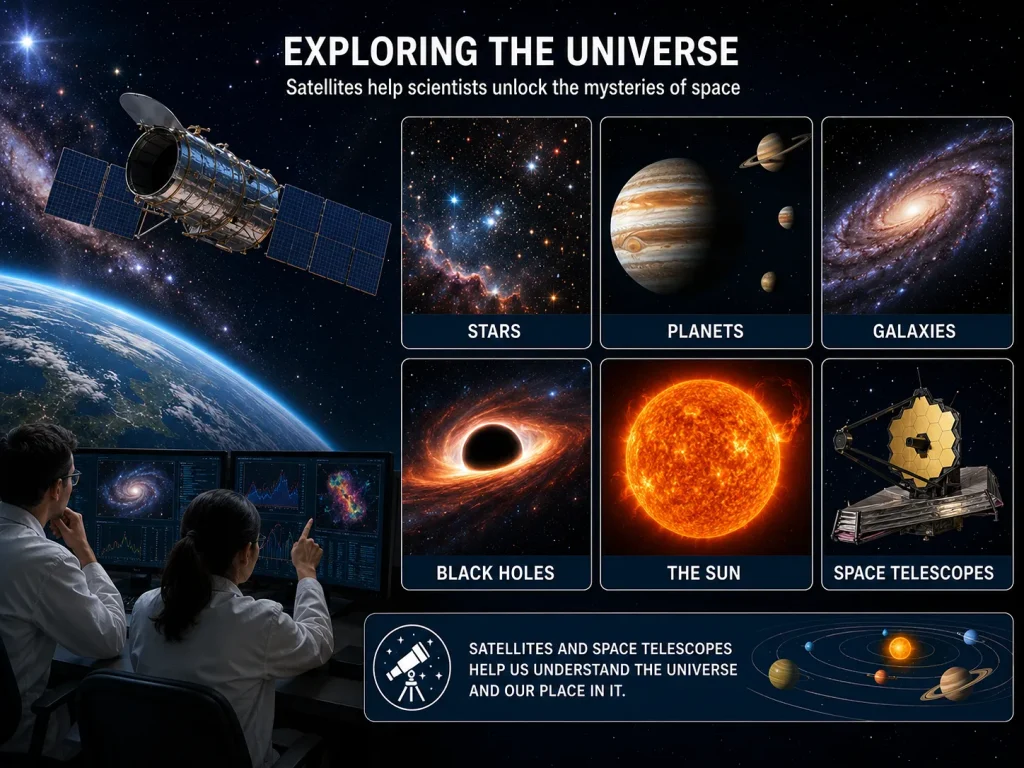
Supporting Scientific Discovery
Satellites are not only used to study Earth.
Some satellites observe space itself.
They help scientists learn about:
- Stars
- Planets
- Galaxies
- Black holes
- The Sun
Space telescopes and scientific satellites collect valuable information that helps us understand the Universe.
Many of humanity’s greatest discoveries about space have been made possible through satellite technology.
What Would Life Be Like Without Satellites?
Imagine a world without satellites.
Many things we take for granted would become more difficult:
- Weather forecasts would be less accurate.
- GPS navigation would be limited.
- Global communications would be slower.
- Disaster response could be less effective.
- Scientific research would lose valuable information.
Although satellites are invisible to most people during everyday life, they quietly support many services we depend upon.
Fun Facts About Satellites
Thousands of artificial satellites orbit Earth.
The Moon is Earth’s natural satellite.
Satellites are launched into space using rockets.
Communication satellites help transmit television and internet signals.
Weather satellites help forecast storms and rainfall.
GPS systems depend on satellites for navigation.
Earth-observation satellites constantly monitor our planet.
Some satellites study distant galaxies and stars.
The Future of Satellites
Scientists and engineers are continually developing new satellites.
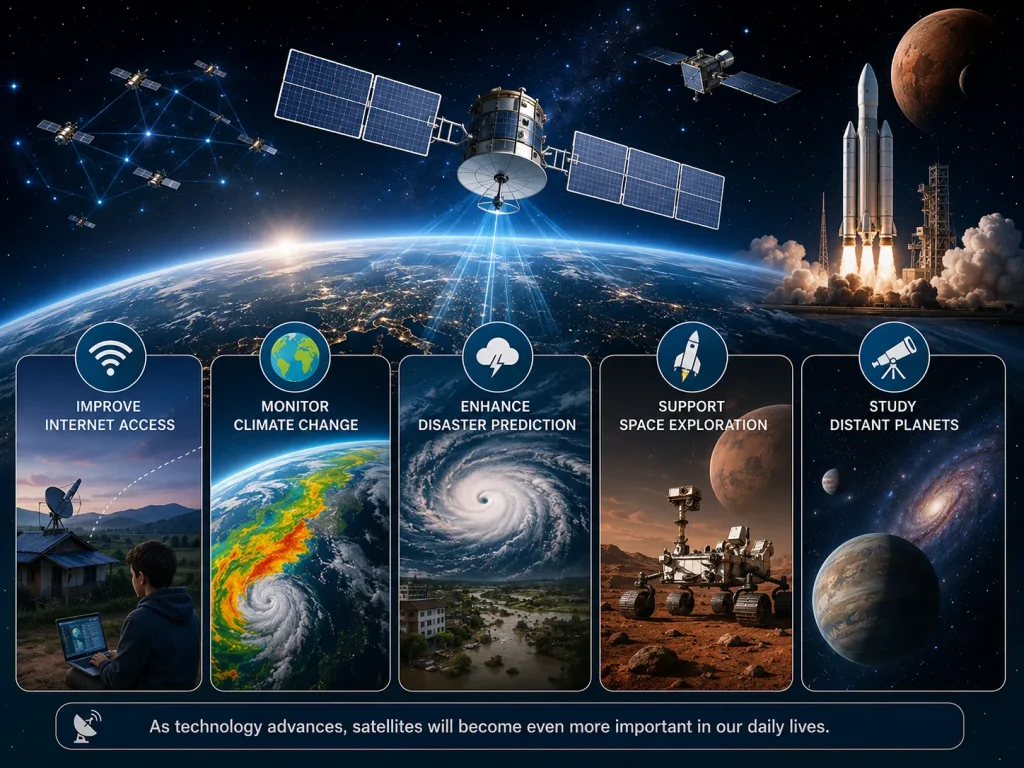
Future satellites may help:
- Improve internet access
- Monitor climate change
- Enhance disaster prediction
- Support space exploration
- Study distant planets
As technology advances, satellites will become even more important in our daily lives.
Conclusion
Satellites may be far above our heads, but they have a huge impact on everyday life. They help us navigate roads, predict the weather, communicate with others, watch television, study Earth and explore space.
From helping farmers grow crops to assisting rescue teams during emergencies, satellites perform countless valuable tasks that often go unnoticed.
The next time you check the weather, use a map app or watch a live event from another part of the world, remember that a satellite high above Earth may be helping make it possible.
These remarkable machines are among humanity’s most useful inventions.
For more interesting articles, please visit www.kidzherald.com