
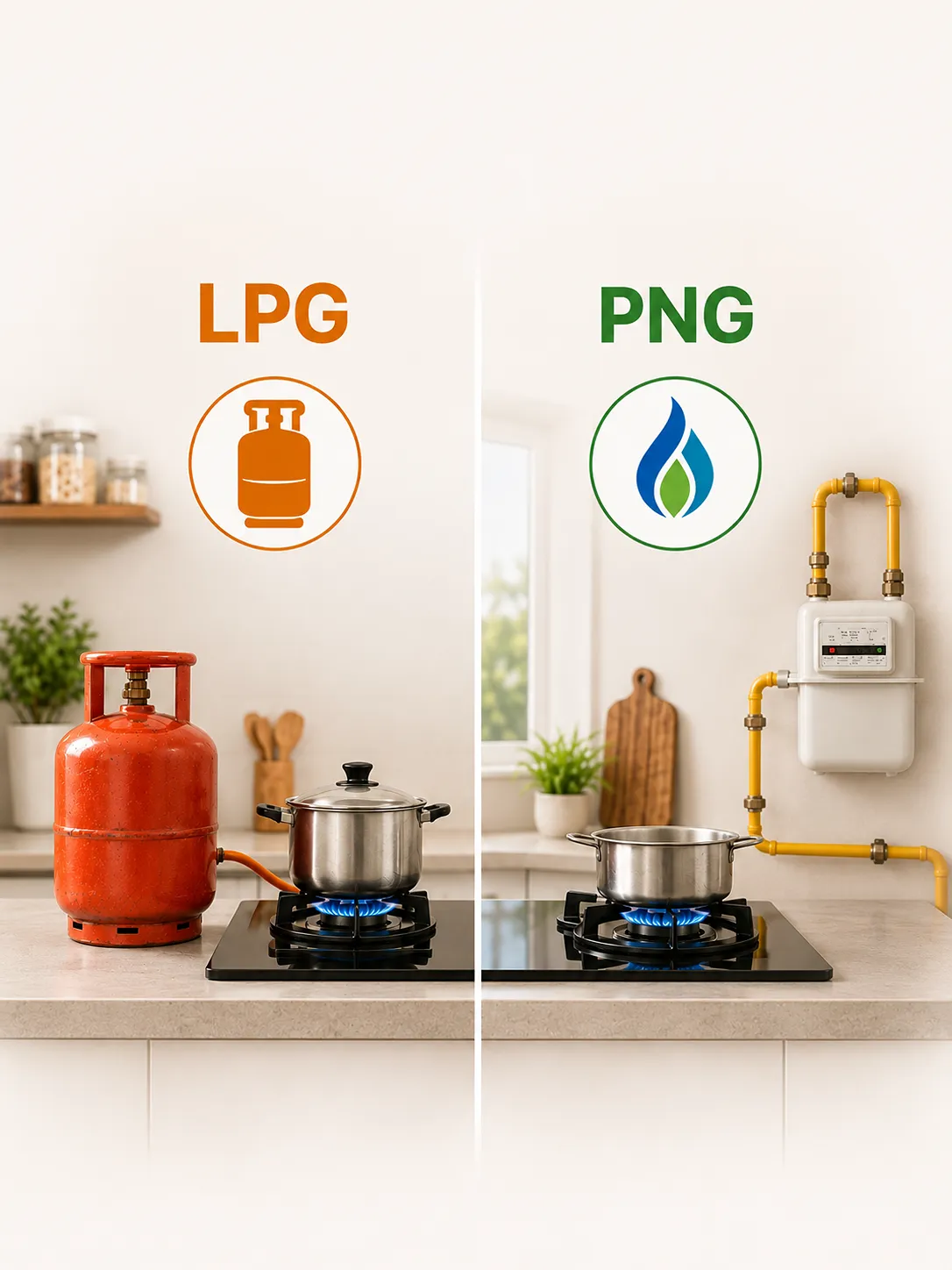
Cooking is something we do every day, but have you ever wondered where the gas that cooks our food comes from? In many homes, people use LPG cylinders, while others use PNG connections. Both are popular cooking fuels, but they are not the same.
Let’s explore the differences between LPG and PNG in a simple and easy-to-understand way!
LPG and PNG at a Glance
What Is LPG?
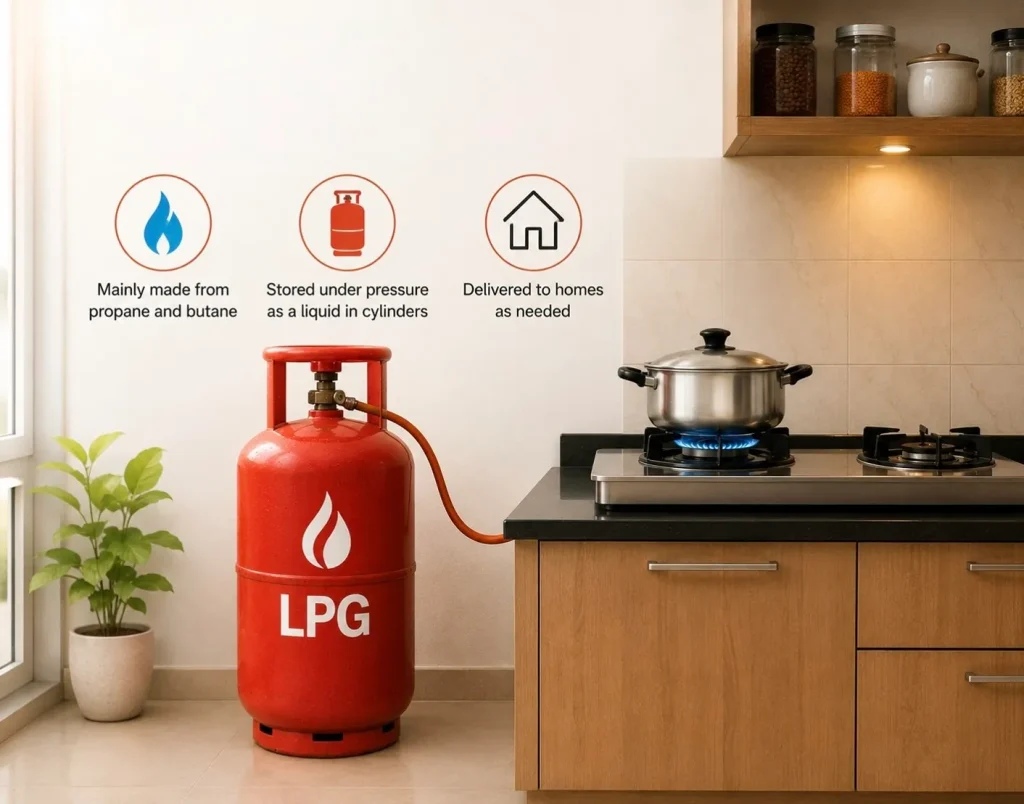
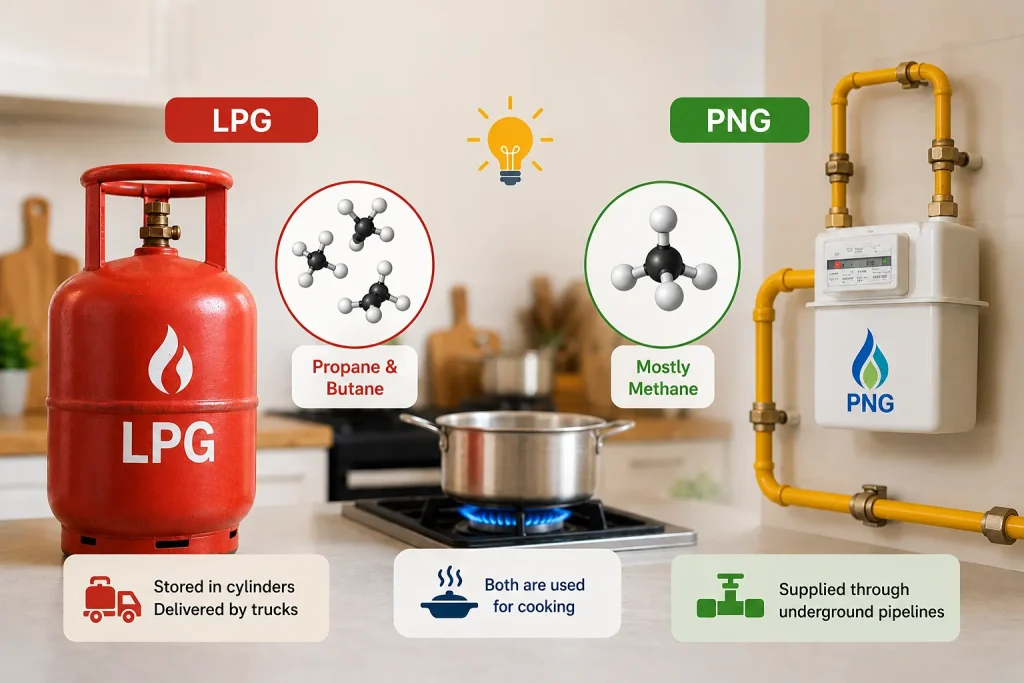
LPG stands for Liquefied Petroleum Gas. It is mainly made from gases called propane and butane. LPG is stored under pressure as a liquid in metal cylinders and delivered to homes as needed. In many countries, including India, LPG cylinders are commonly used for cooking.
What Is PNG?
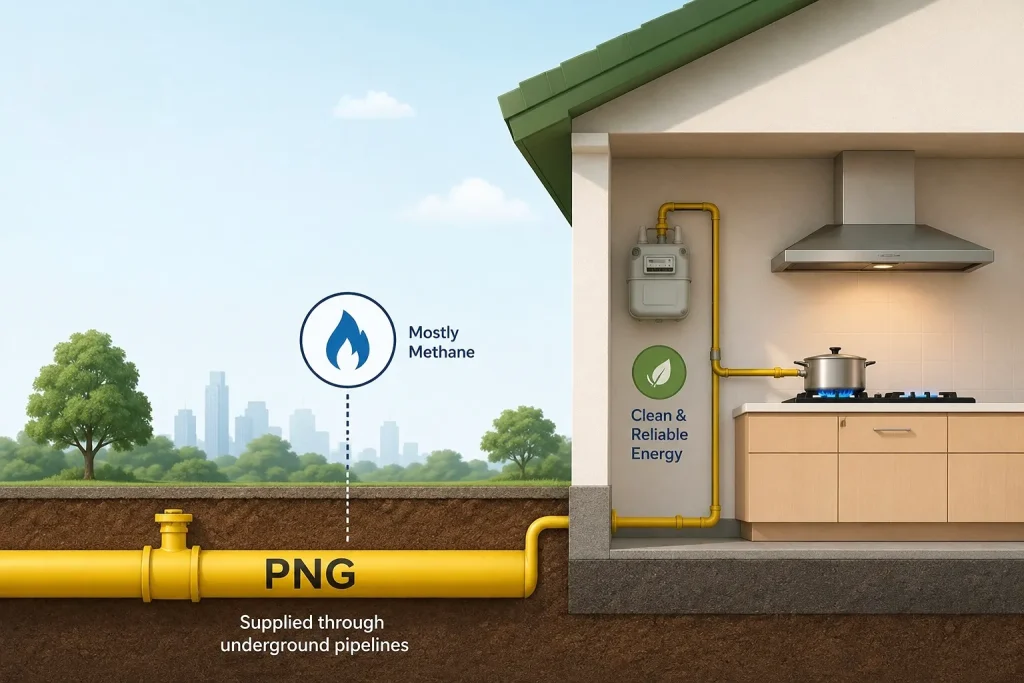
PNG stands for Piped Natural Gas. It is mostly made up of methane, a natural gas found underground. Instead of arriving in cylinders, PNG is supplied directly to homes through underground pipelines.
This means people can use gas whenever they need it without waiting for a new cylinder.
How Are LPG and PNG Different?
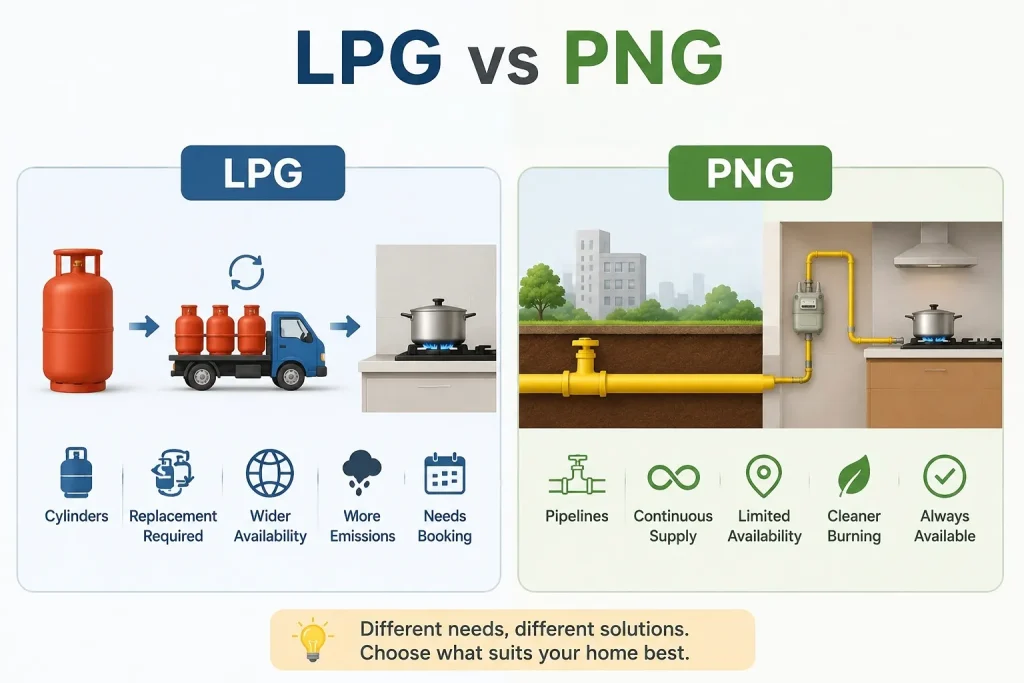
The biggest difference is how they reach your home.
| Feature | LPG | PNG |
| Full Form | Liquefied Petroleum Gas | Piped Natural Gas |
| Main Ingredient | Propane and Butane | Methane |
| Supply Method | Cylinders | Pipelines |
| Storage | Stored in cylinders | No home storage needed |
| Refilling | Cylinder replacement required | Continuous supply |
| Availability | Available almost everywhere | Available only where pipelines exist |
| Environmental Impact | Produces more emissions | Burns cleaner |
| Convenience | Needs cylinder booking | Always available through pipeline |
These differences make each fuel suitable for different situations.
Which One Is More Convenient?
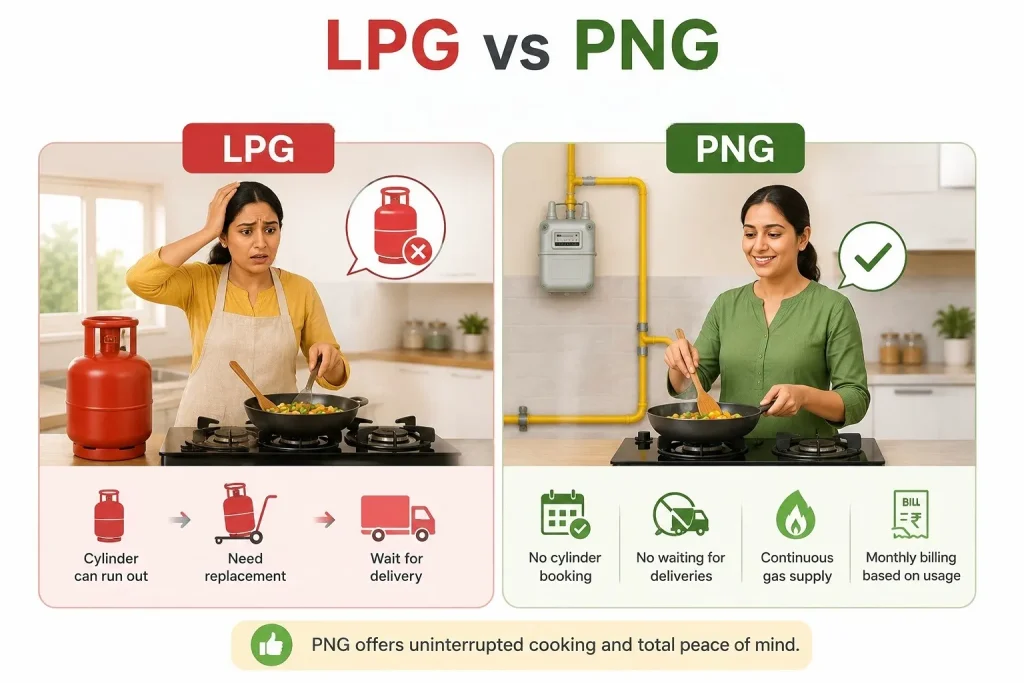
Imagine you are halfway through cooking dinner and your gas cylinder suddenly runs out!
Imagine you are halfway through cooking dinner and your gas cylinder suddenly runs out!
With LPG, this can happen if the cylinder becomes empty. You then need a replacement cylinder. With PNG, gas continues to flow through the pipeline, so there is no need to order refills.
Many families find PNG more convenient because:
- No cylinder booking
- No waiting for deliveries
- Continuous gas supply
- Monthly billing based on usage
Which Fuel Is Safer?
Safety is very important when using any fuel.
LPG Safety
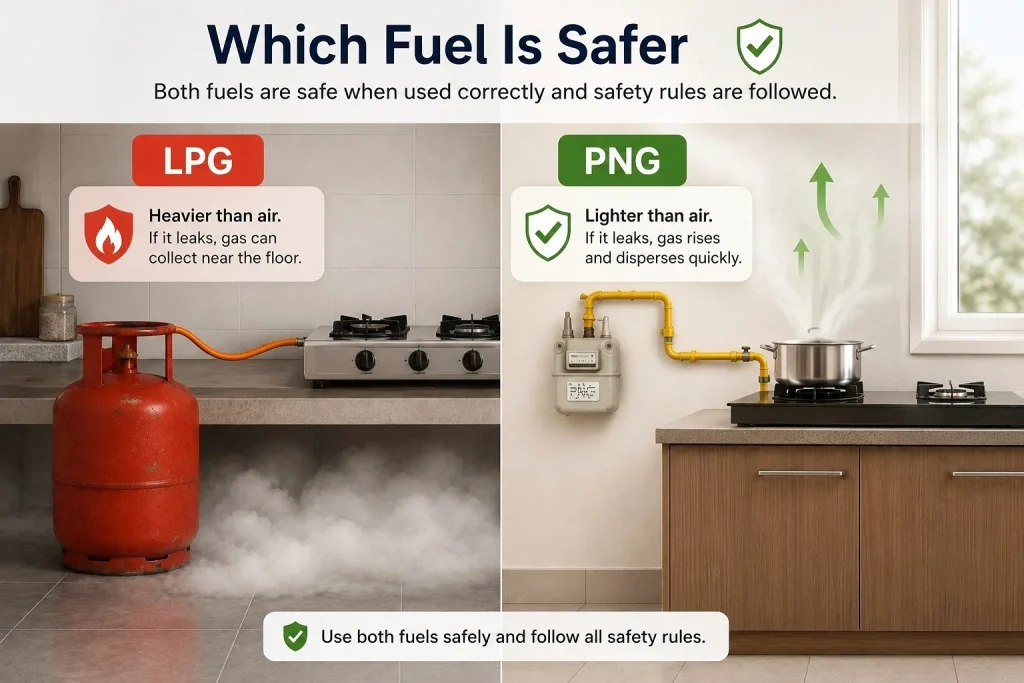
LPG is heavier than air. If a leak occurs, the gas can collect near the floor, potentially increasing fire risk if not handled properly.
PNG Safety
PNG is lighter than air. If it leaks, it tends to rise and spread more quickly into the atmosphere, reducing the chance of gas collecting in one place.
However, both fuels are safe when used correctly and when proper safety rules are followed.
Which Fuel Is Better for the Environment?
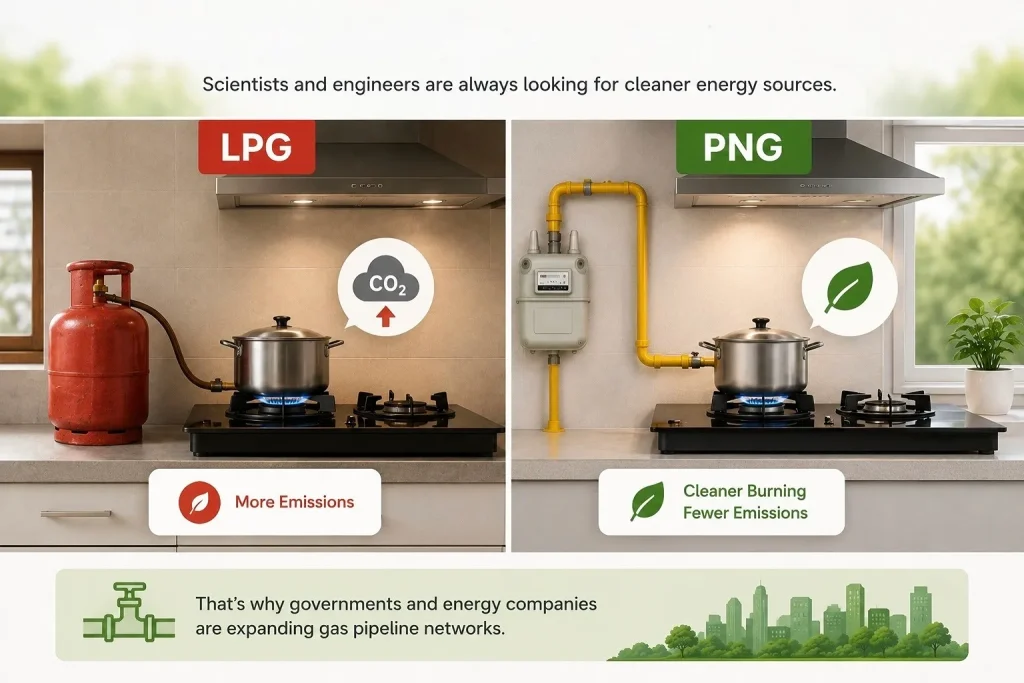
Scientists and engineers are always looking for cleaner energy sources.
PNG generally burns more cleanly and produces fewer harmful emissions than LPG. Because of this, many experts see PNG as a cleaner cooking fuel option for cities.
This is one reason why governments and energy companies are expanding gas pipeline networks in many areas.
Why Is the Indian Government Promoting PNG?
India imports a large amount of LPG from other countries. As a result, LPG supplies can be affected by international events and fuel markets. PNG, on the other hand, can provide a more stable and reliable supply through pipeline networks.
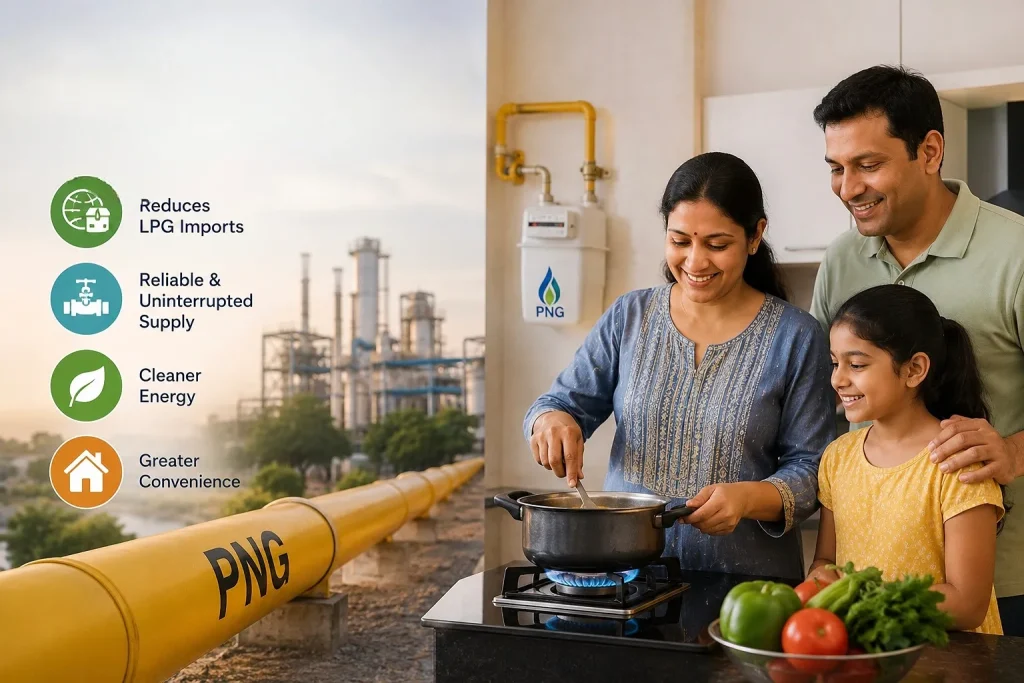
The government has been encouraging the growth of PNG networks because they can:
- Reduce dependence on imported LPG
- Provide uninterrupted fuel supply
- Support cleaner energy use
- Improve convenience for households
Can Everyone Get PNG?
Not yet.
While LPG cylinders can be delivered to most towns and villages, PNG requires underground pipelines. These pipelines are mostly available in many cities and urban areas, but they have not reached every part of the country.
This means millions of families still depend on LPG cylinders for cooking.
Which One Should You Choose?
The answer depends on where you live.
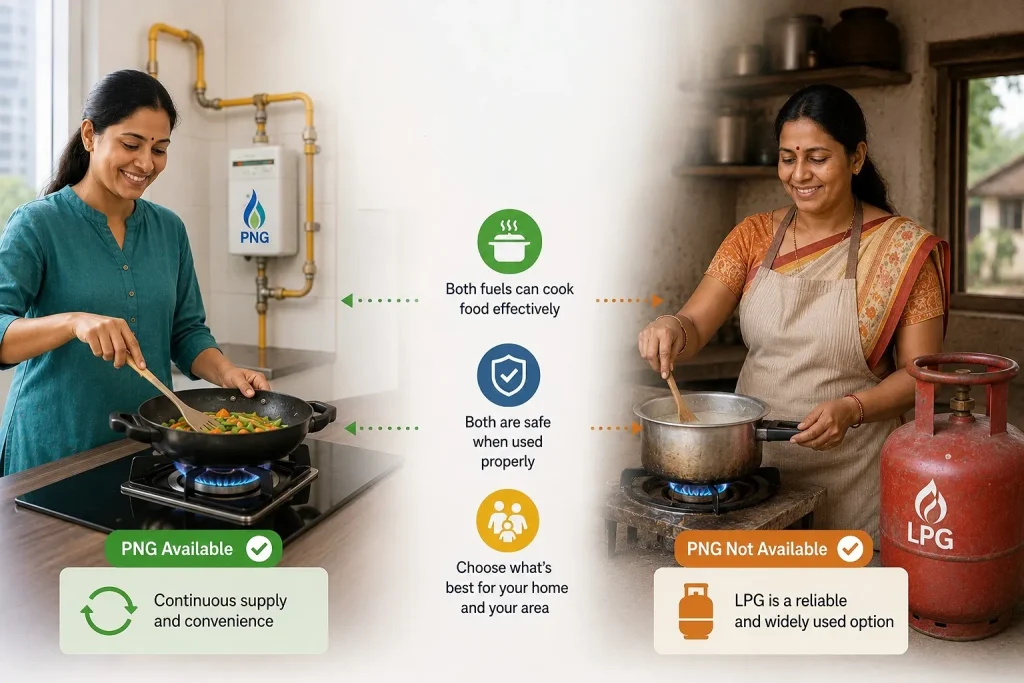
- If your area has a PNG connection available, it can offer continuous supply and convenience.
- If PNG pipelines are not available, LPG remains a reliable and widely used option.
- Both fuels can cook food effectively and safely when used properly.
Fun Fact!
Did you know that although LPG and PNG are both used for cooking, they are made from different gases? LPG mainly contains propane and butane, while PNG is mostly methane. That is why they have different storage and delivery methods!
Conclusion
LPG and PNG are two important fuels that help millions of families cook their meals every day. LPG comes in cylinders and can be used almost anywhere, while PNG travels through pipelines and offers a continuous supply. PNG is generally considered cleaner and more convenient, but LPG remains essential in areas where pipeline networks are not yet available.
As technology improves and gas networks expand, more households may gain access to PNG. Until then, both fuels will continue playing a major role in kitchens across India and around the world.
For more interesting articles, please visit www.kidzherald.com