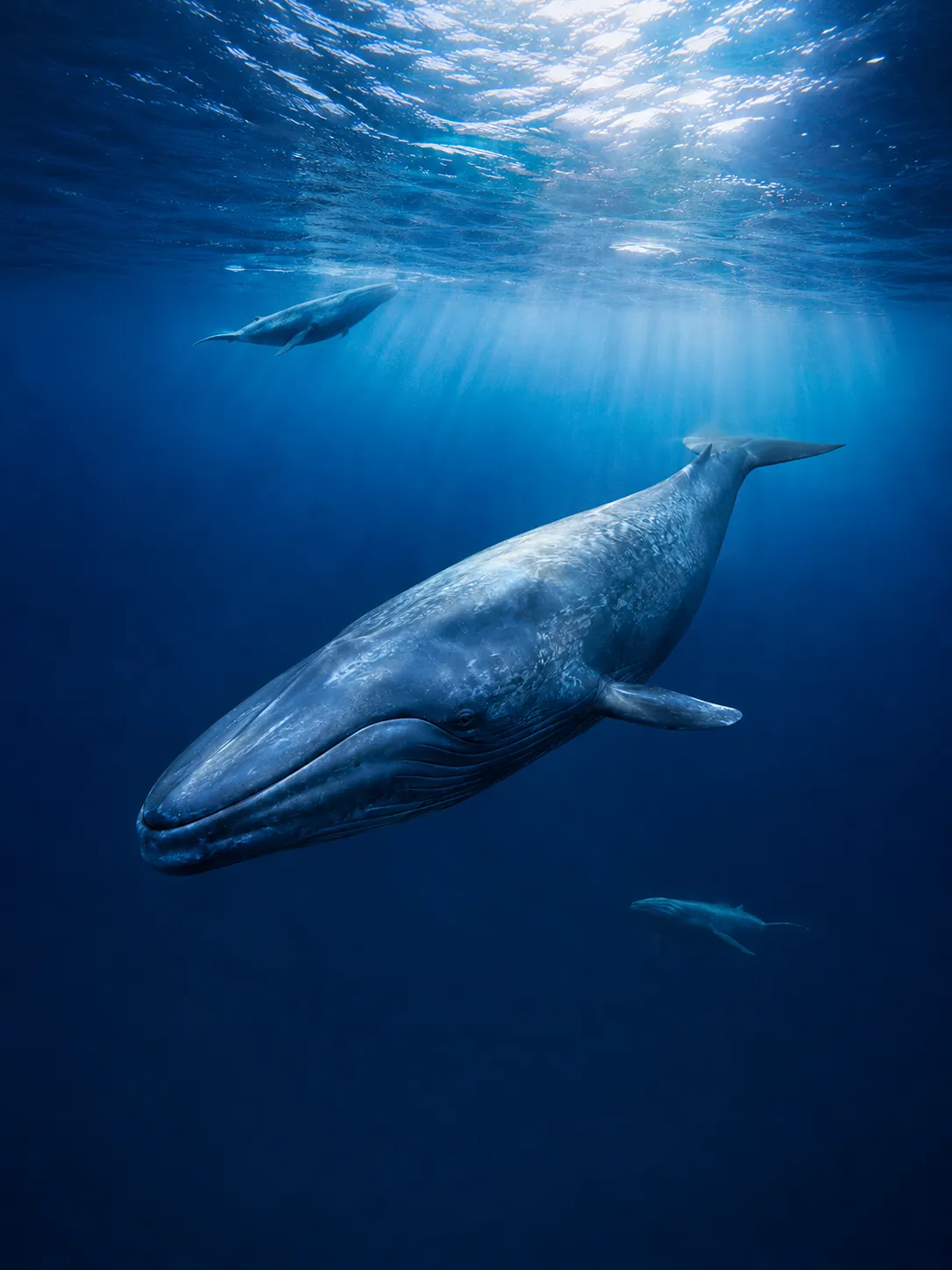
Have you ever wondered what the largest animal on Earth is?
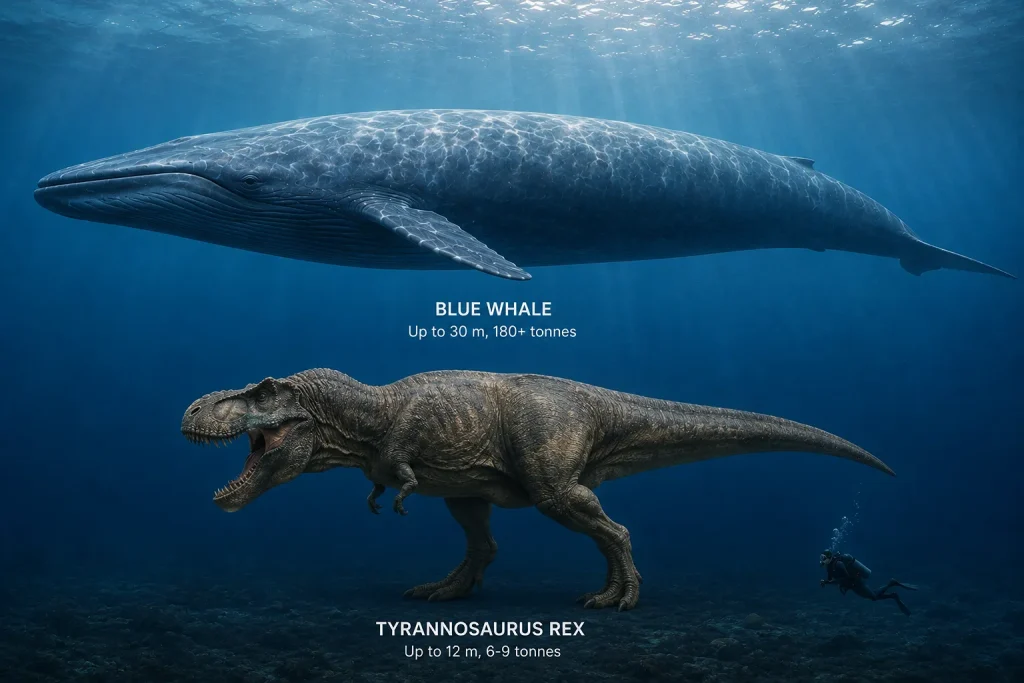
The answer is the amazing Blue Whale! These gentle giants can grow up to 30 metres long and weigh more than 180 tonnes. That is heavier than many dinosaurs and about the same as 30 elephants combined!
But how did blue whales become so enormous? After all, their ancestors were much smaller. Scientists have spent many years studying this mystery and have discovered fascinating clues.
Let’s dive into the ocean and find out!
Meet the Blue Whale
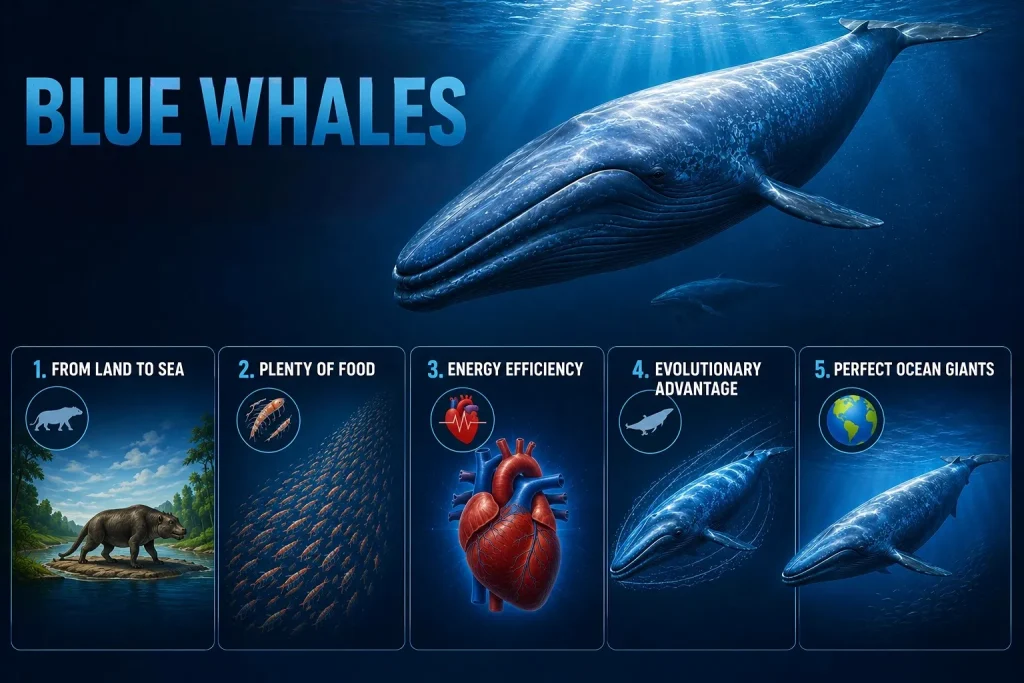
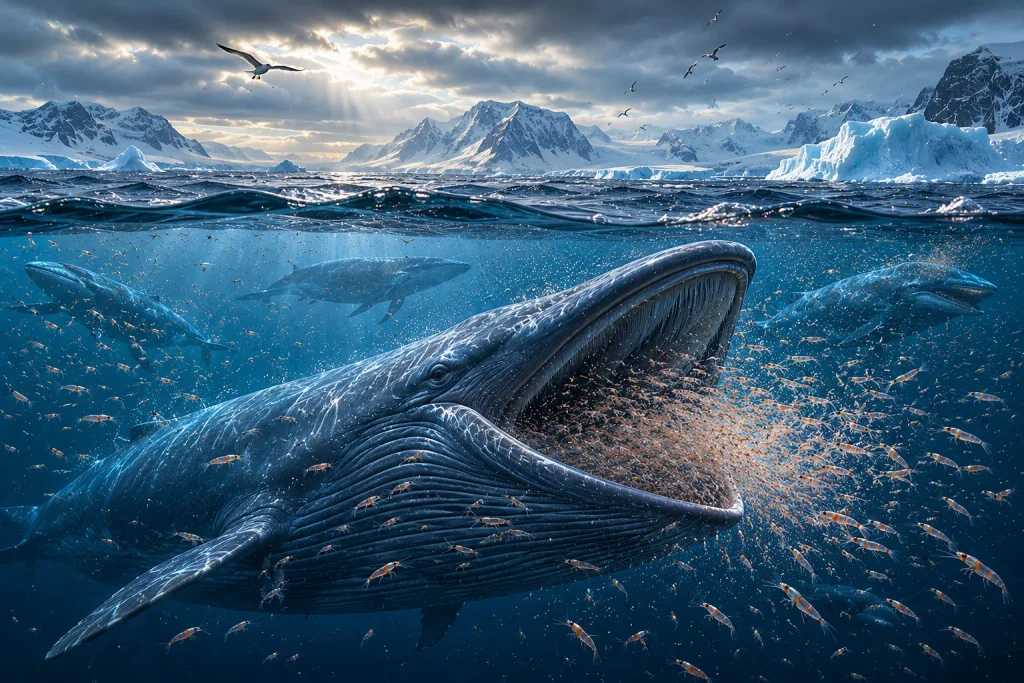
Blue whales live in oceans around the world. Even though they are the biggest animals ever known to have lived, they eat surprisingly tiny creatures called krill.
Krill are small shrimp-like animals that drift through the sea in huge groups called swarms. A blue whale can eat several tonnes of krill in a single day during feeding season!
This might sound strange. How can the world’s largest animal survive on some of the ocean’s smallest creatures?
The answer is one of the reasons blue whales became so large.
Long Ago, Whales Walked on Land
Believe it or not, whales were not always ocean animals.
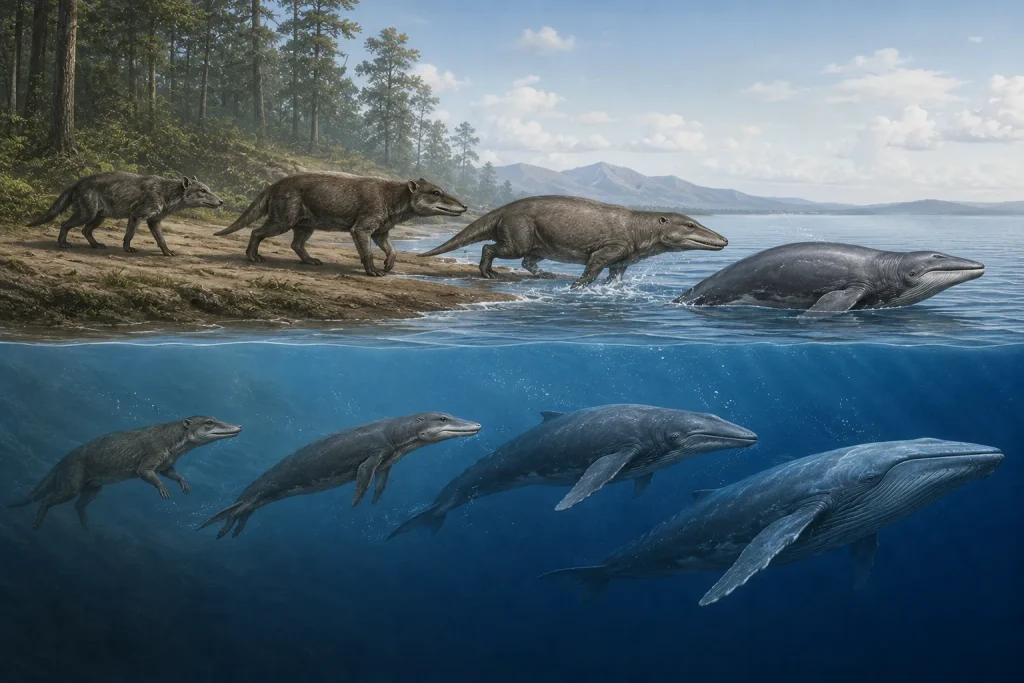
Millions of years ago, the ancestors of modern whales lived on land. These ancient mammals looked a bit like wolves or deer and gradually adapted to life in the water.
Over time, their legs became flippers, their bodies became streamlined, and they evolved into the whales we know today.
Scientists believe that early whales were much smaller than modern blue whales. For millions of years, whales remained relatively modest in size.
Then something changed.
A Big Change in the Oceans
Around 2 to 5 million years ago, Earth’s climate began changing.
Ice ages became more common, and ocean currents shifted. These changes helped create enormous concentrations of krill and other small sea creatures in certain parts of the oceans.
Instead of food being spread evenly, huge patches began appearing in specific locations.
For whales, this was a fantastic opportunity.
Scientists think that whales, which could travel farther and eat more food, gained an advantage. Over many generations, larger whales became more successful.
Eventually, some whale species grew bigger and bigger.
Bigger Bodies Have Advantages
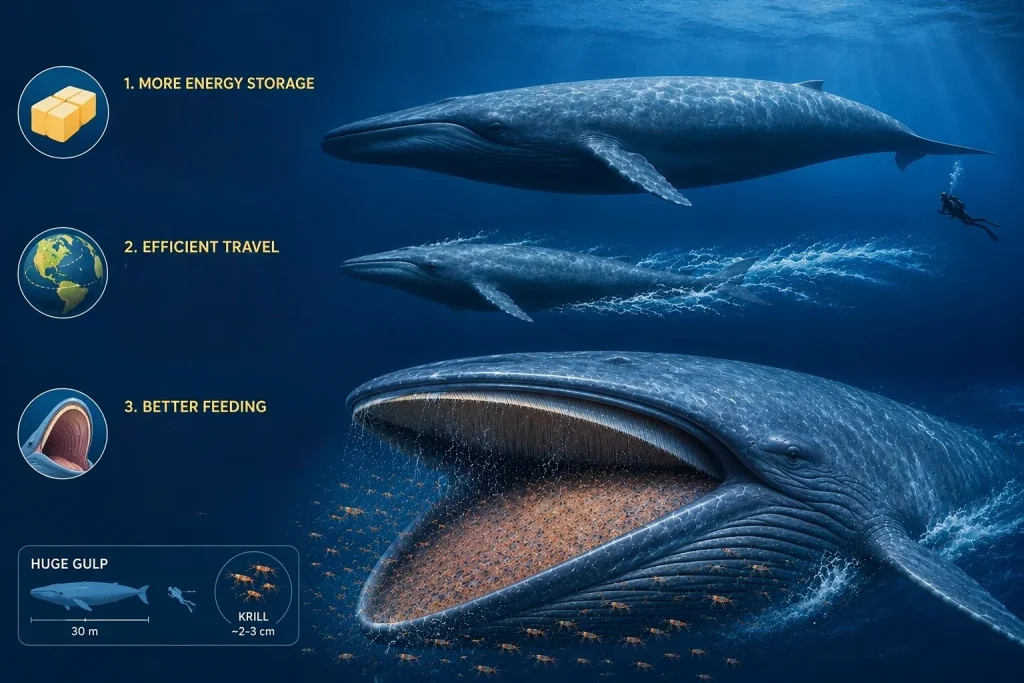
Being enormous might seem difficult, but it actually provides several benefits.
1. More Energy Storage
Large animals can store more energy as fat, known as blubber.
This helps blue whales survive long migrations and periods when food is harder to find.
2. Efficient Travel
Large bodies are surprisingly efficient in water.
A giant whale can travel thousands of kilometres while using energy very effectively. This allows blue whales to move between feeding grounds and breeding areas across entire oceans.
3. Better Feeding
A bigger mouth means a bigger meal!
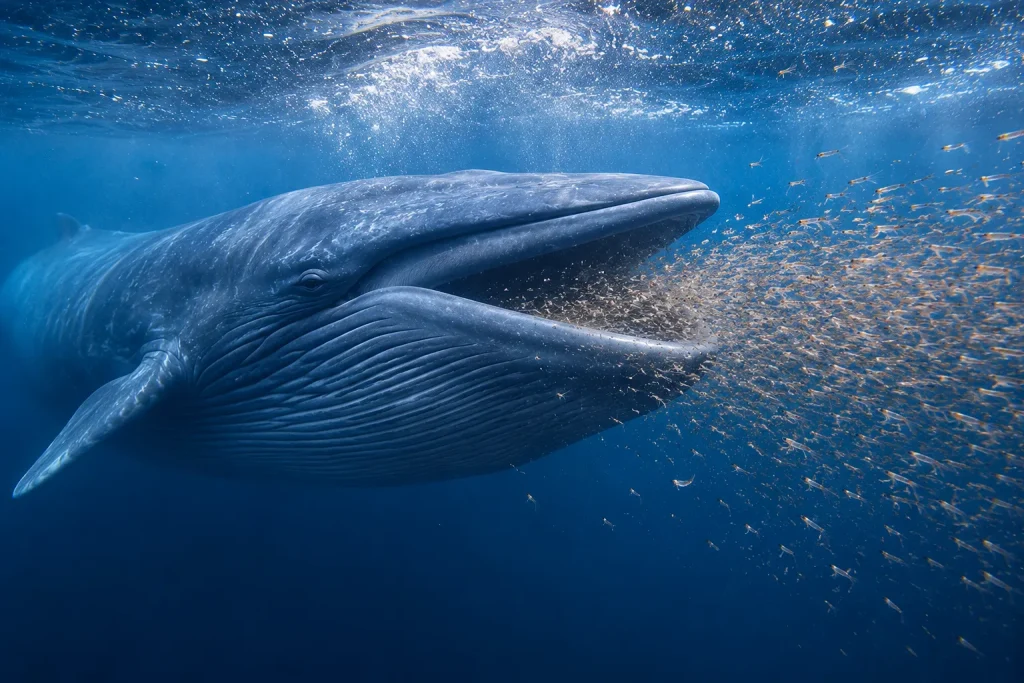
Blue whales use a feeding method called lunge feeding. They open their huge mouths and take in massive amounts of water filled with krill. Then they push the water out and swallow the trapped krill.
The larger the whale, the more krill it can collect in one gulp.
Why Don’t All Animals Become Giant?
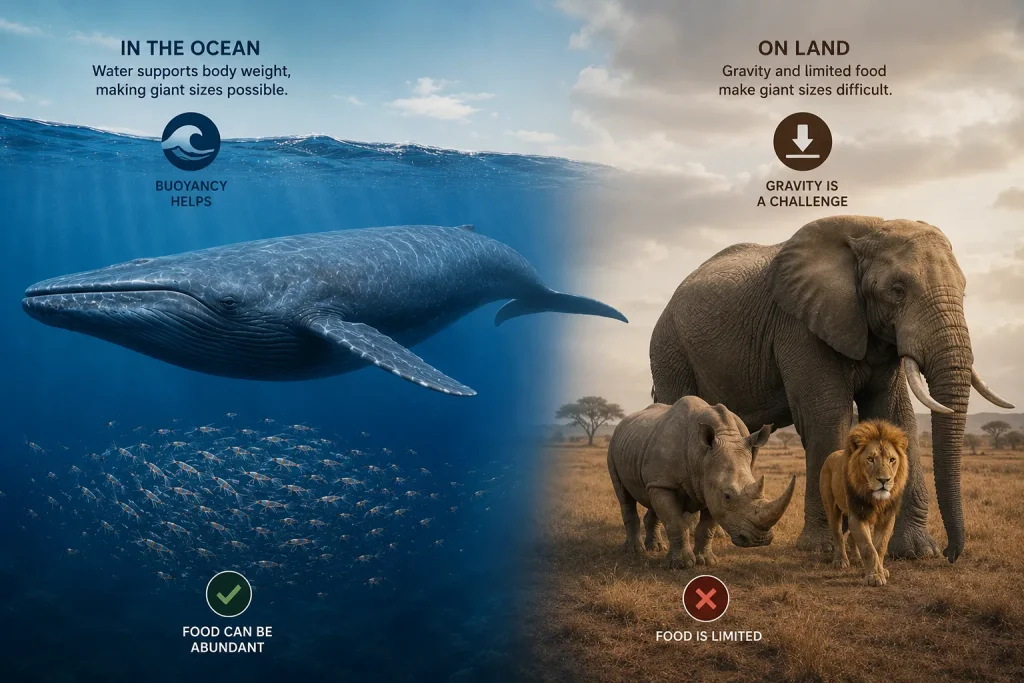
If being huge is so helpful, why aren’t all animals enormous?
The answer is simple: growing large requires a lot of food.
On land, finding enough food to support a giant body can be difficult. Gravity also makes moving a massive body much harder.
In the ocean, however, water helps support an animal’s weight. This makes it easier for creatures like whales to become much larger than most land animals.
The sea provides a unique environment where giant sizes are possible.
Bigger Than Dinosaurs?
Many people think dinosaurs were the largest animals ever.
Some dinosaurs were certainly enormous, but blue whales are believed to be the largest animals known to have existed.
Even the mighty Tyrannosaurus rex was much lighter than a fully grown blue whale.
Imagine an animal longer than a basketball court and heavier than dozens of cars put together. That is the incredible scale of a blue whale!
The Role of Krill
One of the most surprising facts about blue whales is that their giant size depends on tiny krill.
Scientists suggest that when krill became concentrated in huge swarms, whales that could find and exploit these rich feeding areas gained more energy than smaller whales.
This created an evolutionary advantage for larger bodies.
In a way, tiny krill helped create the largest animal on Earth!
Challenges for Blue Whales Today
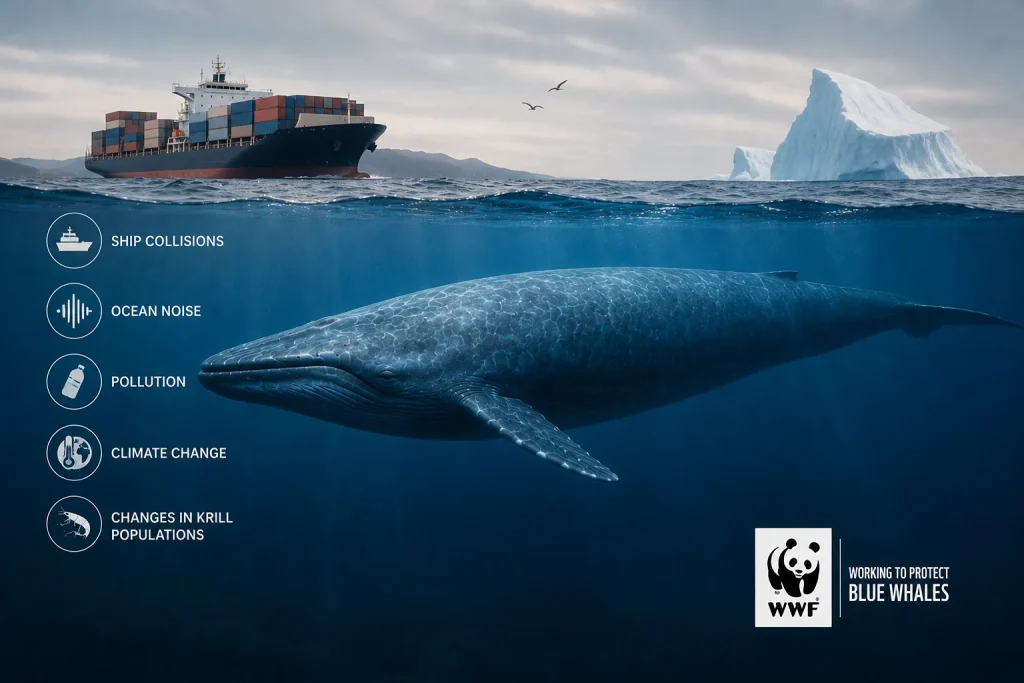
Although blue whales are incredible survivors, they face challenges in the modern world.
These include:
- Ship collisions
- Ocean noise
- Pollution
- Climate change
- Changes in krill populations
People around the world are working to protect blue whales and their habitats.
Organisations such as the World Wildlife Fund and many marine research groups help study and conserve these magnificent animals.
Fun Blue Whale Facts
Here are some amazing facts to impress your friends:
- A blue whale’s tongue can weigh as much as an elephant.
- Its heart can weigh more than a small car.
- Blue whales can communicate using very low sounds that travel hundreds of kilometres through water.
- Calves can gain around 90 kilograms of weight each day while nursing.
- They are the largest animals known to have ever lived on Earth.
Conclusion
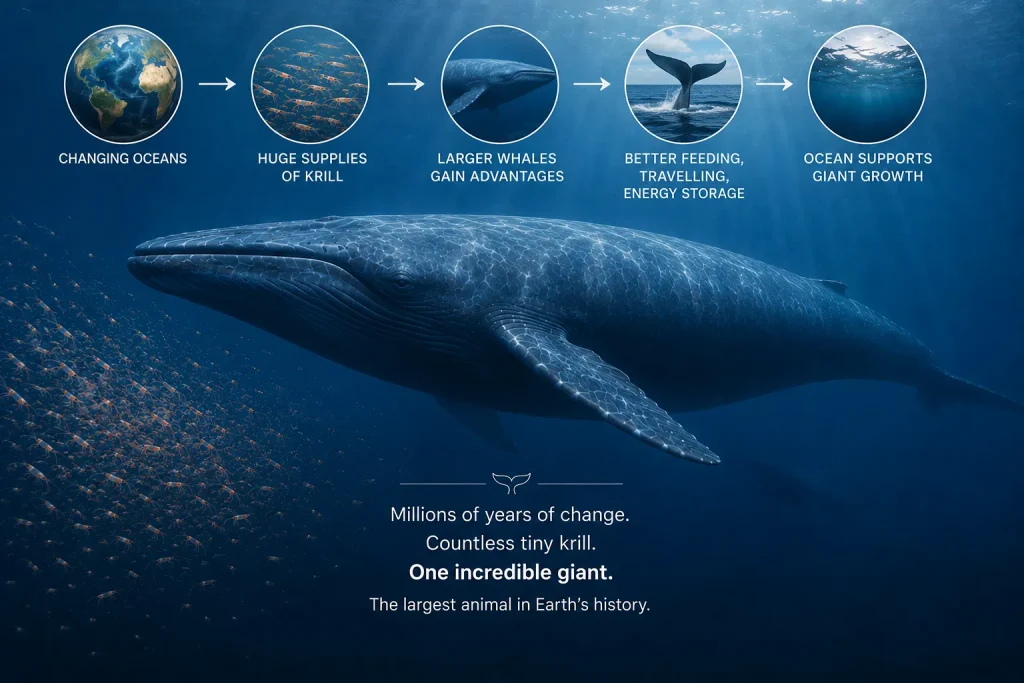
Blue whales did not become giant overnight. Over millions of years, changing oceans created vast krill populations, and larger whales gained advantages in feeding, travelling, and storing energy.
The ocean’s unique environment allowed these animals to grow larger than almost any creature that has ever lived. Thanks to abundant food and water, evolution produced the incredible blue whale—the largest animal in Earth’s history.
The next time you see a picture of a blue whale, remember that its enormous size is the result of millions of years of adaptation, changing climates, and countless tiny krill helping shape one of nature’s greatest wonders.
For more interesting articles, please visit www.kidzherald.com