
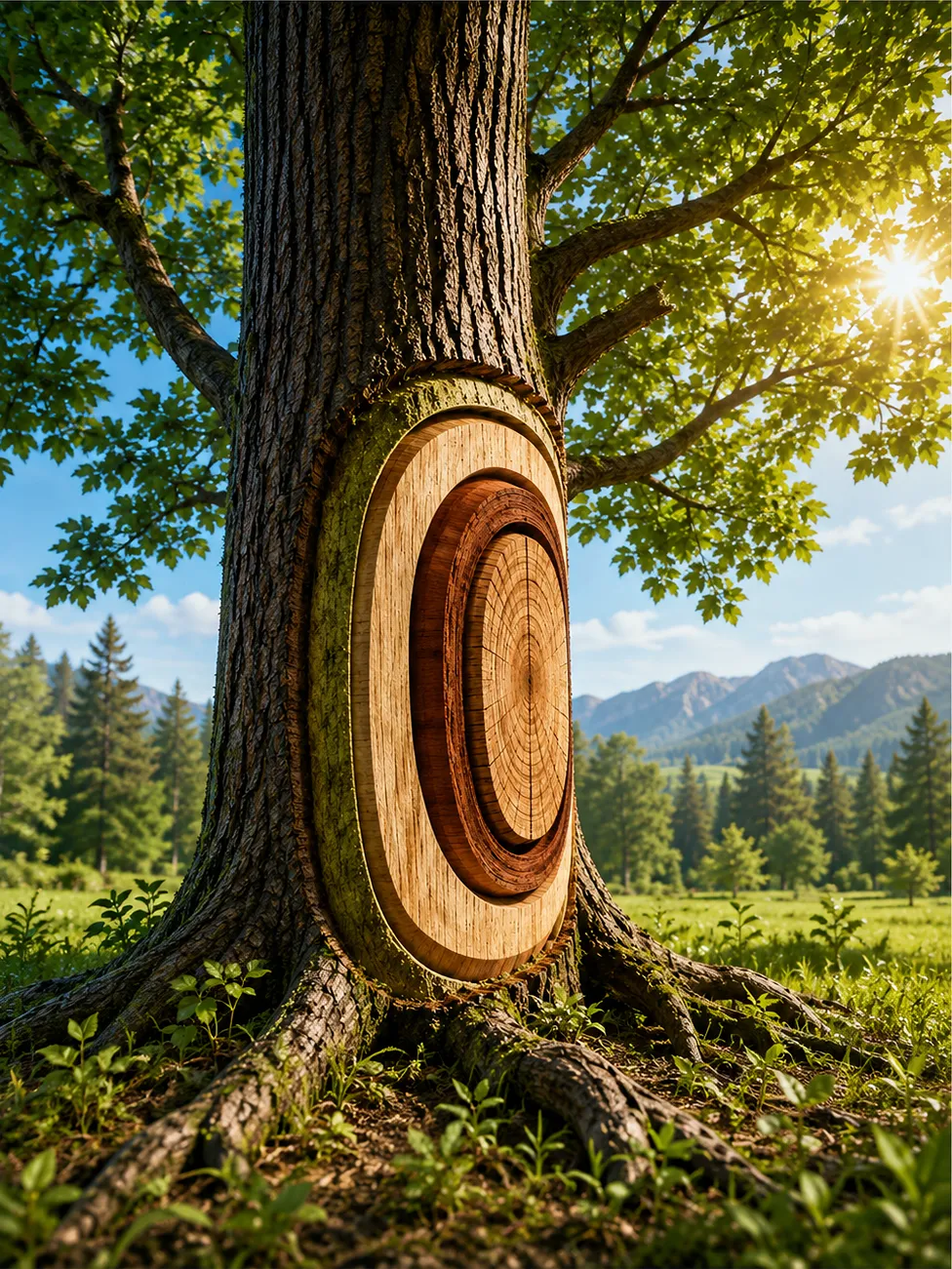
Trees are some of the most amazing living things on Earth. They provide oxygen, food, shade and homes for countless animals. When we look at a tree, we often notice its leaves, branches and bark. But have you ever wondered what is hidden inside a tree trunk?
A tree trunk may look like a simple piece of wood from the outside, but inside it is a complex structure made of different layers. Each layer has a special job that helps the tree grow, stay strong and transport water and nutrients.
Let’s take a journey inside a tree trunk and discover how it works!
What Is a Tree Trunk?
The trunk is the main stem of a tree. It supports the branches, leaves, flowers and fruits above the ground.
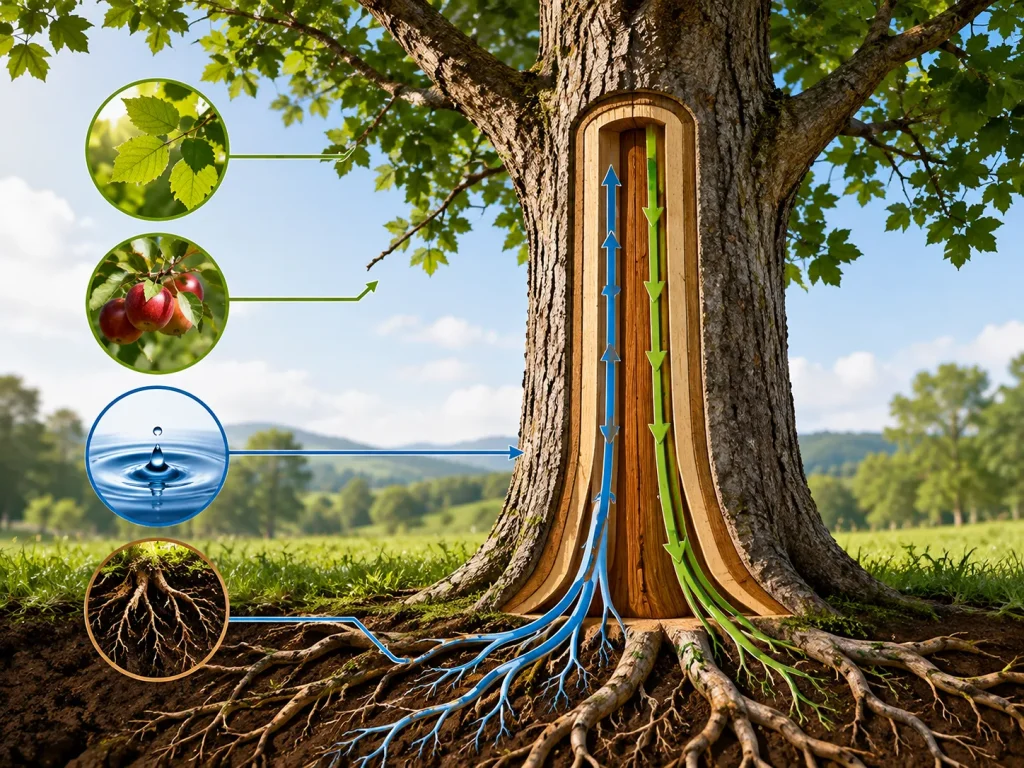
A tree trunk also acts like a giant transport system. It moves water and nutrients from the roots to the leaves and carries food produced by the leaves to other parts of the tree.
Without a healthy trunk, a tree would not be able to survive.
The Layers Inside a Tree Trunk
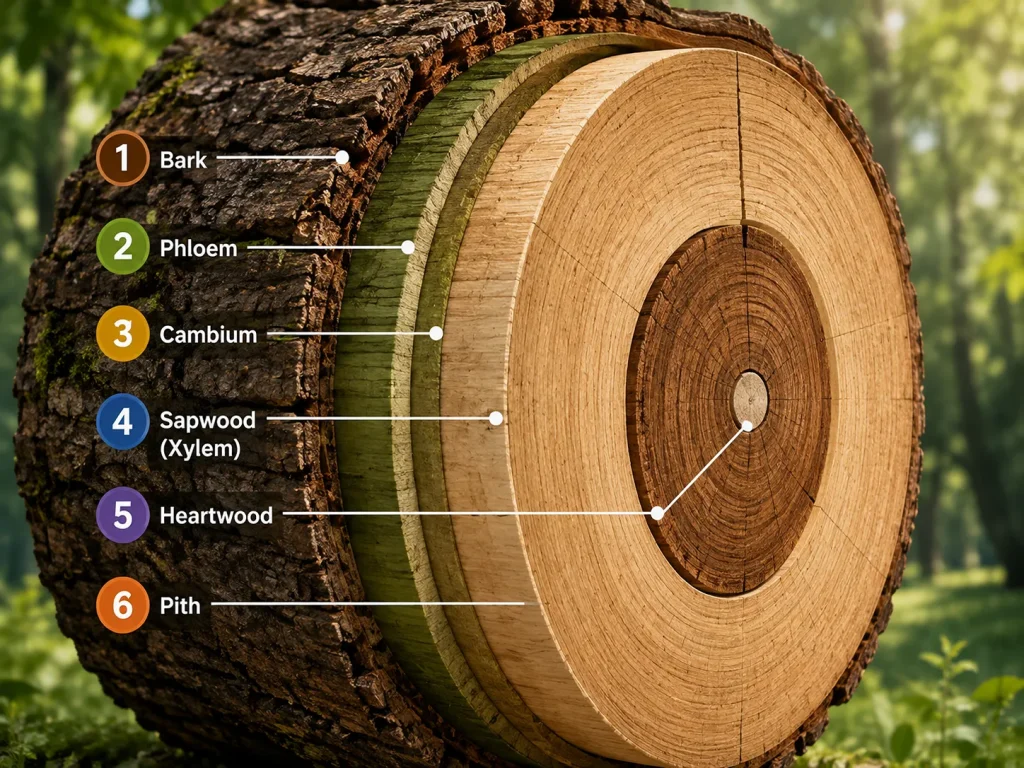
A tree trunk is made up of several important layers. Starting from the outside and moving inward, these layers include:
- Bark
- Phloem
- Cambium
- Sapwood (Xylem)
- Heartwood
- Pith
Each layer plays an important role in keeping the tree alive.
The Bark: The Tree’s Protective Coat
The outermost layer is called the bark.
Bark acts like a protective coat or suit of armour for the tree. It helps shield the tree from:
- Insects
- Diseases
- Extreme weather
- Fire damage
- Physical injuries
Different tree species have different types of bark. Some are smooth, while others are rough, thick or deeply ridged.
When you touch a tree trunk, the bark is usually the part you feel first.
Phloem: The Food Delivery System
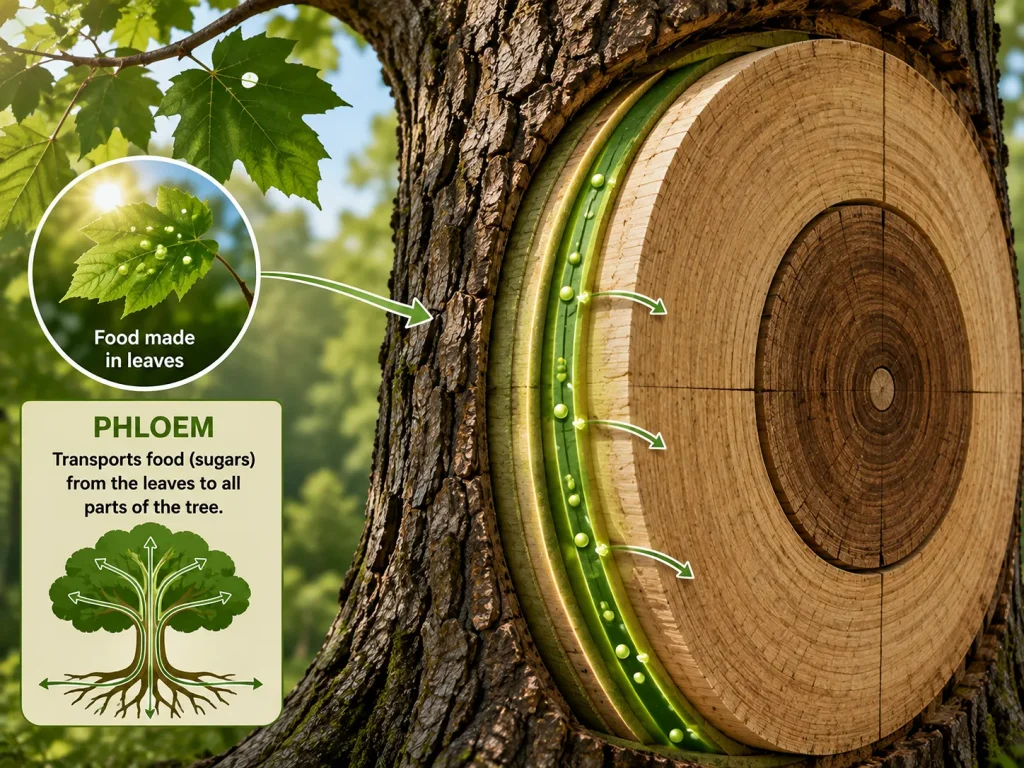
Just beneath the bark is a layer called the phloem.
The phloem acts like a delivery service.
Leaves produce food through a process called Photosynthesis. The phloem transports this food to the roots, trunk, branches and other parts of the tree.
You can think of the phloem as a network of roads carrying supplies throughout the tree.
Without the phloem, many parts of the tree would not receive the energy they need.
Cambium: The Growth Factory
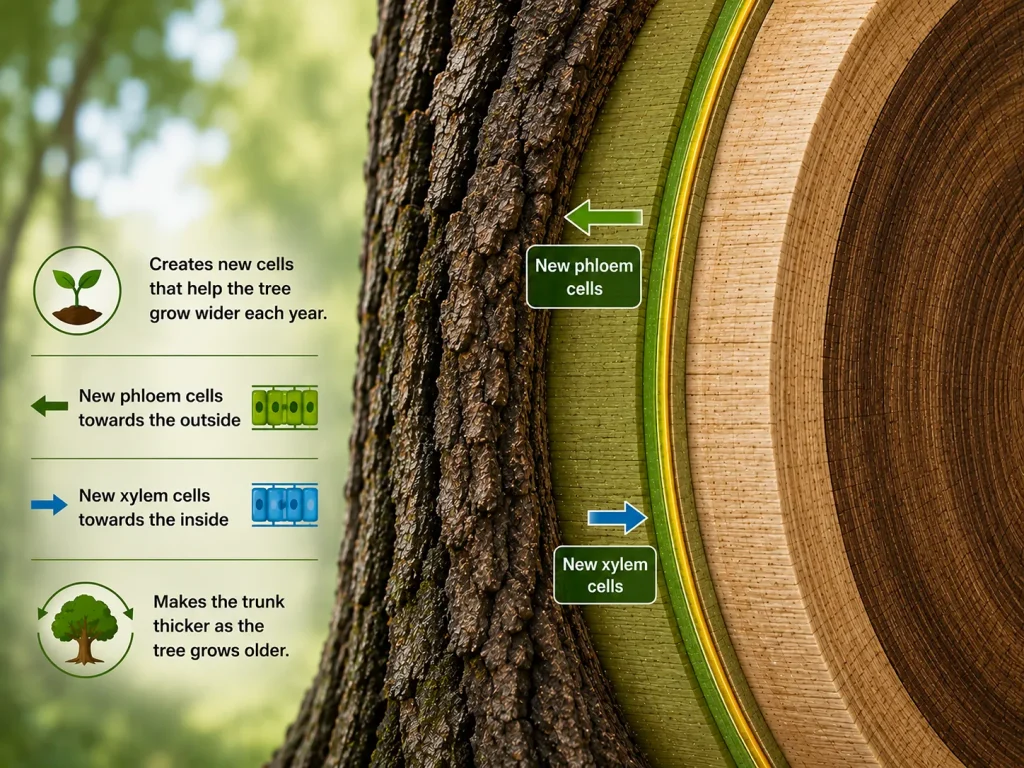
Next comes a very thin layer called the cambium.
Although it is thin, it is one of the most important parts of the tree.
The cambium is where new cells are created. These new cells help the tree grow wider each year.
The cambium produces:
- New phloem cells towards the outside
- New xylem cells towards the inside
Because of the cambium, tree trunks become thicker as trees grow older.
Sapwood: The Water Highway
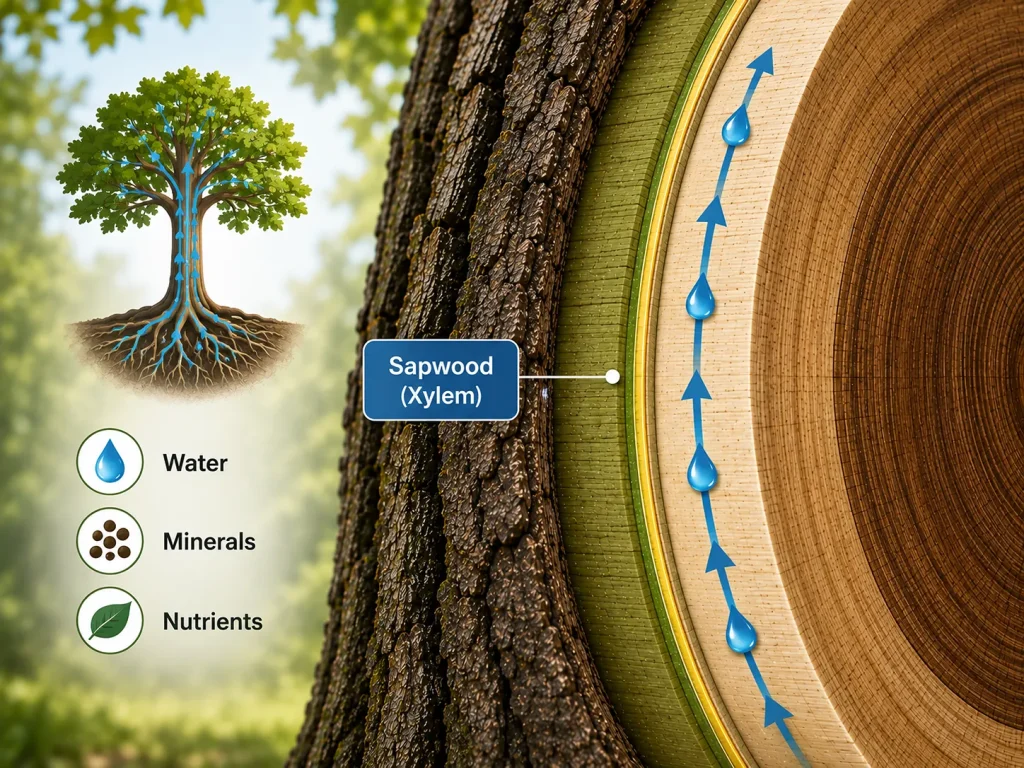
Inside the cambium lies the sapwood, also called xylem.
The sapwood acts like a huge plumbing system.
Its job is to carry:
- Water
- Minerals
- Nutrients
from the roots all the way to the leaves.
Trees can be very tall, yet water still travels from the roots to the highest leaves thanks to the xylem.
Imagine drinking through a very long straw—that is like how water moves through these special tubes.
Heartwood: The Strong Core
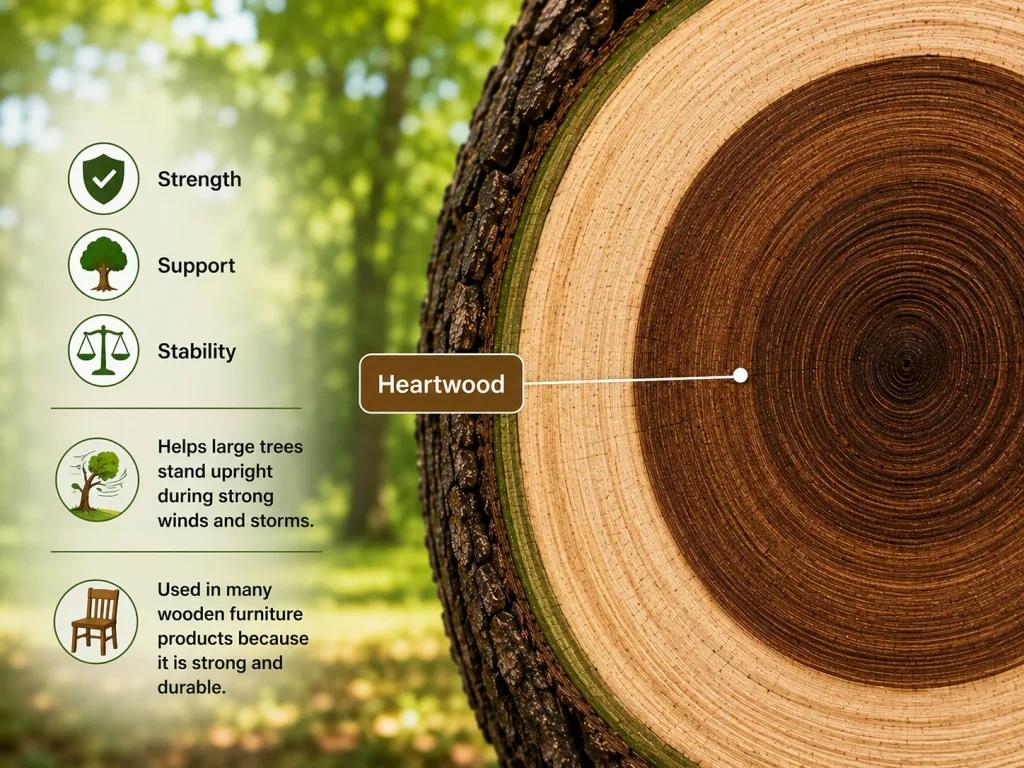
At the centre of many mature trees is the heartwood.
Heartwood is made from old xylem cells that no longer transport water.
Although it is no longer part of the transport system, it remains extremely important because it provides:
- Strength
- Support
- Stability
Heartwood helps large trees stand upright during strong winds and storms.
It is often darker in colour than the surrounding sapwood.
Many wooden furniture products are made from heartwood because it is strong and durable.
The Pith: The Tree’s Centre
Right in the middle of the trunk is a small area called the pith.
The pith is usually found in young trees and stems.
Its main role is to store and transport nutrients during the early stages of growth.
As trees mature, the pith often becomes less important compared to the other layers.
What Are Tree Rings?
Have you ever seen a tree stump with circular rings inside?
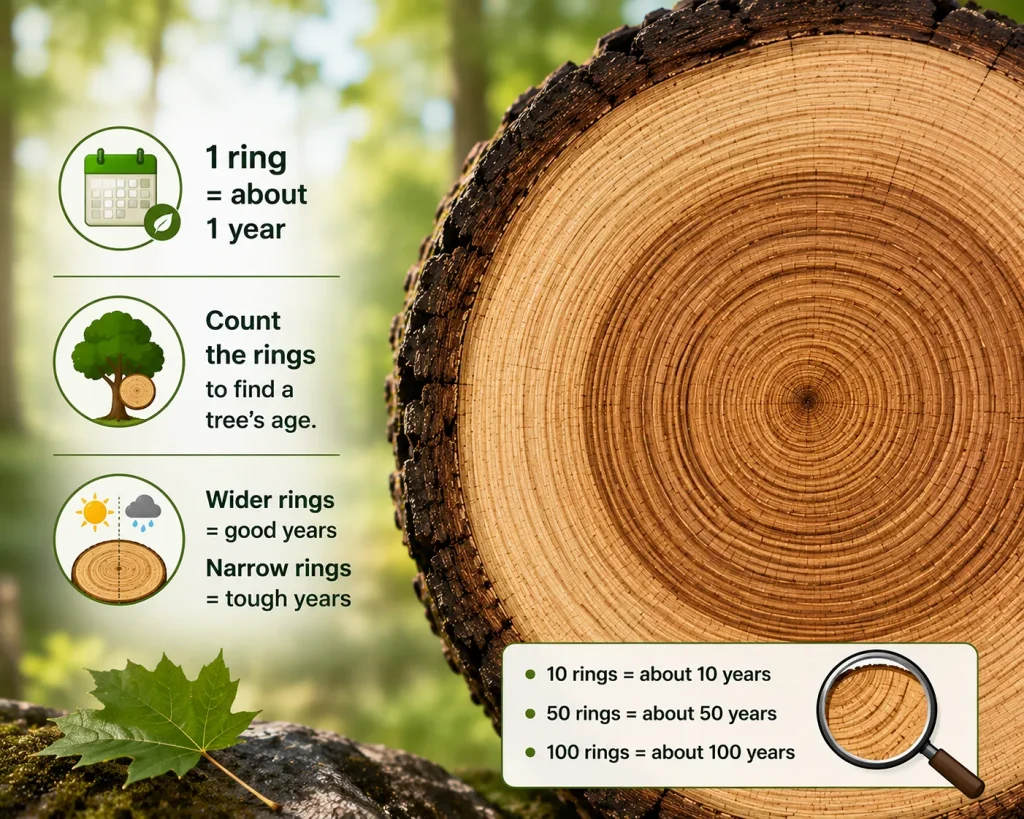
These are called growth rings or annual rings.
Each year, the cambium produces a new layer of wood.
In many climates, one ring represents approximately one year of growth.
Scientists can estimate a tree’s age by counting these rings.
For example:
- 10 rings = about 10 years old
- 50 rings = about 50 years old
- 100 rings = about 100 years old
Growth rings can also provide clues about past weather conditions.
Wide rings often indicate good growing conditions, while narrow rings may suggest drought or difficult years.
How Does Water Travel Through a Tree?
Trees need large amounts of water to survive.
The journey begins in the roots.
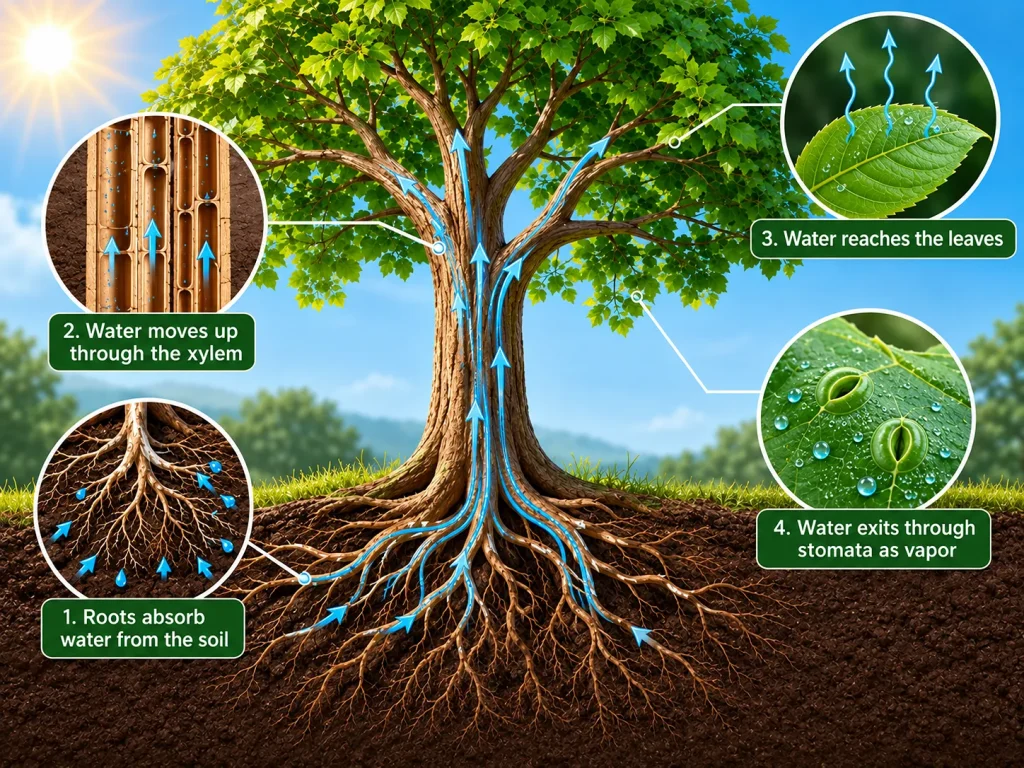
The roots absorb water from the soil and send it into the xylem. The water then travels up through the trunk and branches until it reaches the leaves.
Once in the leaves, water helps support photosynthesis and may eventually evaporate into the air through tiny openings called stomata.
This continuous movement helps keep the tree healthy.
Why Is the Trunk So Strong?
A tree trunk must support a tremendous amount of weight.
Consider everything it holds up:
- Branches
- Leaves
- Flowers
- Fruit
- Birds
- Sometimes climbing animals
The combination of heartwood, sapwood and other tissues creates an incredibly strong structure.
Some trees can live for hundreds or even thousands of years because of this remarkable design.
Fun Facts About Tree Trunks
The bark protects the tree from damage and disease.
Sapwood carries water from the roots to the leaves.
Heartwood provides strength and support.
Tree rings can help scientists estimate a tree’s age.
Some tree trunks can grow several metres wide.
Certain trees can live for thousands of years.
Every layer inside the trunk has a special purpose.
Why Understanding Trees Matters
Trees are essential for life on Earth.
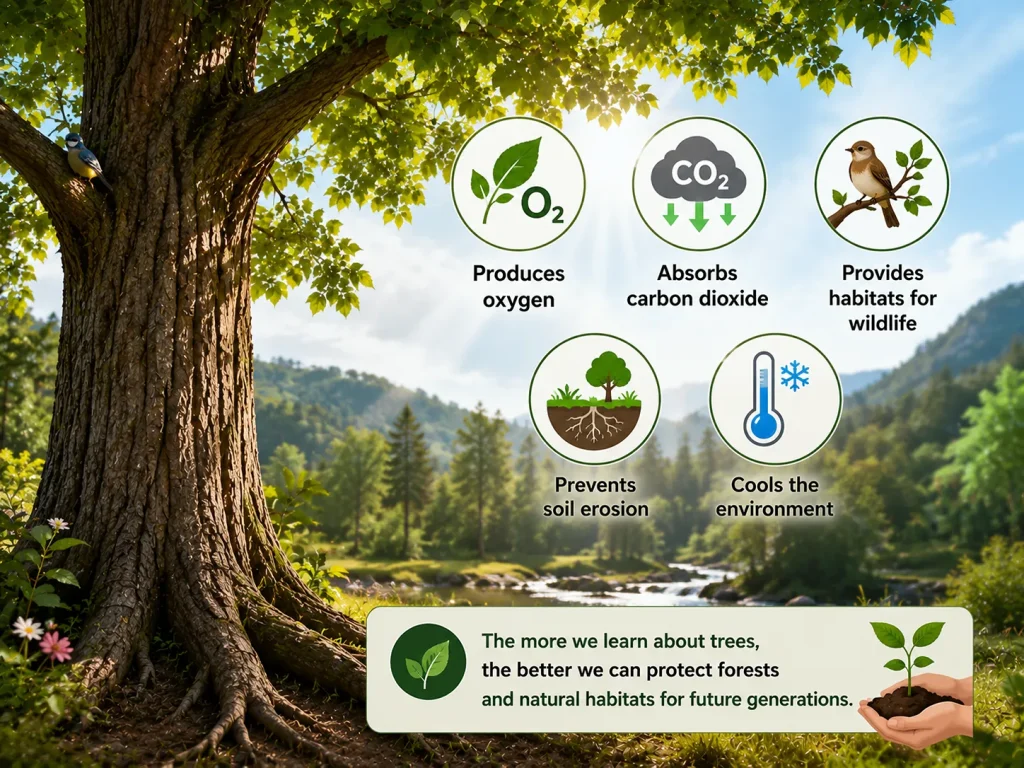
They help by:
- Producing oxygen
- Absorbing carbon dioxide
- Providing habitats for wildlife
- Preventing soil erosion
- Cooling the environment
Learning about tree trunks helps us understand how these amazing plants survive and grow.
The more we learn about trees, the better we can protect forests and natural habitats for future generations.
Conclusion
A tree trunk is much more than a column of wood. Inside it are several fascinating layers working together to keep the tree alive. The bark protects the tree, the phloem carries food, the cambium creates new growth, the sapwood transports water, and the heartwood provides strength.
Together, these layers form an incredible natural system that allows trees to grow tall, live for many years and support life around them.
The next time you walk past a tree, take a moment to appreciate the amazing world hidden inside its trunk. Beneath the bark lies a busy network of living tissues that helps one of nature’s greatest creations thrive.
For more interesting articles, please visit www.kidzherald.com