

Have you ever wondered why some athletes can run so fast, jump so high, or hit a ball with amazing accuracy? The answer is not just practice and talent—it is also science!
The science of sports helps us understand how the human body works during exercise and how athletes can improve their performance. From muscles and bones to nutrition and technology, science plays an important role in almost every sport.
Let’s explore the exciting world of sports science and discover how it helps athletes perform at their best.
What Is Sports Science?
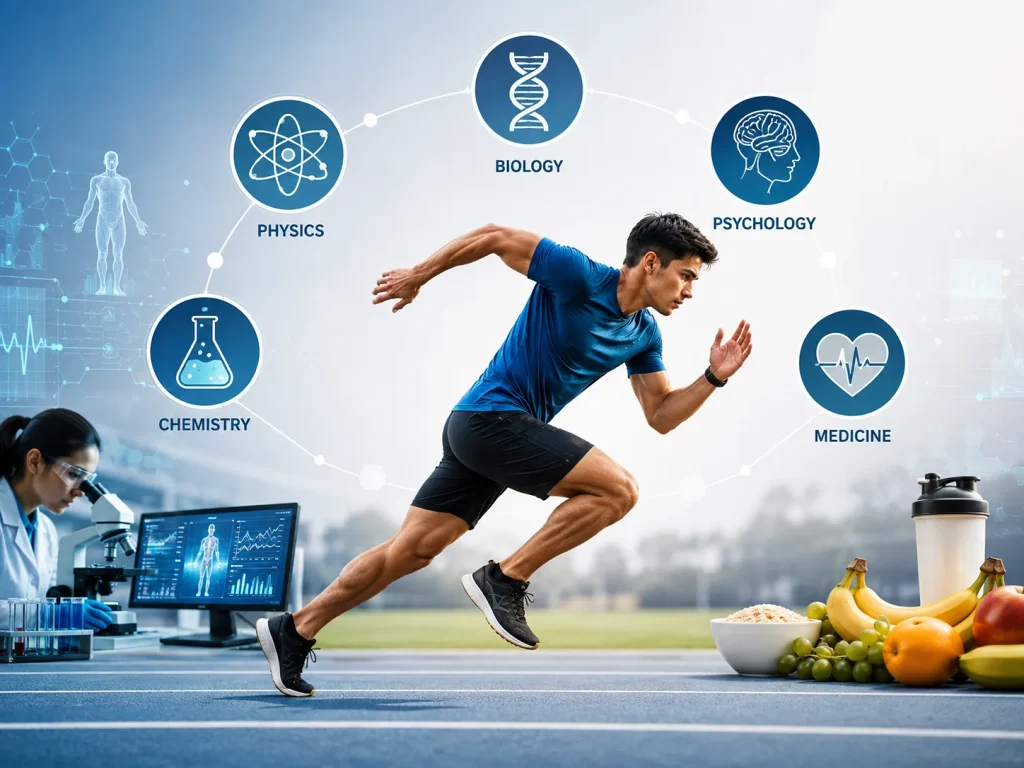
Sports science is the study of how the body works during physical activity. It combines knowledge from different subjects, including biology, physics, chemistry, psychology, and medicine.
Scientists who work in sports science study questions such as:
- How do muscles become stronger?
- What foods give athletes energy?
- Why do athletes get tired?
- How can injuries be prevented?
- What helps athletes stay focused?
By answering these questions, sports scientists help athletes train safely and improve their skills.
How Do Muscles Help Us Move?
Every time you run, jump, kick, throw, or swim, your muscles are working.
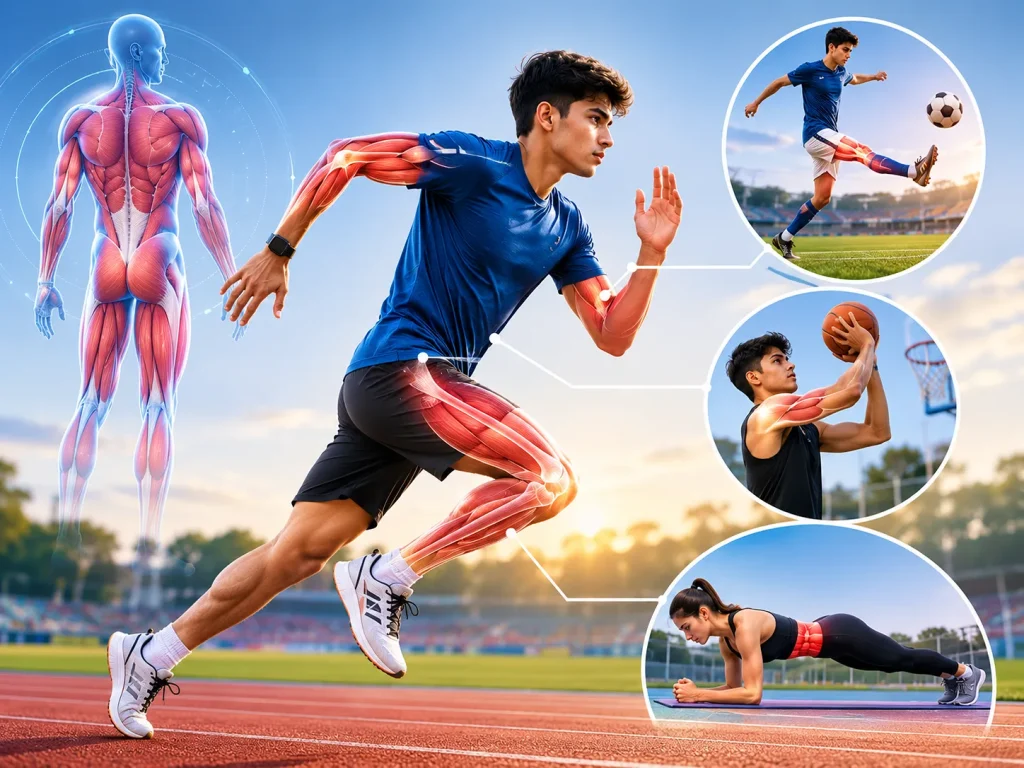
Your body contains more than 600 muscles. Muscles work together with bones to create movement. When a muscle contracts, it becomes shorter and pulls on a bone, causing a body part to move.
For example:
- Leg muscles help you run.
- Arm muscles help you throw a ball.
- Core muscles help you keep your balance.
Athletes train regularly to make their muscles stronger and more efficient.
Why Do Athletes Need Energy?
Just like a car needs fuel, the human body needs energy.
The energy we use comes from food. Foods containing carbohydrates, proteins, and healthy fats provide the fuel needed for sports and exercise.
Carbohydrates
Carbohydrates are the body’s main energy source. Foods such as bread, rice, pasta, potatoes, and fruit provide quick energy for activity.
Proteins
Proteins help muscles grow and repair themselves after exercise.
Healthy Fats
Healthy fats provide long-lasting energy and support overall health.
Athletes often follow carefully planned diets to ensure they get the nutrients they need.

The Importance of Water
Water is one of the most important parts of sports performance.
When we exercise, we sweat. Sweating helps cool the body, but it also causes us to lose water.
If athletes do not drink enough water, they may become dehydrated. This can make them feel tired, dizzy, and unable to perform well.
That is why coaches often remind players to drink water before, during, and after exercise.

How Does Physics Affect Sport?
Physics helps explain many sporting movements.
For example:
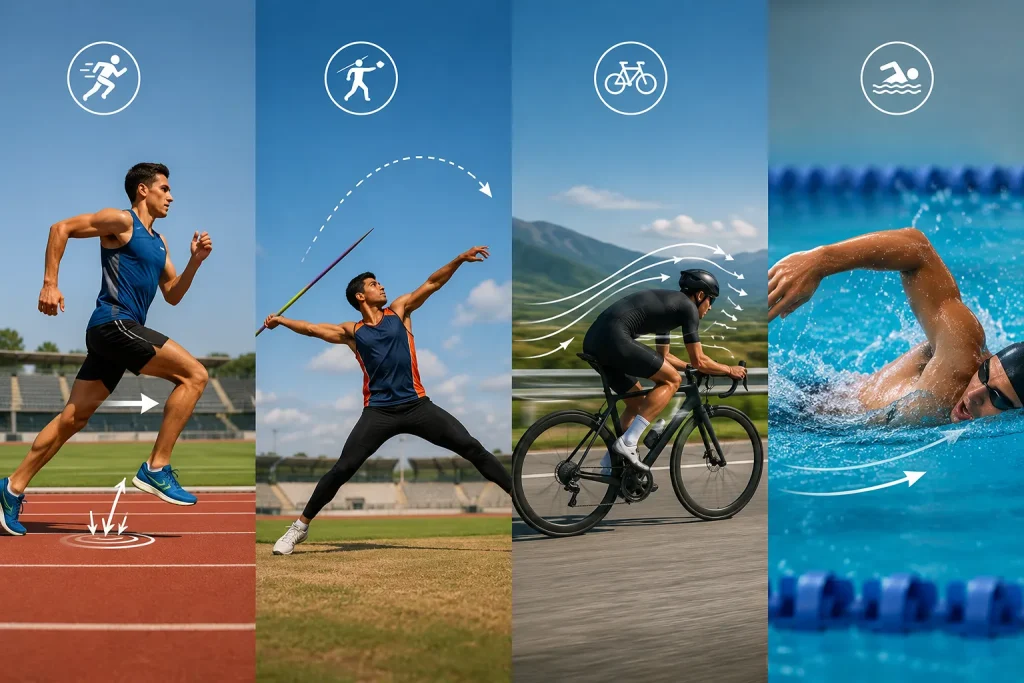
Running
The force from an athlete’s legs pushes against the ground, helping them move forwards.
Throwing
When a cricket player or javelin thrower launches an object, physics determines how far it travels.
Cycling
Cyclists try to reduce air resistance to travel faster.
Swimming
Swimmers move through water while trying to reduce drag, which is the force that slows them down.
Understanding these scientific principles helps athletes improve their techniques.
Why Is Practice Important?
Many people think successful athletes are born with talent. Talent can help, but practice is equally important.
When athletes repeat a skill many times, their brains and muscles learn to work together more efficiently. This process is called motor learning.
For example:
- A football player practises passing.
- A tennis player practises serving.
- A gymnast practises balancing.
Over time, these skills become smoother, quicker, and more accurate.

The Science of the Brain
Sport is not only about muscles—it is also about the brain.
Athletes need concentration, confidence, and quick decision-making.
Sports psychologists study how thoughts and emotions affect performance. They help athletes:
- Stay calm under pressure.
- Build confidence.
- Improve focus.
- Handle competition stress.
Many top athletes use mental training techniques to perform their best during important competitions.
Why Do Athletes Warm Up?
Before playing sports, athletes usually warm up.
A warm-up gradually increases heart rate and prepares muscles for exercise.
Common warm-up activities include:
- Light jogging
- Stretching
- Gentle exercises
- Practice movements
Warming up helps reduce the risk of injury and prepares the body for activity.

How Does Technology Help Athletes?
Modern technology has changed the world of sport.
Scientists and coaches use special tools to measure performance and improve training.
Examples include:
Fitness Trackers
These devices can monitor heart rate, speed, distance, and activity levels.
Video Analysis
Coaches use video recordings to study movements and identify ways to improve technique.
Special Equipment
Modern running shoes, bicycles, swimsuits, and protective gear are designed using scientific research.
Computer Models
Scientists use computers to analyse performance data and create personalised training plans.
Technology helps athletes train smarter and harder.

How Do Scientists Prevent Injuries?
Sports scientists work hard to help athletes stay healthy.
They study how injuries happen and how they can be prevented.
Some ways to reduce injuries include:
- Proper warm-ups
- Good training techniques
- Protective equipment
- Strength exercises
- Adequate rest
Rest is especially important because the body needs time to recover after exercise.
Why Is Sleep Important?
Sleep is one of the most powerful tools for athletic performance.
During sleep, the body:
- Repairs muscles
- Restores energy
- Strengthens the immune system
- Processes learning and memories
Many professional athletes pay close attention to their sleeping habits because good sleep helps them recover and perform better.
Sports Science Careers
People who enjoy science and sport may choose careers in sports science.
Some examples include:
- Sports scientist
- Physiotherapist
- Fitness coach
- Nutritionist
- Sports psychologist
- Exercise physiologist
- Performance analyst
These professionals help athletes achieve their goals while staying healthy and safe.

The Future of Sports Science
Scientists continue to make exciting discoveries about the human body.
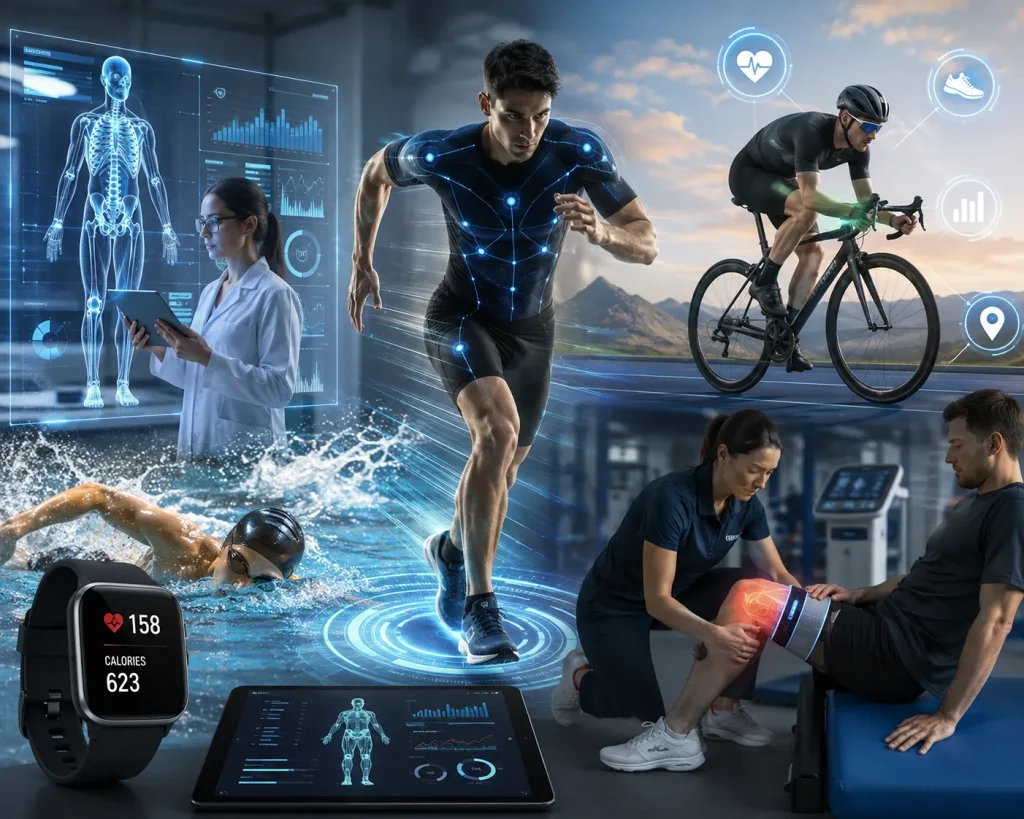
In the future, sports science may use even more advanced technology, including:
- Artificial intelligence
- Smart clothing
- Advanced fitness trackers
- Improved injury treatments
- Personalised training programmes
These innovations could help athletes become stronger, faster, and healthier than ever before.
Conclusion
The science of sports is a fascinating field that combines biology, physics, nutrition, psychology, and technology. It helps us understand how athletes move, train, recover, and perform at their best.
Whether you enjoy football, cricket, swimming, athletics, badminton, or any other sport, science is working behind the scenes to make athletes stronger, safer, and more successful.
The next time you watch a sporting event, remember that every great performance is powered not only by skill and determination, but also by the amazing science of sport.
For more interesting articles, please visit www.kidzherald.com