
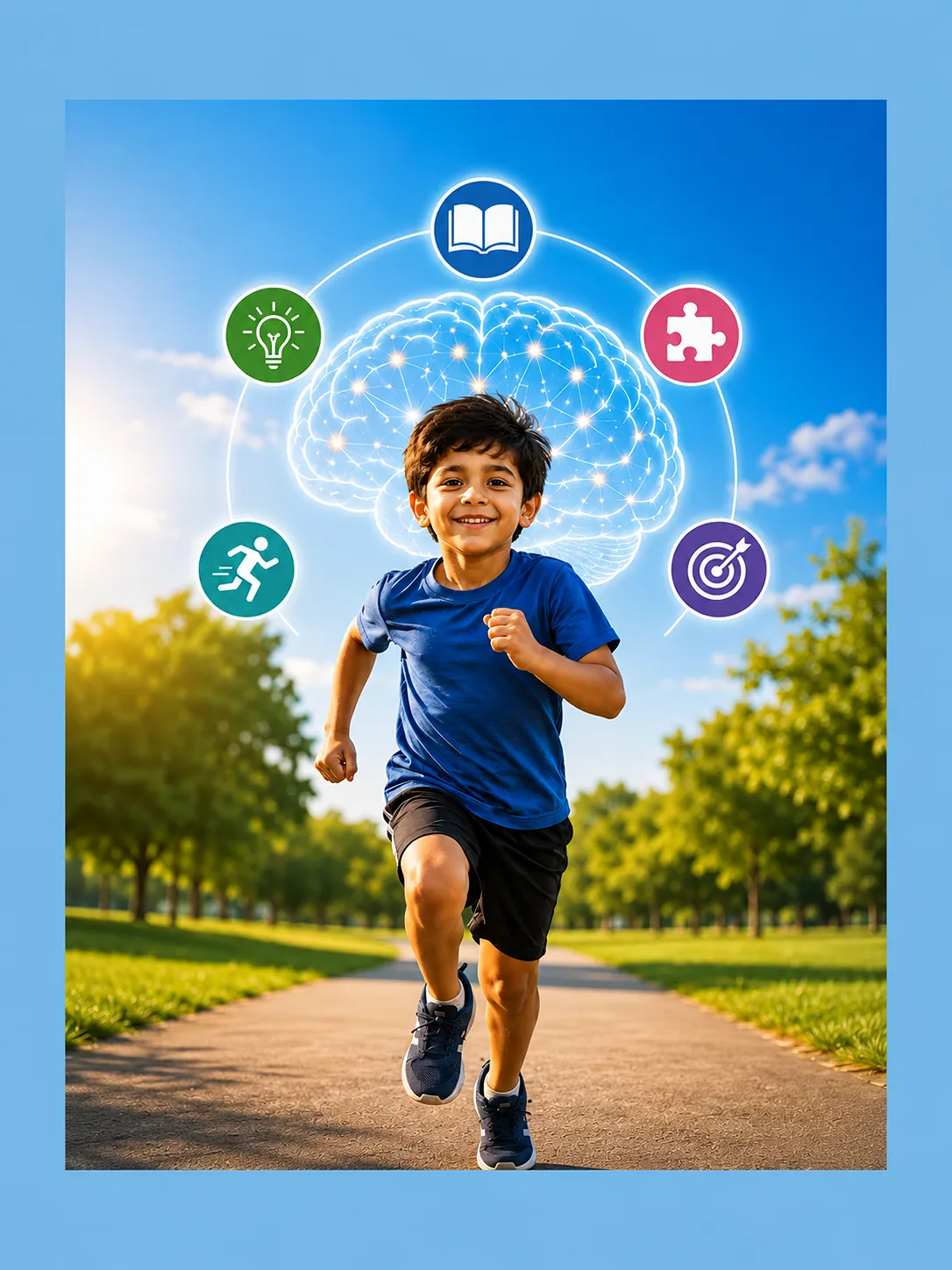
When people think about exercise, they often imagine stronger muscles, faster running and better fitness. But did you know that exercise can also help your brain?
Your brain is the control centre of your body. It helps you think, learn, remember, solve problems and make decisions. Scientists have discovered that regular physical activity does much more than keep the body healthy—it can also improve brain function.
Whether you enjoy football, cycling, swimming, dancing, or simply playing outside with friends, exercise can give your brain a powerful boost. Let’s explore how!
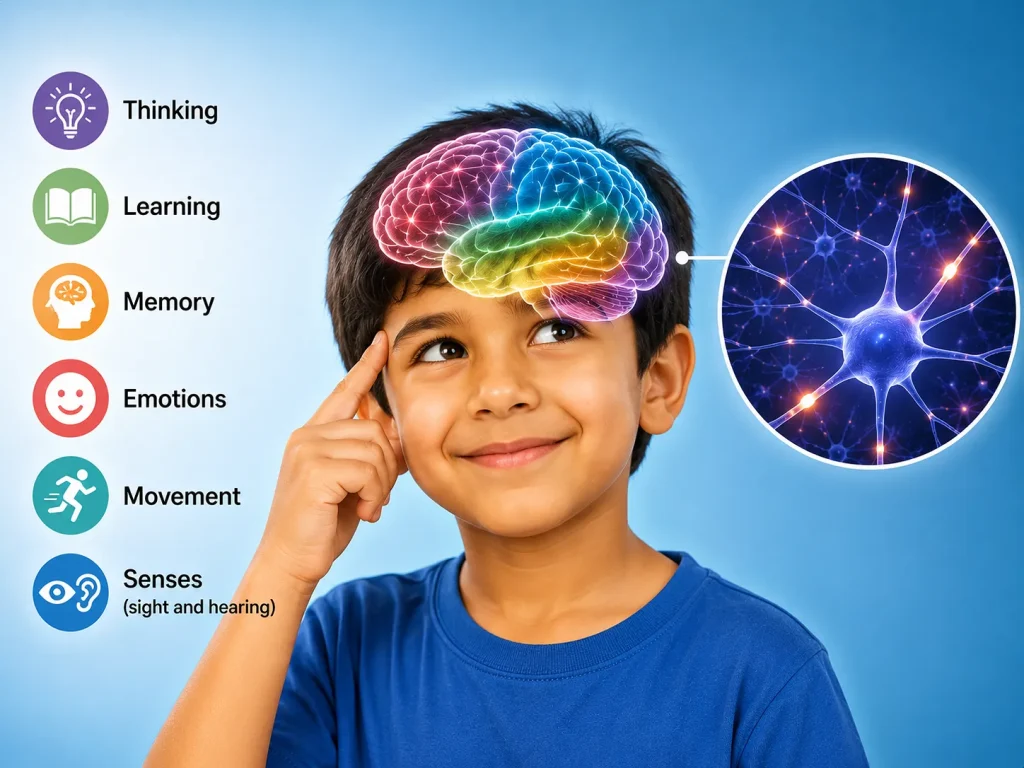
What Is the Brain?
The brain is one of the most amazing organs in the human body.
It controls:
- Thinking
- Learning
- Memory
- Emotions
- Movement
- Senses such as sight and hearing
Your brain contains billions of nerve cells that communicate with one another through electrical and chemical signals. These signals help you learn new things, remember information and react to the world around you.
Because the brain works so hard every day, it needs plenty of care to stay healthy.
What Is Exercise?
Exercise is any physical activity that gets your body moving.
Examples include:
- Running
- Walking
- Swimming
- Cycling
- Dancing
- Playing football
- Skipping
- Martial arts
Exercise increases your heart rate and makes your muscles work harder. It also affects many other parts of your body—including your brain.

More Blood Reaches the Brain
One of the first things that happens during exercise is that your heart pumps blood more quickly.
Blood carries oxygen and nutrients throughout the body. When you exercise, more oxygen-rich blood reaches your brain.
You can think of oxygen as fuel for the brain. The better the fuel supply, the better the brain can perform its important tasks.
This extra blood flow helps brain cells stay healthy and active.
Exercise Helps Memory
Have you ever found it easier to remember something after being active?
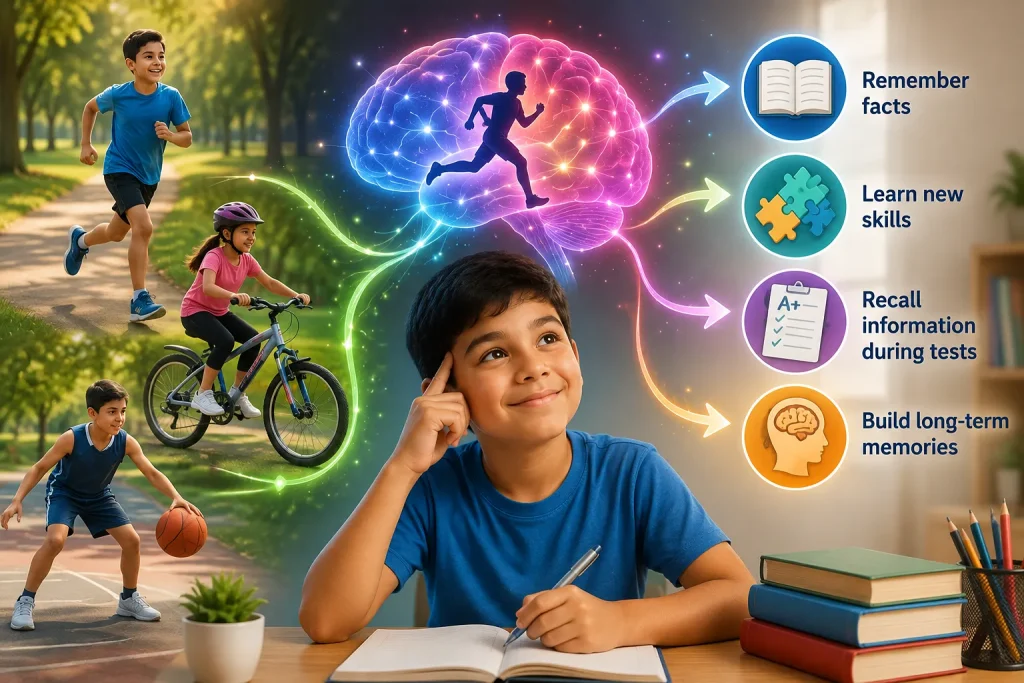
Scientists have discovered that exercise may help improve memory. Physical activity encourages the brain to create and strengthen connections between nerve cells.
These connections help you:
- Remember facts
- Learn new skills
- Recall information during tests
- Build long-term memories
This is one reason why many experts encourage children to stay active during their school years.
It Can Improve Concentration
Sometimes it can be difficult to focus on homework or classroom activities.
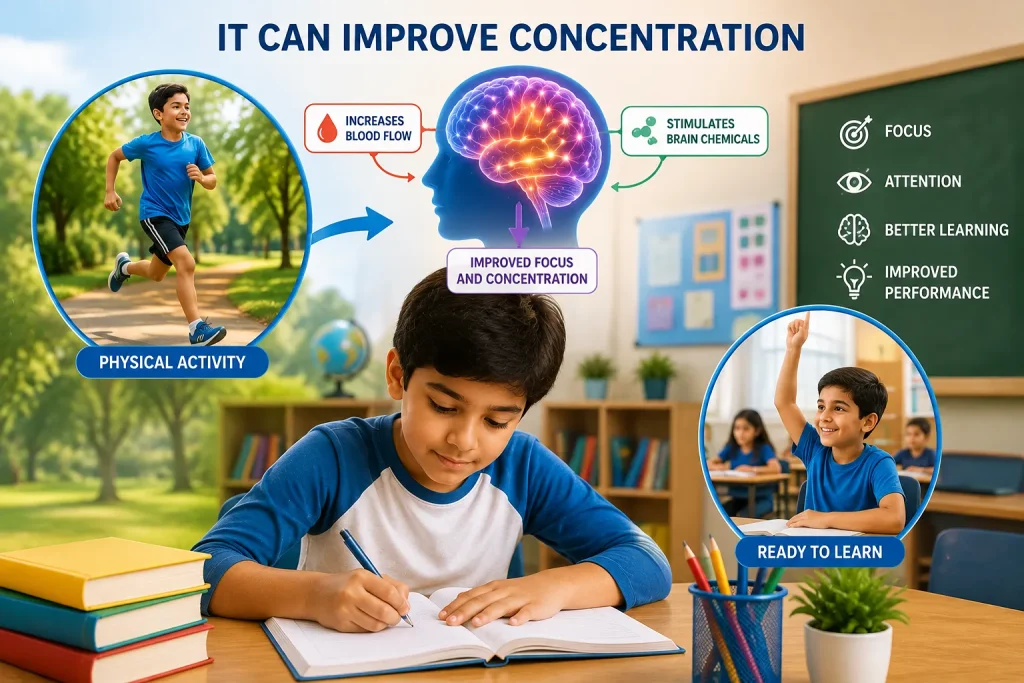
Exercise may help improve attention and concentration.
After physical activity, many people feel more alert and ready to learn. This may happen because exercise increases blood flow and stimulates important brain chemicals.
That is why schools often include sports and physical education lessons as part of the school day.
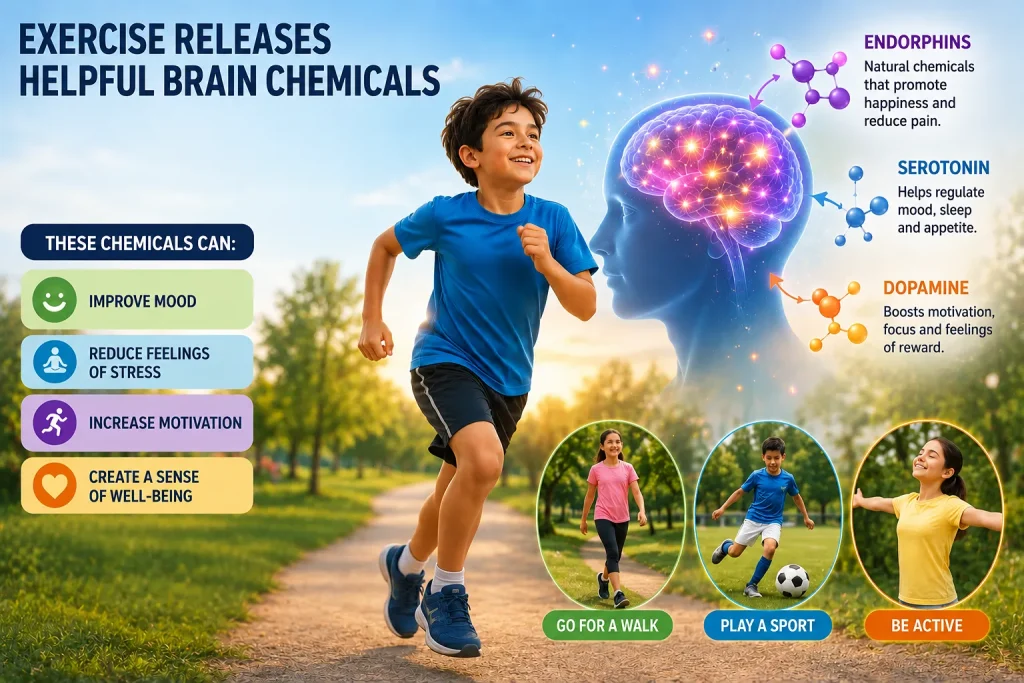
Exercise Releases Helpful Brain Chemicals
The brain produces special chemicals that affect mood and thinking.
During exercise, the body releases chemicals such as endorphins and other substances that can help people feel happier and more energetic.
These chemicals can:
- Improve mood
- Reduce feelings of stress
- Increase motivation
- Create a sense of well-being
Many people notice that they feel better after going for a walk, playing a sport or spending time being active.
Exercise Helps Reduce Stress
Everyone experiences stress sometimes.
You might feel stressed before an exam, a competition or a presentation at school.
Exercise can help the body manage stress more effectively. Physical activity gives the body a chance to release energy and can help people feel calmer afterwards.
Many athletes say that exercise helps them clear their minds and feel more relaxed.
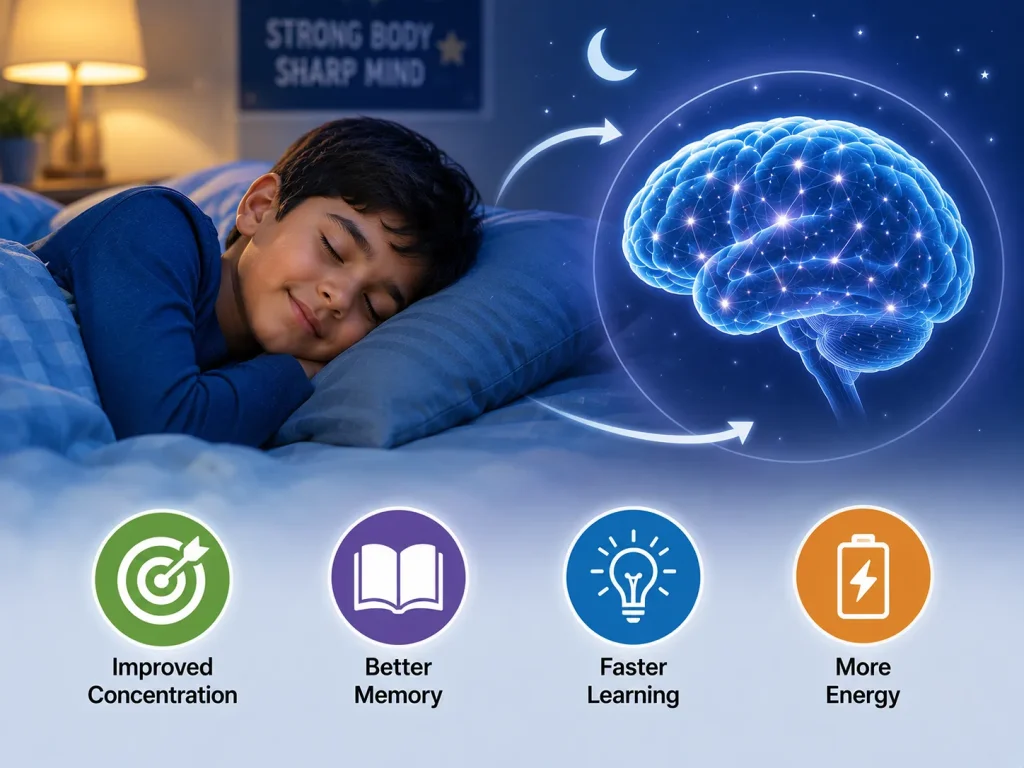
Better Sleep Means a Better Brain
Sleep is extremely important for brain health.
During sleep, the brain processes information, stores memories and prepares for the next day.
Regular exercise can help people sleep more soundly. Better sleep often leads to:
- Improved concentration
- Better memory
- Faster learning
- More energy
This means exercise can help the brain both directly and indirectly.
Exercise Helps Learning
Scientists studying the neurobiological effects of exercise have found that physical activity can support learning and brain development.
Exercise encourages the production of substances that help brain cells grow and communicate more effectively.
For children and teenagers, whose brains are still developing, staying active may support healthy growth and learning.
This does not mean exercise replaces studying. Instead, exercise and learning work well together.
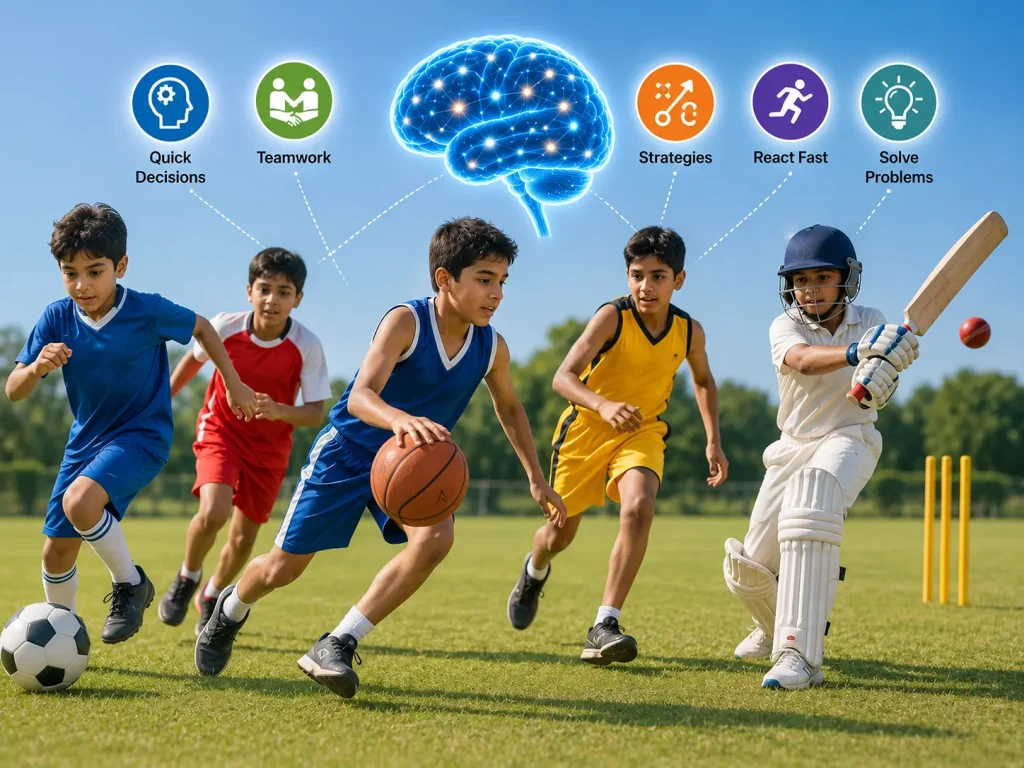
Team Sports Help the Brain Too
Activities such as football, cricket, basketball and hockey do more than strengthen muscles.
They also train the brain.
When playing team sports, children often need to:
- Make quick decisions
- Work with teammates
- Follow strategies
- React to changing situations
- Solve problems
These mental challenges help develop thinking and decision-making skills.
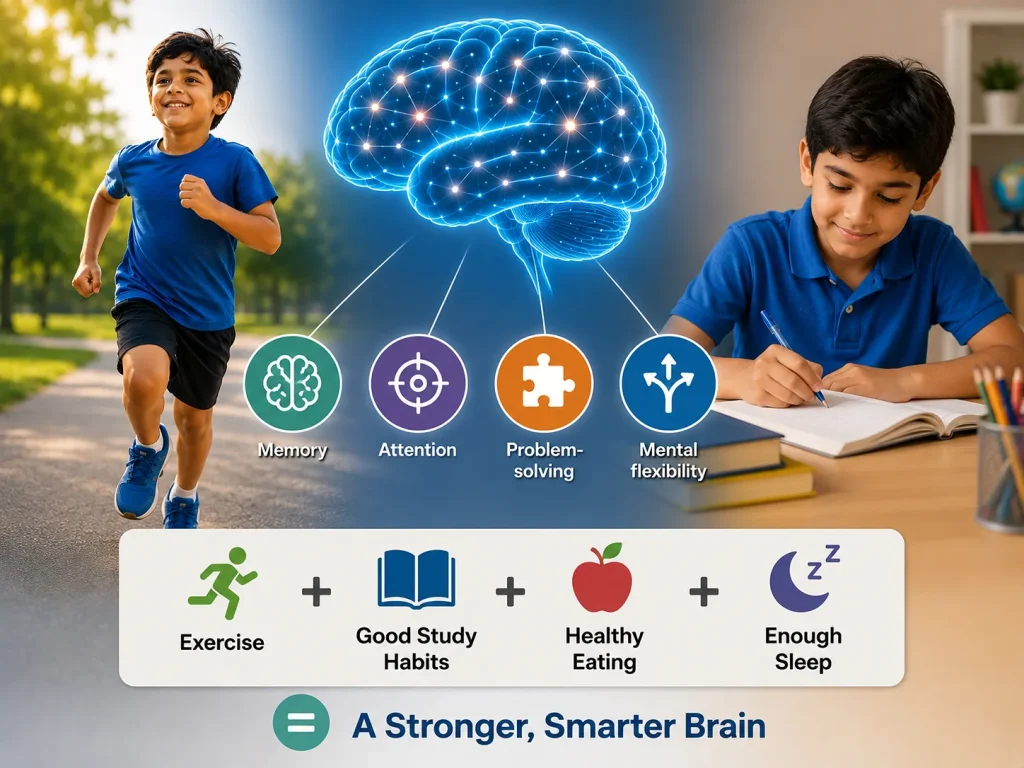
Can Exercise Make You Smarter?
Exercise alone does not magically increase intelligence overnight.
However, research suggests that regular physical activity can support many brain functions that help learning, including:
- Memory
- Attention
- Problem-solving
- Mental flexibility
In other words, exercise helps create a healthy environment for the brain to do its best work.
Combining exercise with good study habits, healthy eating and enough sleep gives the brain the best chance to thrive.
How Much Exercise Do Children Need?
Health experts generally recommend that children and teenagers get plenty of physical activity every day.
This does not mean spending hours in a gym.
Fun activities count too, such as:
- Playing tag
- Riding a bicycle
- Dancing
- Swimming
- Walking the dog
- Playing sports with friends
The most important thing is to stay active regularly and choose activities you enjoy.

Fun Facts About Exercise and the Brain
Your brain uses a large amount of the oxygen you breathe.
Exercise increases blood flow to the brain.
Active children often find it easier to focus in class.
Physical activity can improve mood.
Exercise may help people sleep better.
Team sports challenge both the body and the brain.
Even a brisk walk can help boost alertness.
Tips for Keeping Your Brain Healthy
Exercise is only one part of brain health.
You can also help your brain by:
- Getting enough sleep
- Eating a balanced diet
- Drinking plenty of water
- Reading books
- Learning new skills
- Spending time outdoors
- Staying socially connected with family and friends
Together, these habits support both physical and mental well-being.
Conclusion
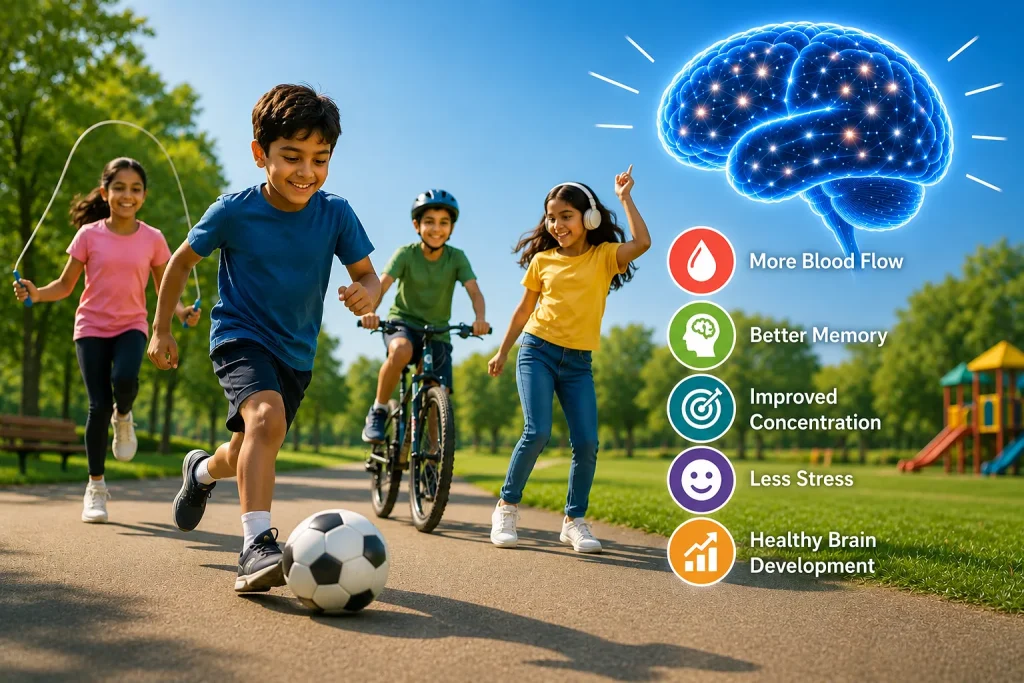
Exercise is one of the best things you can do for your body—and your brain. Physical activity increases blood flow, supports memory, improves concentration, helps reduce stress and encourages healthy brain development.
Whether you’re kicking a football, riding a bicycle, dancing to music or simply playing outside, every bit of movement helps. Exercise keeps your muscles strong, your heart healthy, and your brain ready to learn.
So the next time you head outside to play, remember: you’re not just exercising your body—you’re giving your brain a workout too!
For more interesting articles, please visit www.kidzherald.com