Have you ever attended a family gathering where people share stories about grandparents, great-grandparents, and relatives from long ago?
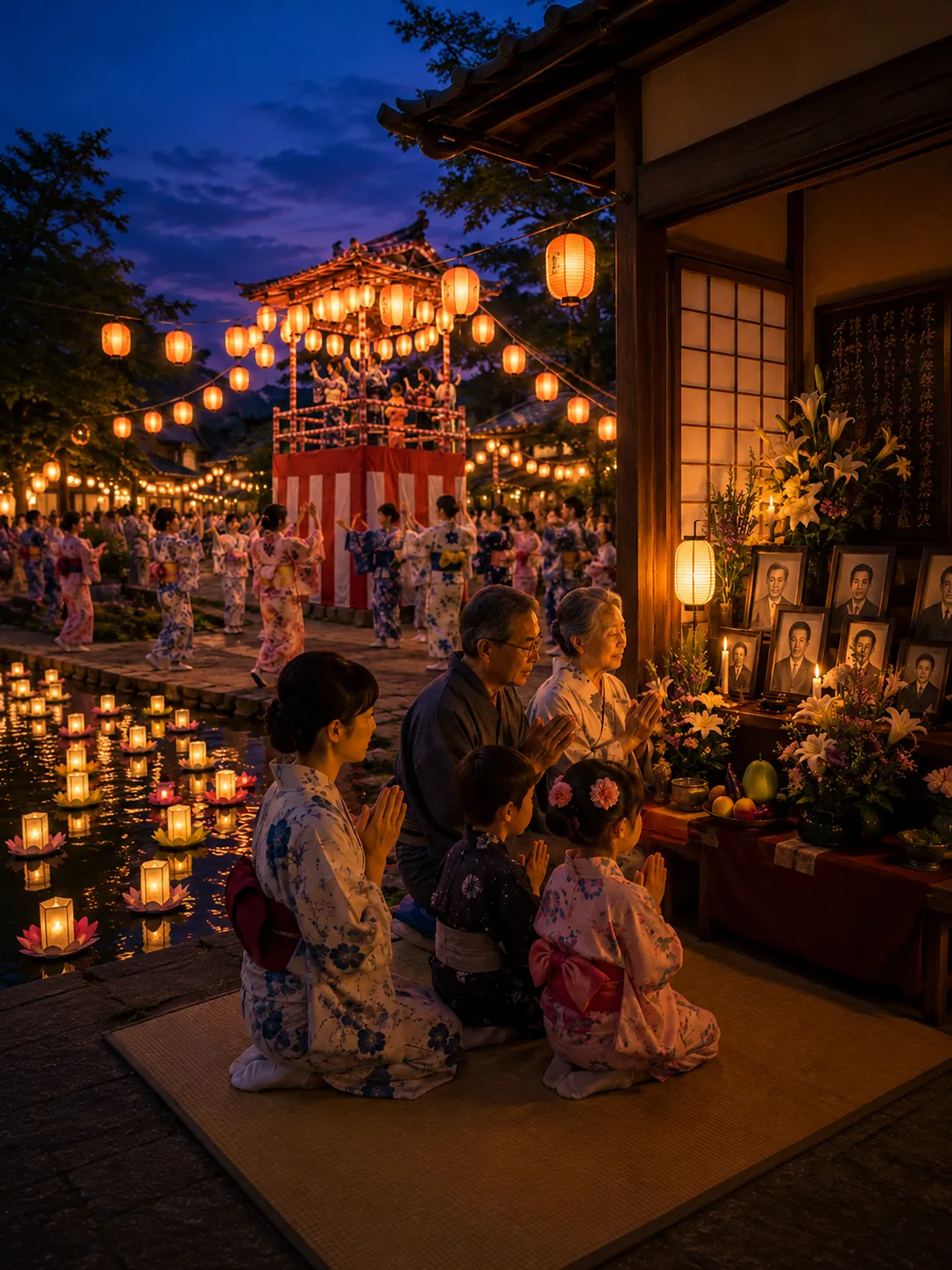
In Japan, there is a special festival called Obon that celebrates family memories and honours the spirits of ancestors. It is one of the most important and meaningful festivals in Japan, bringing families together every year.
Obon is filled with colourful lanterns, traditional dances, family reunions, and beautiful customs passed down through generations.
Let’s discover the fascinating world of the Obon Festival!
What Is Obon?
Obon is a traditional Japanese festival that honours the spirits of family members who have passed away.
The festival has Buddhist roots and has been celebrated in Japan for hundreds of years. Many people believe that during Obon, the spirits of ancestors return to visit their families.
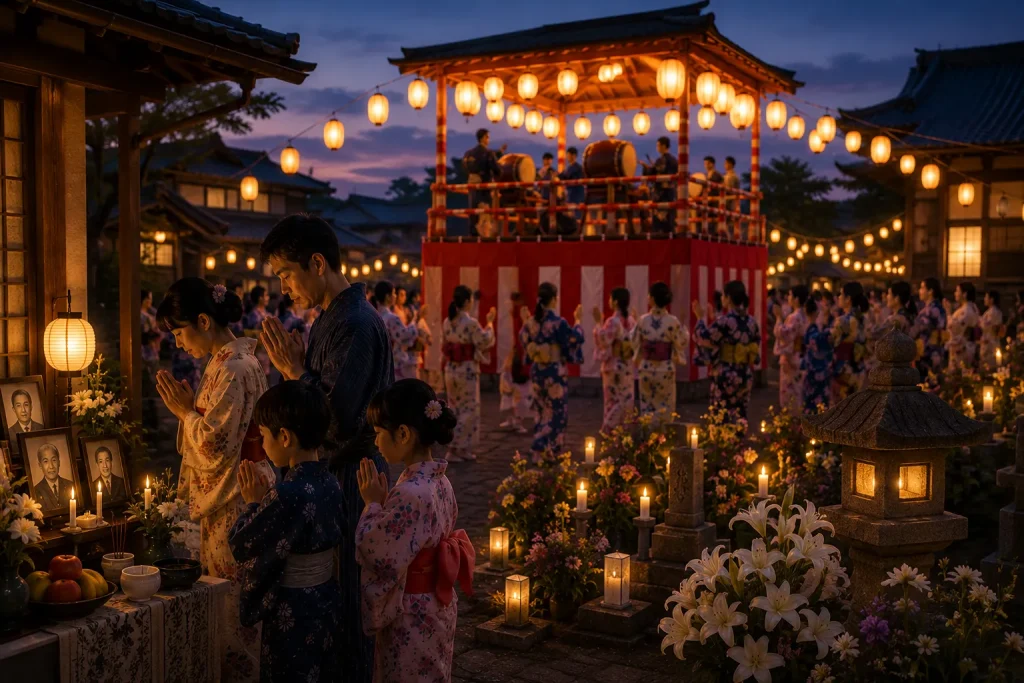
Because of this belief, families gather to remember loved ones, clean family graves, and take part in special ceremonies.
Although customs can vary across Japan, the spirit of the festival remains the same: showing respect, gratitude, and love for family members who came before us.
When Is Obon Celebrated?
Obon is usually celebrated in August, although some regions observe it in July.
Most celebrations last for about three days.
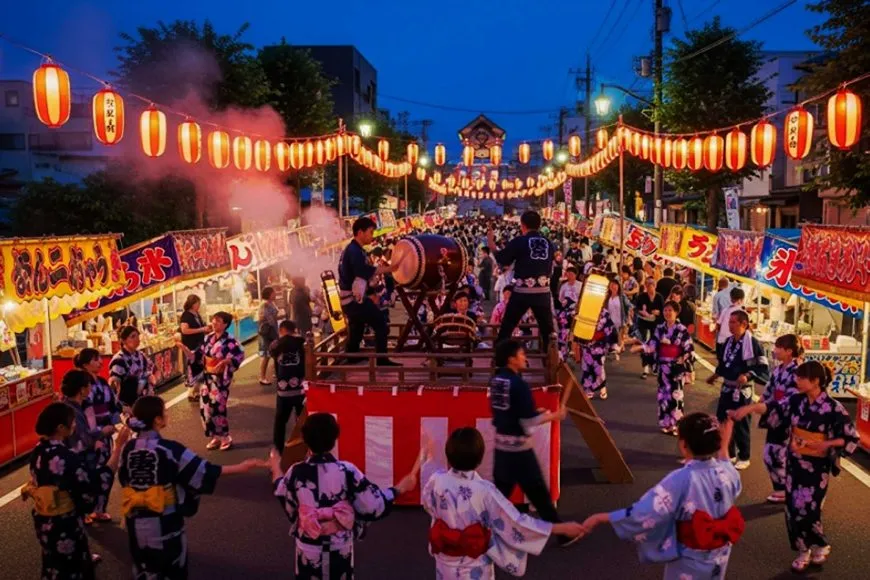
Since many people travel to visit relatives during Obon, it becomes one of the busiest holiday periods in Japan. Roads, trains, and airports often become crowded as families return to their hometowns.
For many Japanese people, Obon is a family reunion combined with a cultural festival.
Why Is Obon Important?
Obon is important because it reminds people of their family history.
Everyone has ancestors who helped shape their family story. Obon gives people an opportunity to:
- Remember loved ones
- Visit family members
- Express gratitude
- Pass traditions to younger generations
- Strengthen family bonds
Rather than being a sad occasion, Obon is often a warm and joyful time filled with family gatherings and community events.
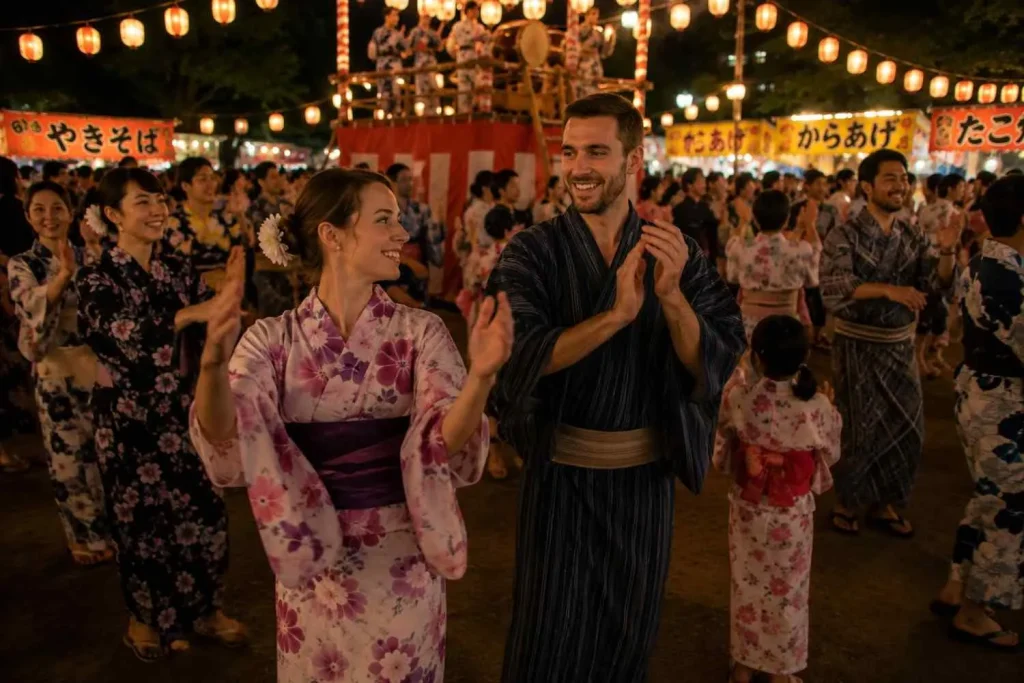
Welcoming the Spirits
One of the most famous Obon traditions involves welcoming ancestral spirits.
Families may place lanterns outside their homes or near family altars. These lanterns are believed to help guide the spirits safely back to their families.
In some places, small welcoming fires are lit at the beginning of the festival.
The glowing lights create a peaceful atmosphere and symbolise a warm welcome for visiting ancestors.
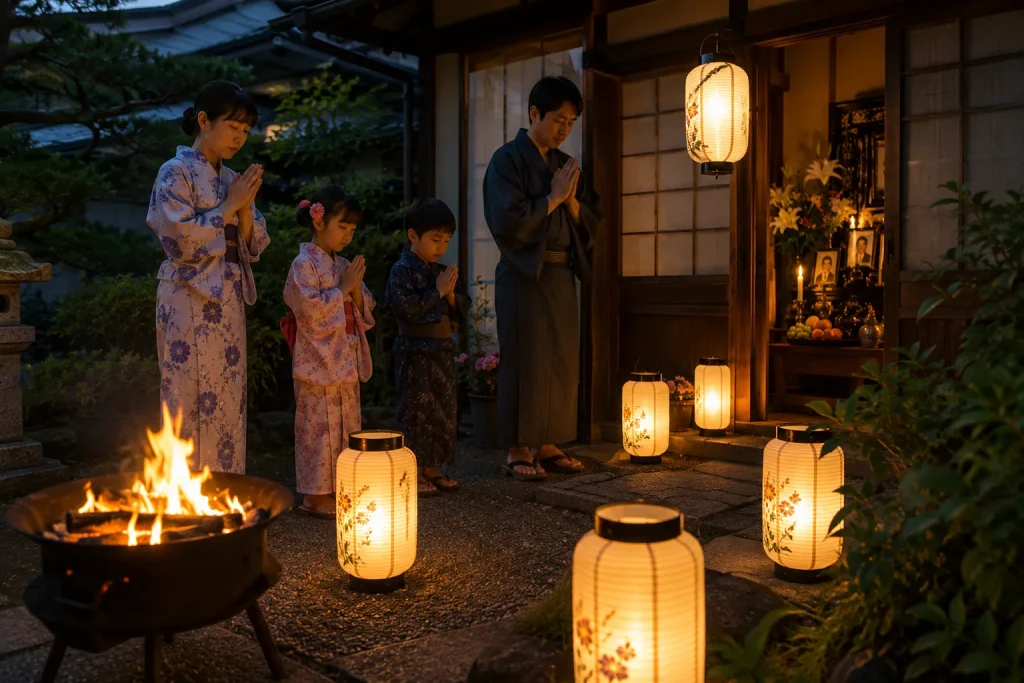
Visiting Family Graves
During Obon, many families visit cemeteries to clean and care for family graves.
People often:
- Wash gravestones
- Remove weeds
- Place flowers
- Offer prayers
- Spend quiet moments remembering loved ones
This tradition teaches children the importance of respecting family history and remembering previous generations.
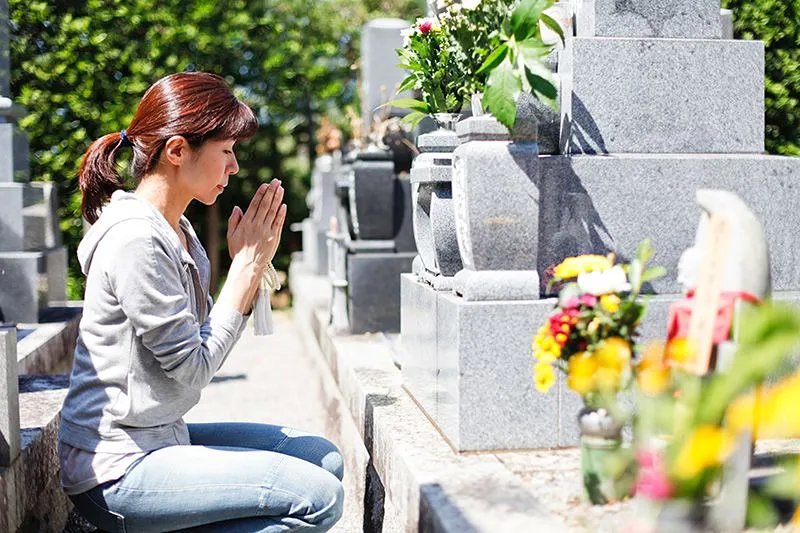
The Wonderful Bon Odori Dance
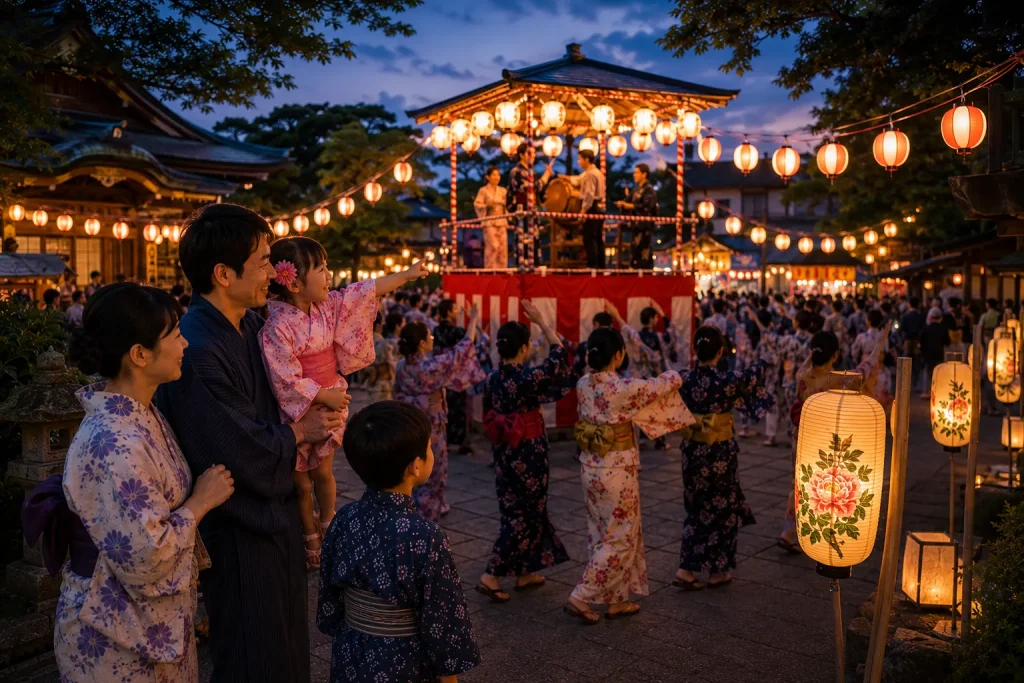
One of the most exciting parts of Obon is Bon Odori.
Bon Odori is a traditional dance performed during Obon celebrations.
People gather in parks, temples, and town squares to dance together.
The dances are usually:
- Simple to learn
- Performed in groups
- Accompanied by music and drums
- Different in various regions of Japan
Children, parents, grandparents, and visitors often join the dancing, creating a fun and welcoming atmosphere.
Many participants wear a light summer kimono called a yukata, adding colourful patterns to the celebrations.
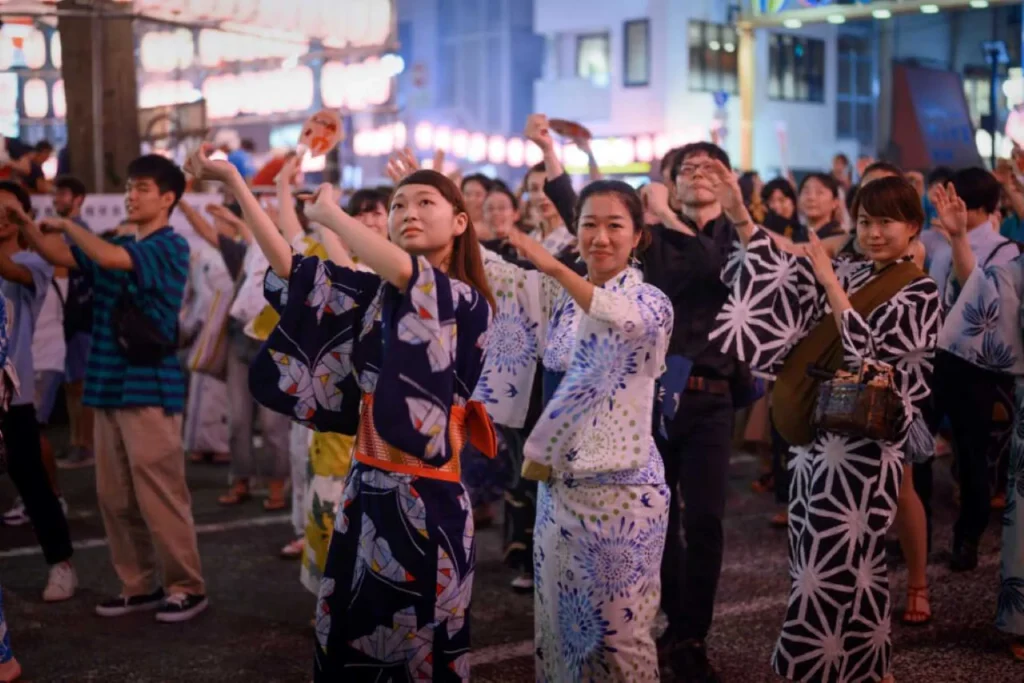
Floating Lanterns on Water
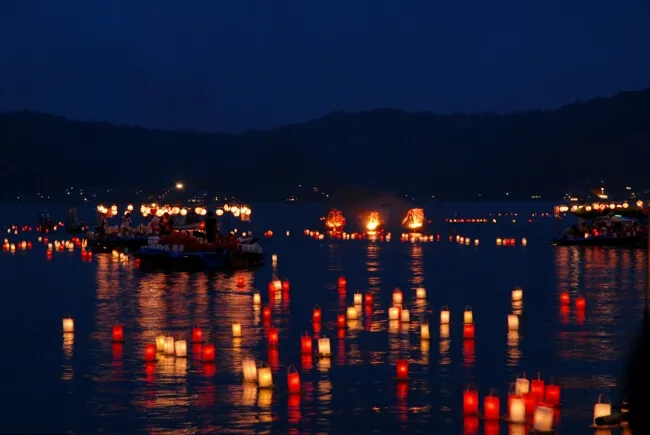
Perhaps the most magical Obon tradition is the floating lantern ceremony.
In some communities, paper lanterns are placed on rivers, lakes, or the sea at the end of the festival.
These lanterns symbolically guide the spirits back to the spirit world after their visit.
As darkness falls, hundreds of glowing lanterns drift across the water, creating a breathtaking sight.
This tradition is known as Toro Nagashi, which means “floating lanterns.”
Delicious Festival Food
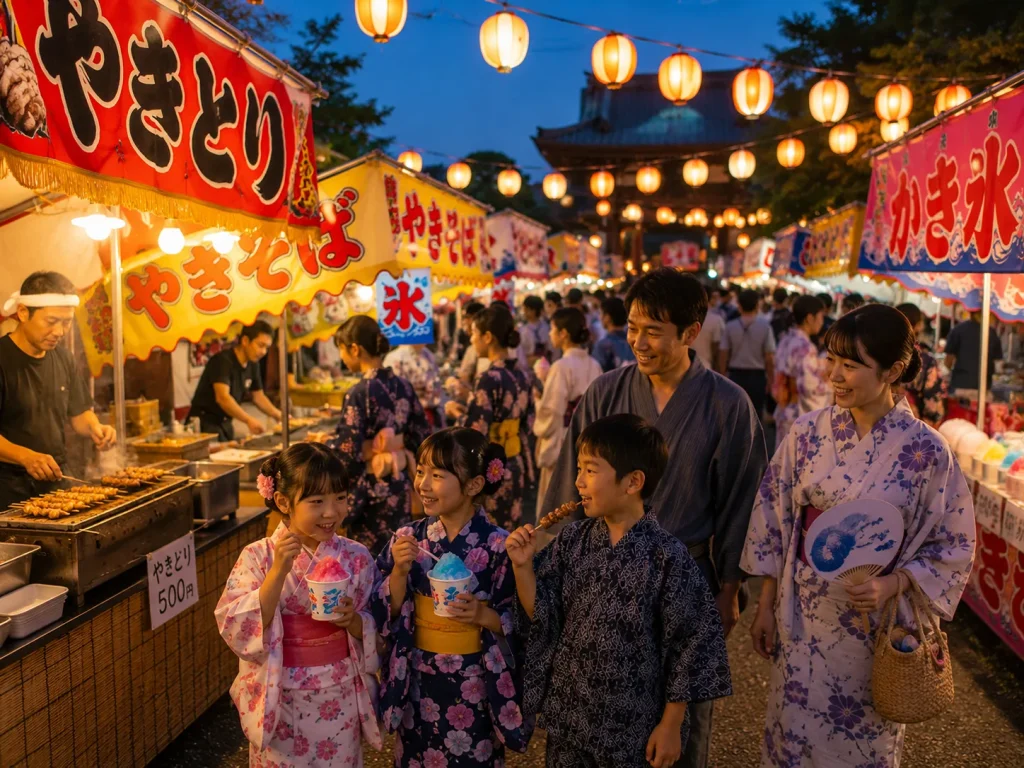
Like many festivals around the world, Obon often includes tasty food.
Festival stalls may sell:
- Grilled snacks
- Sweet treats
- Noodles
- Ice cream
- Traditional Japanese foods
Children especially enjoy exploring the food stalls and games found at larger Obon celebrations.
Food helps bring families and communities together, making the festival even more enjoyable.
Obon Across Japan
Japan is made up of many regions, and each area may celebrate Obon slightly differently.
For example:
- Some towns have unique dances.
- Others hold large lantern festivals.
- Certain communities organise parades.
- Some temples conduct special ceremonies.
This variety makes Obon a rich and diverse cultural celebration.
Whether in a large city such as Kyoto or a small countryside village, the festival remains an important part of Japanese culture.
What Can We Learn from Obon?
Obon teaches several valuable lessons.
Remembering Family
The festival reminds us to appreciate the people who came before us and helped shape our lives.
Respecting Traditions
Many Obon customs have been practised for hundreds of years, showing how traditions can connect generations.
Bringing Communities Together
Obon encourages people to gather, celebrate, and support one another.
Appreciating Life
By remembering the past, people can better appreciate the present and look forward to the future.
Fun Facts About Obon
- Obon has been celebrated in Japan for centuries.
- Millions of people travel during the Obon holiday period.
- Bon Odori dances vary from region to region.
- Many participants wear colourful yukata.
- Floating lantern ceremonies create some of Japan’s most beautiful festival scenes.
- Obon combines family traditions, community celebrations, and cultural heritage.
Conclusion
The Obon Festival is one of Japan’s most meaningful celebrations. Through lanterns, dancing, family gatherings, grave visits, and community events, people honour their ancestors and strengthen family connections.
While customs may differ from place to place, the heart of Obon remains the same: remembering loved ones, celebrating family, and passing traditions to future generations.
With its glowing lanterns, joyful dances, and strong sense of community, Obon is a wonderful example of how cultures around the world celebrate family, history, and remembrance.
For more interesting articles, please visit www.kidzherald.com