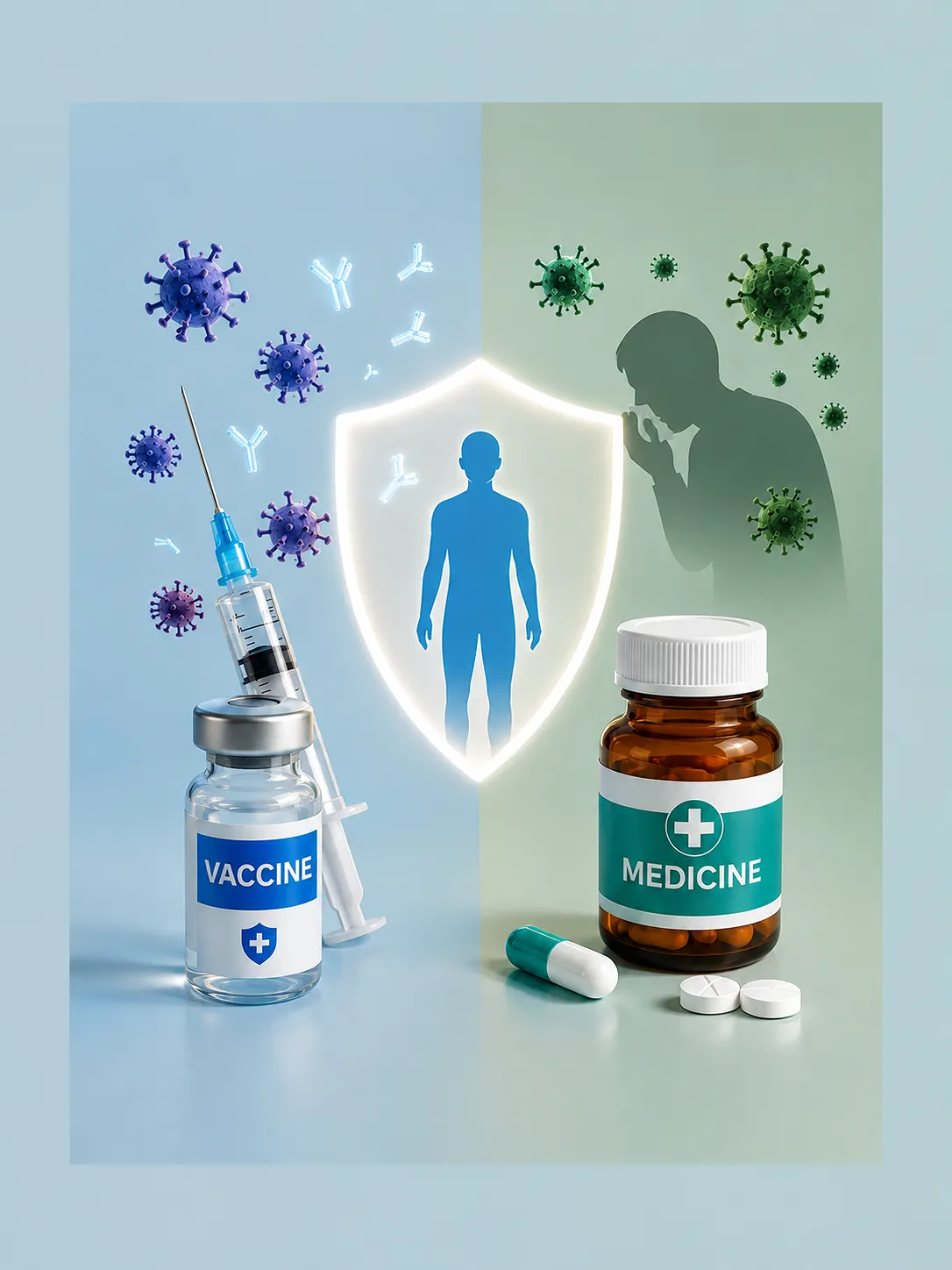
Have you ever wondered why a doctor gives you medicine when you are ill, or why children receive vaccines even when they are healthy? Both vaccines and medicines help keep us healthy, but they work in different ways.
Medicines usually help treat an illness after you become sick, while vaccines help protect you before you get sick. Together, they are among the most important tools in modern healthcare.
Let’s explore how vaccines and medicines work and why they are so important.
Your Body’s Amazing Defence Team
Before we talk about vaccines and medicines, we need to understand something called the immune system.
The immune system is your body’s natural defence team. It works day and night to protect you from tiny organisms, such as bacteria, viruses, and other germs, that can cause disease.
When harmful germs enter your body, the immune system tries to recognise and destroy them. Special cells act like soldiers, searching for invaders and helping to keep you healthy.
What Is a Vaccine?
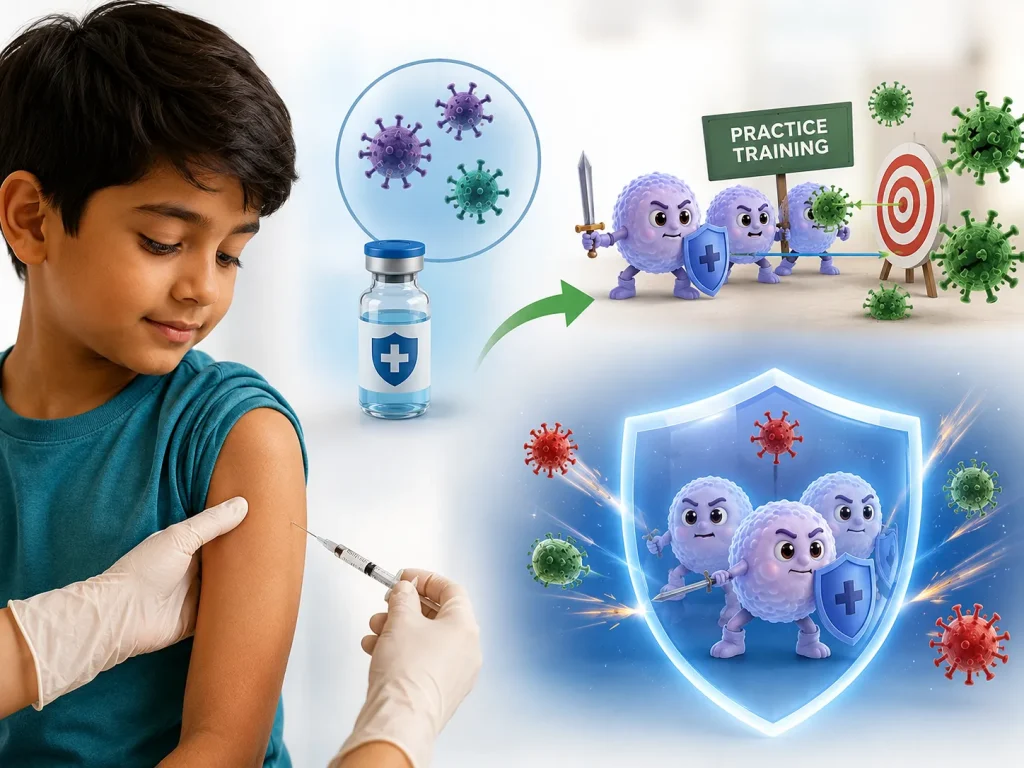
A Vaccine is a special preparation that trains your immune system to recognise and fight certain diseases.
Think of a vaccine as a practice session for your body’s defence team.
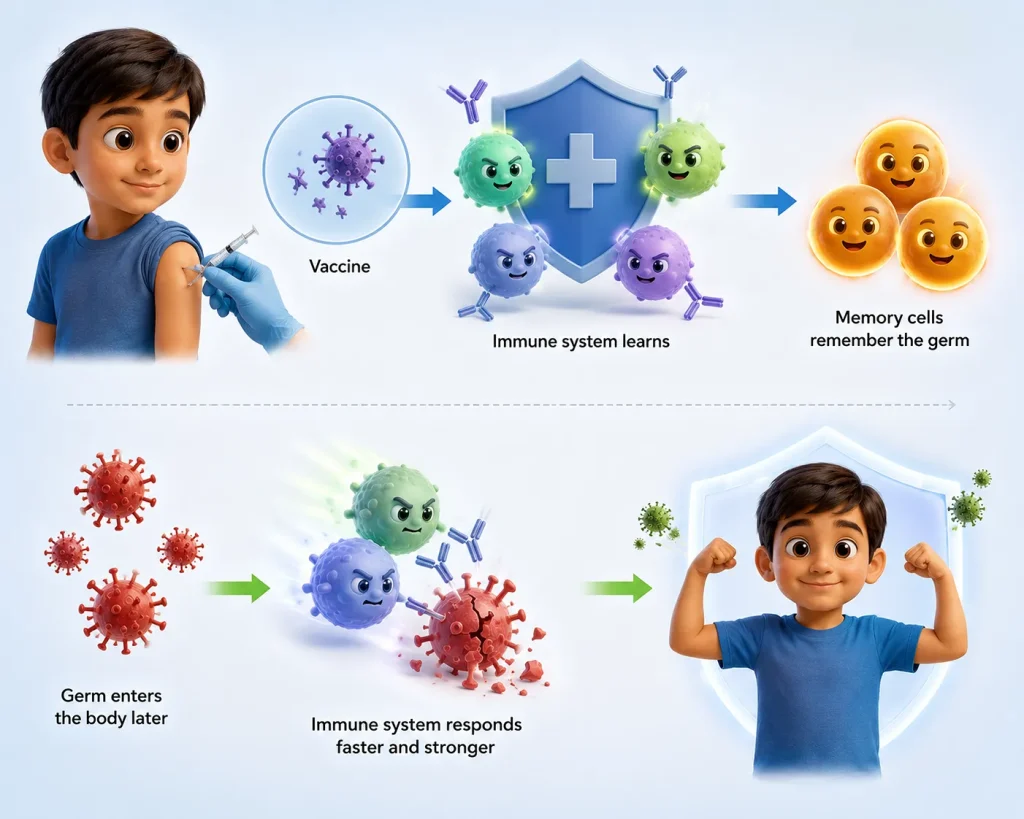
Instead of waiting for a dangerous germ to attack, a vaccine safely introduces your immune system to information about that germ. This helps your body learn how to recognise and fight it in the future.
As a result, if the real germ enters your body later, your immune system can respond much more quickly.
How Do Vaccines Work?
Imagine a football team preparing for an important match.
Before the real game, the players practise, learn strategies and prepare for possible challenges.
Vaccines work similarly.
They help your immune system practise recognising a disease before it encounters the real thing. After vaccination, the immune system creates special memory cells that remember the germ.
If the germ appears again months or even years later, the immune system can often respond much faster and more effectively.
This process is called Immunization.
What Is Vaccination?
Vaccination is the act of receiving a vaccine.
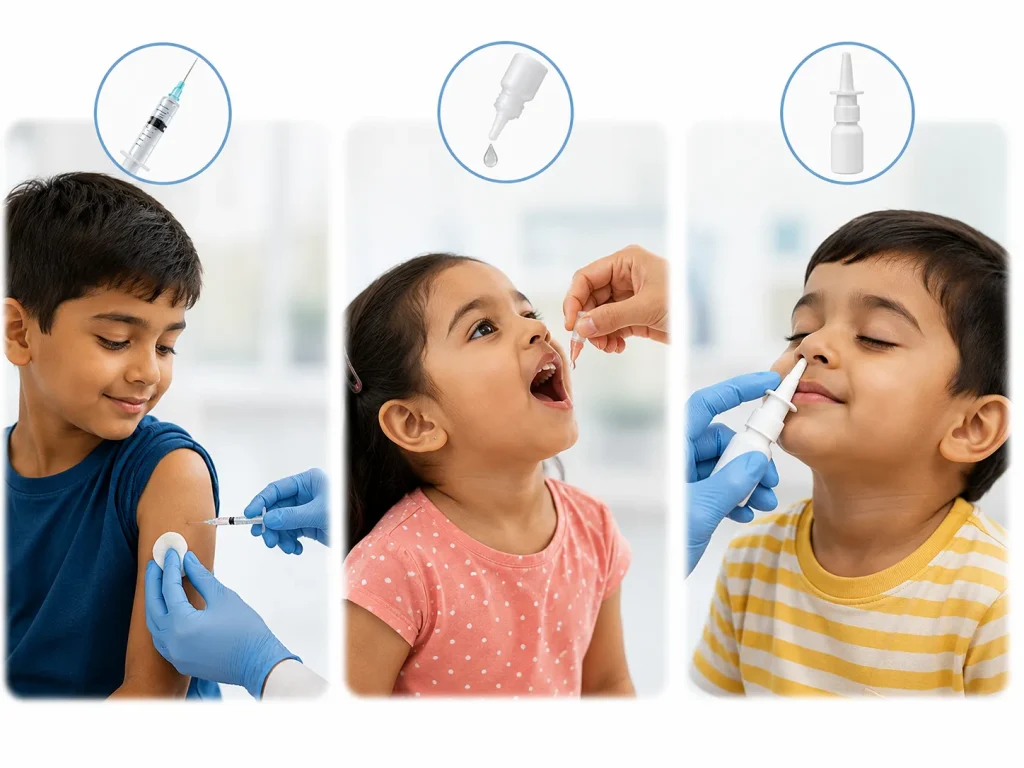
Vaccines can be given in different ways:
- As an injection in the arm or leg
- As drops in the mouth
- As a nasal spray in some cases
Doctors and healthcare professionals carefully follow guidelines to ensure vaccines are administered safely.
Why Are Vaccines Important?
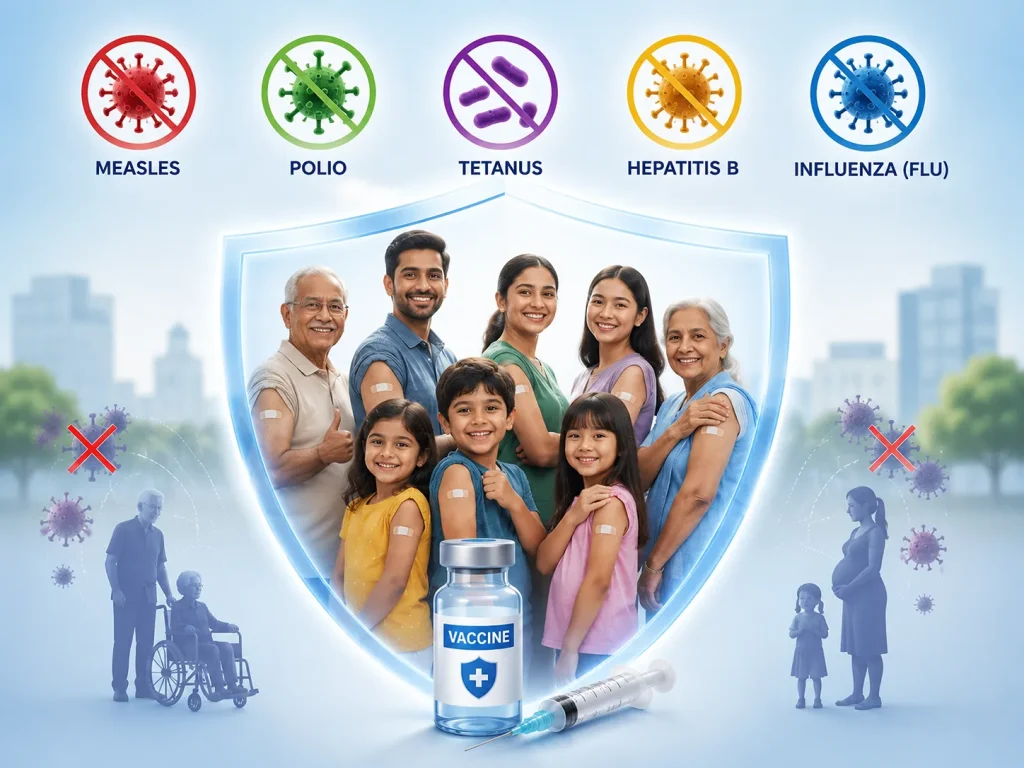
Vaccines have helped protect millions of people from serious diseases.
They can help prevent illnesses such as:
- Measles
- Polio
- Tetanus
- Hepatitis B
- Influenza (flu)
When many people in a community are vaccinated, diseases often spread more slowly from person to person.
This helps protect not only vaccinated people but also some individuals who may be unable to receive certain vaccines.
What Is Medicine?
A medicine is a substance used to help prevent, treat or manage illnesses and health conditions.
Unlike vaccines, which mainly prepare the body before infection occurs, medicines are often used after a person becomes ill.
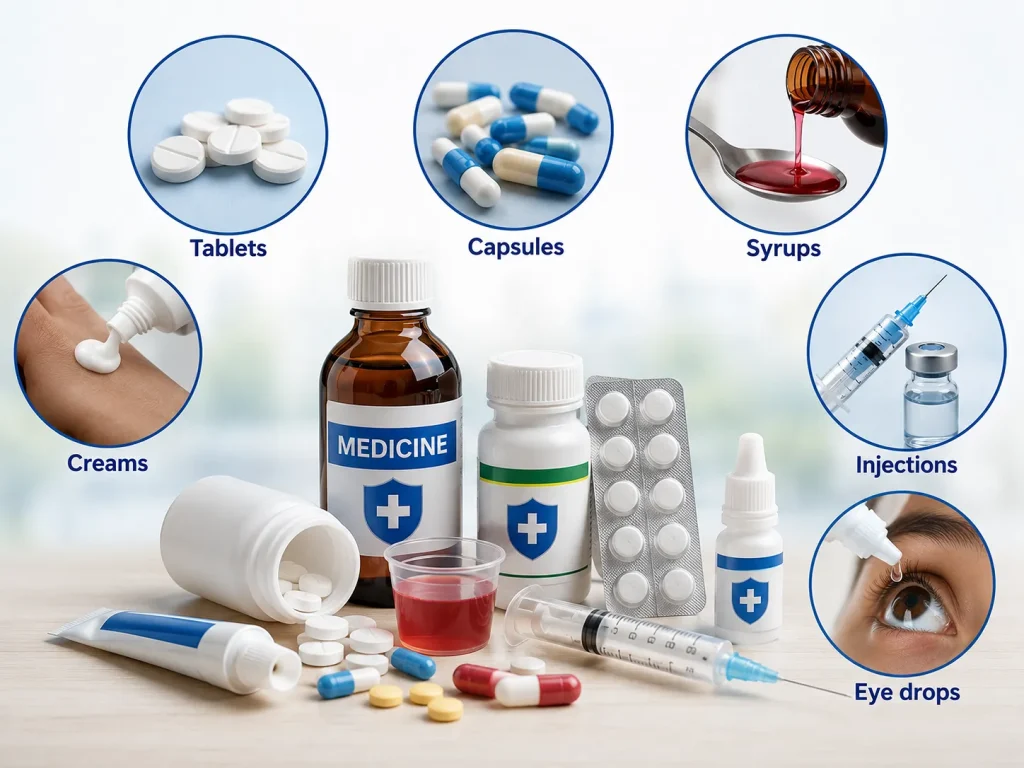
Medicines come in many forms:
- Tablets
- Capsules
- Syrups
- Creams
- Injections
- Eye drops
Different medicines work in different ways depending on the illness being treated.
How Do Medicines Work?
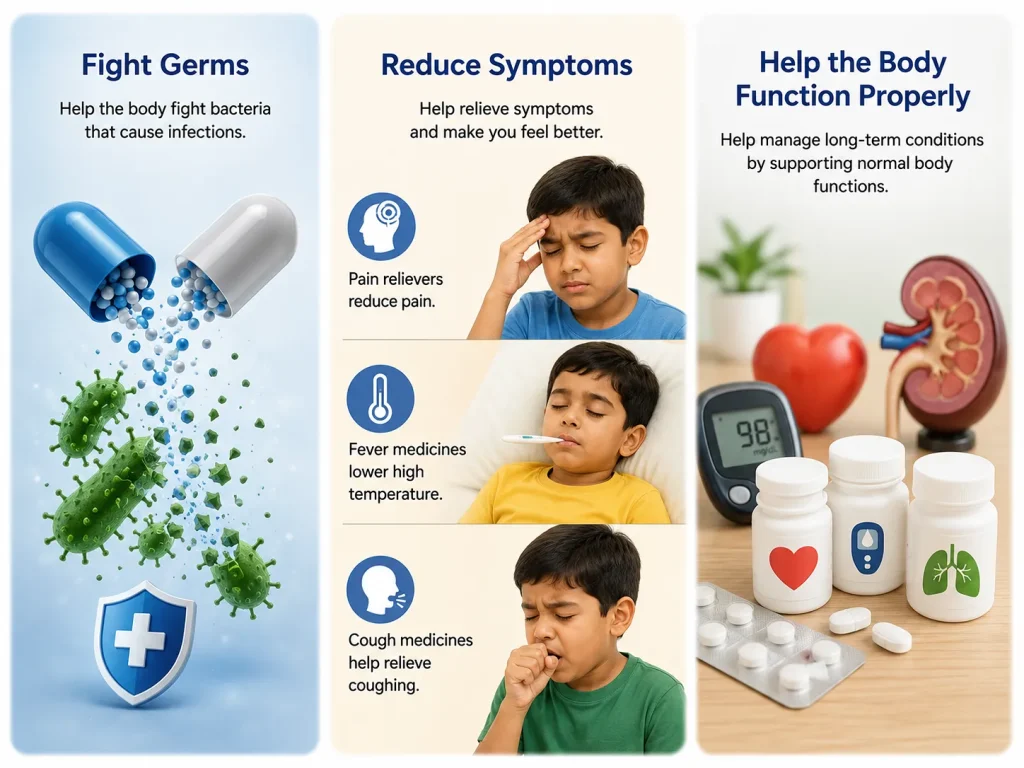
Medicines can help the body in several ways.
Some medicines:
Fight Germs
Certain medicines help fight bacteria that cause infections.
For example, antibiotics are used to treat bacterial infections. However, antibiotics do not work against viruses such as those that cause colds or flu.
Reduce Symptoms
Some medicines do not remove the cause of an illness but help people feel better.
For example:
- Pain relievers may reduce pain.
- Fever medicines may lower a high temperature.
- Cough medicines may help relieve coughing.
Help the Body Function Properly
Other medicines help people manage long-term health conditions by supporting normal body functions.
Vaccines vs Medicines
People sometimes confuse vaccines and medicines because both are used in healthcare.
However, they have different jobs.
| Vaccines | Medicines |
| Usually help prevent disease before infection occurs | Often help treat illness after it occurs |
| Train the immune system | Work directly on symptoms, germs or body functions |
| Create immune memory | Usually do not create immune memory |
| Given before illness in many cases | Usually taken during or after illness |
A simple way to remember this is:
Vaccines help prepare the body. Medicines help the body recover or manage illness.
Why Doesn’t the Immune System Always Win?
You might wonder why people need vaccines or medicines if their immune systems are already protecting them.
The answer is that some germs can be very powerful or unfamiliar.
Sometimes the immune system needs help:
- Vaccines teach it what to expect.
- Medicines support the body during illness.
Together, they improve our ability to stay healthy.
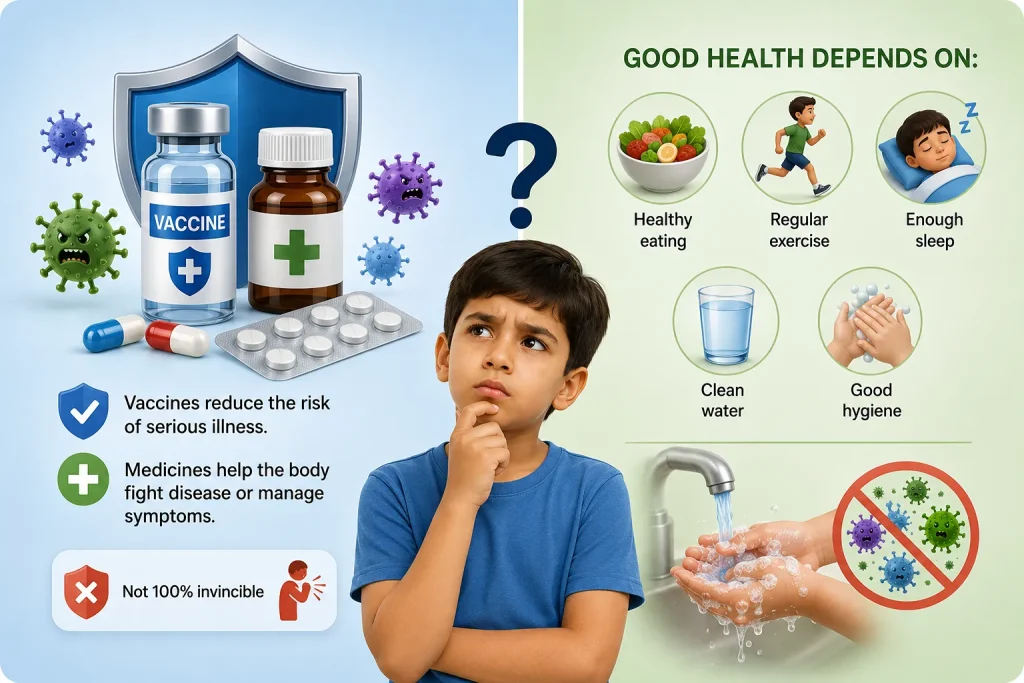
Do Vaccines and Medicines Make You Completely Invincible?
No.
Even vaccinated people can sometimes become ill, and medicines do not guarantee an instant cure.
However, vaccines often reduce the risk of serious illness, and medicines can help the body fight disease or manage symptoms more effectively.
Good health also depends on:
- Healthy eating
- Regular exercise
- Enough sleep
- Clean water
- Good hygiene
Washing your hands regularly remains one of the simplest ways to help prevent the spread of germs.
Fun Facts About Vaccines and Medicines
Vaccines help train the immune system before infection occurs.
Medicines come in many forms, including tablets, syrups and creams.
The immune system can remember certain germs after vaccination.
Doctors and scientists spend years developing and testing vaccines and medicines.
Vaccination programmes have helped reduce many serious diseases around the world.
Researchers continue to create new medicines and vaccines to fight emerging diseases.
The Scientists Behind the Discoveries
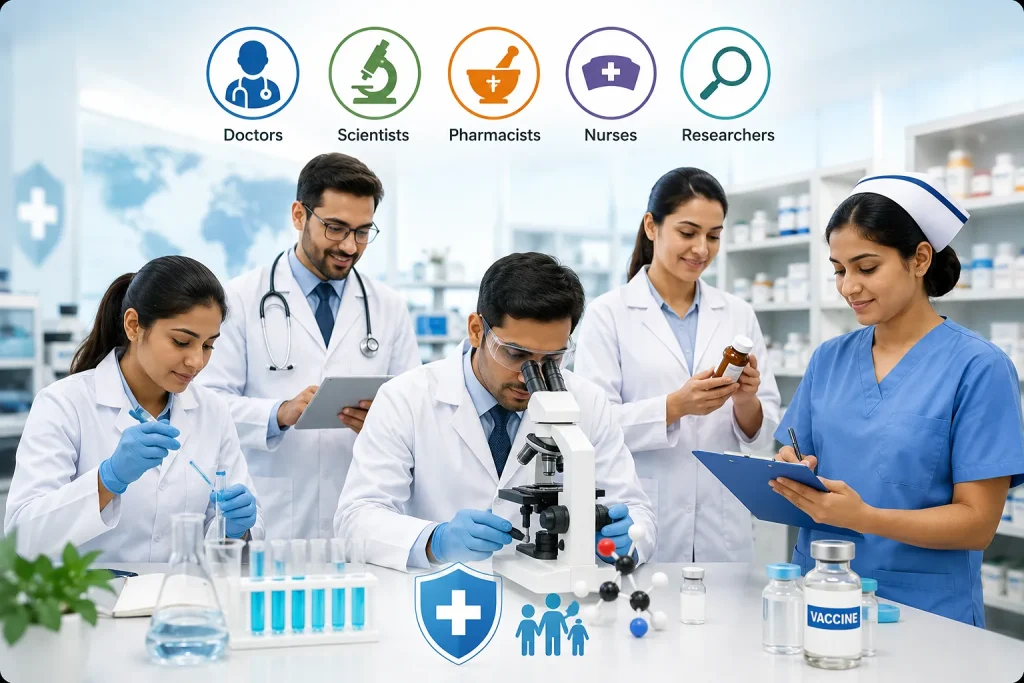
The development of vaccines and medicines involves many experts:
- Doctors
- Scientists
- Pharmacists
- Nurses
- Researchers
These professionals work together to study diseases and create safer, more effective ways to protect people.
Their discoveries have improved health and increased life expectancy for millions around the world.
Conclusion
Vaccines and medicines are two powerful tools that help keep people healthy.
Vaccines prepare the immune system to recognise and fight certain diseases before they cause serious illness. Medicines help treat illnesses, relieve symptoms and support the body’s recovery when people become sick.
Although they work in different ways, both vaccines and medicines have played an important role in improving health and saving lives around the world. Combined with healthy habits such as good nutrition, exercise and proper hygiene, they help us stay strong and ready for life’s adventures.
The next time you visit a doctor or hear about vaccines and medicines, you’ll know that they are part of a remarkable system designed to help protect and support the human body.
For more interesting articles, please visit www.kidzherald.com