
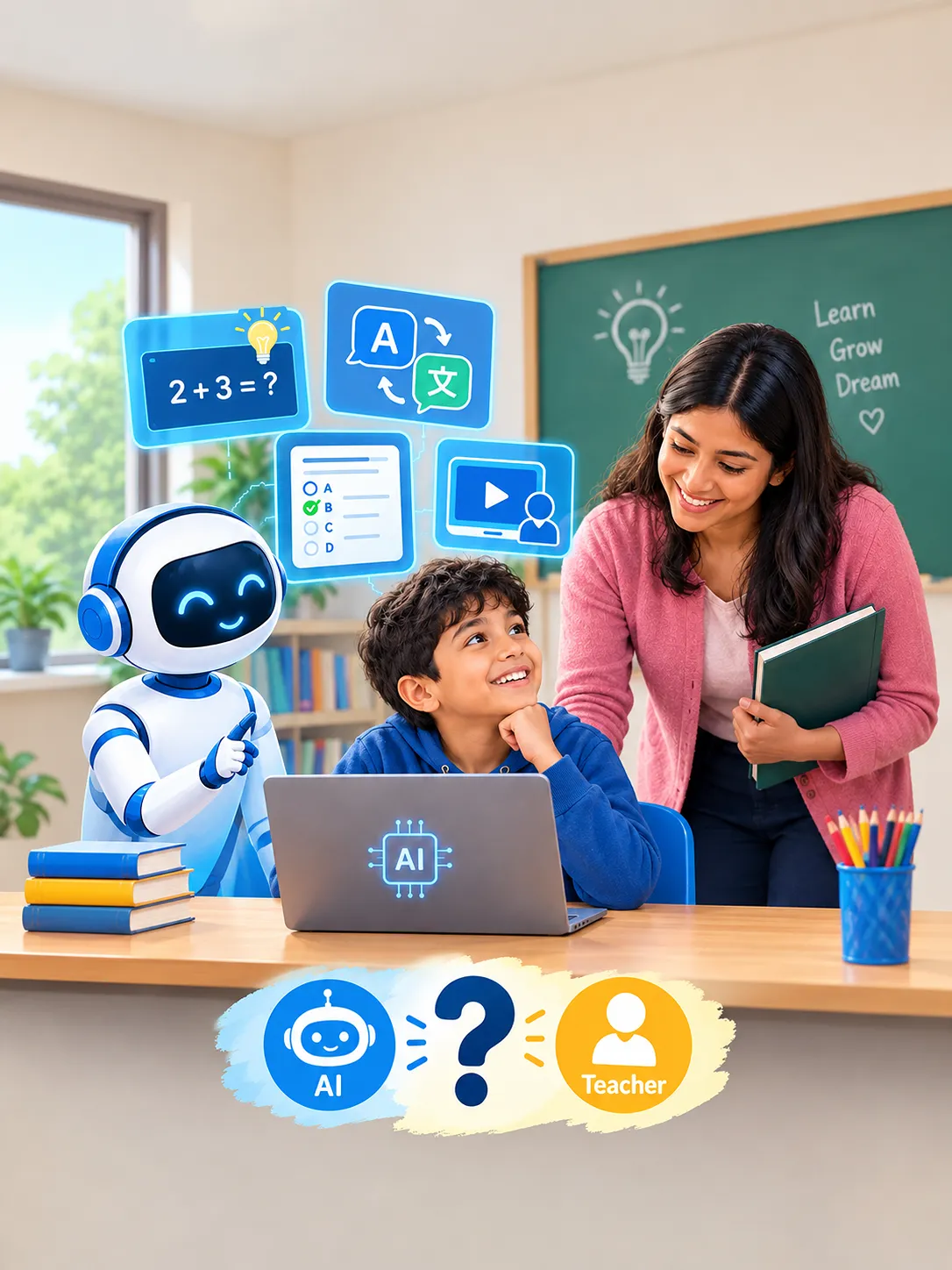
Imagine entering a classroom where a computer answers all your questions, explains difficult maths problems, helps you learn a new language and even creates quizzes just for you. Sounds exciting, doesn’t it?
This is becoming possible because of Artificial Intelligence (AI). AI is changing how children learn, how teachers prepare lessons and how schools use technology.
But here is an important question: Can AI replace human teachers completely?
The short answer is that AI can help teachers and students in many wonderful ways, but it cannot fully replace the human care, understanding and guidance that a good teacher provides. Let’s explore why!
1. What Is Artificial Intelligence?
Artificial Intelligence, often called AI, is technology that allows computers to perform tasks that usually require human intelligence. These tasks include recognising patterns, understanding questions, solving problems and producing text or pictures.
You may already have used AI without realising it. Voice assistants, translation tools, helpful chatbots and some learning apps use AI to perform different tasks.
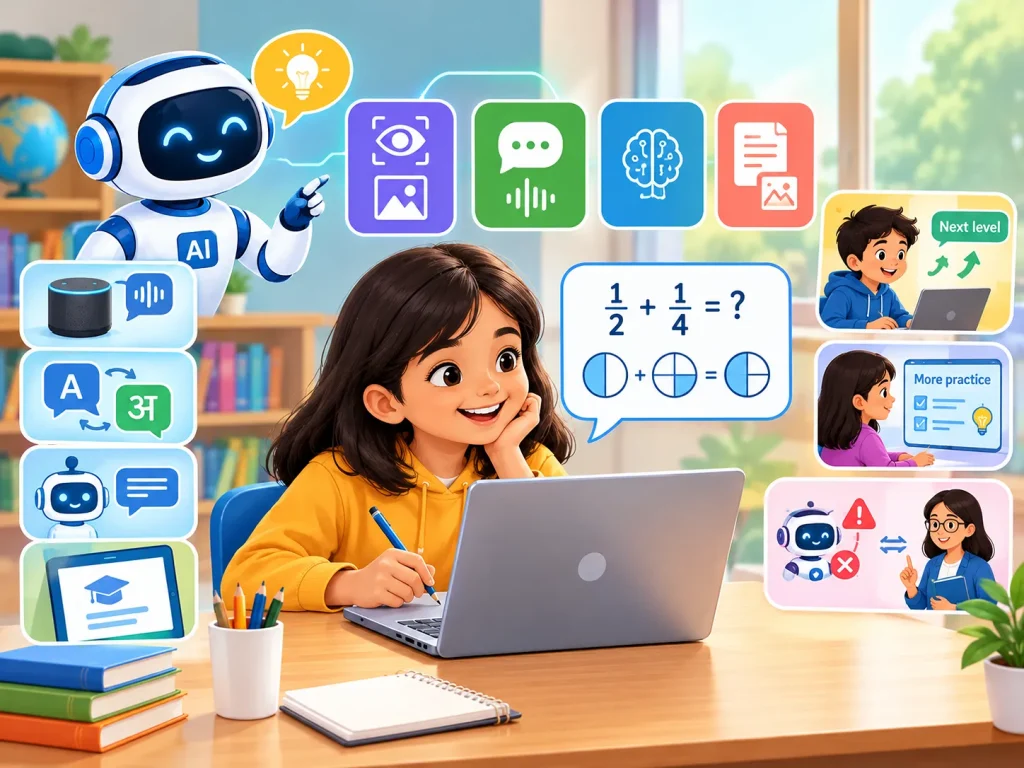
In education, AI can act like a digital learning assistant. For example, if you find fractions difficult, an AI tool can explain them in simple language, provide examples and give you extra questions to practise.
AI can also help you learn at your own pace. If you understand a topic quickly, it can suggest a harder activity. If you need more practice, it can explain the topic in another way.
However, AI does not know everything. It can sometimes make mistakes, give incorrect information or misunderstand a question. That is why checking its answers and asking a teacher for help are still important.
2. How Can AI Help Students Learn?
AI offers several useful ways to make learning more interesting and accessible.
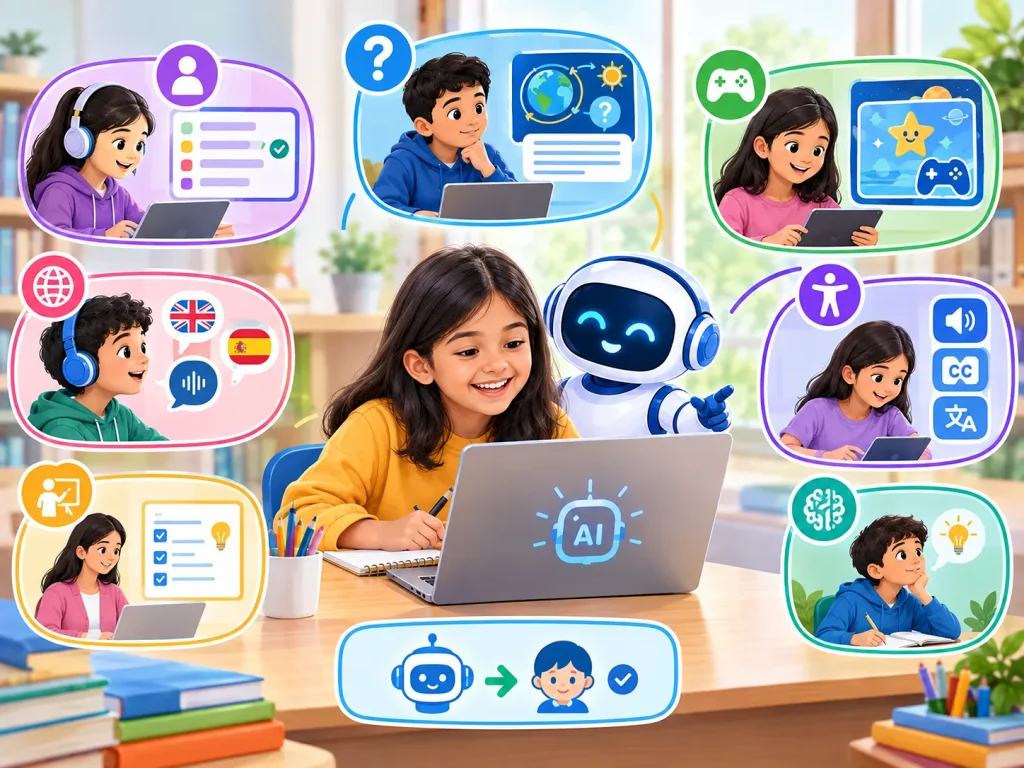
Personalised learning: Every child learns differently. Some understand a topic quickly, while others need more time. AI tools can offer different explanations, practice questions and activities based on a student’s needs.
Instant answers: Suppose you are doing homework and do not understand why the Earth revolves around the Sun. An AI assistant can explain the idea using simple words and examples.
Learning through games: AI-powered educational games can turn revision into an enjoyable activity. Students might solve puzzles, practise spelling or answer science questions while receiving feedback.
Help with languages: AI tools can help students practise vocabulary, understand grammar and learn how words are pronounced.
Support for different needs: Some AI tools can read text aloud, create captions or help translate information. These features may make learning easier for children who need additional support.
AI can also help teachers prepare quizzes, organise lesson ideas and create extra learning materials. This may give teachers more time to work directly with their pupils.
Nevertheless, AI should support learning rather than simply provide answers. Understanding how to solve a problem is more valuable than copying a solution without knowing why it works.
3. Why Are Human Teachers Still Important?
Think about a time when you found a school subject difficult or felt nervous before an exam. Perhaps your teacher encouraged you, explained the topic again or reminded you that making mistakes is part of learning.
These moments show why teachers are so important.
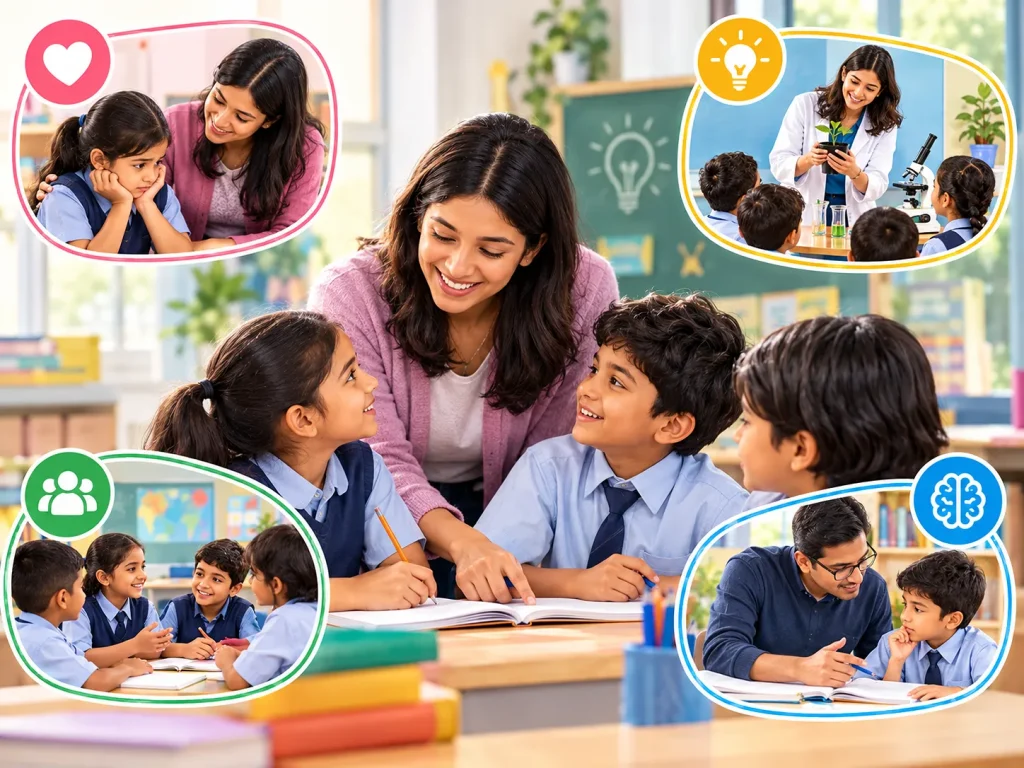
Teachers understand feelings. A human teacher can notice when a pupil looks worried, confused or unhappy. They can offer encouragement, listen carefully and help the child feel more confident. AI can respond to messages about feelings, but it cannot understand human experiences in the same way a person can.
Teachers inspire curiosity. A great teacher does more than explain facts. They encourage children to ask questions, explore new ideas and discover what they love. A science teacher might bring a plant into the classroom or demonstrate a fascinating experiment to make a lesson memorable.
Teachers help us learn to work together. Schools are places where children make friends, share ideas, solve disagreements and learn to respect different opinions. Teachers guide pupils through these experiences, helping them develop communication and teamwork skills.
Teachers use human judgement. Two pupils might give the same incorrect answer for completely different reasons. A teacher can ask follow-up questions, notice what each child is struggling with and change their explanation accordingly.
According to UNESCO, teachers bring human connection, empathy, critical thinking and a sense of belonging into education. Its article, Teachers cannot be coded, explains why teachers must remain at the heart of learning.
4. Can AI Make Mistakes?
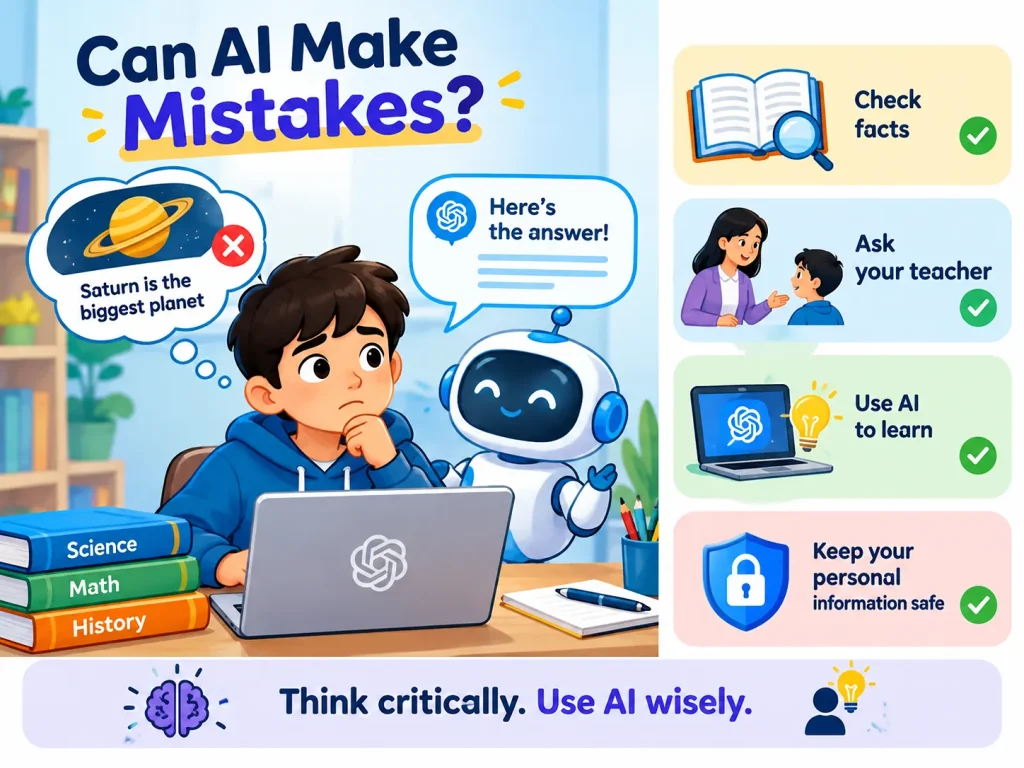
Yes! Although AI can be helpful, it is not always correct.
Imagine asking an AI tool a question about the planets. It might give you a clear answer, but one of its facts could be wrong. Because the answer sounds confident, you might believe it without checking.
AI can also misunderstand questions, miss important details or provide information that is unfair or out of date. Some tools collect personal information, so children should follow their school’s rules and never share private details with an AI assistant.
That is why critical thinking is essential. Critical thinking means examining information carefully instead of believing everything you read.
Students should learn to:
- Check important facts using reliable books and trusted websites.
- Ask their teachers when an answer seems confusing or incorrect.
- Use AI to understand ideas rather than simply copying its answers.
- Protect personal information when using digital tools.
AI should help children become better thinkers, not make decisions for them. Teachers can show pupils how to use technology safely, honestly and responsibly.
5. What Are the Disadvantages of Using AI in Schools?
AI has many advantages, but there are also challenges that schools need to consider.
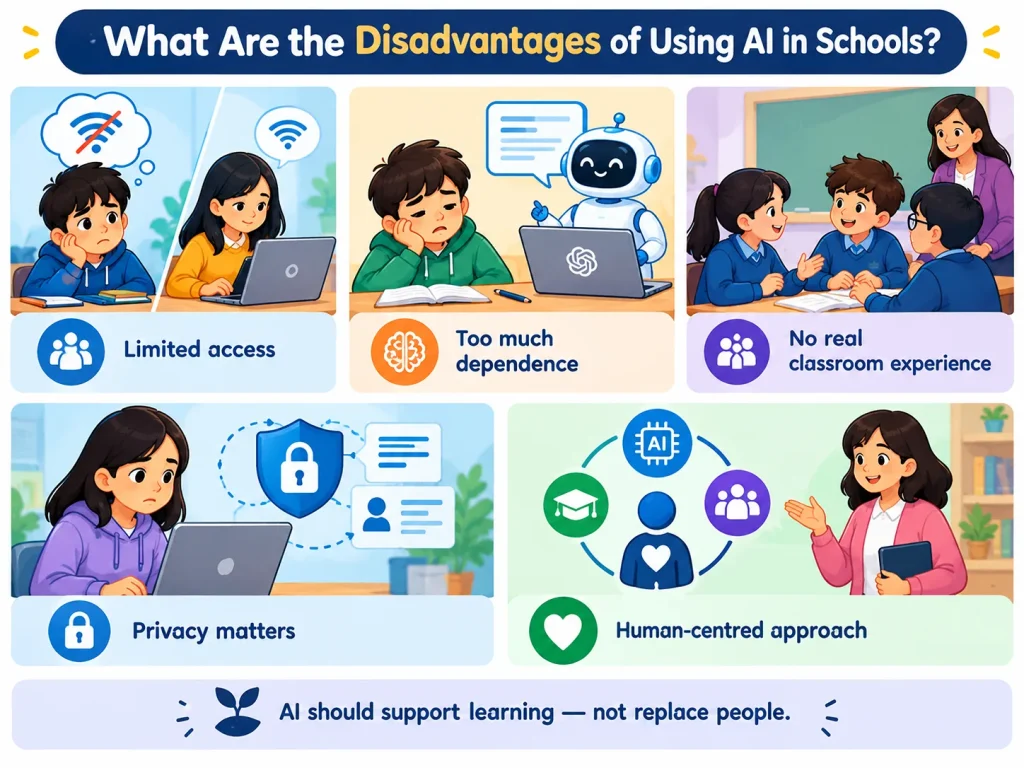
Not everyone has access to technology. Some children may not have a computer, a tablet or a reliable internet connection at home. If schools depend too much on AI, these pupils could miss out on learning opportunities.
Too much dependence can weaken learning. If students ask AI to complete every assignment, they may miss opportunities to practise writing, solve problems independently and develop their own ideas.
AI cannot replace every classroom experience. A computer can explain teamwork, but children need real opportunities to work with classmates. It can suggest ways to resolve disagreements, but a human teacher can help pupils understand each other’s feelings.
Privacy matters. Schools must be careful about how AI tools collect and use pupils’ information.
UNESCO recommends a human-centred approach to AI in education, meaning that technology should benefit learners without increasing unfairness or reducing valuable human interaction.
6. What Will Classrooms Look Like in the Future?
In the future, classrooms may combine the best parts of human teaching and AI technology.
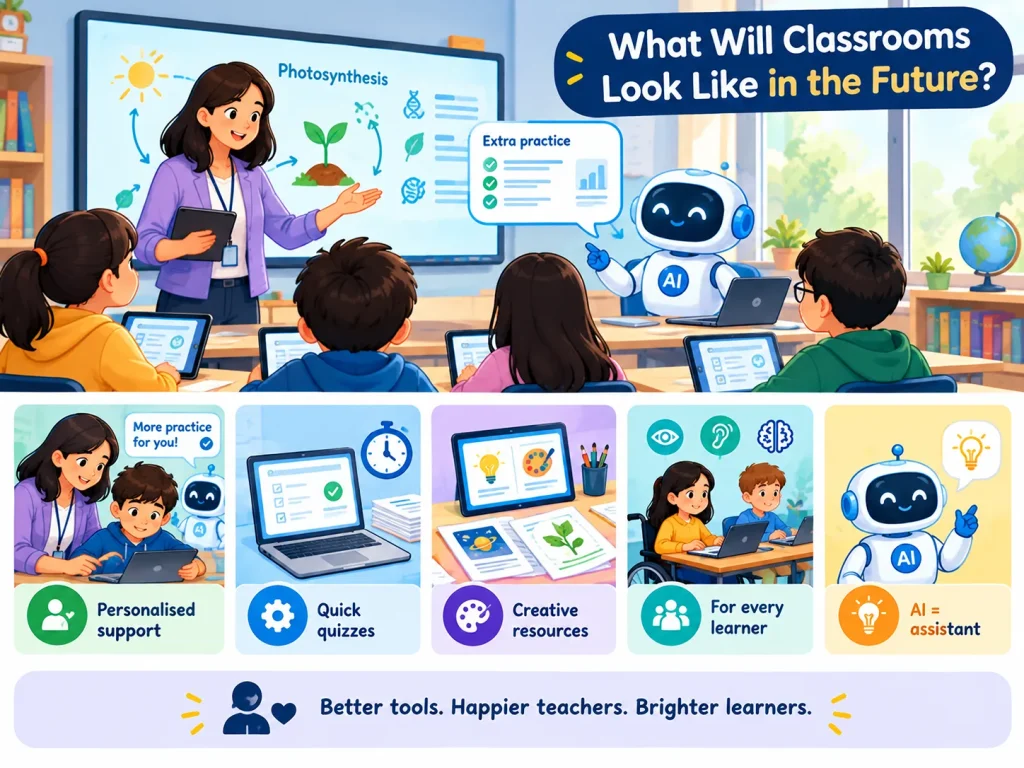
Imagine a classroom where a teacher explains a science lesson while an AI programme prepares extra activities for pupils who need more practice. Another tool might help the teacher check quizzes quickly, leaving more time for experiments, discussions and individual support.
Teachers may also use AI to create colourful worksheets, suggest creative projects and adapt lessons for children with different learning needs.
In this classroom, AI would be a teaching assistant, not the teacher in charge.
The goal should not be to replace teachers with machines. Instead, it should be to use technology wisely so that both teachers and pupils benefit.
7. So, Can AI Replace Human Teachers?
The answer is that AI can perform some teaching tasks, but it cannot fully replace human teachers.
AI is excellent at providing quick explanations, offering practice activities and helping people find information. It can make learning more flexible and help teachers save time.
However, education is about much more than remembering facts or answering questions. It is also about building confidence, developing friendships, learning to think independently and discovering how to treat other people with kindness.
A good teacher can inspire a child to become a scientist, an artist, an engineer or an explorer. They can encourage pupils when learning becomes difficult and celebrate their achievements along the way.
AI can support these efforts, but the human relationship between a teacher and a pupil remains essential.
The best classrooms of the future will probably be those where human teachers and AI work together. Technology can help us learn, but people help us understand why learning matters.
So, the next time you use an AI learning tool, remember this: let it help you ask better questions, explore new ideas and practise your skills. And never be afraid to ask your teacher for guidance!
For more interesting articles, please visit www.kidzherald.com


