
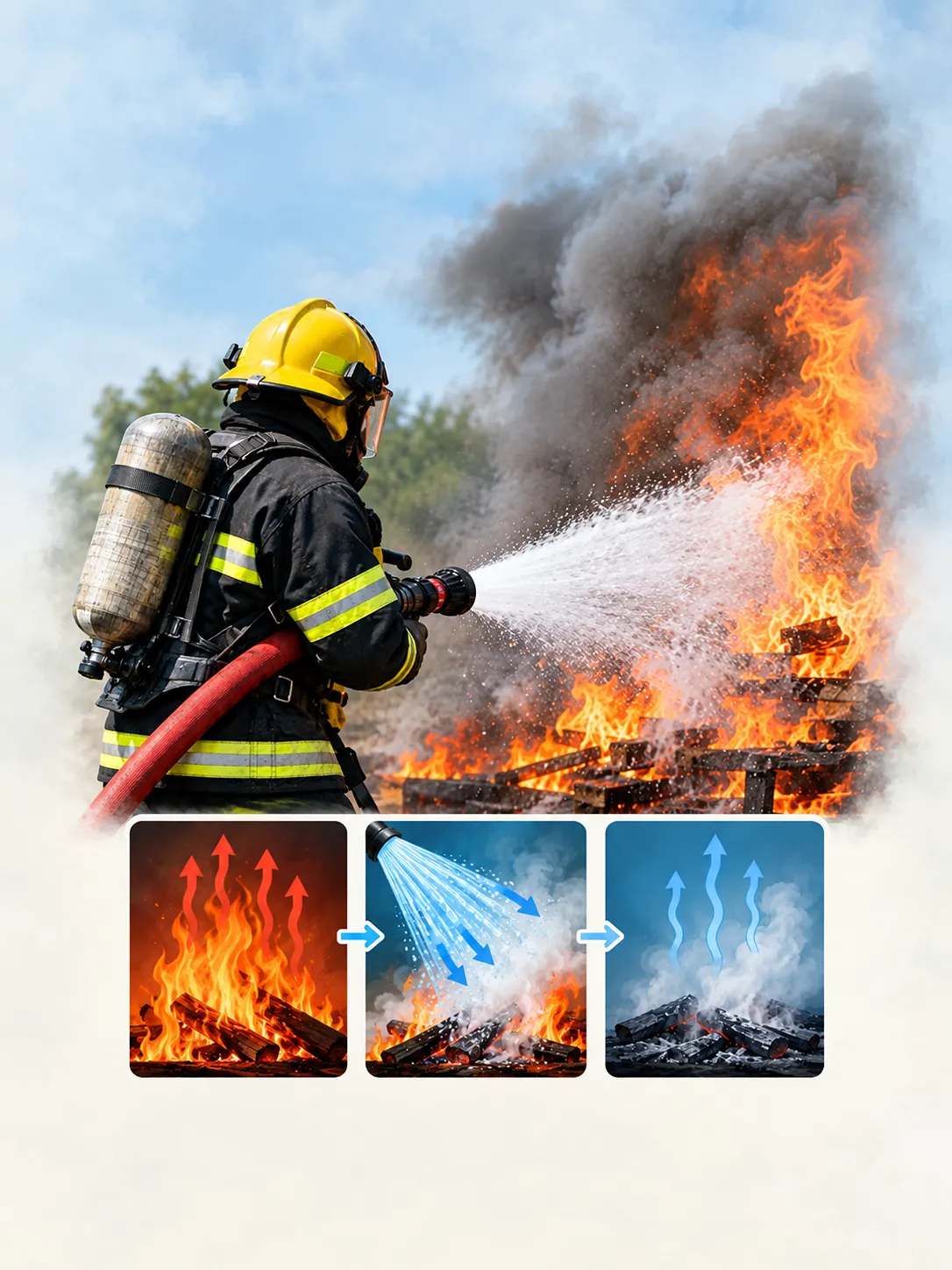
Have you ever wondered why firefighters often use so much water to fight fires?
It might seem surprising. Fire is hot, while water is cool, so the answer may seem obvious. But there is some fascinating science behind it.
Water does not simply make flames disappear. Its main job is to remove heat from the fire and the burning material. When enough heat is removed, the fire can no longer continue burning.
So, how does this happen?
What Does a Fire Need?
To understand how water puts out a fire, we first need to understand what a fire needs to keep going.
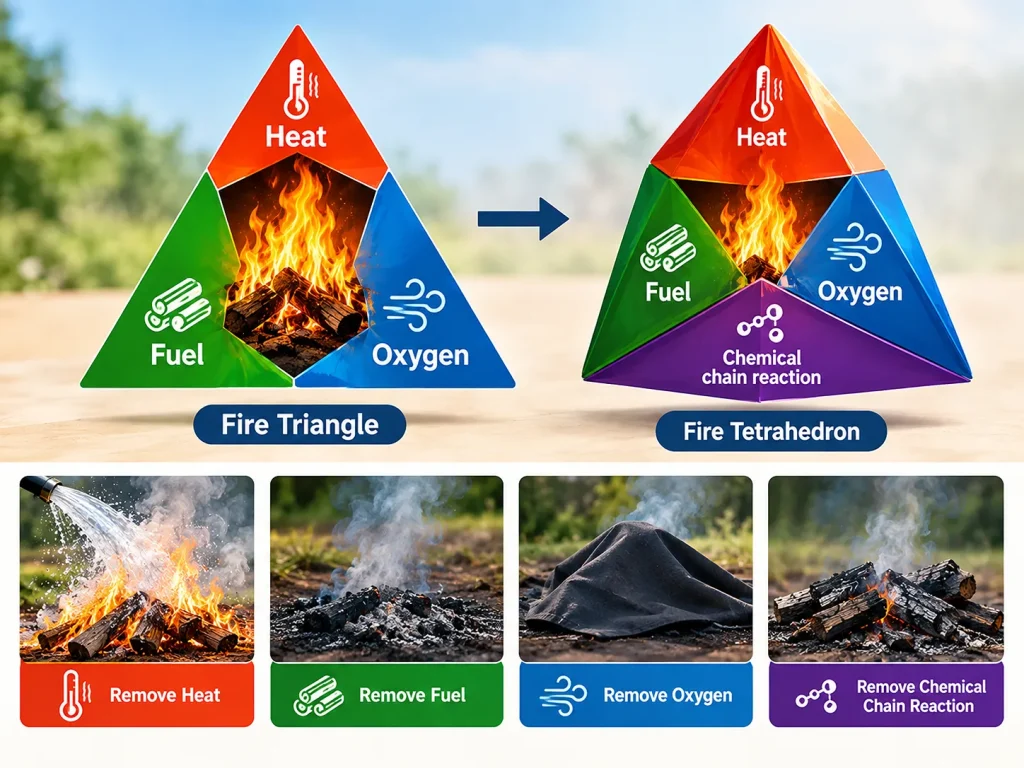
A simple model called the fire triangle shows three important ingredients:
- Heat
- Fuel
- Oxygen
If you remove one of these, the fire cannot continue in the usual way. Fire science also recognises a fourth element — a chemical chain reaction — which is why firefighters sometimes use the more detailed fire tetrahedron model.
Think of a fire as needing a recipe.
Take away an important ingredient, and the recipe no longer works.
Water Removes Heat
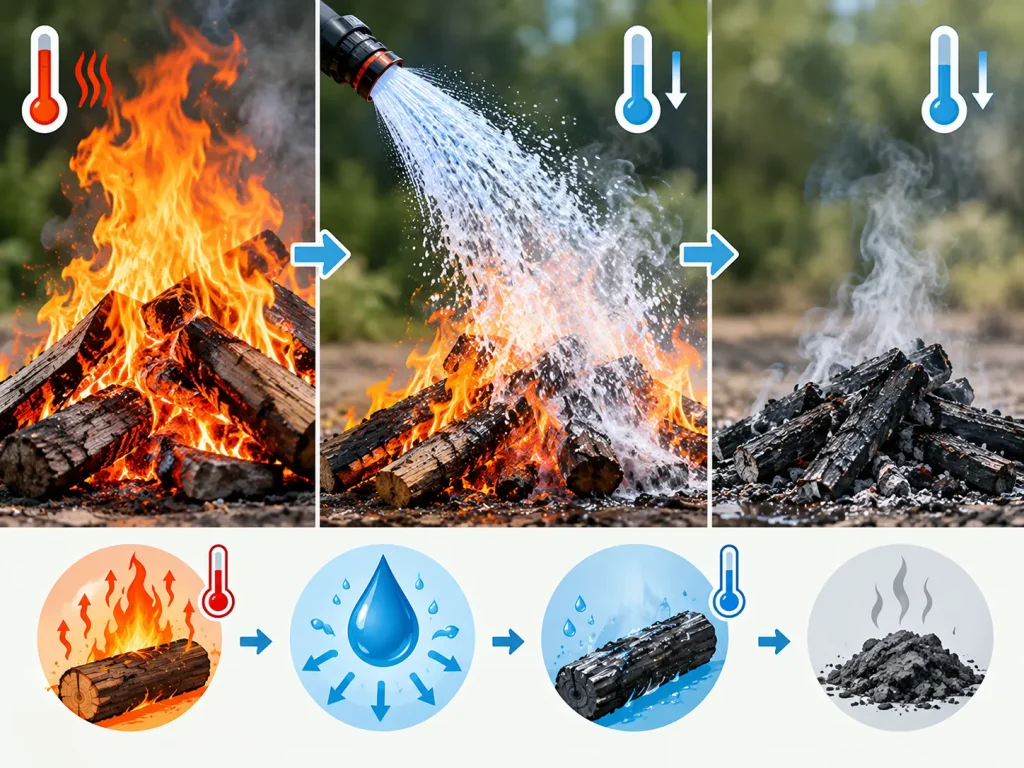
The most important way water fights many ordinary fires is by absorbing heat.
Imagine a piece of wood burning. The flames are producing a great deal of heat. That heat keeps the wood hot enough to keep burning.
When firefighters apply water, the water absorbs some of that heat.
As the burning material becomes cooler, it eventually falls below the temperature needed to keep the fire going.
The flames then disappear.
The US Fire Administration describes water as a common way of extinguishing fires because it absorbs heat and lowers the temperature below the ignition temperature of burning materials.
But Why Does Water Absorb So Much Heat?
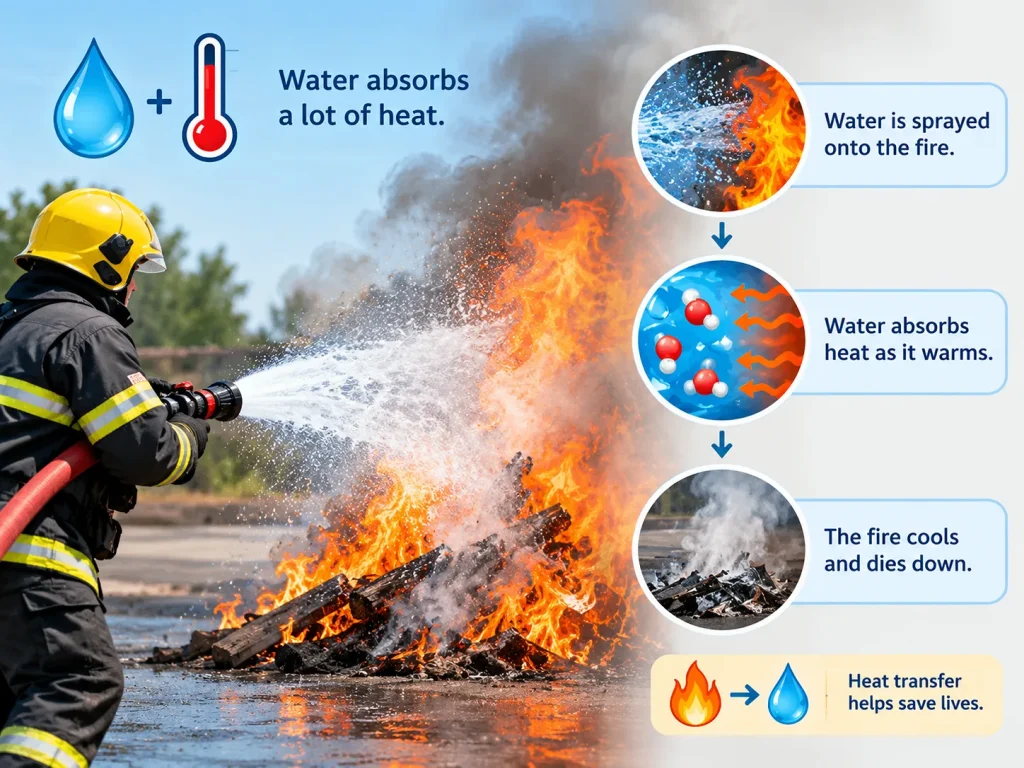
Water has a useful scientific property: it takes a lot of energy to raise its temperature.
When water is sprayed onto a fire, it can absorb a large amount of heat as it warms.
If enough heat transfers from the fire into the water, the burning material cools.
This is why water is such a useful firefighting material.
It is not magic.
It is heat transfer.
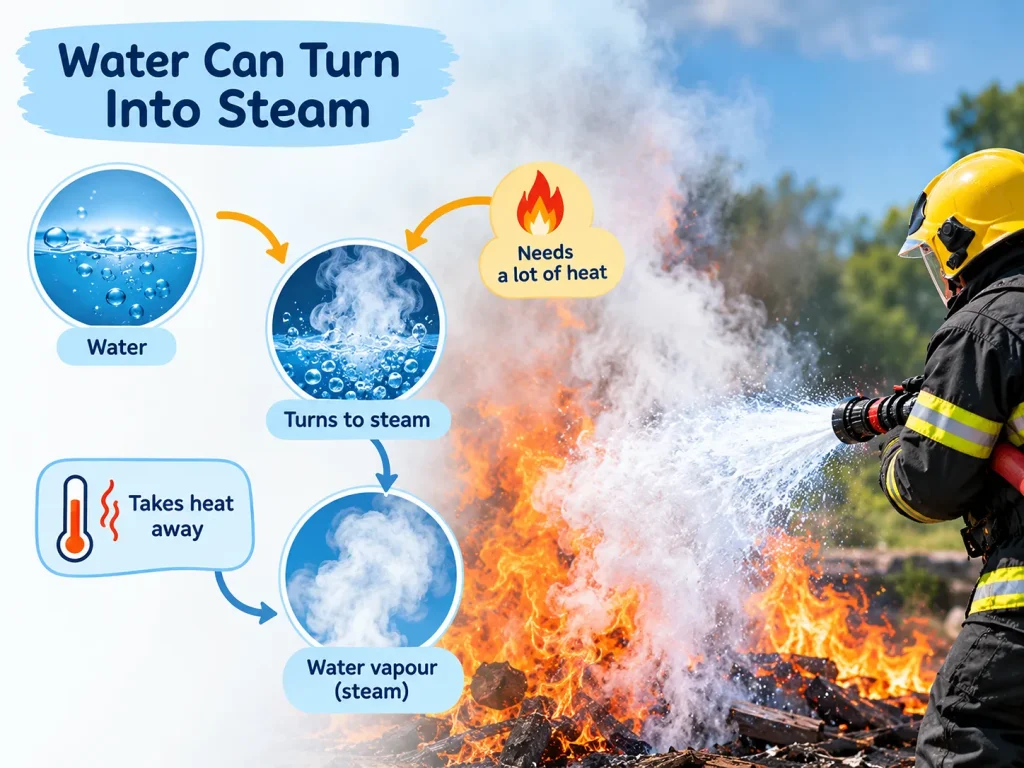
Water Can Turn Into Steam
There is another interesting part of the process.
If water becomes hot enough, it changes from a liquid into a gas called water vapour, commonly known as steam.
Changing liquid water into water vapour requires a large amount of energy.
That energy comes from the surrounding hot material and fire.
So, when water changes into steam, it takes a lot of heat away with it.
This makes the cooling effect even more useful.
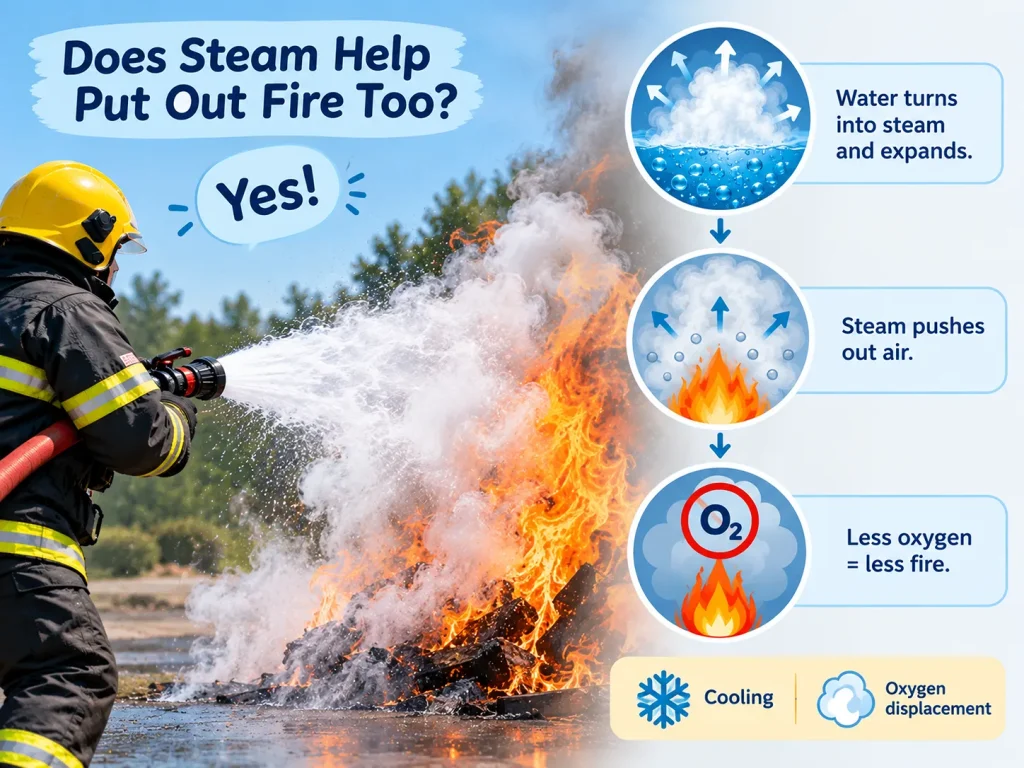
Does Steam Help Put Out Fire Too?
It can.
When water becomes steam, it expands enormously compared with its liquid form. In the immediate area around a fire, steam can displace some of the surrounding air.
Because fire needs oxygen to keep burning, reducing the amount of oxygen available near the flames can help suppress combustion.
Firefighting training materials describe water as having both a cooling effect and, when it becomes steam, a potential oxygen-displacement effect.
However, cooling is the main idea to remember when explaining why water is effective against many ordinary fires.
Why Do Firefighters Use Water Sprays?
You might have seen firefighters using a hose that produces a spray of many small droplets rather than one enormous stream.
There is a scientific reason for this.
Small droplets have a larger total surface area compared with the same amount of water in one large stream. This lets heat transfer from the hot surroundings to the water more effectively.
The droplets can heat up and turn into vapour, carrying heat away from the fire.
So, a cloud of tiny droplets can be very useful for cooling.
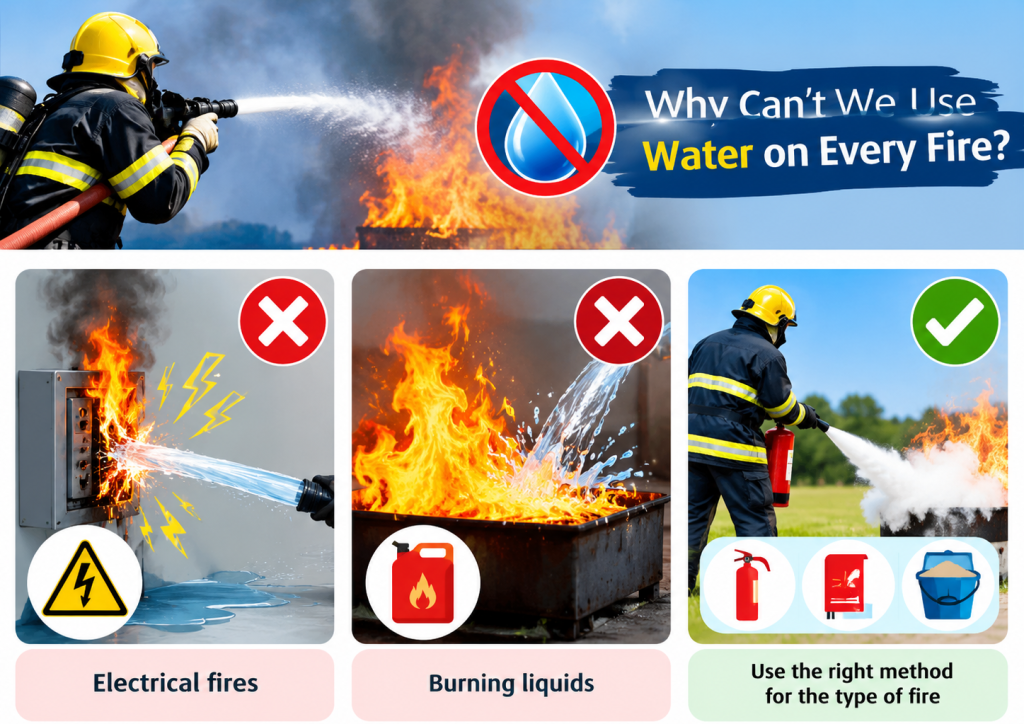
Why Can’t We Use Water on Every Fire?
This is very important.
Water is not suitable for every type of fire.
For example, you should not pour water onto a fire involving electrical equipment because water can conduct electricity and create an electric shock hazard.
Water can also be dangerous on certain burning liquids because it may spread the burning material rather than safely extinguishing it.
That is why firefighters choose firefighting methods based on the type of fire.
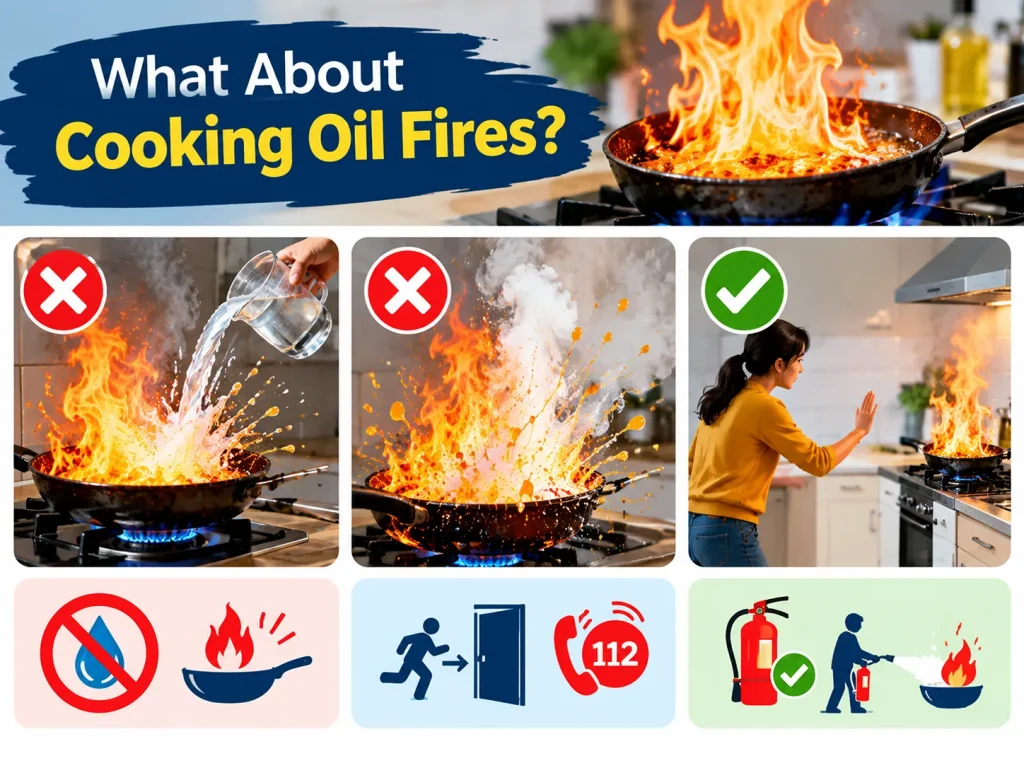
What About Cooking Oil Fires?
A particularly important example is a fire involving hot cooking oil.
Pouring water onto burning oil can cause a dangerous boil over or rapid splashing, because water can turn into steam extremely quickly when it contacts very hot oil. The expanding steam can throw burning oil around and make the fire worse.
This is why you should never experiment with putting water on a cooking-oil fire.
If a fire starts while cooking, move away and ask an adult or emergency services for help. Only use firefighting equipment if it is appropriate and you have been taught how to use it safely.
Why Is Water So Commonly Used?
Water has several advantages.
It is:
- Widely available.
- Relatively inexpensive.
- Easy to transport through hoses.
- Very effective at absorbing heat.
- Useful for cooling burning materials and nearby objects.
Firefighters can use water from hydrants, tanks and other water supplies, depending on the situation.
Large fires may require enormous quantities because they can produce huge amounts of heat.
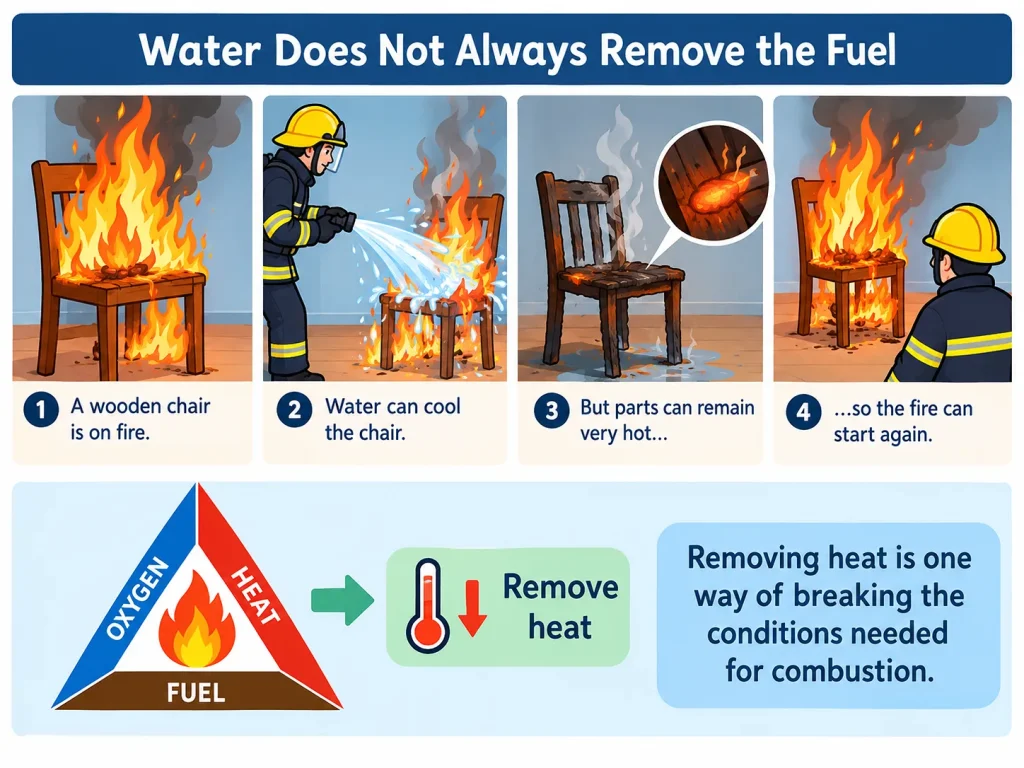
Water Does Not Always Remove the Fuel
Imagine a wooden chair on fire.
Spraying water onto the flames can cool the chair.
But if parts of the chair remain extremely hot, the fire could start again once the water is gone.
Firefighters therefore need to make sure the burning material has cooled sufficiently, and the fire is properly controlled.
This demonstrates an important idea from the fire triangle:
Removing heat is one way of breaking the conditions needed for combustion.
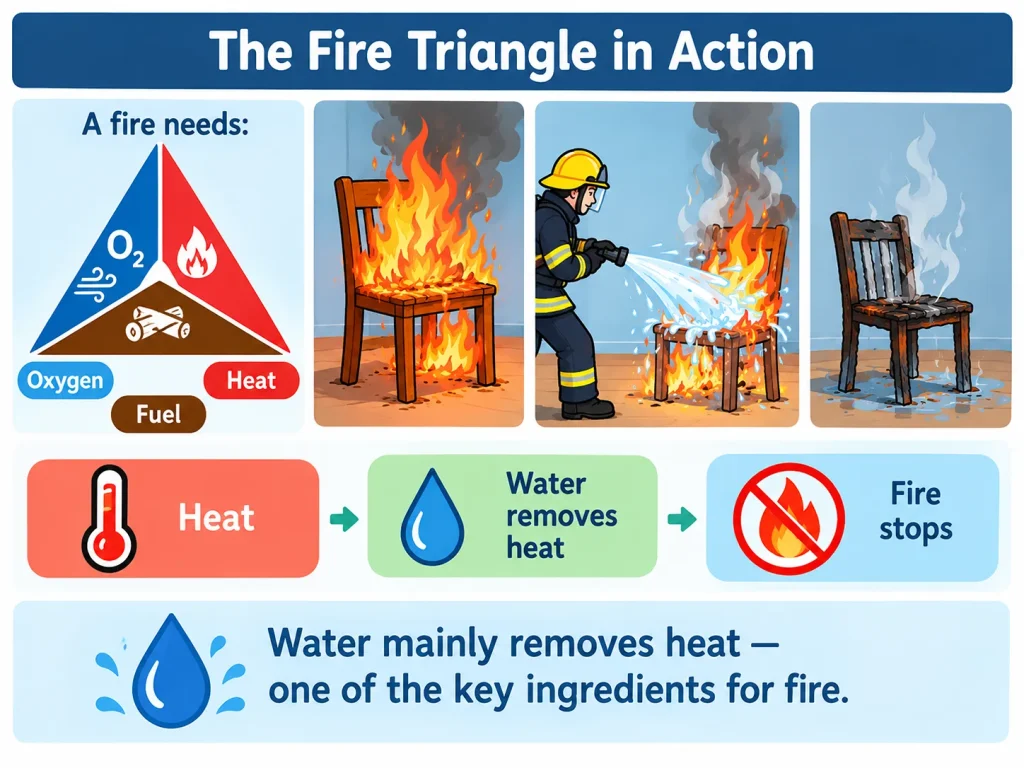
The Fire Triangle in Action
Let’s put everything together.
A fire needs:
Heat
Fuel
Oxygen
Water mainly attacks the first part — heat.
It absorbs energy from the burning material and lowers its temperature.
If the material cools enough to stop producing the conditions needed for combustion, the flames go out.
So, you can think of water as removing one of fire’s most important ingredients.
A Simple Everyday Example
Imagine placing an ice cube on a warm surface.
The ice absorbs heat from its surroundings and begins to melt.
Water works in a similar general way when fighting fire, although the temperatures and energy involved are much greater.
Instead of the water simply sitting there, it absorbs heat and may eventually turn into water vapour.
That heat transfer is what makes the difference.
The Big Idea
So, how does water kill fire?
The main answer is cooling.
Water absorbs heat from burning materials. When enough heat is removed, the material can fall below the temperature needed to keep burning, and the fire goes out. Water turning into steam can also absorb large amounts of heat and may reduce oxygen around the fire.
But remember water is not suitable for every kind of fire. Some fires, especially those involving electricity or very hot cooking oil, require different approaches.
Fire is a powerful chemical reaction, but it needs the right conditions to continue.
Take away an important part of those conditions — especially the heat — and the flames can disappear.
So, the next time you see firefighters using water, remember that they are not simply “washing away” the fire.
They are using the science of heat transfer to take away the energy that keeps the fire burning!
For more interesting articles, please visit www.kidzherald.com