
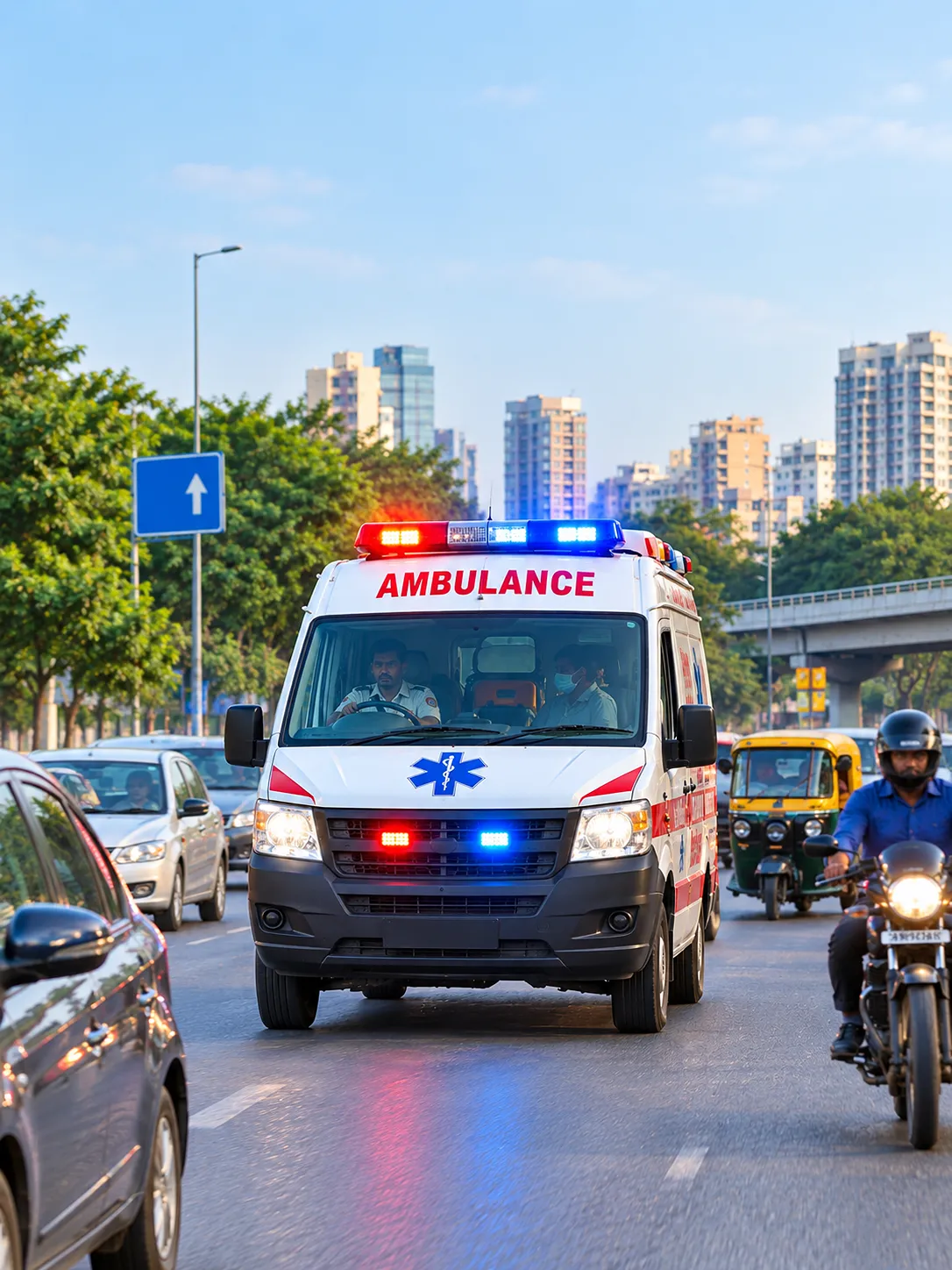
Imagine an ambulance rushing through busy city traffic. Its siren is sounding, its lights are flashing, and someone inside needs medical help quickly.
You might wonder: If an ambulance goes faster than the normal speed limit, can the driver get a speeding ticket?
The answer is a little more complicated than simply saying “yes” or “no”.
In India, emergency vehicles such as ambulances have special rules when they are responding to genuine emergencies. The Motor Vehicles (Driving) Regulations, 2017 allow an emergency vehicle, when its siren and flashing warning light are operating, to exceed the specified speed limit in an “utmost emergency”, such as when saving a human life. However, the driver must do so with utmost care, responsibility and caution. Let’s understand how this works.
Why Do Ambulances Need to Drive Quickly?
An ambulance is a vehicle specially designed to transport people who are ill or injured and, in many cases, provide medical care while travelling.
When someone has a serious medical emergency, time can be extremely important.
For example, an ambulance may need to take a patient to a hospital quickly. Traffic jams, busy junctions, and long distances can all slow the journey.
This is why emergency vehicles receive special consideration on the road.
The Motor Vehicles (Driving) Regulations, 2017 state that an emergency vehicle using its multi-toned horn and flashing light during an emergency has the right of way over other vehicles.
That means other road users should safely make way.

Can an Ambulance Exceed the Speed Limit?
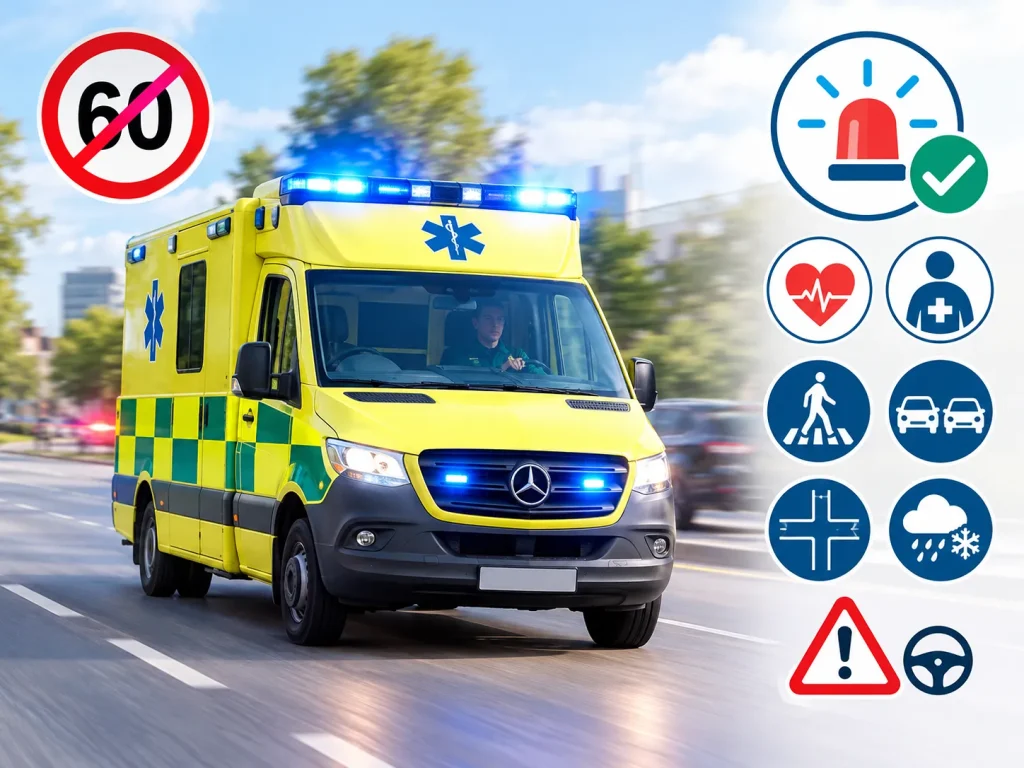
Under the 2017 driving regulations, yes, in an utmost emergency, an emergency- vehicle driver may exceed the specified speed limit when the siren and flashing warning light are operating.
The regulation specifically includes situations such as saving a human life or preventing serious harm to a person’s health.
But there is an important condition:
The driver must still act with great care and caution.
The special rule does not mean an ambulance can simply drive as fast as possible.
The driver must consider pedestrians, other vehicles, junctions, road conditions and everyone’s safety.
What If There Is No Emergency?
This is where things become different.
The special emergency provisions are connected to an ambulance responding to an emergency.
An ambulance travelling normally, without responding to an emergency, should not be treated as having unlimited permission to ignore traffic laws.
India’s Motor Vehicles Act contains general speed-limit rules. Section 112 says that vehicles must not exceed the applicable maximum speed limits. Section 183 deals with driving in contravention of those limits.
So, the special emergency provision should not be understood as a permanent exemption from speed limits.
What About Dangerous Driving?
There is another important rule.
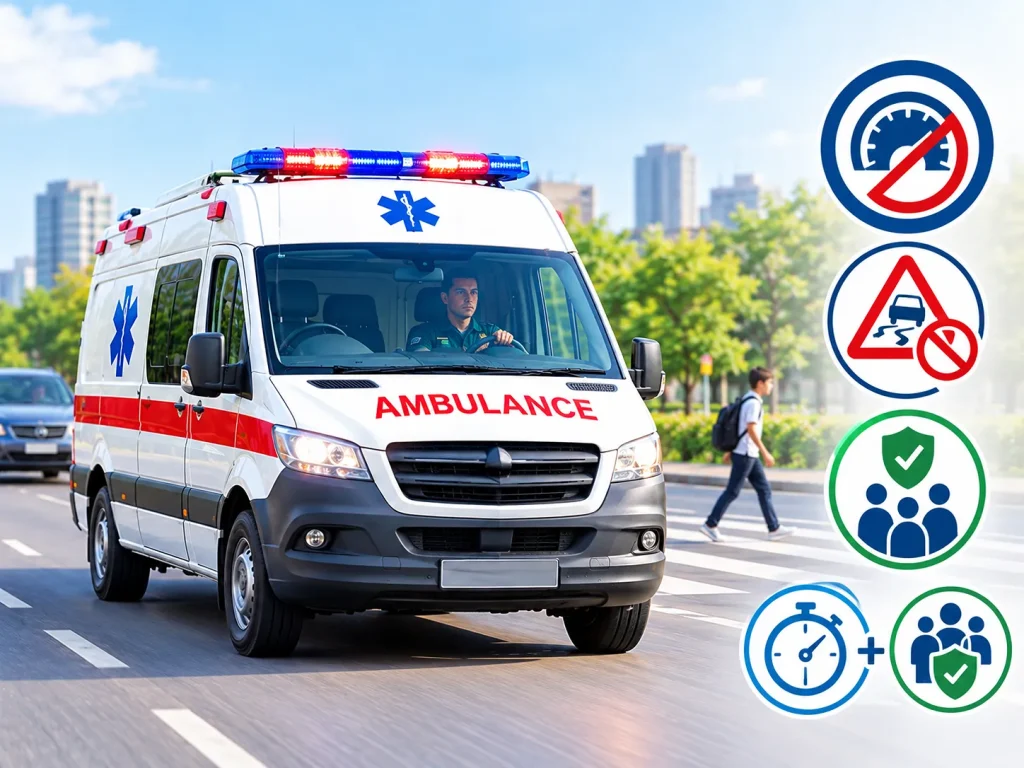
Even during an emergency, an ambulance driver must take care not to put other people in unnecessary danger.
Section 184 of the Motor Vehicles Act deals with dangerous driving. It covers driving at a speed or in a manner that is dangerous to the public, taking road and traffic conditions into account.
This is important because an ambulance driver’s job is not simply to get somewhere quickly.
The driver has two responsibilities:
- Reach the destination quickly when necessary.
- Do everything reasonably possible to keep people on the road safe.
Speed alone does not make an emergency journey successful.
What Do the Siren and Flashing Lights Mean?
When an authorised emergency vehicle responds to an emergency, its siren and flashing warning light signal other road users.
The 2017 regulations say that designated emergency vehicles, including ambulances, should operate these warning signals when responding to an emergency call or alarm. When the siren and flashing light are operating, the emergency vehicle has the right of way.
This tells other drivers:
“Please make way — an emergency vehicle is coming.”
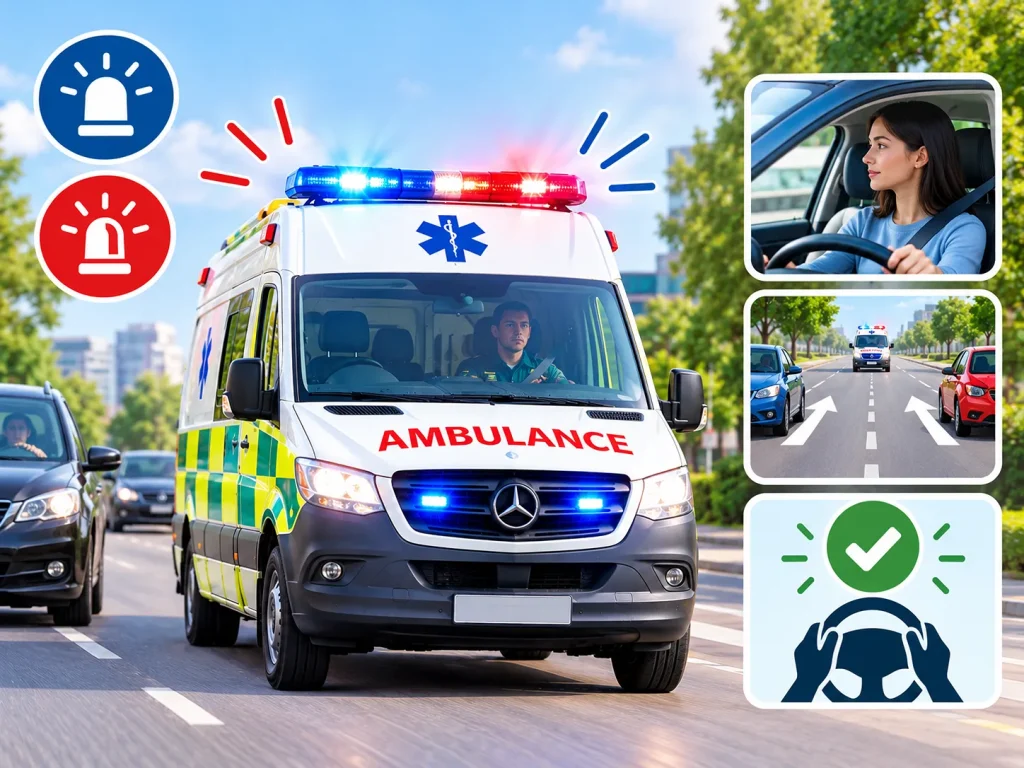
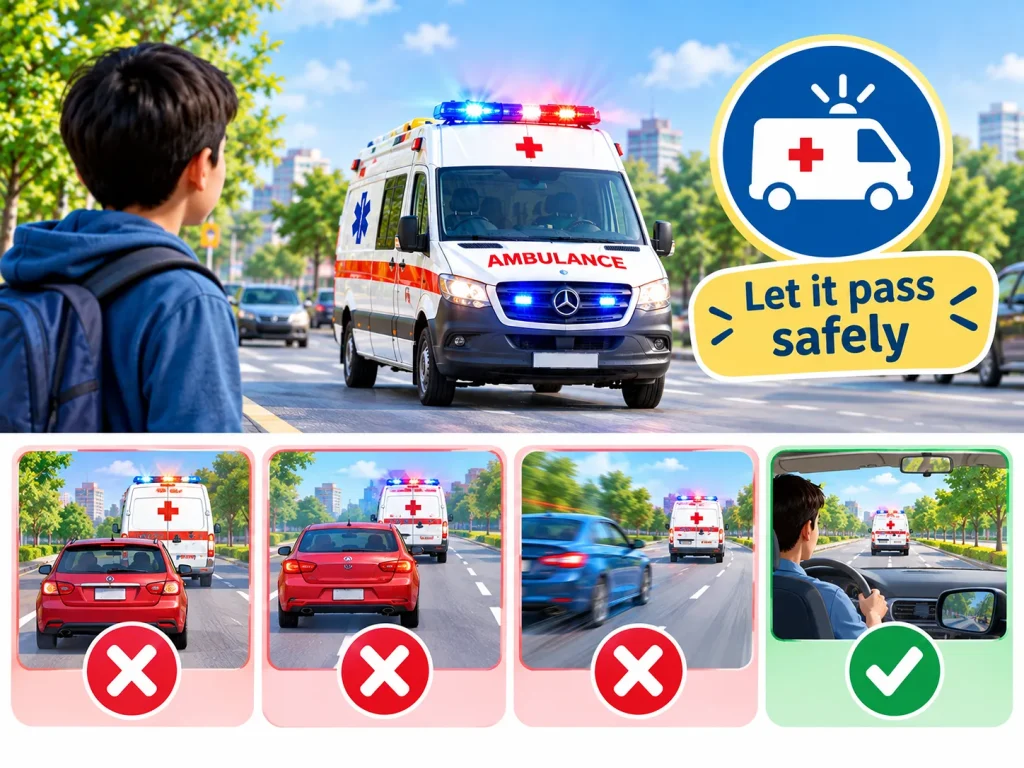
If you hear an ambulance approaching, the safest response is to remain calm, look around carefully and allow it to pass when you can do so safely.
Do Other Drivers Have to Give Way?
Yes.
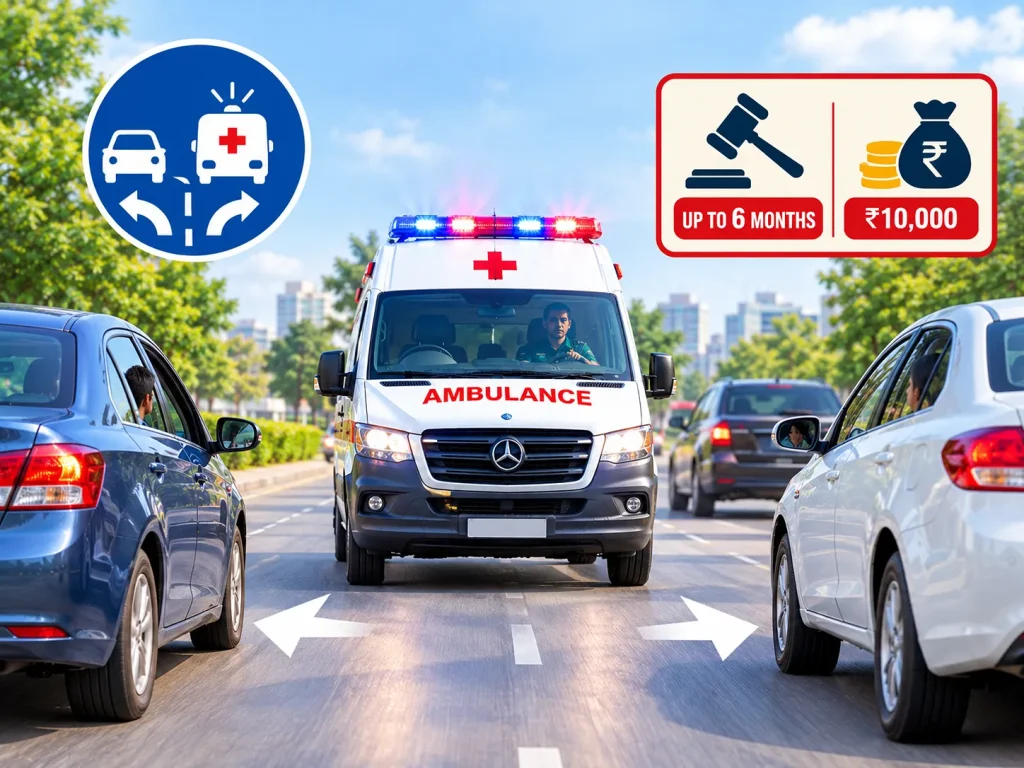
India’s Motor Vehicles Act contains a specific provision requiring drivers to allow free passage to ambulances and other specified emergency vehicles.
Section 194E says that failing to draw to the side of the road when an ambulance or other specified emergency vehicle approaches can result in imprisonment of up to six months, a fine of ₹10,000, or both.
This shows just how important it is for traffic to make room for emergency services.
Can an Ambulance Go Through a Red Light?
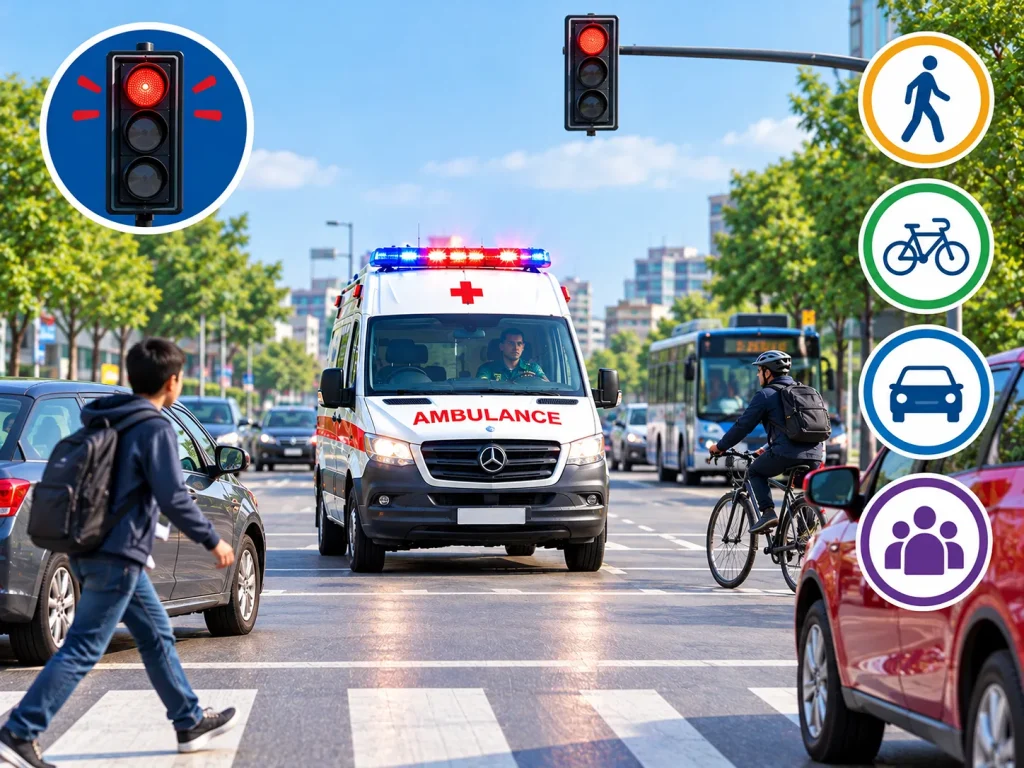
In an utmost emergency, the 2017 regulations allow an emergency vehicle with its siren and flashing light operating to cross a red traffic light, provided the driver does so with utmost care, responsibility and caution. Again, this does not mean the driver can race through a junction without looking.
Imagine an ambulance approaching a busy crossroads.
Even with special permission in an emergency, the driver still needs to watch for pedestrians, cyclists, cars, and other road users.
Getting through the junction safely is extremely important.
Why Are These Rules Necessary?
Emergency vehicles need special treatment because their journeys can involve life-or-death situations.
At the same time, roads contain many other people.
If an ambulance drove dangerously while trying to save someone, it could cause another accident and create even more emergencies.
That is why the rules try to balance speed and safety.
The ambulance needs to reach the patient or hospital as quickly as reasonably possible, but the driver must remain careful and responsible.
What Should Children Remember?
If you see an ambulance with its siren and flashing lights on, remember one simple rule:
Let the ambulance pass safely.
Do not try to race it, follow closely behind it or block its path.
Adults driving nearby should remain calm and make room when it is safe to do so.
Even a few seconds can matter when emergency workers are taking someone to medical care.
The Big Idea
So, can ambulance drivers get speeding tickets in India?
An ambulance does not have blanket permission to speed whenever it wants. However, India’s Motor Vehicles (Driving) Regulations, 2017 provide special rules for emergency vehicles responding to an utmost emergency. When the required warning signals are operating, an emergency vehicle may, with great care and caution, exceed the specified speed limit and take certain other actions that ordinary drivers cannot.
The key idea is emergency plus responsibility.
Ambulance drivers may need to travel faster than normal to save lives, but they still have to drive carefully and responsibly.
And for everyone else on the road, the message is simple:
When you hear an ambulance siren, make way safely. You could be helping someone get the medical care they urgently need.
For more interesting articles, please visit www.kidzherald.com


