

Have you ever been sitting quietly in class when suddenly your stomach makes a loud “Grrrrrrr!”?
Everyone turns around.
You look down at your tummy and think, “I haven’t even said anything!”
Stomach growling can be surprising, funny and sometimes a little embarrassing. But it is a completely normal part of how your digestive system works.
The interesting thing is that your stomach does not only make noises when you are hungry. Your digestive system is almost always moving, squeezing and mixing things. When your stomach and intestines are empty, however, these movements can become easier to hear.
So, what causes that famous growl?
Your Digestive System Is Always Moving
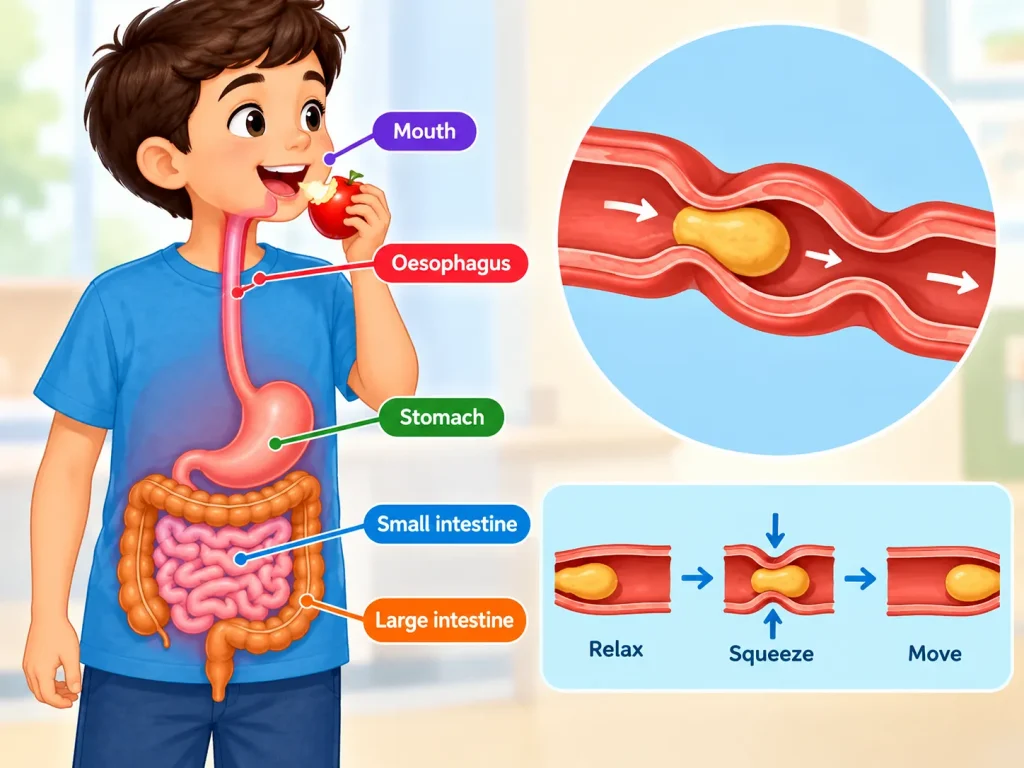
Your digestive system is like a long, winding tube running through your body.
It includes your:
- Mouth
- Oesophagus
- Stomach
- Small intestine
- Large intestine
After you eat, muscles in the walls of your digestive system squeeze and relax in waves. These movements help push food, liquid and gas through the digestive tract.
This process is called peristalsis.
You don’t have to think about making these movements happen. Your digestive system does the job automatically.
It is a conveyor belt inside your body, gently moving things along.
Why Does It Growl When You Are Hungry?
After you have eaten a meal, your stomach contains food, liquid and gas. These can help muffle some of the sounds your digestive system makes.
After several hours without food, however, your stomach and small intestine can become relatively empty.
Your digestive tract still moves.
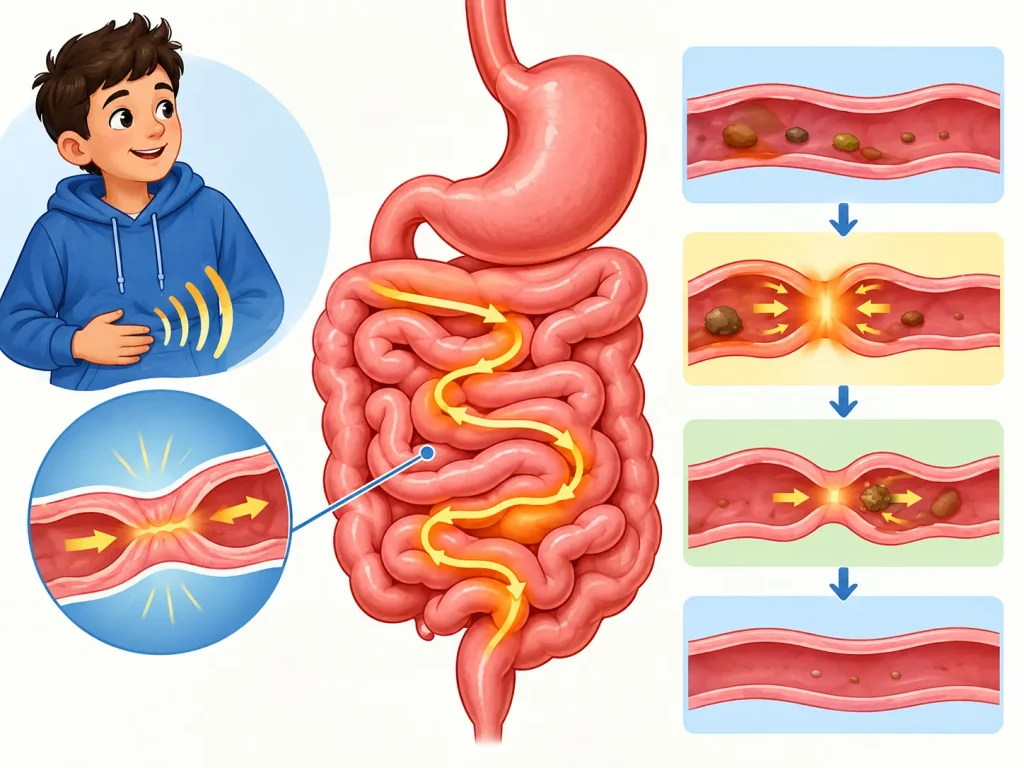
In fact, during fasting, it undergoes repeated waves of activity called the migrating motor complex, or MMC. These waves help move leftover material through the digestive system.
When these muscles squeeze around an emptier digestive tract, they can move air and liquid around.
The movement creates vibrations.
Those vibrations can produce the familiar:
GRRRR… GURGLE… RUMBLE!

It Is Not Really Your Stomach Making All the Noise
Here’s a surprising fact.
We often call it a “stomach growl”, but the sound does not necessarily come from the stomach.
The small intestine can make similar noises too.
Your digestive tract contains gas and liquid, and muscular contractions move them along. The hollow spaces in the digestive system can make these sounds easier to hear, particularly when there is not much food inside to muffle them.
So, when your tummy makes a loud noise, your intestines might deserve some of the blame!

What Is Peristalsis?
Let’s take a closer look at peristalsis.
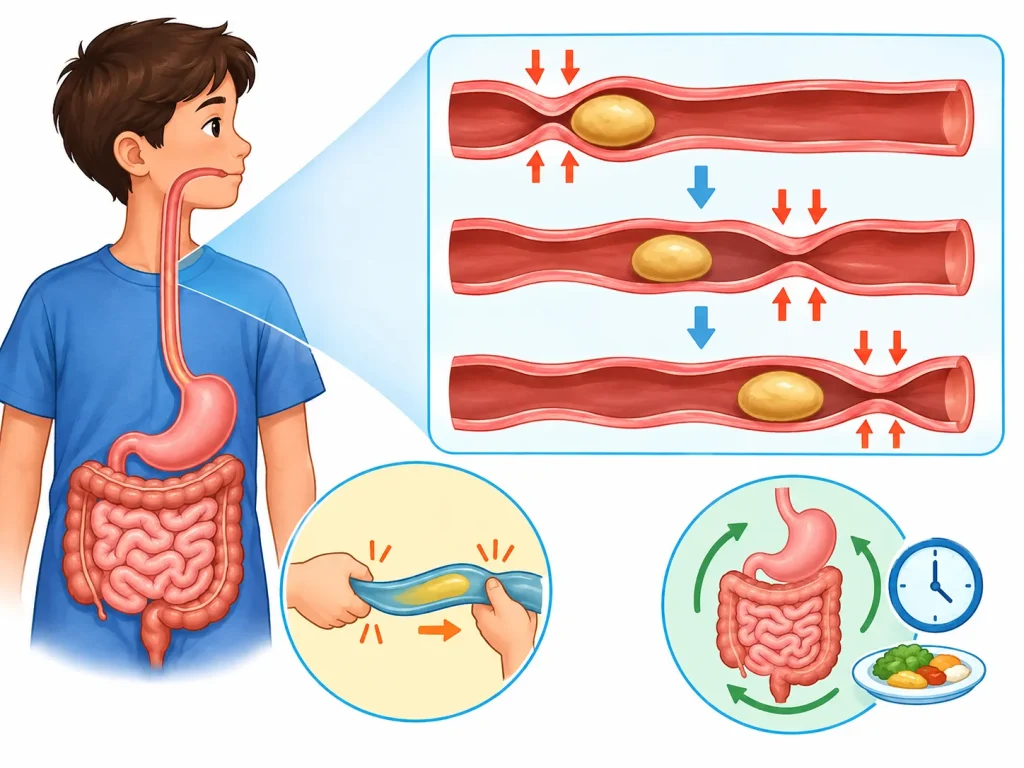
Imagine squeezing a soft tube from one end.
If you squeeze one section and then the next, anything inside the tube gets pushed forward.
Your digestive system works in a somewhat similar way.
Muscles in the walls of the digestive tract contract in organised waves. These waves help move material through your body.
Peristalsis occurs when food is in your digestive system, but muscular activity also occurs between meals.
So, your digestive system does not simply “switch off” when you finish eating.
It keeps working!
What Is the Migrating Motor Complex?
The migrating motor complex sounds like the name of a robot from a science-fiction film, but it is a natural pattern of movement in your stomach and small intestine.
During periods without food, the digestive tract goes through cycles of relatively quiet activity followed by stronger contractions.
One particularly active part of the cycle creates waves that travel through the digestive system. Scientists think these movements help clear remaining material and act a little like a housekeeping system between meals.
These contractions can also contribute to the rumbling sounds associated with hunger.
So that loud noise from your tummy is partly a sign that your digestive system is still busy doing its job.
What Does Hunger Have to Do With It?
The growl and the feeling of hunger are connected, but they are not the same thing.
Hunger is a complex feeling regulated by signals from different parts of your body, including the digestive system and the brain.
Your body uses information about things such as how much food you have eaten and how much energy is available.
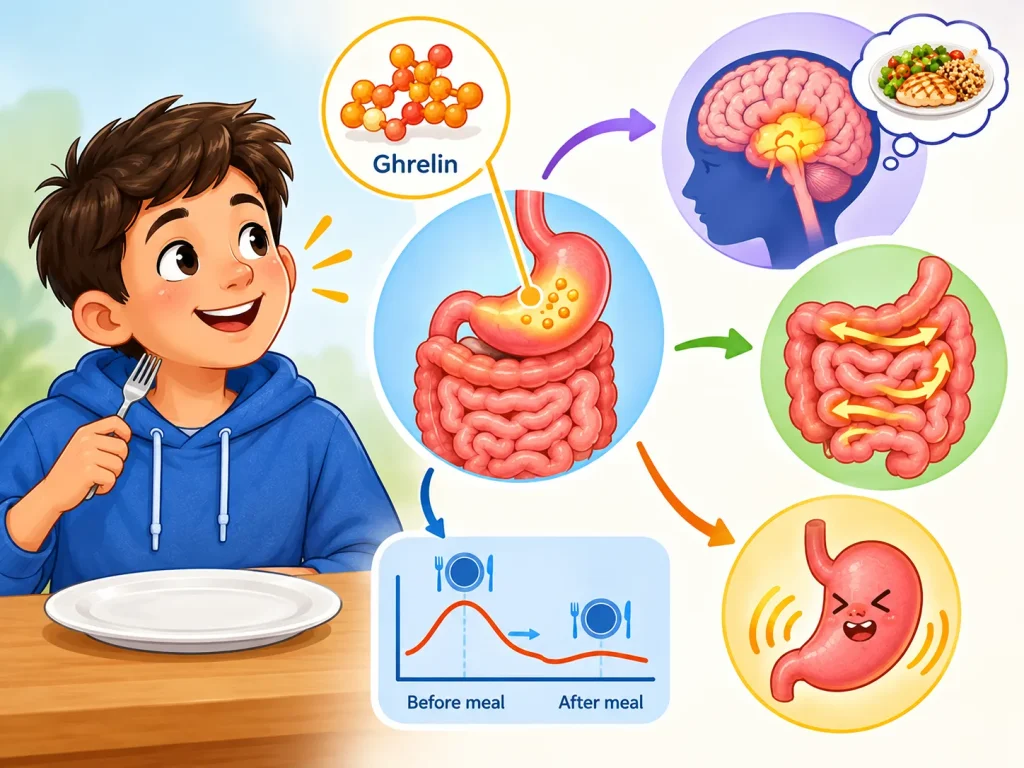
One important hormone involved in hunger is called ghrelin.
Meet Ghrelin: The Hunger Hormone
Ghrelin is a hormone made mainly in the digestive tract, especially in the stomach.
It is sometimes nicknamed the “hunger hormone” because it can increase appetite. Ghrelin levels are often higher before meals and generally fall after eating.
Ghrelin is also involved in regulating movement in the digestive system.
Scientists have found connections between ghrelin and the migrating motor complex, although hunger is controlled by many different signals rather than one single hormone.
So, when you are hungry, several things are happening at once:
Your brain: “Food sounds good!”
Your digestive system: “Let’s get moving!”
Your stomach: “Grrrrrr!”
It is a whole-body conversation.
Can Your Stomach Growl When You Are Not Hungry?
Absolutely!
This is one of the most important things to remember.
Stomach and intestinal noises can happen even when you are not hungry. Your digestive system continues to move food, liquid, and gas around after meals, too.
You might therefore hear your stomach:
- After eating breakfast.
- During lunch.
- In the afternoon.
- After drinking something.
- When you are hungry.
So a stomach rumble does not always mean “Feed me!”
It simply means that your digestive system is moving things around.
Why Is It Sometimes So Loud?
The volume of a stomach rumble can change.
When there is less food in the digestive tract, sounds produced by moving gas and liquid may be easier to hear.
Think about shaking a bottle containing a little water and air. You may hear the liquid sloshing around.
Your digestive system is obviously much more complicated than a bottle. Still, the basic idea of moving gas and liquid helps explain why an empty digestive tract can sometimes sound surprisingly noisy.
The position of your body and how much gas is present can also affect the sounds you notice.

Why Does It Always Happen at the Worst Time?
It might seem as if your stomach knows exactly when the classroom becomes silent!
But your stomach is not trying to embarrass you.
If you have not eaten for a while, your digestive system continues its normal cycles of activity. If everyone around you is quiet, you are more likely to notice the sound.
Your stomach has no idea that you are taking a test or sitting in an important meeting.
It is just doing its job.

Is Stomach Growling Normal?
Yes. Occasional stomach and bowel sounds are a normal part of digestion.
Your digestive tract is a busy place, with muscles continually helping move food, liquid and gas through your body.
Most of the time, you do not notice any of it.
But sometimes your digestive system turns up the volume!
If stomach noises occur along with symptoms such as significant pain, repeated vomiting or other concerning symptoms, it is sensible to tell a parent or trusted adult and seek medical advice.

The Big Idea
So, why does your stomach growl when you are hungry?
When you have not eaten for a while, your stomach and intestines continue making organised muscular contractions. These movements are part of the migrating motor complex, which helps move material through the digestive tract. The contractions can move gas and liquid, creating vibrations we hear as rumbling or growling.
The hormone ghrelin is also involved in hunger and can influence digestive activity.
So, the next time your tummy goes “GRRRR!”, don’t worry.
It is not your stomach complaining.
It is your amazing digestive system carrying on with its everyday work!
For more interesting articles, please visit www.kidzherald.com