
Have you ever heard someone say that lobsters cannot die from old age?
It sounds like something from a science-fiction film. You may even have seen pictures or jokes online claiming that lobsters are “immortal”.
But is it actually true?
The answer is no. Lobsters are not immortal, and they cannot live forever. However, there is something very unusual about the way they grow and age that has helped create this fascinating myth.
Let’s dive beneath the waves and discover the amazing science behind lobster ageing!
What Is a Lobster?
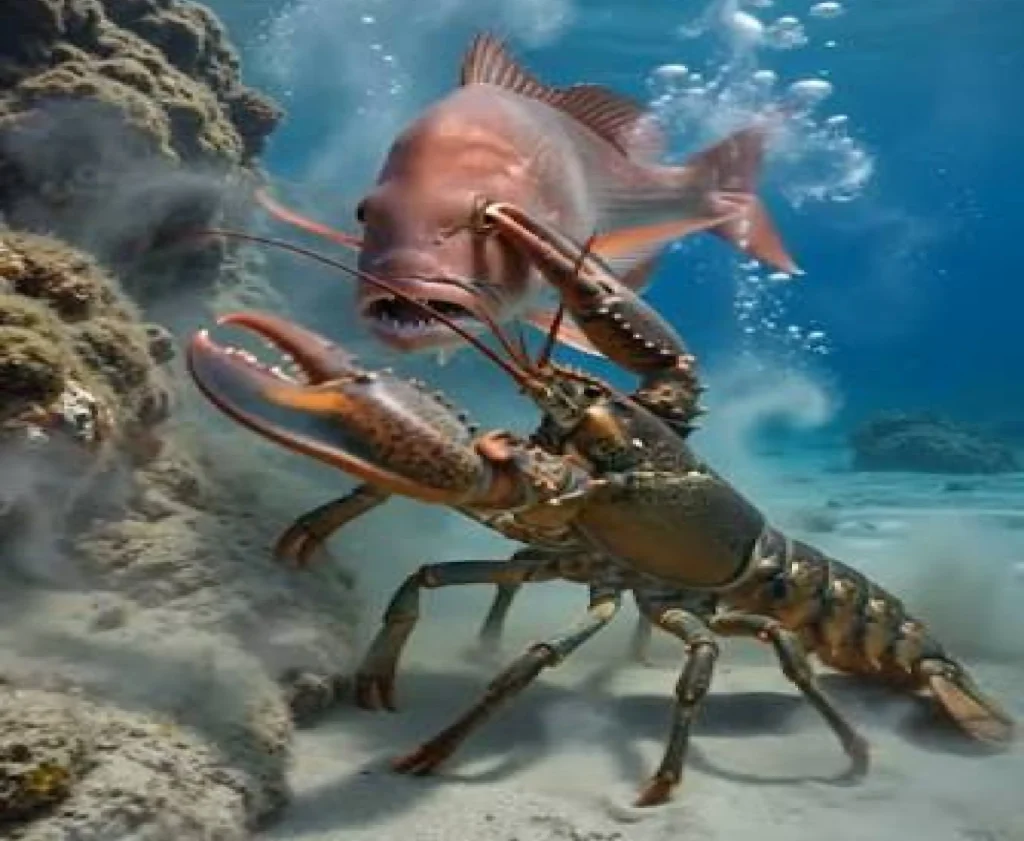
Lobsters are marine crustaceans. They are related to animals such as crabs and prawns.
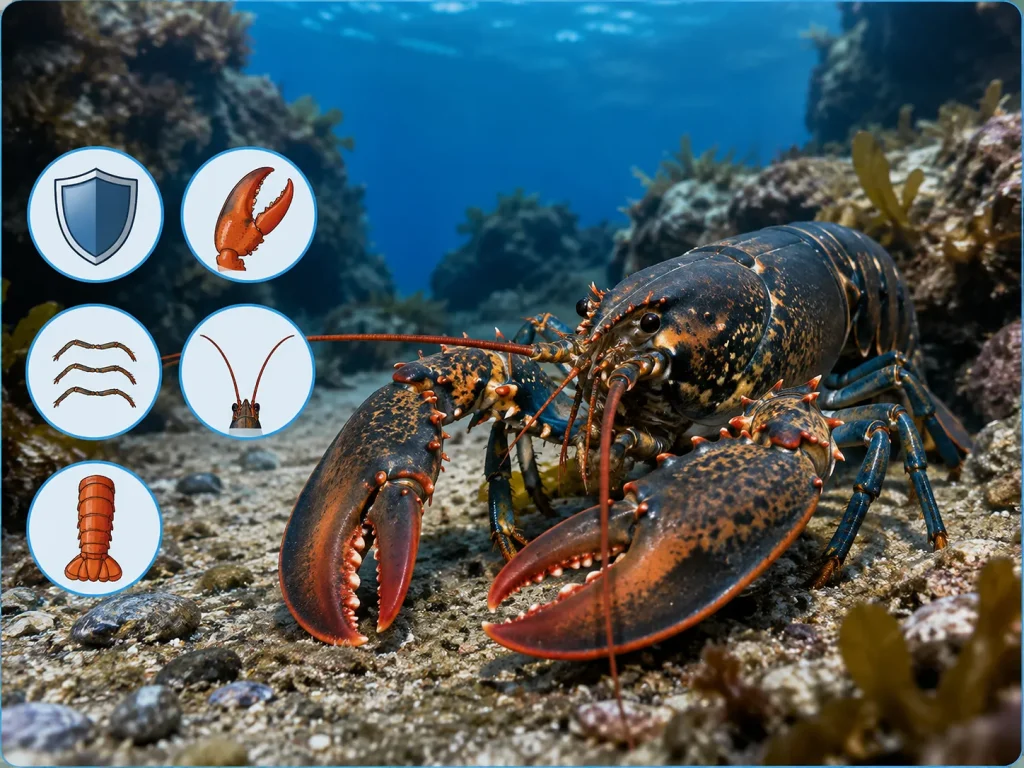
They have:
- A hard outer covering called an exoskeleton
- Two large claws in some species
- Several pairs of legs
- Antennae that help them sense their surroundings
- A segmented body and tail
Lobsters live on the seabed, where they search for food and hide among rocks and other underwater structures.
There are different kinds of animals called lobsters, but the term “true lobster” usually refers to members of the family Nephropidae, which includes European and American lobsters.
The Strange Way Lobsters Grow
Here’s where things become really interesting.
Humans stop growing taller after reaching adulthood. Lobsters are different. They continue to grow throughout their lives.
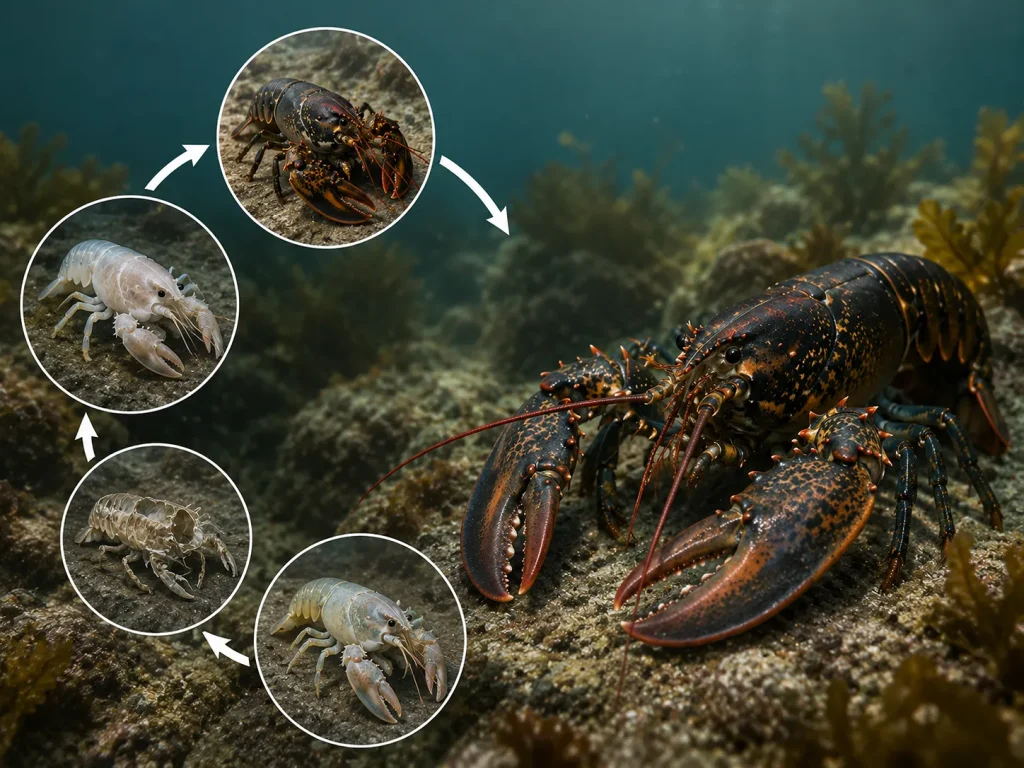
But a lobster cannot simply stretch its hard outer shell as its body gets bigger.
Instead, it has to shed its old shell and grow a new, larger one.
This process is called moulting.
When a lobster is young, it can moult several times a year because it is growing quickly. As it grows older and larger, growth slows, and moulting occurs less frequently.
So imagine wearing a suit that suddenly becomes too small. Instead of buying a bigger suit, you would magically grow a completely new one!
That is a little like what a lobster does.
Why Do People Think Lobsters Are Immortal?
The idea stems from the fact that lobsters do not exhibit some of the obvious signs of ageing that humans do.
As people grow older, our bodies can gradually become less efficient. This process is called senescence, which means the gradual deterioration of the body as it ages.
Lobsters are different.
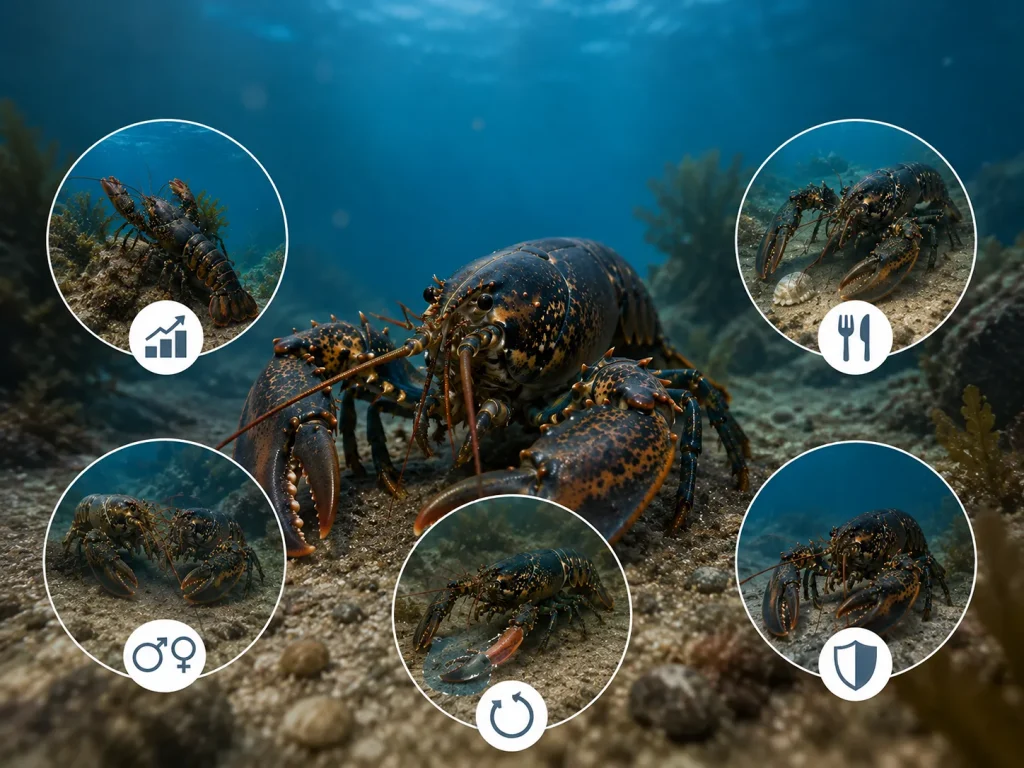
Older lobsters can continue to:
- Grow
- Eat
- Reproduce
- Regenerate lost limbs
They do not seem to become weaker simply because they are old in the same way humans do.
This unusual ageing process has led to the popular idea that lobsters could live forever.
But there is a very important difference between not ageing in the usual way and being immortal.
Lobsters Can Still Die
Lobsters can die.
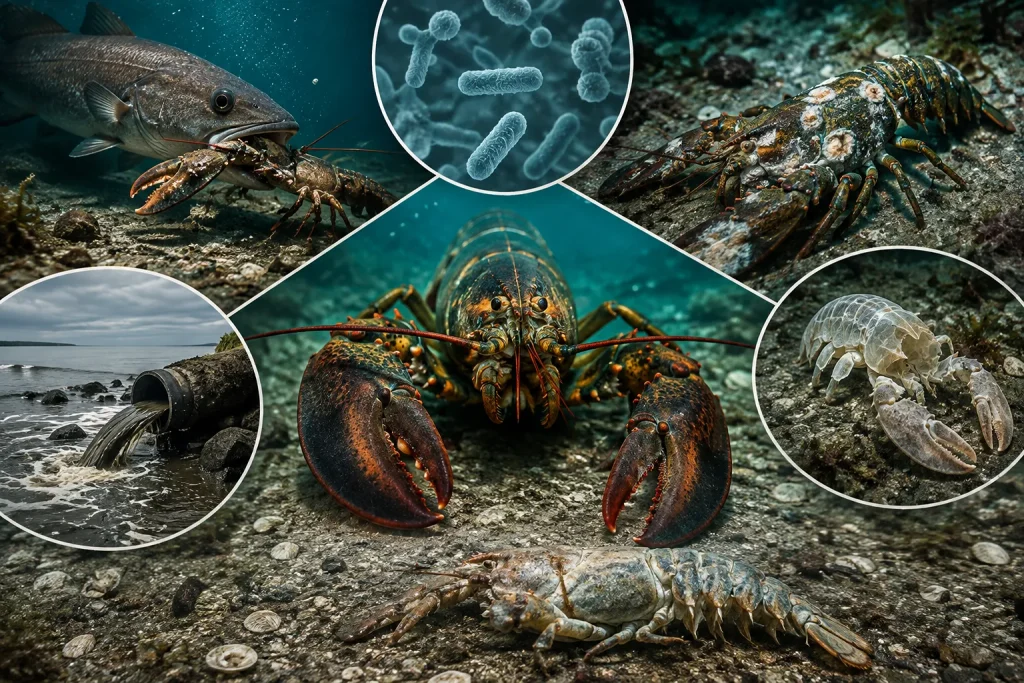
Predators can eat them, become ill, contract diseases, or die from other environmental problems.
There is also a surprising danger connected to moulting.
Remember that lobsters must shed their shells to grow. As they become larger, moulting requires more energy.
Eventually, the energy needed for a moult can become extremely difficult for an old, large lobster to provide. Some lobsters may die from exhaustion during this process.
So even though an old lobster might not look as “old” as an elderly human, it still has limits.
The Mystery of Telomerase
Scientists have also investigated the cells inside lobsters.
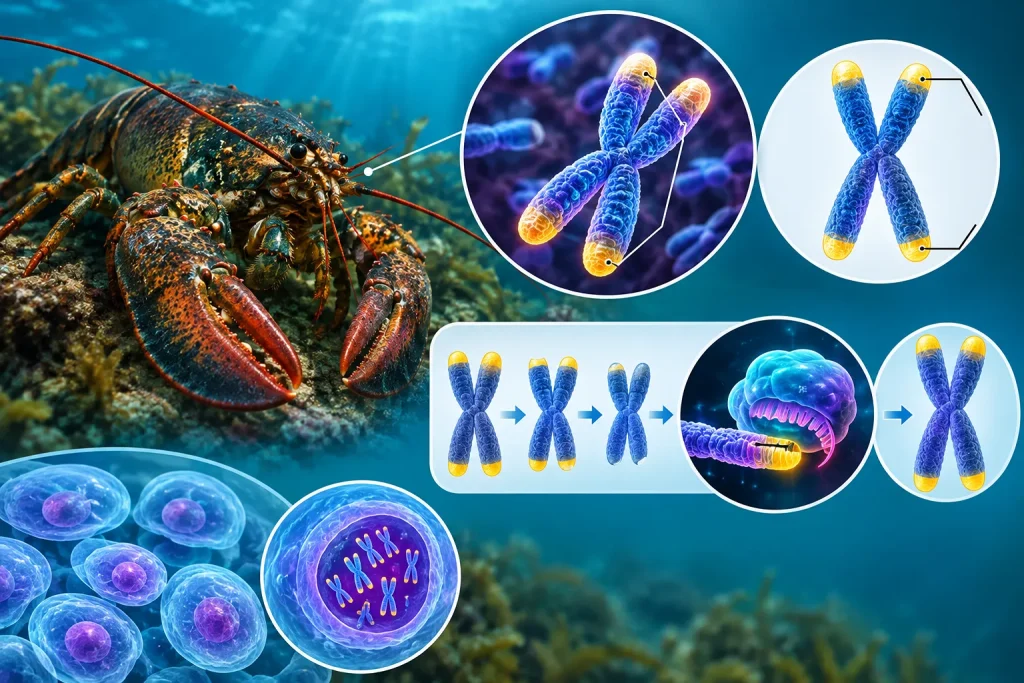
Inside our cells are structures called chromosomes, which contain DNA. At the ends of chromosomes are protective sections called telomeres.
Each time many types of cells divide, their telomeres become shorter. When telomeres become too short, the cell can stop dividing normally.
Lobsters have attracted scientific interest because they appear to maintain telomerase activity in many of their cells.
Telomerase can help rebuild telomeres. This may help explain why lobsters do not show some typical signs of ageing as clearly as humans do.
However, this does not make lobsters immortal.
It is just one part of the fascinating biology that makes them unusual.
How Old Can Lobsters Get?
Working out the exact age of a lobster is surprisingly difficult.
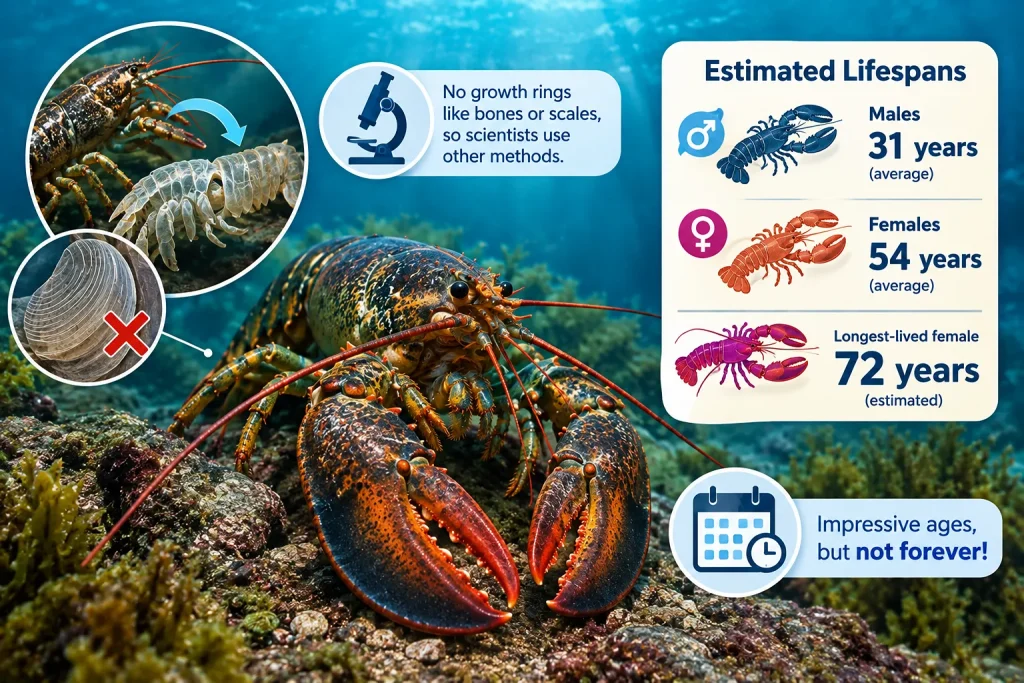
Scientists can often estimate the age of animals by studying growth rings in structures such as bones or scales. Lobsters make this much harder because they shed their entire outer skeleton when they moult.
Scientists have therefore had to develop other methods to estimate lobster ages.
Research discussed by the Natural History Museum suggests that European lobsters can live for several decades. In one study, average estimated lifespans were around 31 years for males and 54 years for females, with one particularly long-lived female estimated to have reached 72 years.
These are impressive ages for a marine animal, but they are certainly not forever!
Why Don’t All Lobsters Become Giant?
If lobsters keep growing, you might wonder why the sea isn’t filled with enormous lobster monsters.
There are several reasons.
Young lobsters face many dangers. Predators can eat them, become ill, or struggle to survive in their environment.
Only a small number survive long enough to become very large adults.
Even when a lobster survives for many years, its growth eventually slows down, and each moult becomes more difficult.
So being old does not give a lobster unlimited growth.
Lobsters Can Be Surprisingly Large
Some lobsters can reach impressive sizes.
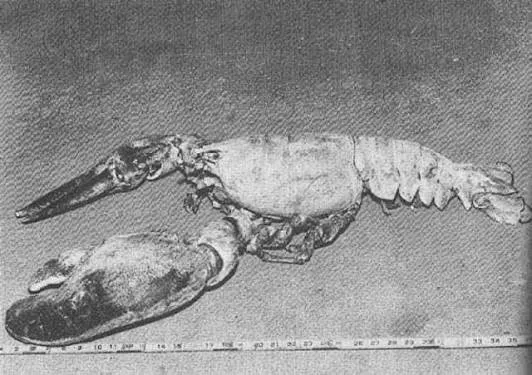
The Natural History Museum reports that the largest recorded American lobster weighed about 20.14 kilograms and measured around one metre long. It was caught off Nova Scotia, Canada, in 1977.
That’s much larger than the lobster you might imagine seeing on a dinner plate!
However, enormous lobsters are extremely unusual. Most lobsters never get anywhere near this size.
So, Are Lobsters Immortal?
The short answer is:
No!
Lobsters are not immortal.
They do, however, have some remarkable biological features that make their ageing different from ours. They continue growing throughout their lives, regularly replace their shells, and can maintain telomerase activity in their cells.
But they can still die from predators, disease, environmental problems, and the challenges of moulting.
Scientists are still studying how lobsters age, which makes them an interesting model for studying biology and the ageing process.
What Can Lobsters Teach Us?
Lobsters remind us that animals do not all age in the same way.
Some creatures age quickly, while others have surprisingly long lives. Studying these differences can help scientists understand how living things grow, repair themselves and change over time.
Lobsters are therefore much more than creatures with big claws. They are fascinating examples of how nature can find very different solutions to life’s challenges.
Conclusion
So, the next time someone tells you that lobsters cannot die of old age, you can tell them the real story.
Lobsters are not immortal. They can die from many causes, and their moulting process can become increasingly difficult as they grow older.
However, their unusual way of ageing is genuinely amazing. They continue to grow throughout their lives, can regenerate lost limbs, and have biological features that help their cells remain active.
The most exciting lesson is that science often turns a strange story into an even more interesting one. Lobsters may not live forever, but their unusual biology gives scientists plenty of mysteries to explore!
For more interesting articles, please visit www.kidzherald.com