
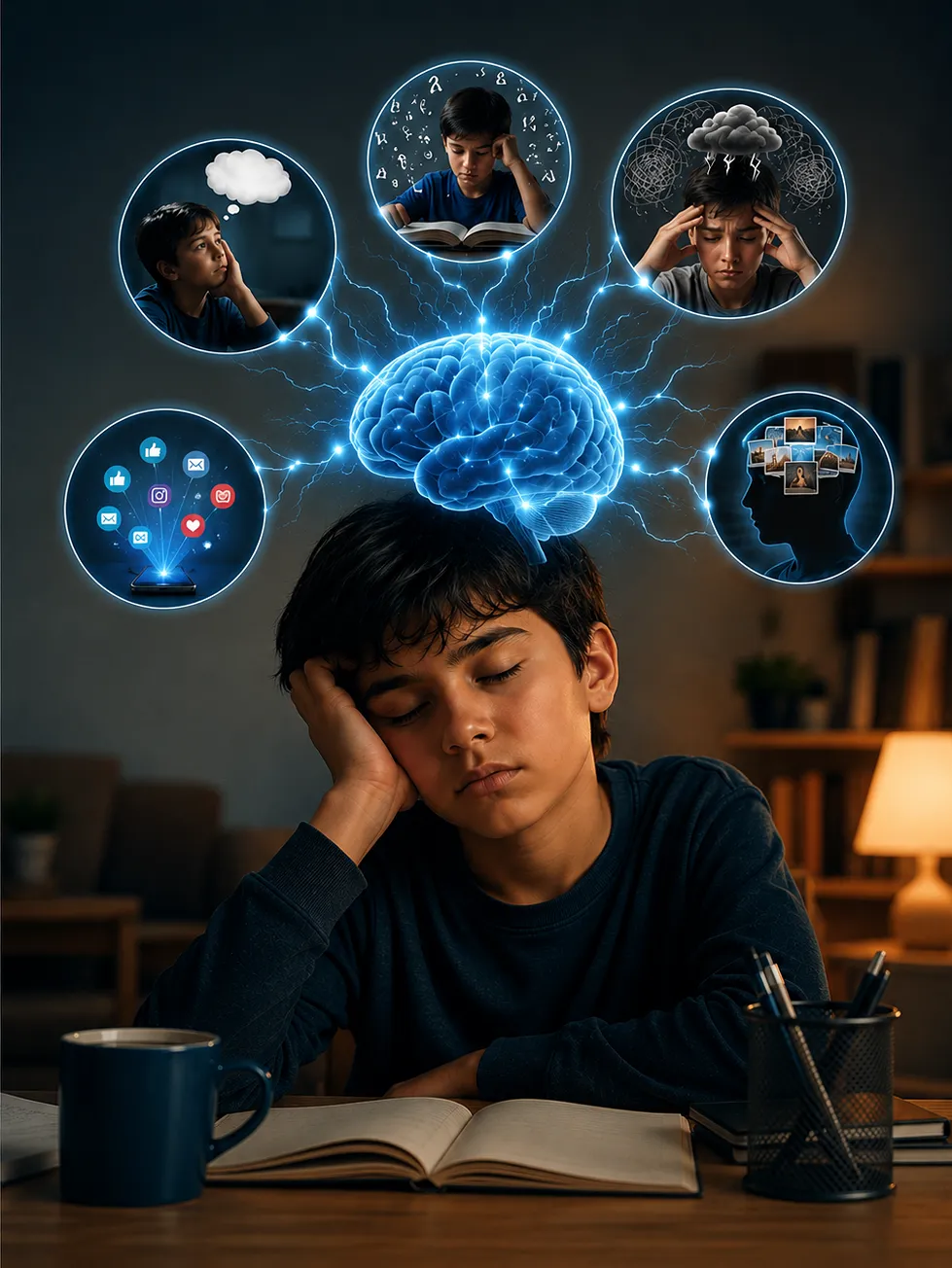
Have you ever had a day when you felt tired, even though you had not been running, playing sports, or doing anything physically demanding? Perhaps you spent most of the day sitting down, yet your brain still felt exhausted.
This can seem very strange. After all, if your body has not been working hard, why would you feel tired?
The answer is that your brain is always busy, even when you think you are doing nothing. It controls your thoughts, emotions, memories, attention, and body functions every second of the day. Sometimes, all that work can leave your brain feeling tired.
Let’s explore the fascinating science behind mental tiredness and discover why it happens.
Your Brain Never Really Stops Working
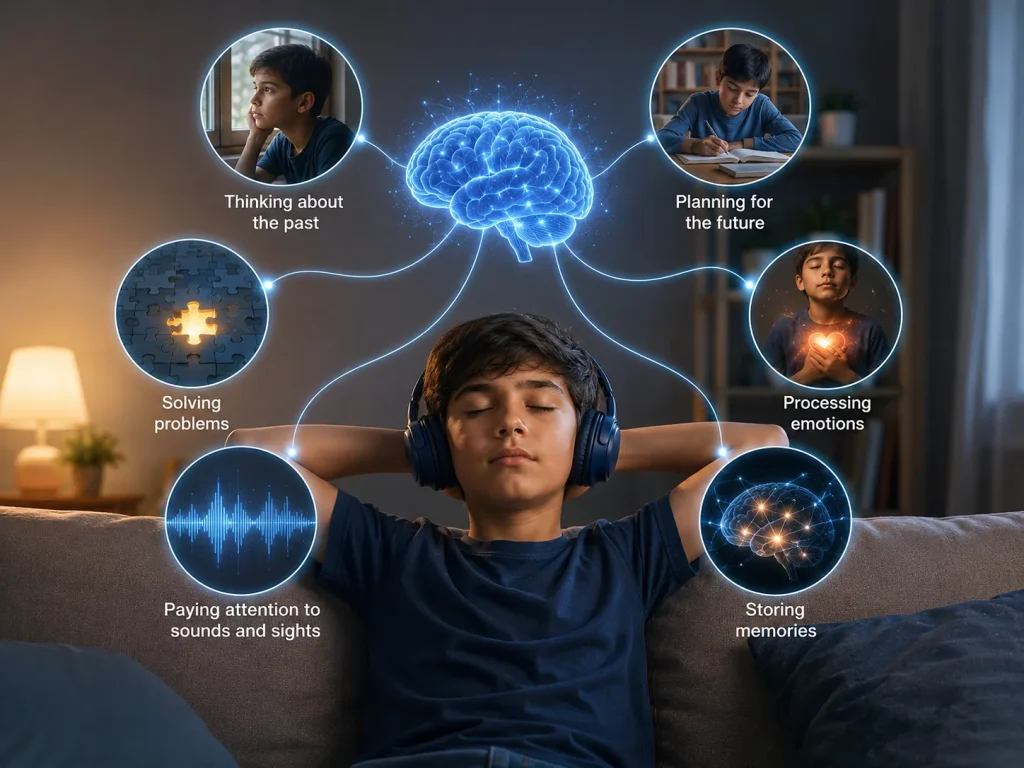
Even when you are resting, your brain is active.
While you are sitting quietly, your brain may be:
- Thinking about the past
- Planning for the future
- Solving problems
- Processing emotions
- Paying attention to sounds and sights
- Storing memories
In fact, scientists have discovered that certain parts of the brain remain active even when we are relaxing or daydreaming.
So although your body may appear to be resting, your brain is often still hard at work.
What Is Mental Fatigue?
Mental fatigue is a feeling of tiredness that affects your mind rather than your muscles.
When mentally tired, you might:
- Find it harder to concentrate
- Feel less motivated
- Become forgetful
- Make more mistakes
- Feel sleepy or sluggish
Mental fatigue can happen after long periods of thinking, studying, worrying, concentrating, or making decisions.
Your brain uses energy to perform these tasks, just as your muscles use energy when you run or jump.
The Brain Uses a Lot of Energy
Many people are surprised to learn that the brain uses a large amount of the body’s energy.
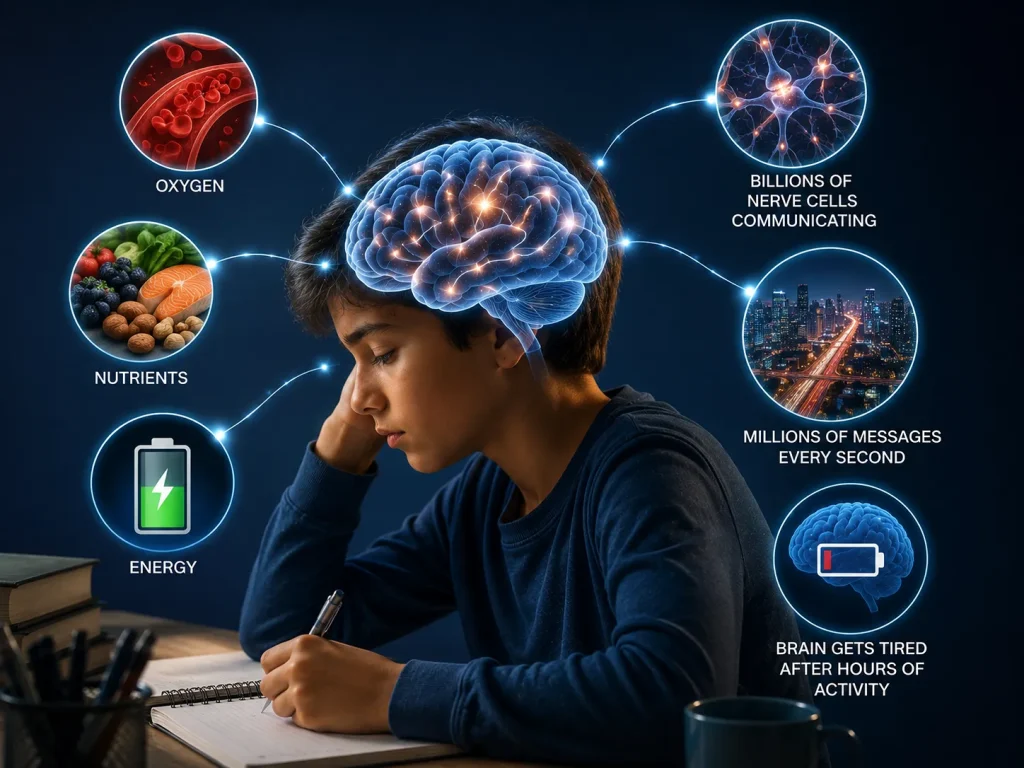
Although the brain makes up only a small part of your body weight, it constantly needs oxygen and nutrients to function properly.
Every thought, memory, and decision involves billions of nerve cells communicating with one another.
Imagine a city filled with millions of people sending messages every second. That is similar to what happens inside your brain all day long.
After hours of activity, your brain may begin to feel tired and less efficient.
Too Much Concentration Can Be Exhausting
Have you ever spent a long time doing homework, reading, or solving math problems?
Concentrating requires effort.
Your brain must ignore distractions and keep attention focused on one task. Scientists sometimes call this directed attention.
After long periods of concentration, your attention system can become tired. This is known as attention fatigue.
When this happens, you may find yourself:
- Reading the same sentence twice
- Losing focus easily
- Feeling irritable
- Wanting to take a break
This is one reason why short breaks during study sessions can be helpful.

Worrying Uses Brain Power Too
Mental tiredness does not only come from studying or learning.
Strong emotions can also make your brain feel exhausted.
When you worry about school, friendships, family situations, or upcoming events, your brain spends a lot of time thinking about these concerns.
Even if you are sitting quietly, your mind may be working hard behind the scenes.
That is why emotional stress can sometimes leave people feeling very tired, even if they have done very little physical activity.
Screens Can Make Your Brain Feel Busy
Many children and adults spend hours using phones, tablets, computers, and televisions.
Digital devices provide a constant stream of information:
- Messages
- Videos
- Games
- Notifications
- Social media updates
Your brain has to process all this information.
Switching quickly between different apps, videos, or tasks can make your attention system work harder than you might realise.
This does not mean screens are bad, but spending too much time on them without breaks can contribute to feelings of mental tiredness.

Why Do You Feel Tired After Waking Up?
Sometimes you wake up feeling tired even after a full night’s sleep.
This can happen because of something called sleep inertia.
Sleep inertia is the groggy feeling some people experience immediately after waking up. During this time, parts of the brain are still transitioning from sleep mode to full alertness.
You may notice that:
- Thinking feels slower
- Concentration is difficult
- You feel sleepy
- Simple tasks seem harder
Usually, this feeling disappears after a short time.

Your Brain Needs Sleep to Recharge
Sleep is one of the most important things for a healthy brain.
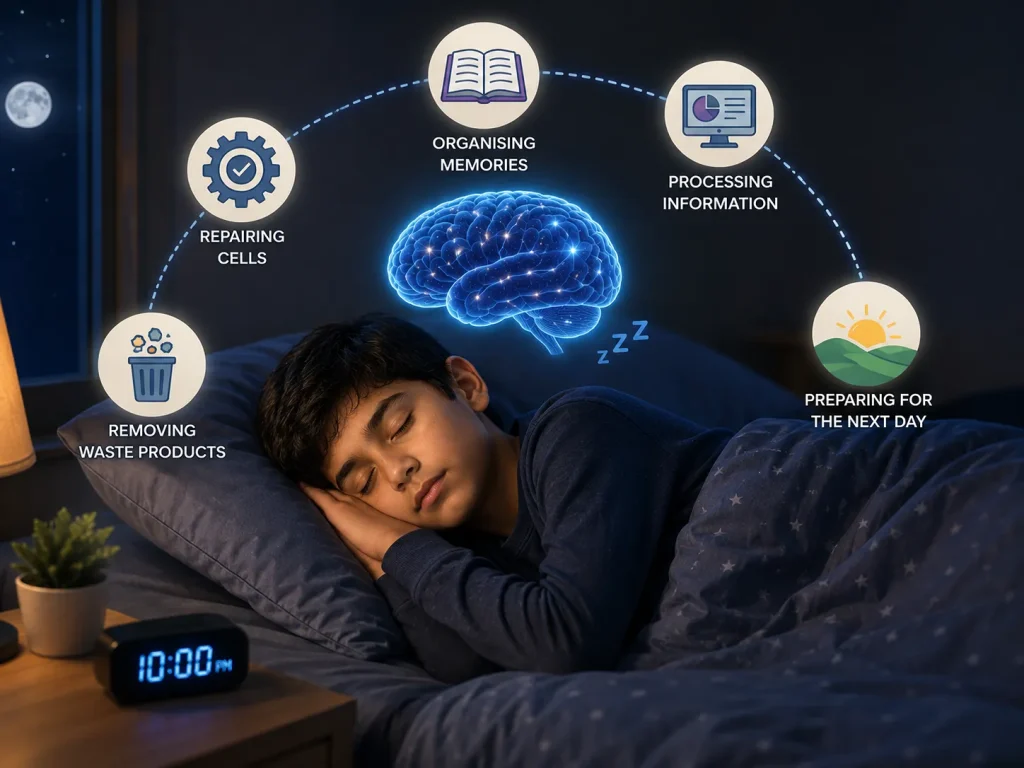
While you sleep, your brain is still active, but it performs different jobs, such as:
- Organising memories
- Processing information
- Repairing cells
- Removing waste products
- Preparing for the next day
If you do not get enough sleep, your brain may struggle to perform at its best.
Children and teenagers generally need more sleep than adults because their brains and bodies are still growing.
Boredom Can Feel Tiring Too
This might sound strange, but boredom can sometimes make you feel tired.
When you are not interested in an activity, your brain may become less alert.
For example, sitting through a very long lesson on a topic you do not enjoy might make you feel sleepy, even though you are not physically tired.
In this case, the tiredness comes from low mental stimulation rather than a lack of energy.

How Can You Refresh a Tired Brain?
The good news is that there are many simple ways to help your brain feel refreshed.
Get Enough Sleep
A regular sleep schedule helps your brain recover and prepare for learning.
Take Breaks
Short breaks during study or screen time can help restore concentration.
Exercise
Physical activity improves blood flow to the brain and can boost mood and energy.
Spend Time Outdoors
Nature can help reduce attention fatigue and improve focus.
Drink Water
Dehydration can make it harder to think clearly and may increase feelings of tiredness.
Eat Healthy Foods
Fruits, vegetables, whole grains, and proteins provide energy for both the body and the brain.
Relax
Activities such as reading, drawing, listening to music, or talking with friends can help reduce stress.

Is Mental Tiredness Normal?
Yes, mental tiredness is completely normal.
Everyone experiences it from time to time.
Students may feel mentally tired after a day of learning. Athletes may feel mentally tired after planning strategies. Even adults can feel exhausted after making lots of decisions.
Mental tiredness is often a signal that your brain needs rest, sleep, a change of activity, or time to recover.
Conclusion
Your brain is one of the busiest organs in your body. Even when you think you are doing nothing, it is often processing information, managing emotions, storing memories, and helping you understand the world around you.
That is why your brain can sometimes feel tired even when your body has not been active. Concentration, stress, screen time, poor sleep, and even boredom can all contribute to mental fatigue.
The good news is that healthy habits such as getting enough sleep, taking breaks, exercising, and spending time outdoors can help keep your brain feeling fresh and ready for new adventures.
So the next time your brain feels tired, remember—it may have been working harder than you realised!

For more interesting articles, please visit www.kidzherald.com