
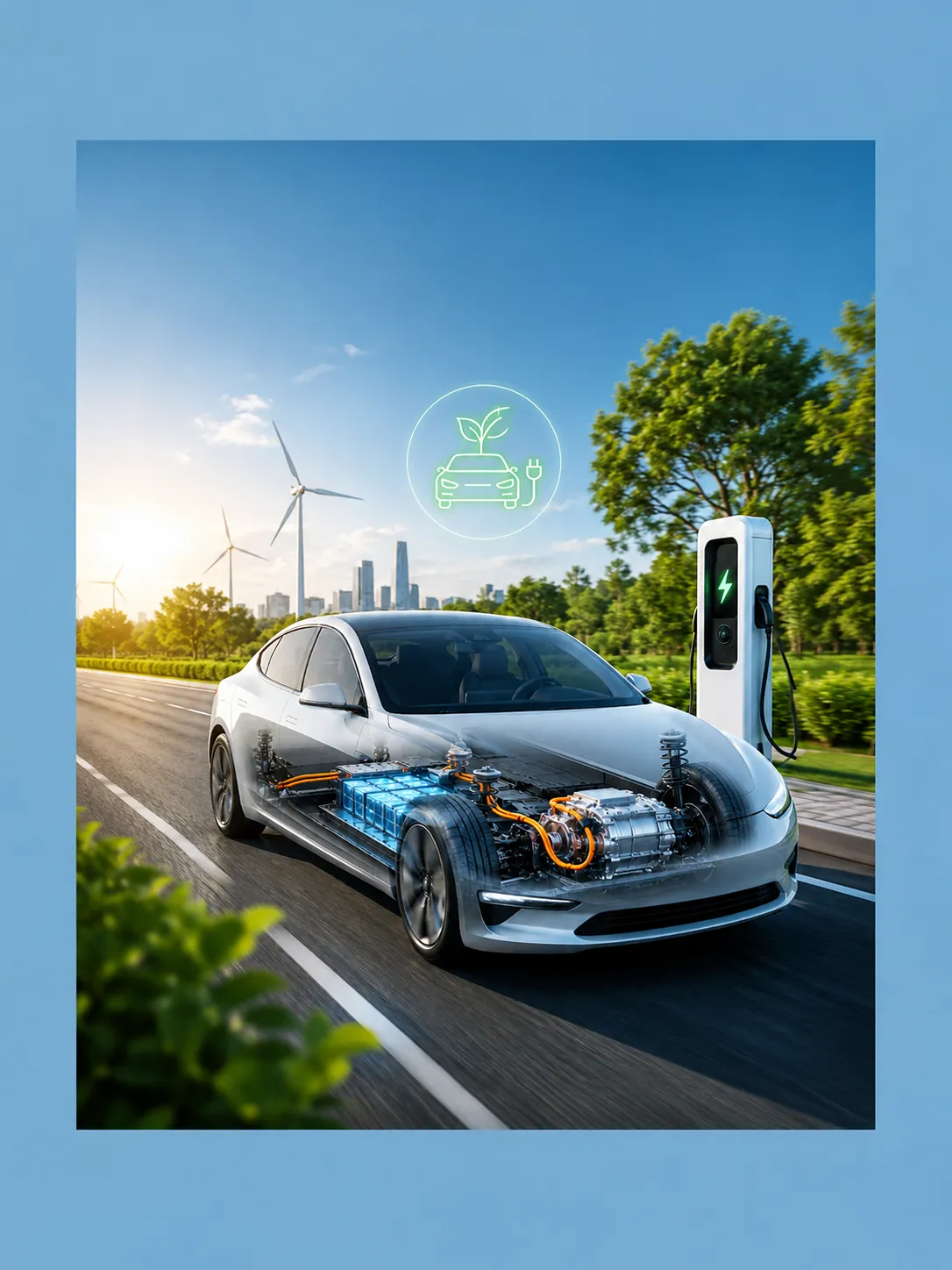
Electric cars are becoming more common on roads all around the world. You may have seen them quietly driving past or charging at special charging stations instead of filling up with petrol or diesel.
But have you ever wondered how these amazing vehicles work?
Unlike traditional cars, electric cars do not have a petrol engine. Instead, they use electricity stored in large batteries to power an electric motor. This makes them quieter, more energy-efficient, and better for the environment in many situations.
Let’s take a journey inside an electric car and discover how it works!
What Is an Electric Car?
An electric car, often called an EV (Electric Vehicle), is a car that runs using electricity instead of petrol or diesel.
Instead of burning fuel, it stores electrical energy inside a large rechargeable battery. This electricity powers an electric motor, which turns the wheels and moves the car.
Because electric cars do not burn fuel while driving, they produce no exhaust emissions from the vehicle itself.
The Main Parts of an Electric Car
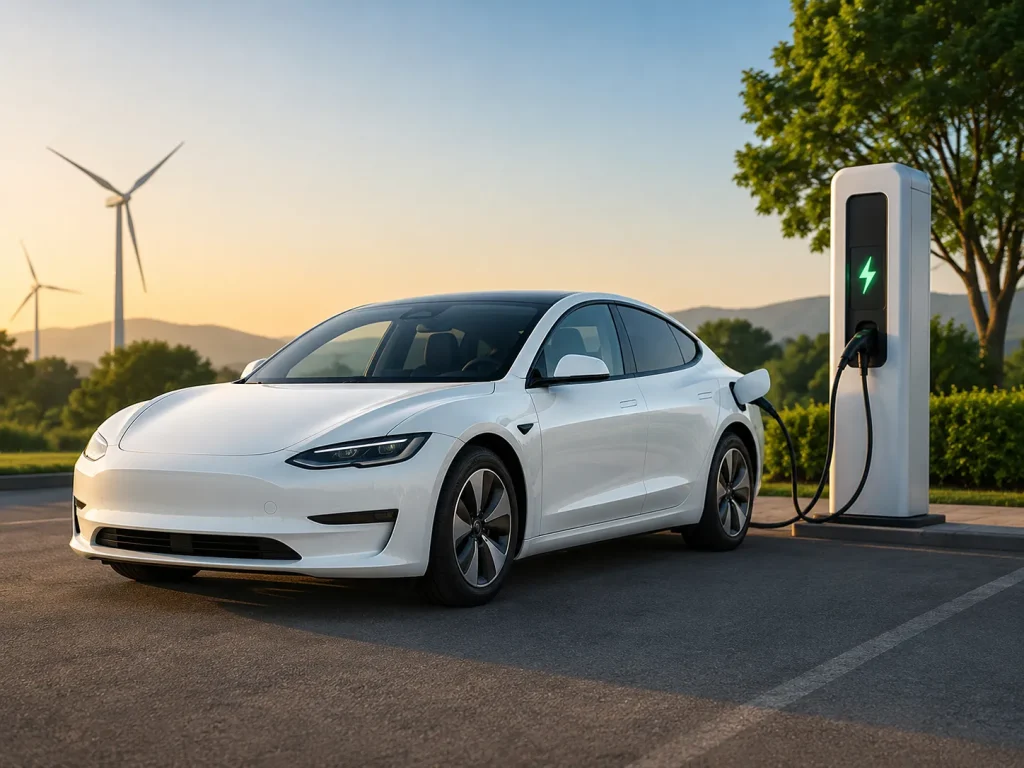
An electric car has several important parts that work together.
1. The Battery
The battery is the heart of an electric car.
It stores electricity, just like the battery in your phone, but it is much larger and far more powerful.
The battery provides the energy needed to move the vehicle.
Most modern electric cars use rechargeable lithium-ion batteries because they can store a large amount of energy.
2. The Electric Motor
The electric motor is like the muscles of the car.
Instead of burning fuel to create movement, the motor uses electricity from the battery.
When electricity flows into the motor, it creates magnetic forces that make the motor spin. This spinning motion turns the wheels and moves the car forwards or backwards.
Electric motors can deliver power almost instantly, which is why many electric cars accelerate very smoothly.
3. The Power Electronics
Electricity from the battery needs to be carefully controlled.
Power electronics act like the car’s “electrical traffic controller.” They manage how much electricity flows from the battery to the motor.
This ensures the car drives safely and efficiently.
4. The Charging Port
The charging port is where the car connects to a charger.
Instead of visiting a petrol station, drivers plug the car into a charging point to refill the battery with electricity.
How Does an Electric Car Move?
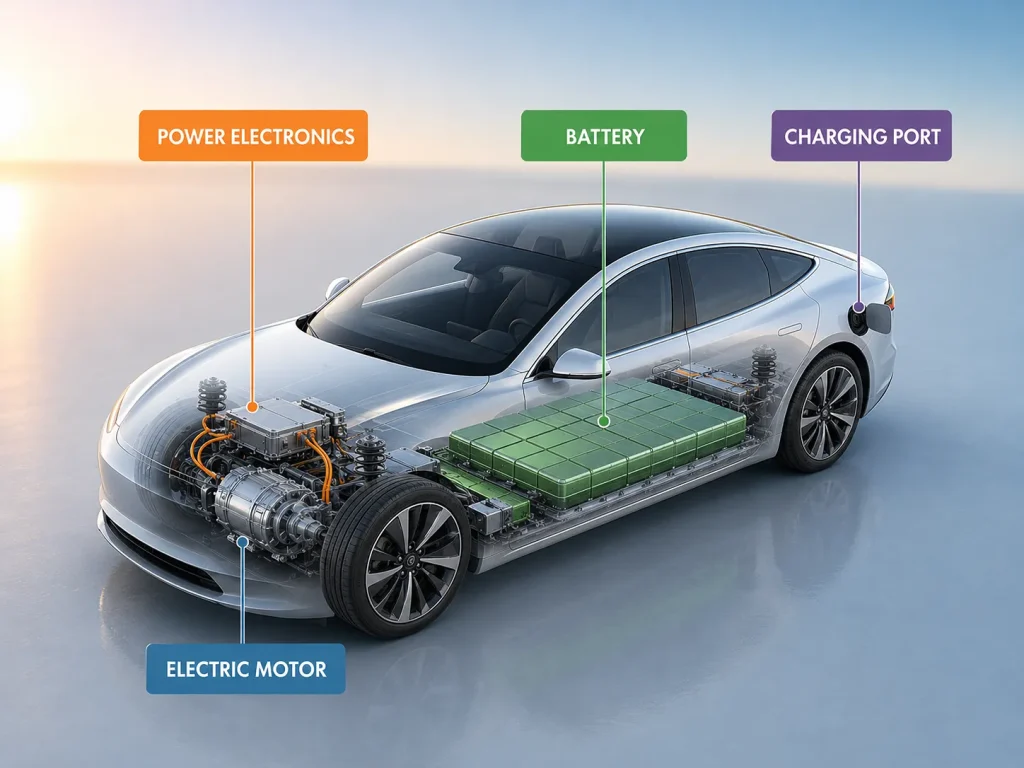
The process is surprisingly simple.
Here is what happens:
- The driver presses the accelerator.
- The battery sends electricity to the motor.
- The electric motor begins to spin.
- The spinning motor turns the wheels.
- The car moves forwards.
Because there are fewer moving parts than in a petrol engine, electric cars are often quieter and require less maintenance.
How Do Electric Cars Charge?
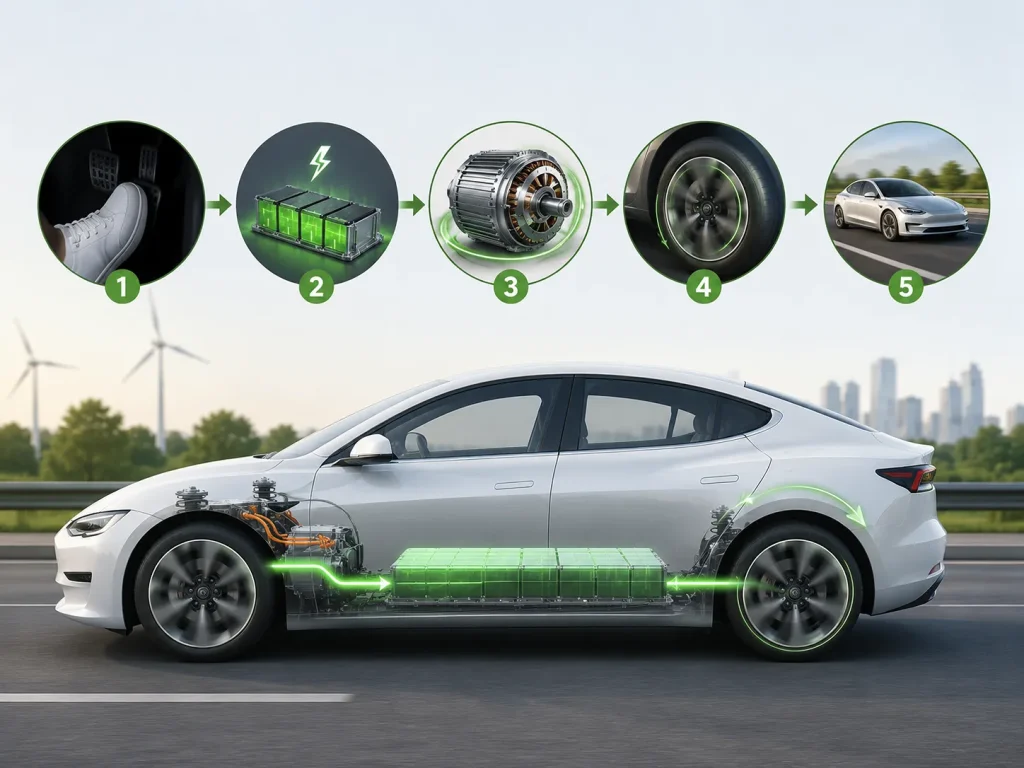
Electric cars need to recharge their batteries regularly.
There are several ways to charge them.
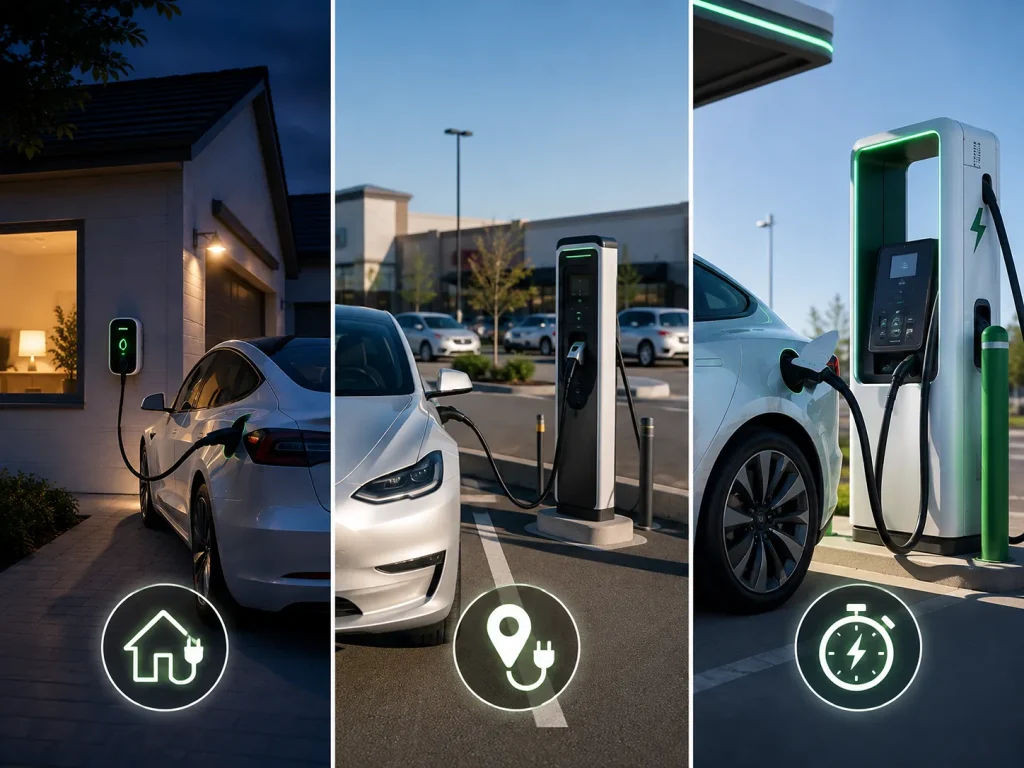
Home Charging
Many people charge their cars overnight at home.
The car is plugged into a home charging unit while the family sleeps.
By morning, the battery is often fully charged and ready to use.
Public Charging Stations
Charging stations can be found in shopping centres, car parks, workplaces, and along major roads.
Some chargers work slowly, while others can recharge a battery much more quickly.
Fast Charging
Fast chargers provide electricity at a much higher rate.
Depending on the vehicle, they can add a significant amount of battery charge in less than an hour.
What Happens When You Brake?
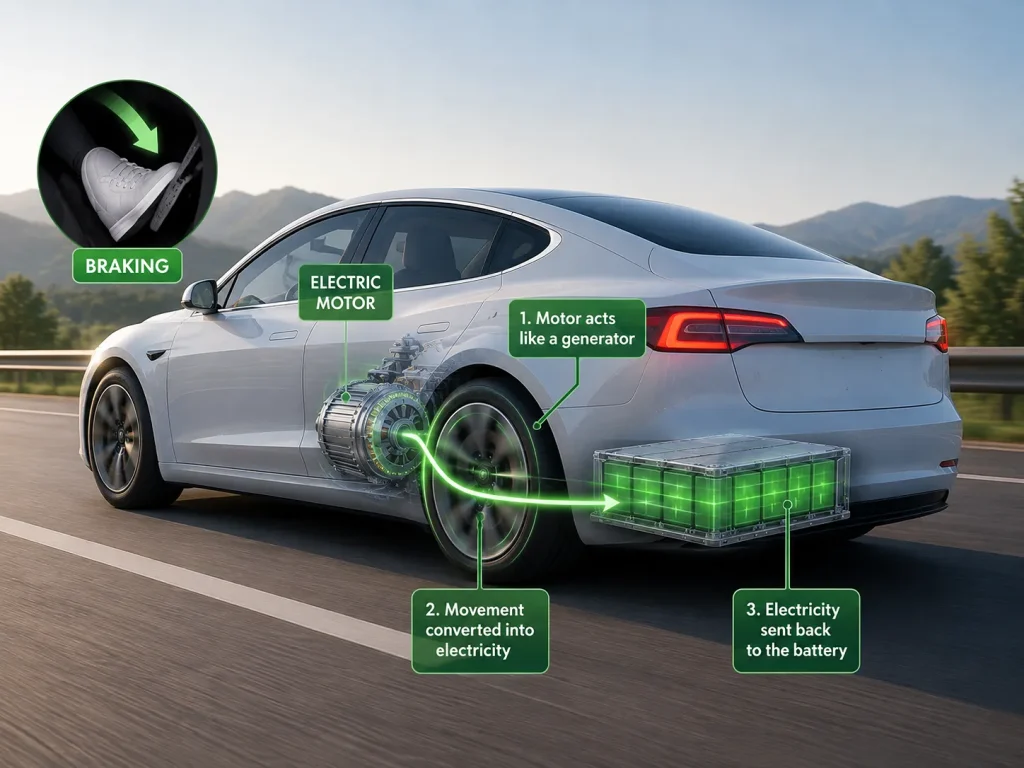
One clever feature of many electric cars is regenerative braking.
Normally, when a car slows down, some energy is lost as heat.
However, many electric cars can capture part of this energy.
When the driver brakes:
- The electric motor acts like a generator.
- Some of the car’s movement is converted back into electricity.
- This electricity is sent back into the battery.
This helps improve the car’s driving range.
Why Are Electric Cars So Quiet?
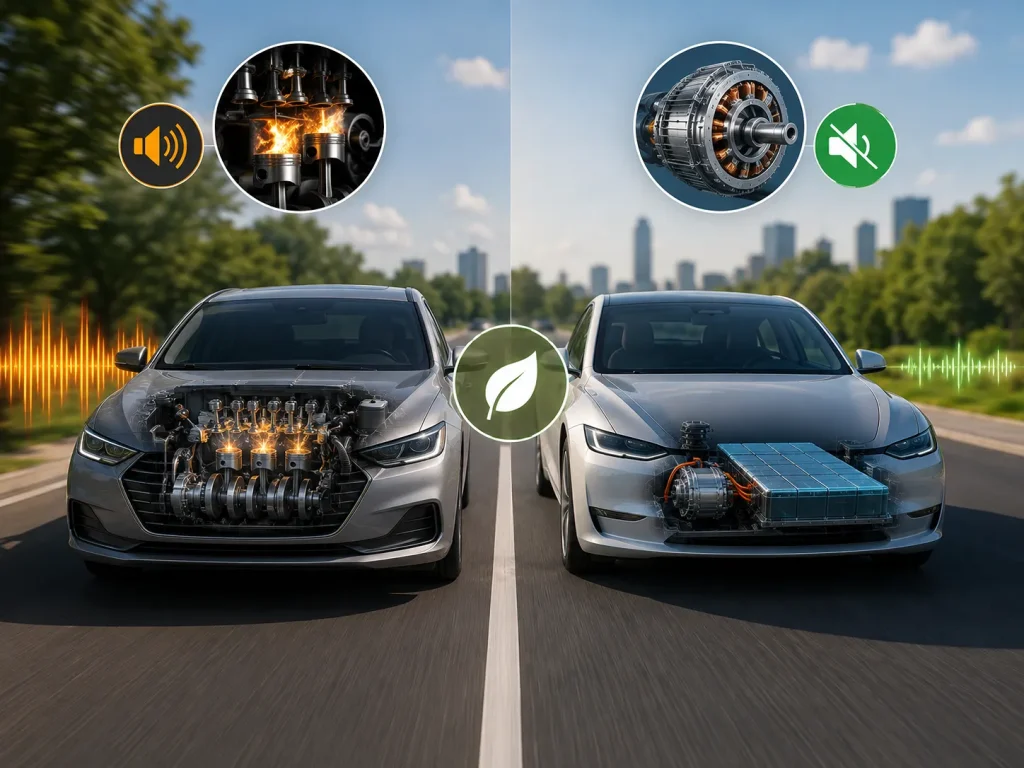
Unlike petrol engines, electric motors do not have explosions happening inside them.
Traditional engines create thousands of tiny fuel explosions every minute.
Electric motors simply use electricity and magnets to produce movement.
As a result, electric cars make much less noise, especially at lower speeds.
How Far Can Electric Cars Travel?
One of the biggest questions people ask is:
“How far can an electric car go before it needs charging?”
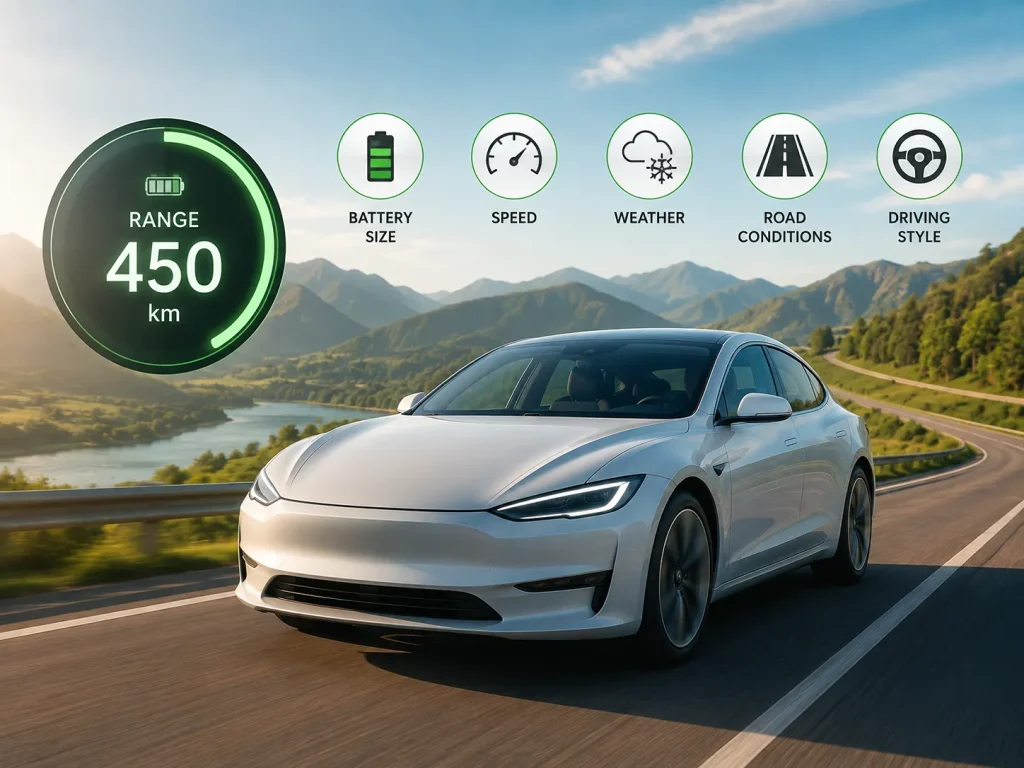
The answer depends on several factors:
- Battery size
- Speed
- Weather
- Road conditions
- Driving style
Many modern electric cars can travel hundreds of kilometres on a single charge, although the exact distance varies from one model to another.
As battery technology improves, driving ranges continue to increase.
Are Electric Cars Better for the Environment?
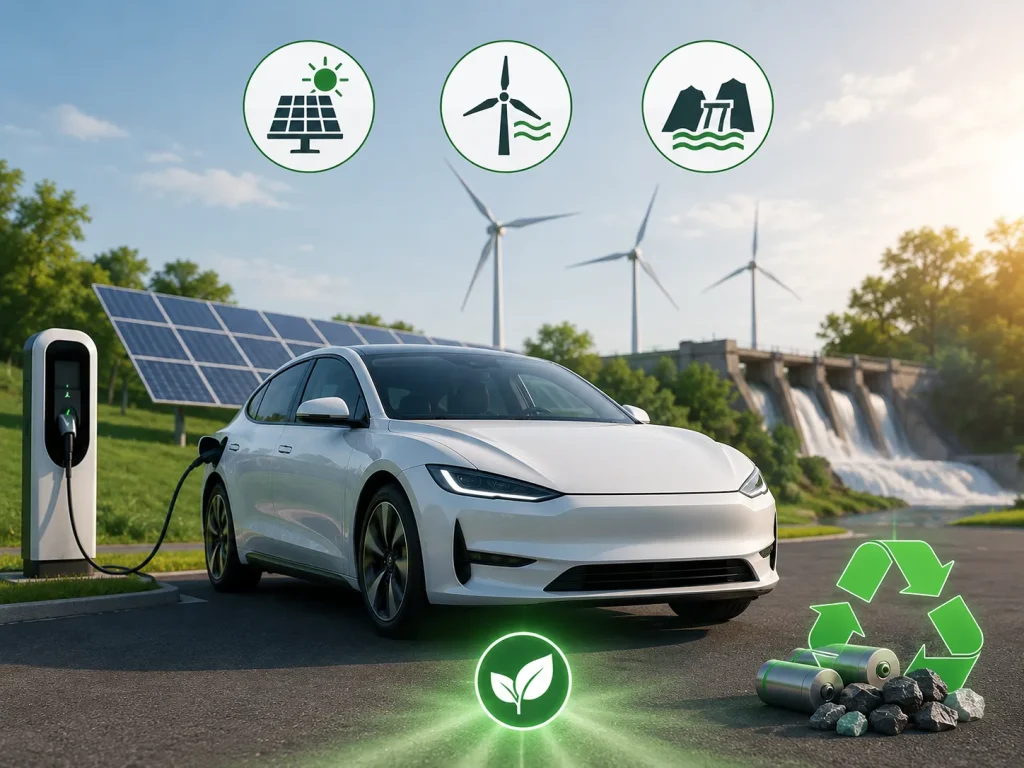
Electric cars can help reduce air pollution because they do not produce exhaust gases while driving.
They can also help reduce greenhouse gas emissions, especially when the electricity used for charging comes from renewable sources such as:
- Solar power
- Wind power
- Hydroelectric power
However, making batteries requires energy and raw materials. Scientists and engineers are working to make battery production cleaner and improve battery recycling.
What Are the Advantages of Electric Cars?
Electric cars offer several benefits:
- Quiet to drive
- Smooth acceleration
- Fewer moving engine parts
- Lower maintenance needs
- No exhaust emissions while driving
- Can be charged at home
- Can use renewable electricity
These advantages have made electric cars increasingly popular around the world.
Are There Any Challenges?
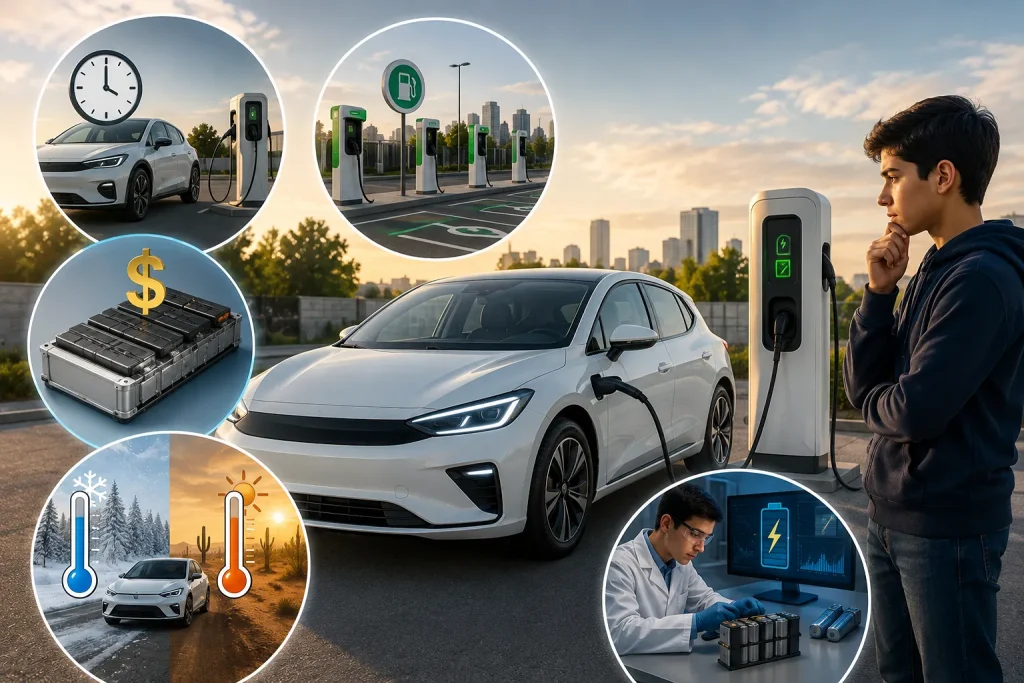
Although electric cars have many benefits, they also have some challenges.
For example:
- Charging takes longer than filling a fuel tank.
- Charging stations are still being built in many areas.
- Batteries can be expensive to manufacture.
- Very cold or very hot weather can reduce battery performance.
Scientists continue to improve battery technology so future electric cars become even better.
The Future of Electric Cars
Every year, electric cars become more advanced.
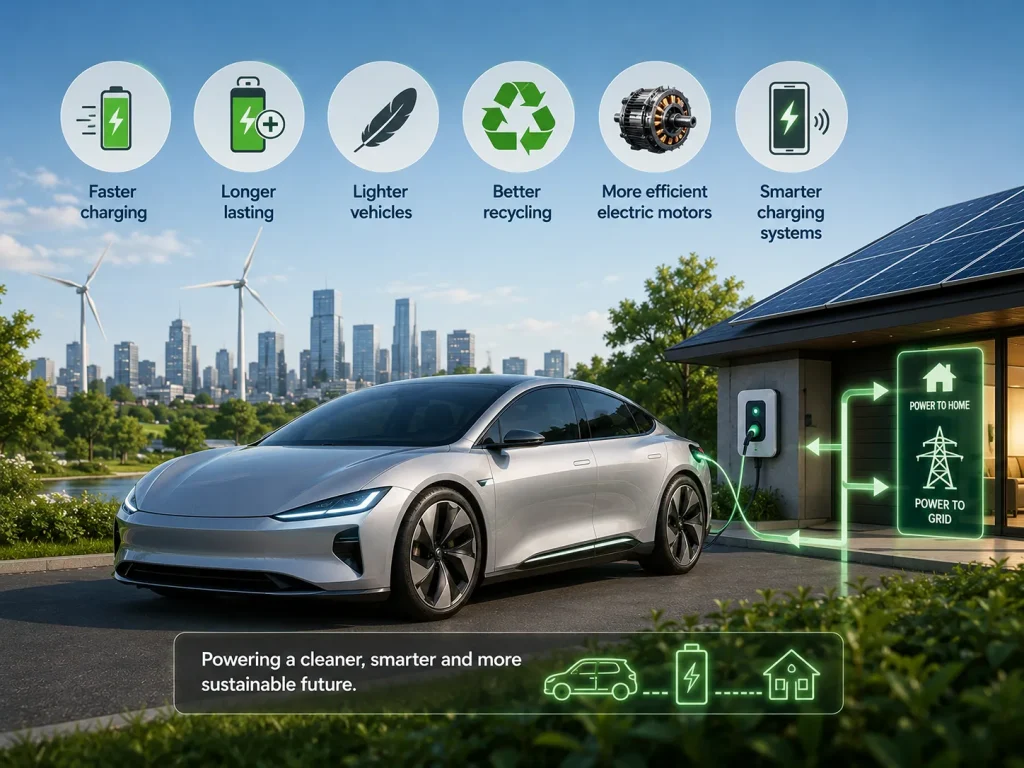
Researchers are developing:
- Batteries that charge faster.
- Batteries that last longer.
- Lighter vehicles.
- Better recycling methods.
- More efficient electric motors.
- Smarter charging systems.
Some future electric cars may even help power homes during electricity shortages by sending stored energy back into the electricity grid.
Fun Facts About Electric Cars
- Electric cars use electricity instead of petrol or diesel.
- Their batteries can be recharged many times.
- Electric motors provide instant power for smooth acceleration.
- Regenerative braking helps recharge the battery while slowing down.
- Electric cars can help reduce air pollution.
- They are much quieter than many traditional cars.
Conclusion
Electric cars are changing the way people travel. Instead of using petrol or diesel, they rely on powerful rechargeable batteries and efficient electric motors to move quietly and smoothly.
As scientists continue to improve batteries, charging technology, and renewable energy, electric cars are likely to become even more common in the future.
Understanding how electric cars work shows us how science, engineering, and technology are helping create cleaner and smarter ways to travel. The next time you see an electric car on the road, you’ll know the amazing science happening beneath its bonnet!
For more interesting articles, please visit www.kidzherald.com