
Have you ever watched a fish swimming around in an aquarium and wondered, “Do fish ever go to sleep?” After all, fish do not have cosy beds, fluffy pillows or blankets. They do not close their eyes like humans do, and many of them seem to move constantly.
The answer might surprise you: Yes, fish do sleep! However, their sleep is very different from the way people sleep.
Let’s dive beneath the water and discover the fascinating world of sleeping fish.
What Is Sleep?
Before we talk about fish, let’s think about sleep in general.
Sleep is a period of rest when an animal becomes less active and less aware of its surroundings. During sleep, the body can save energy and recover from the day’s activities.
Humans sleep by lying down, closing their eyes and becoming much less responsive to the world around them. Many other animals sleep too, including birds, dogs, cats and even insects.
Fish also need rest, but because they live underwater, they have developed their own special way of sleeping.
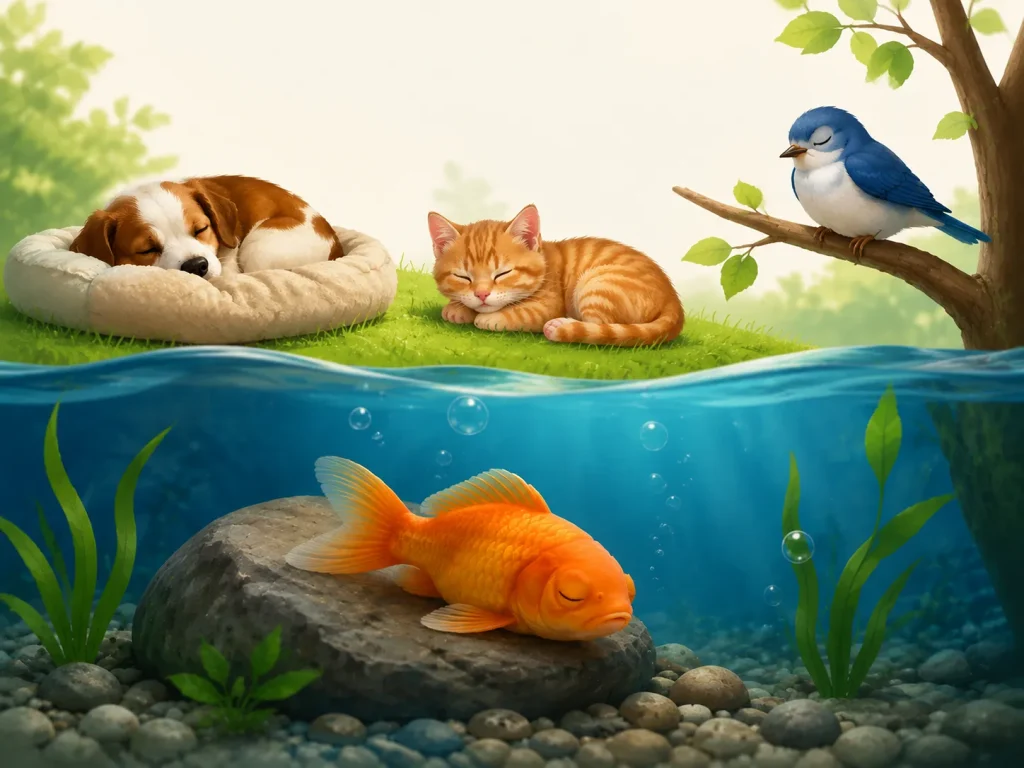
Do Fish Really Sleep?
Scientists have discovered that fish enter a state very similar to sleep.
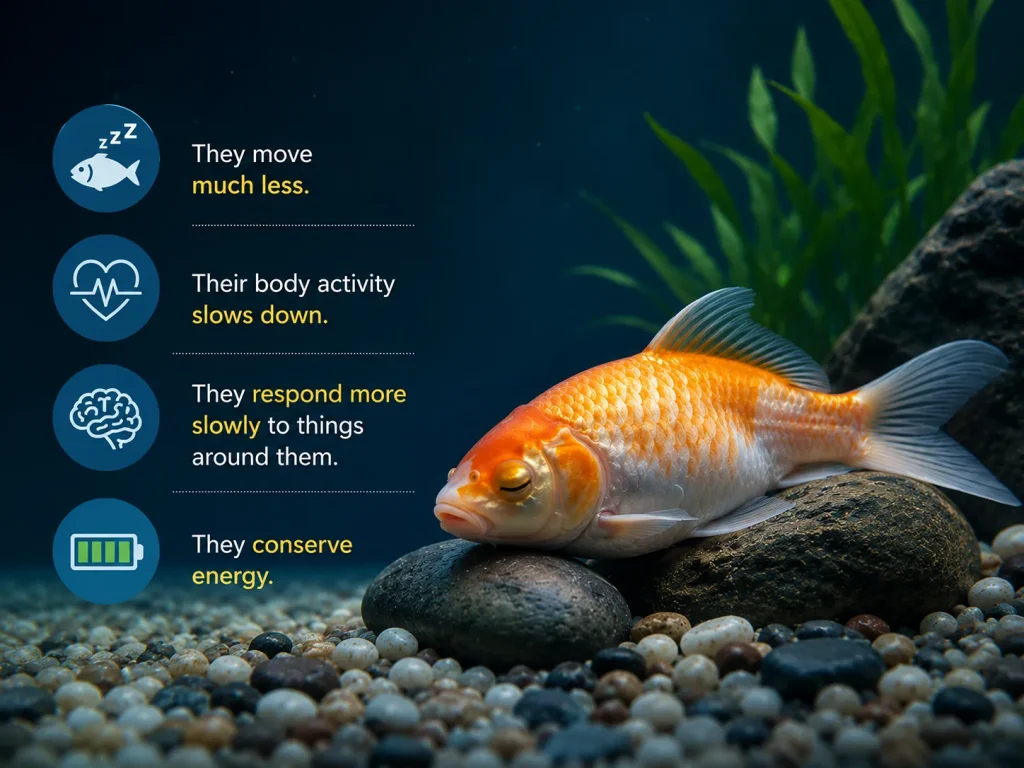
During this time:
- They move much less.
- Their body activity slows down.
- They respond more slowly to things around them.
- They conserve energy.
Although fish do not sleep exactly like humans, this resting period performs many of the same functions.
Researchers often call this behaviour sleep-like rest’ because fish brains differ from human brains. Even so, it is clear that fish need periods of rest to stay healthy.
Why Don’t Fish Close Their Eyes?
One reason people sometimes think fish never sleep is that fish usually keep their eyes open all the time.
Most fish do not have eyelids.
Humans close their eyelids to protect and moisten their eyes while sleeping. Fish live in water, which naturally keeps their eyes moist, so they do not need eyelids in the same way.
This means a sleeping fish may look awake even when it is resting.
Imagine trying to tell whether someone was asleep if they never closed their eyes!
How Do Fish Sleep?
Different fish sleep in different ways.
Some fish stop swimming and hover quietly in the water.
Others find a safe hiding place among rocks, coral reefs or plants.
A few species rest on the seabed or lake floor.
When fish sleep, they usually become less active and slower to react if something approaches them.
Scientists have observed that sleeping fish can still respond to danger, but they take longer to react than when fully awake.
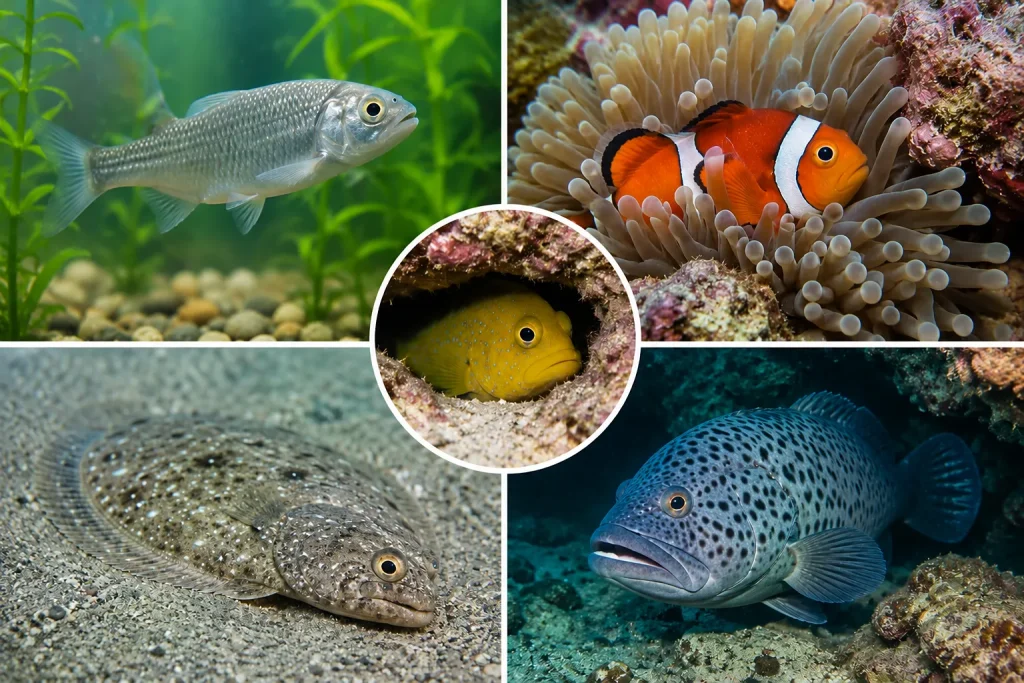
Do All Fish Sleep the Same Way?
Not at all!
The fish world contains more than 30,000 known species, and many have unique sleeping habits.
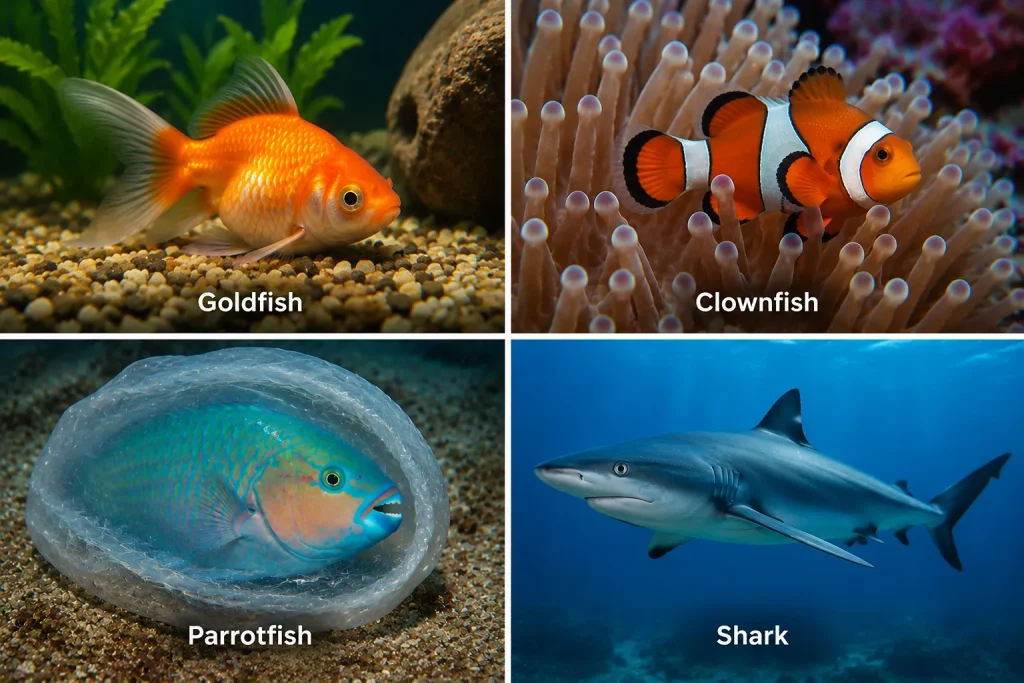
Goldfish
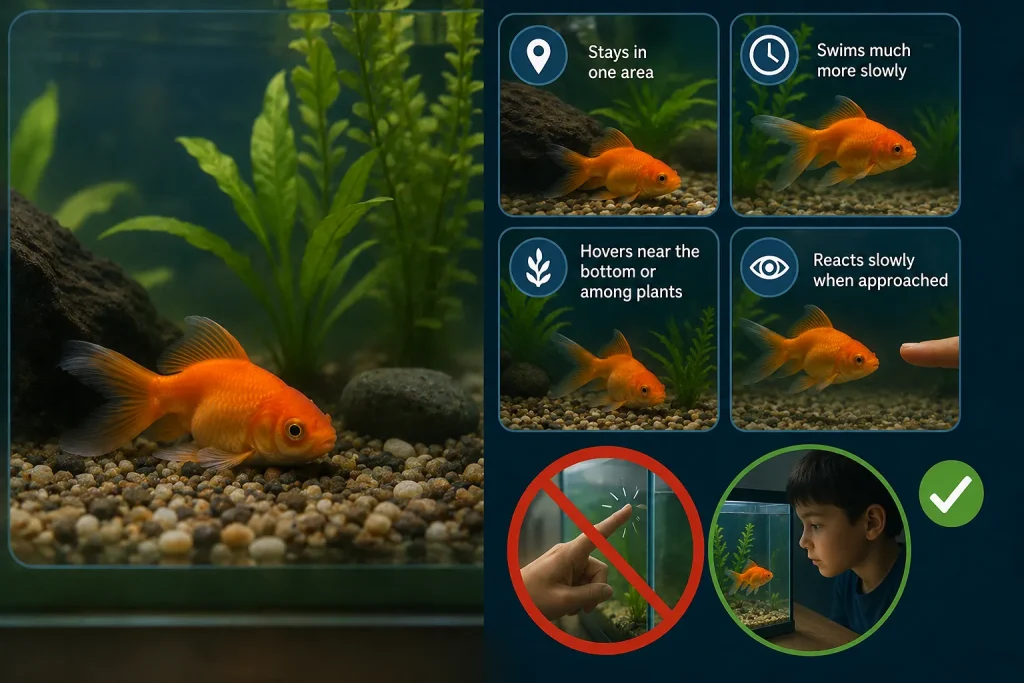
Goldfish often rest near the bottom of an aquarium or hover quietly in one place. Their movements become slower, and they appear less active.
Clownfish
Clownfish may remain close to their sea anemone home while resting at night.
Parrotfish
Parrotfish have one of the strangest bedtime routines in the ocean. Some species create a protective mucus cocoon around themselves before sleeping. Scientists think this may help hide their scent from predators.
Sharks
Some sharks never completely stop moving because water must flow over their gills to help them breathe. These sharks may rest parts of their brain while continuing to swim slowly.
When Do Fish Sleep?
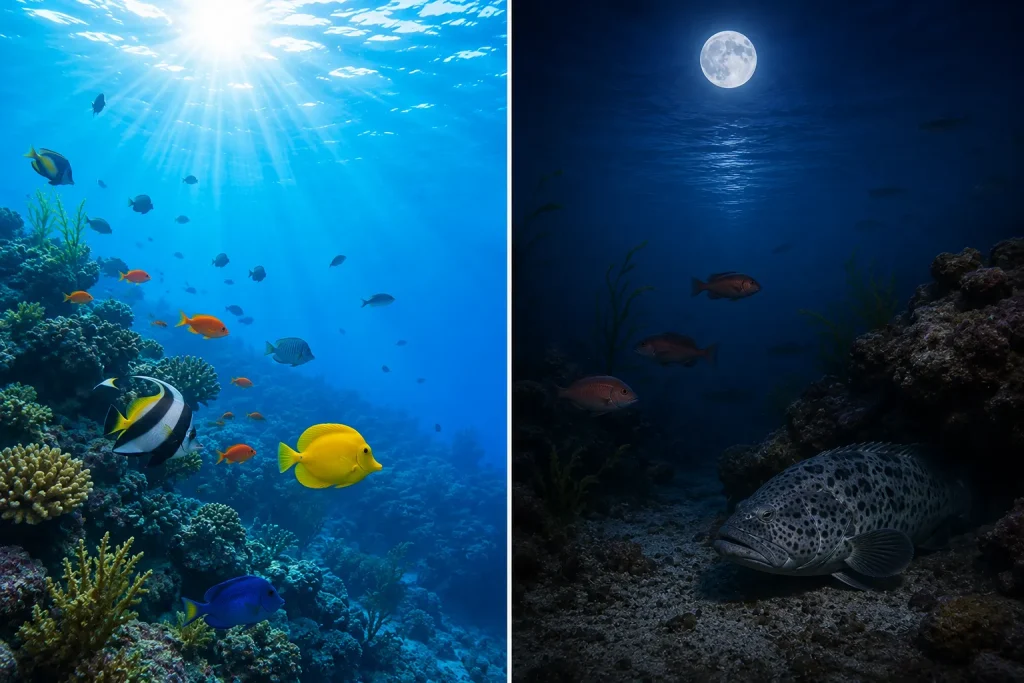
Many fish follow a daily cycle that is influenced by light and darkness.
Some fish are active during the day and rest at night.
Others are nocturnal, meaning they rest during the day and become active after sunset.
This is similar to animals such as owls and bats, which are awake at night while humans usually sleep.
The sleeping schedule often depends on where a fish lives and how it avoids predators.
Can Fish Dream?
This is a difficult question!
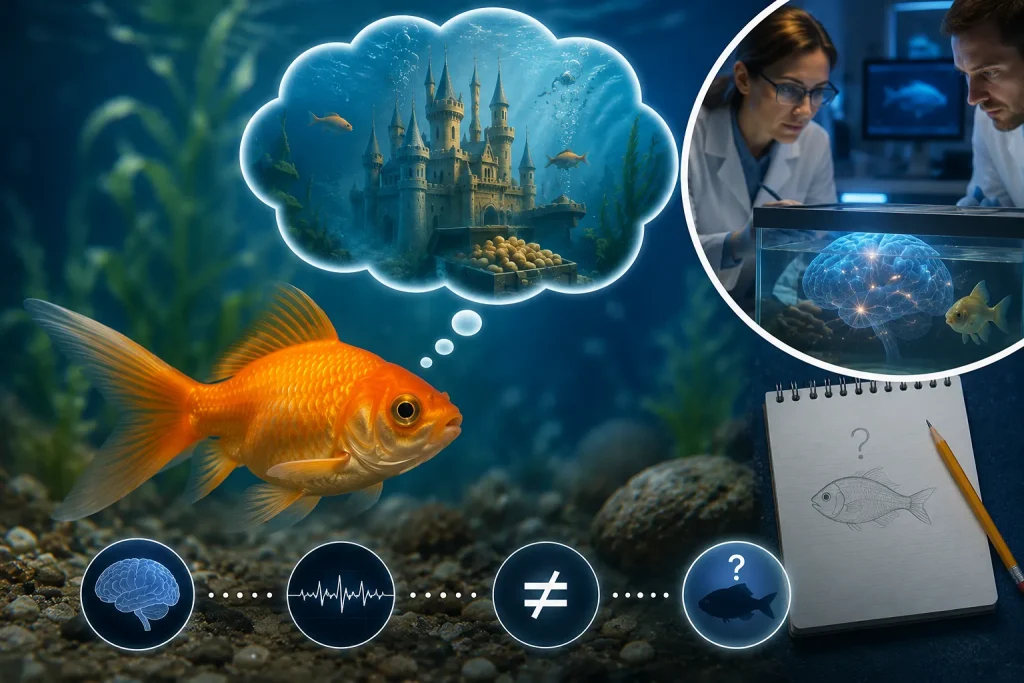
Scientists do not yet know whether fish dream in the same way humans do.
Human dreams are linked to a special stage of sleep called REM (Rapid Eye Movement) sleep. Fish do not appear to experience sleep in the same way that humans do.
Because fish brains are very different from ours, researchers are still studying whether dreaming occurs in fish.
For now, nobody knows for certain whether a goldfish dreams about swimming through giant castles or finding endless supplies of fish food!
What Happens If Fish Do Not Get Enough Rest?
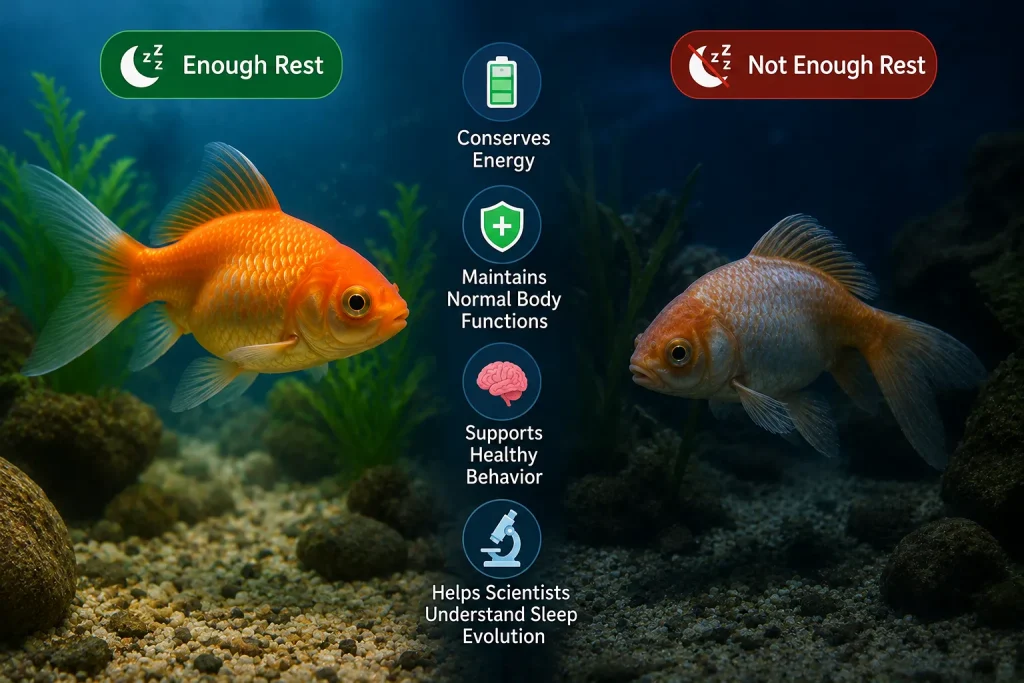
Just like humans, fish need rest to stay healthy.
Studies have shown that fish deprived of sleep-like rest can become less active and may exhibit different behaviour.
Rest helps fish conserve energy and maintain normal body functions.
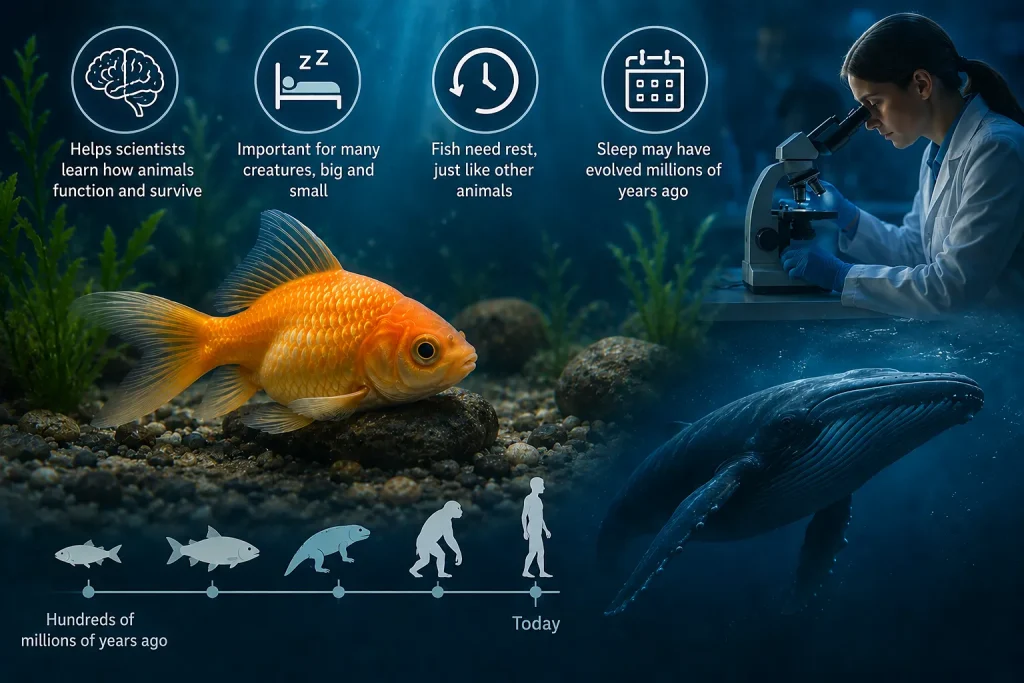
Scientists often study fish sleep because it can help them understand how sleep evolved in animals over millions of years.
How Can You Tell If Your Pet Fish Is Sleeping?
If you have an aquarium at home, you might notice some signs that your fish is resting:
- It stays in one area for a long time.
- It swims much more slowly.
- It hovers near the bottom or among plants.
- It reacts slowly when approached.
However, it is important not to tap on the aquarium glass to test whether a fish is sleeping. Sudden disturbances can stress fish and make them uncomfortable.
Instead, quietly observe them and note how their behaviour changes throughout the day.
Strange Sleeping Fish Facts
Here are some fun facts about sleeping fish:
Most fish sleep with their eyes open.
Some fish sleep hidden among coral reefs.
Certain parrotfish create a mucus sleeping bag around themselves.
Some sharks must keep moving while resting.
Fish become less responsive during sleep-like rest.
Scientists continue to study fish sleep to learn more about animal behaviour.
Why Is Fish Sleep Important?
Understanding fish sleep helps scientists learn how animals function and survive.
Sleep appears to be important for many different creatures, from tiny fish to giant whales and humans.
The fact that fish also need periods of rest suggests that sleep may have evolved hundreds of millions of years ago, long before people ever existed.
This shows just how important rest is in the animal kingdom.
Conclusion
So, do fish sleep? The answer is yes!
Fish may not curl up under blankets or close their eyes, but they do enter a special resting state that helps them save energy and stay healthy. Some hover quietly in the water, some hide among rocks and plants, and others even create protective cocoons before bedtime.
The next time you visit an aquarium or watch fish swimming in a pond, remember that these fascinating animals need their rest too. They sleep in a way that is perfectly suited to life underwater.
Nature is full of surprises, and sleeping fish are one of its most fascinating secrets!
For more interesting articles, please visit www.kidzherald.com