
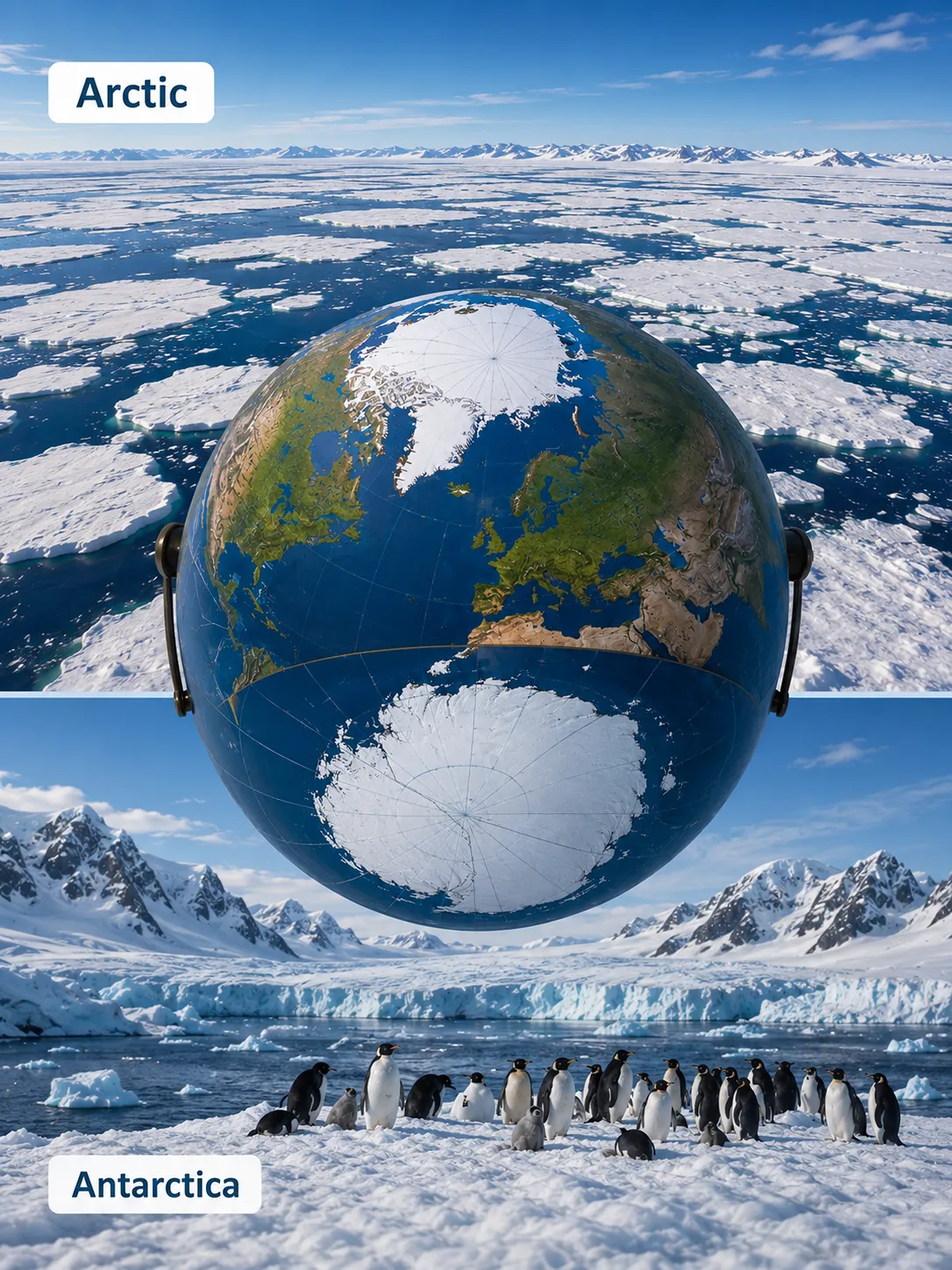
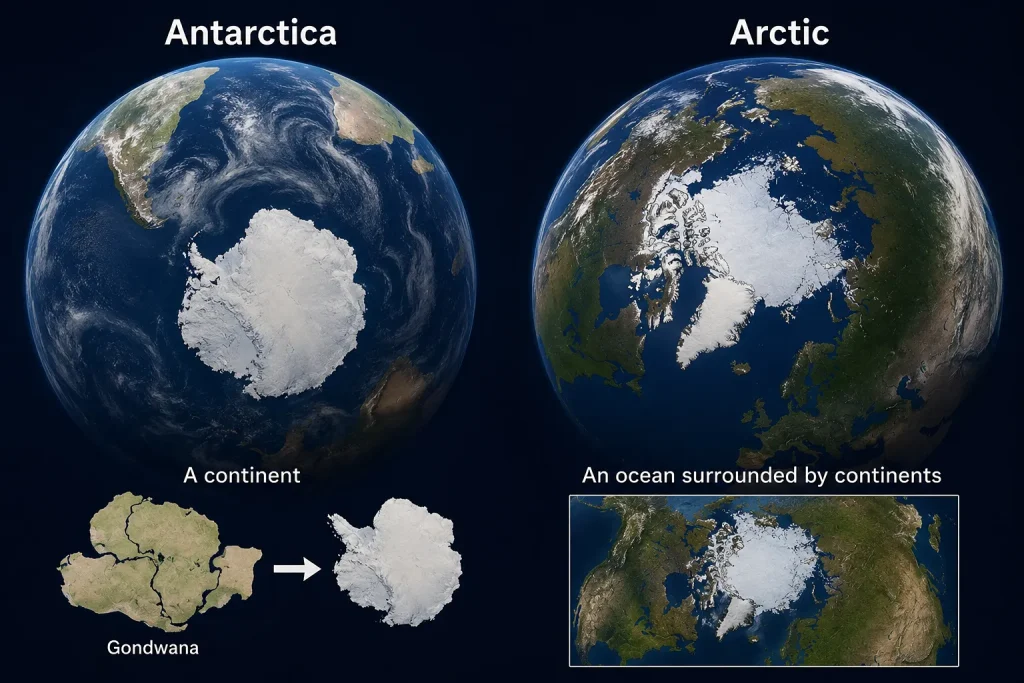
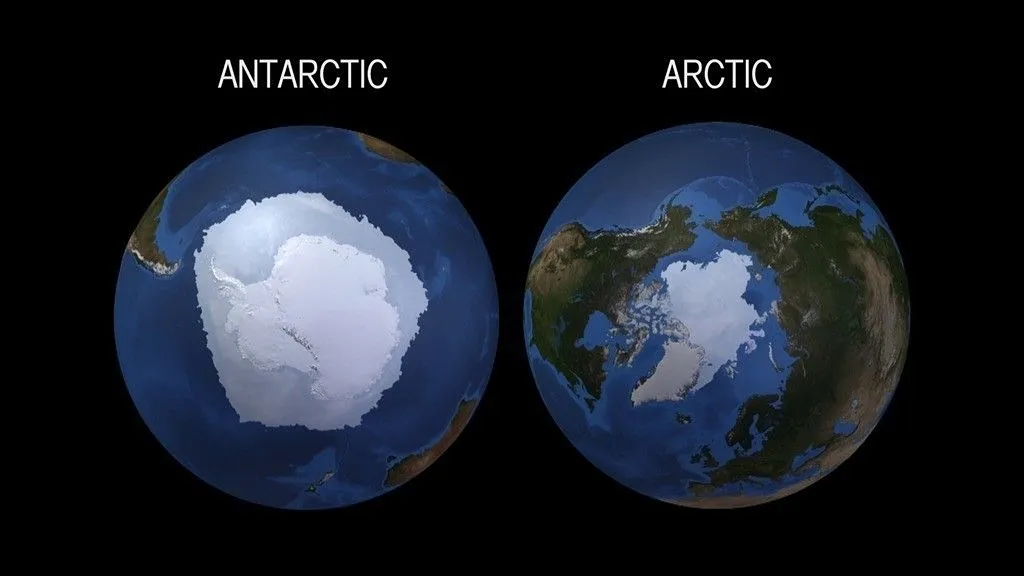
Have you ever looked at a globe and noticed something interesting? At the very bottom of the Earth is Antarctica, a huge frozen landmass that is called a continent. But at the very top of the Earth is the Arctic, which is not a continent at all.
Both places are icy, extremely cold, and home to amazing wildlife. So why does one count as a continent while the other does not? Let’s explore the fascinating differences between these two polar regions.
What Is a Continent?
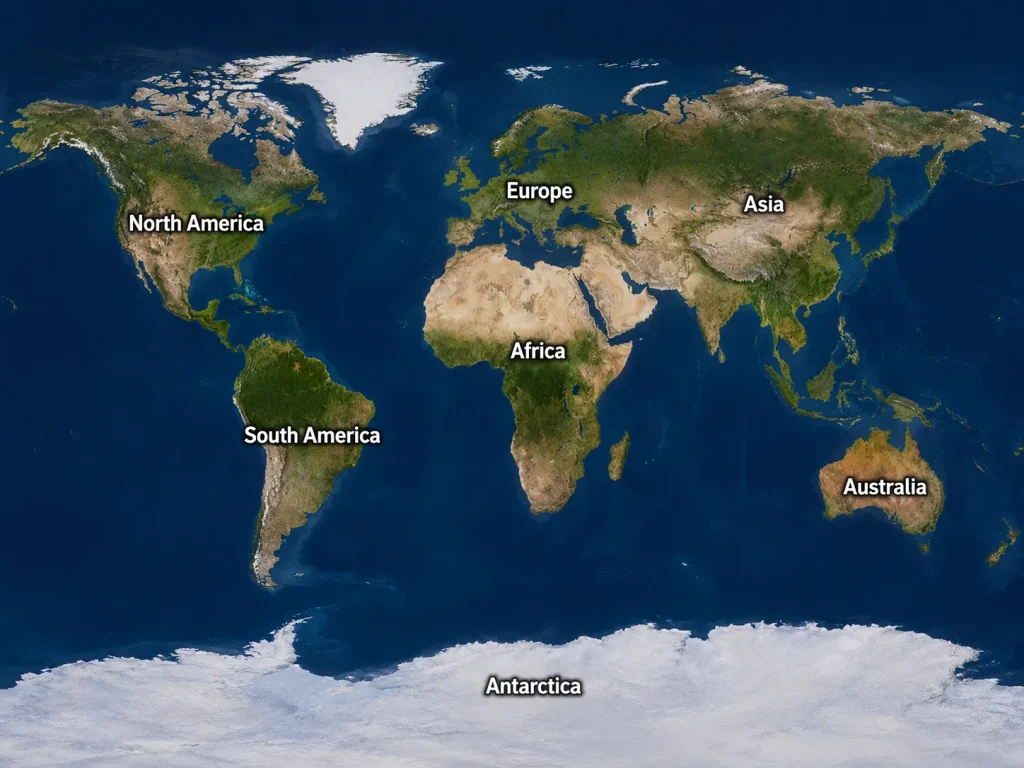
A continent is a very large area of land that is mostly separate from other landmasses. The Earth has seven continents:
- Asia
- Africa
- North America
- South America
- Europe
- Australia
- Antarctica
To be considered a continent, an area usually needs to be a large, continuous landmass with its own geological structure.
Antarctica meets these requirements perfectly. The Arctic does not.
Antarctica: A Continent Covered in Ice
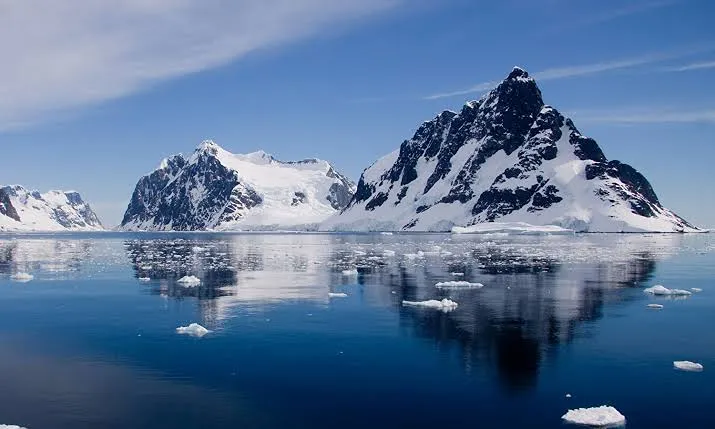
Antarctica is located around the South Pole. It is the fifth-largest continent on Earth, covering about 14 million square kilometres.
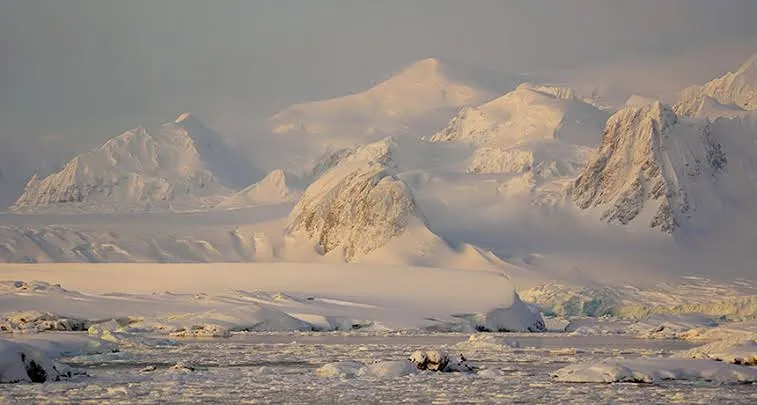
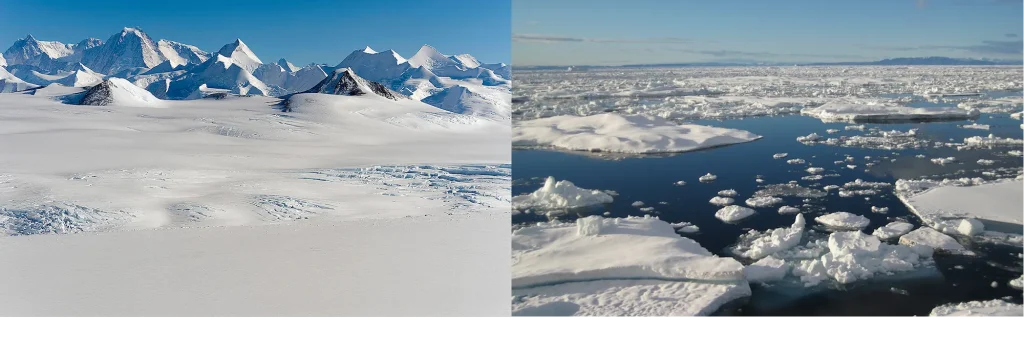
Although it looks like a giant sheet of ice, there is solid land underneath. In fact, Antarctica is composed of mountains, valleys, lakes, and rocky terrain. The thick ice sheet covers most of the continent.
Scientists have discovered that Antarctica has its own continental crust, just like the other continents. This is one of the main reasons it is recognised as a true continent.
More than 98% of Antarctica is covered by ice, making it the coldest, driest, and windiest continent on Earth.
The Arctic: An Ocean Surrounded by Land
The Arctic is very different.
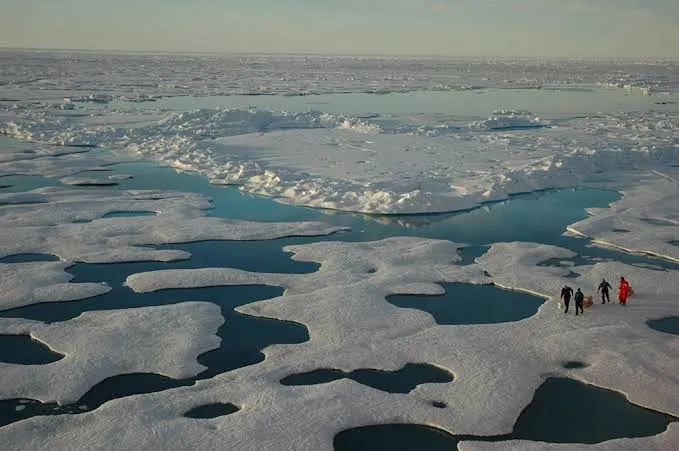
Instead of being a continent covered by ice, the Arctic is mainly an ocean covered by floating sea ice. At its centre lies the Arctic Ocean, with countries such as Canada, Russia, Norway, Greenland, and the United States surrounding it.
If you travelled to the North Pole, you would not be standing on land. You would be standing on ice floating on top of the ocean.
Because there is no large landmass beneath most of the Arctic region, it does not qualify as a continent.
A simple way to remember the difference is:
- Antarctica = Land covered by ice
- Arctic = Ocean covered by ice
An Easy Comparison
Imagine two bowls.
In the first bowl, place a large rock and cover it with a thick blanket. The rock is still there underneath. This is like Antarctica.
In the second bowl, fill it with water and place a layer of ice cubes on top. The ice floats on the water. This is like the Arctic.
The hidden rock represents a continent. The floating ice does not.
How Were They Formed?
Millions of years ago, Antarctica was part of a giant supercontinent called Gondwana. Over time, Earth’s tectonic plates slowly moved, and Antarctica became separated from other continents.
Because it sits on its own large piece of continental crust, geologists classify it as a continent.
The Arctic developed differently. The region is centred around the Arctic Ocean rather than a separate landmass. While there are nearby islands and continents, there is no single continent called “Arctic”.
What Animals Live There?
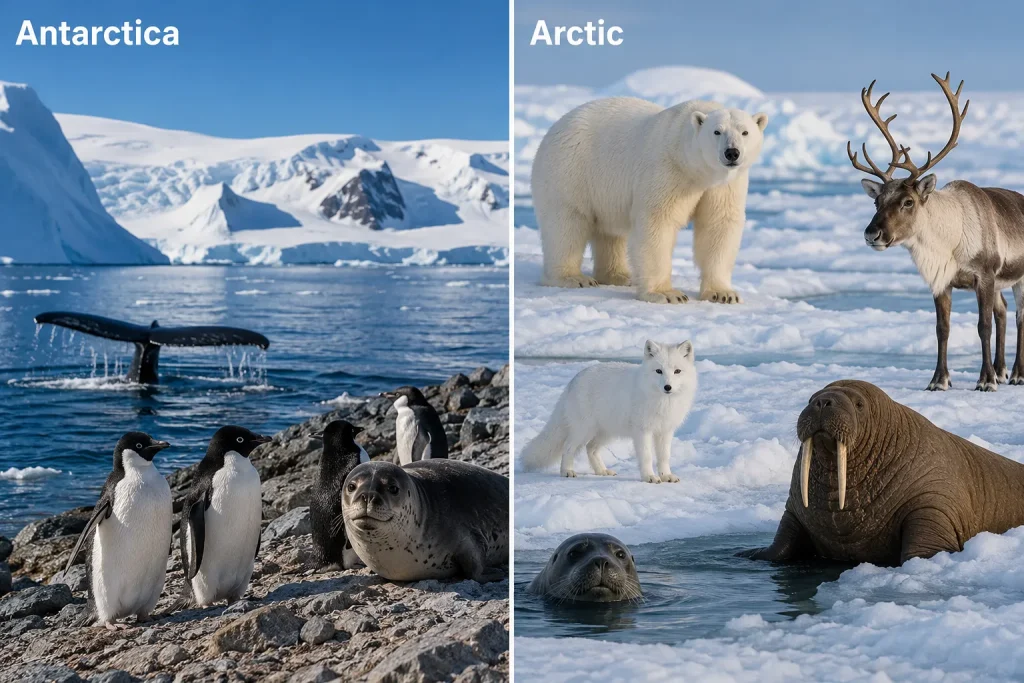
The wildlife of the two regions is very different.
Antarctica
Antarctica is famous for:
- Penguins
- Seals
- Whales
- Seabirds
One thing you will never find in Antarctica is a polar bear.
Arctic
The Arctic is home to:
- Polar bears
- Arctic foxes
- Walruses
- Reindeer
- Seals
One thing you will never find naturally in the Arctic is a penguin.
A fun fact is that penguins live in the south, while polar bears live in the north.
Which Is Colder?
Many people think the Arctic is colder because it is at the North Pole. However, Antarctica is usually much colder.
There are two main reasons:
- Antarctica is a continent with high mountains and a thick ice sheet. Higher places are generally colder.
- Land cools more quickly than oceans. The Arctic Ocean helps keep Arctic temperatures slightly warmer.
The coldest temperature ever recorded on Earth was in Antarctica: about -89°C.
Do People Live There?
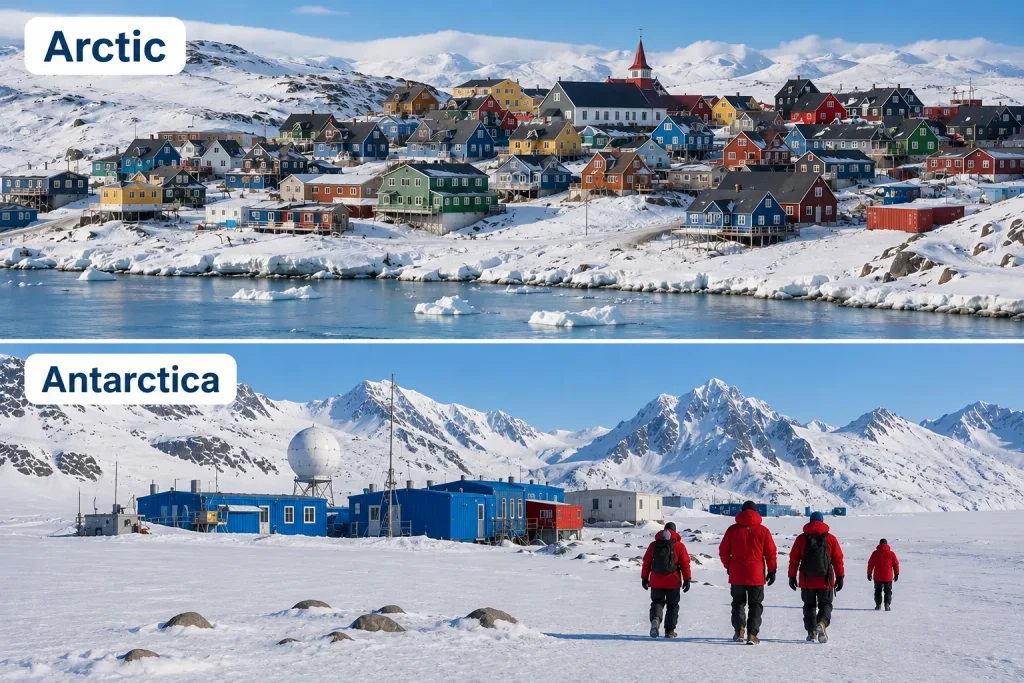
The Arctic has many permanent residents. Indigenous peoples and communities have lived in Arctic regions for thousands of years. Today, towns and cities can be found throughout the Arctic.
Antarctica is different. No one lives there permanently. Instead, scientists from many countries stay at research stations for months at a time to study climate, wildlife, space weather, and the environment.
Why Does This Matter?
Understanding the difference between Antarctica and the Arctic helps scientists learn more about our planet.
Both regions play important roles in Earth’s climate. Their ice helps reflect sunlight into space, keeping the planet cooler. Scientists carefully monitor changes in polar ice because they can affect sea levels, weather patterns, and ecosystems worldwide.
Although they are both icy wildernesses, they are not the same. One is a continent hidden beneath a thick blanket of ice, while the other is an ocean topped with floating ice.
Conclusion
So, why is Antarctica a continent while the Arctic is not?
The answer is simple: Antarctica is a huge landmass with continental crust underneath its ice, making it a true continent. The Arctic, on the other hand, is mostly an ocean covered by floating sea ice, with land surrounding it.
You can remember it with this easy phrase:
Antarctica is land under ice.
The Arctic is ice over water.
That one difference is what makes Antarctica a continent and the Arctic a region rather than a continent.
For more interesting articles, please visit www.kidzherald.com