
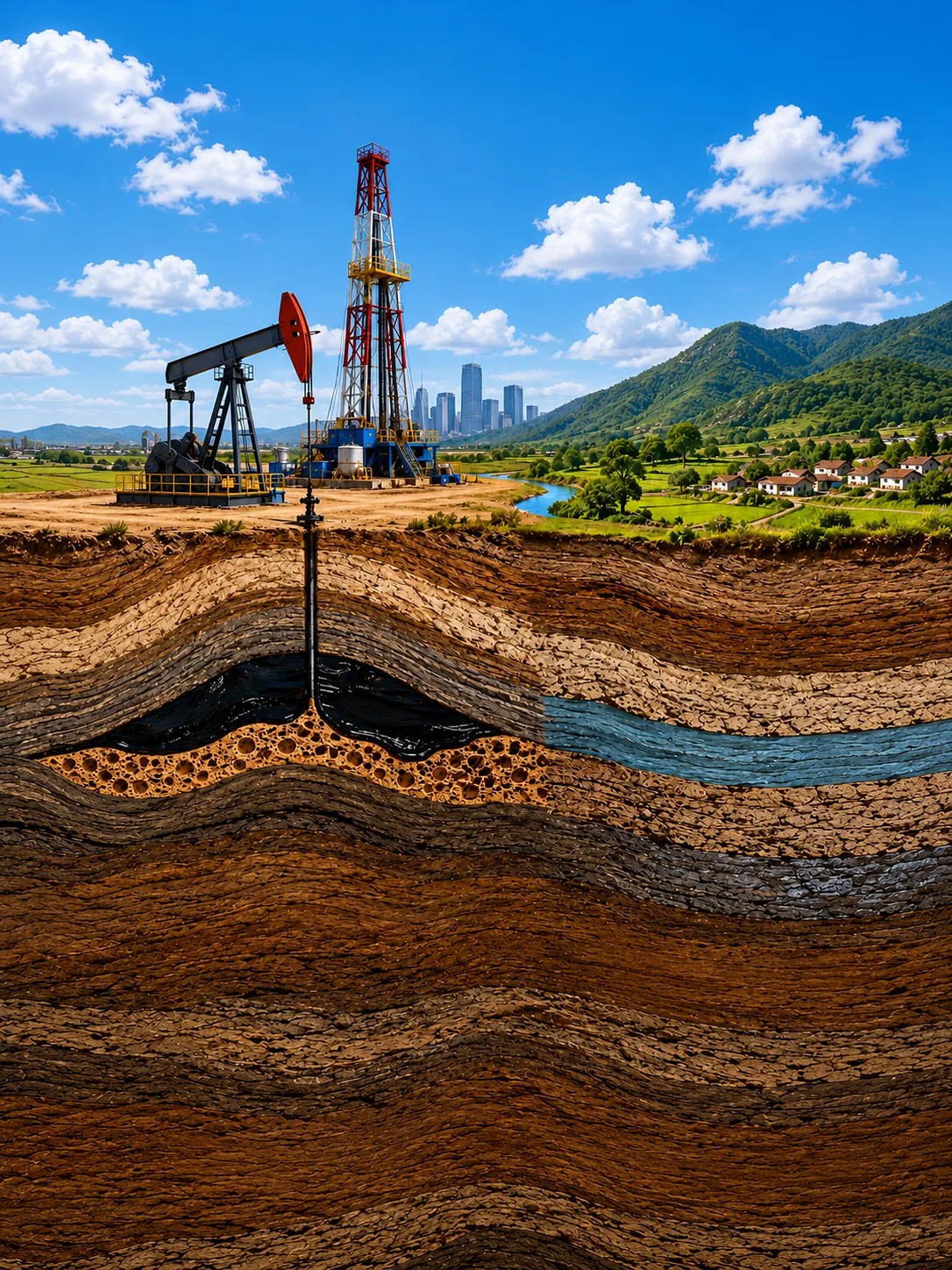
Have you ever wondered why some countries have huge oil fields while others have very little petroleum underground?
Petroleum, often called oil, is one of the world’s most important natural resources. It helps power vehicles, aeroplanes, ships, and many industries. It is also used to make thousands of everyday products, including plastics, clothing fibres, paints, and even some medicines.
But petroleum is not spread evenly across the Earth. Some places have enormous reserves buried deep underground, while others have almost none.
So why does this happen?
The answer lies in ancient oceans, tiny organisms, millions of years of geological changes, and a little bit of luck!
Let’s dig into the fascinating story of how petroleum forms and why it is found in some places but not others.
What Is Petroleum?
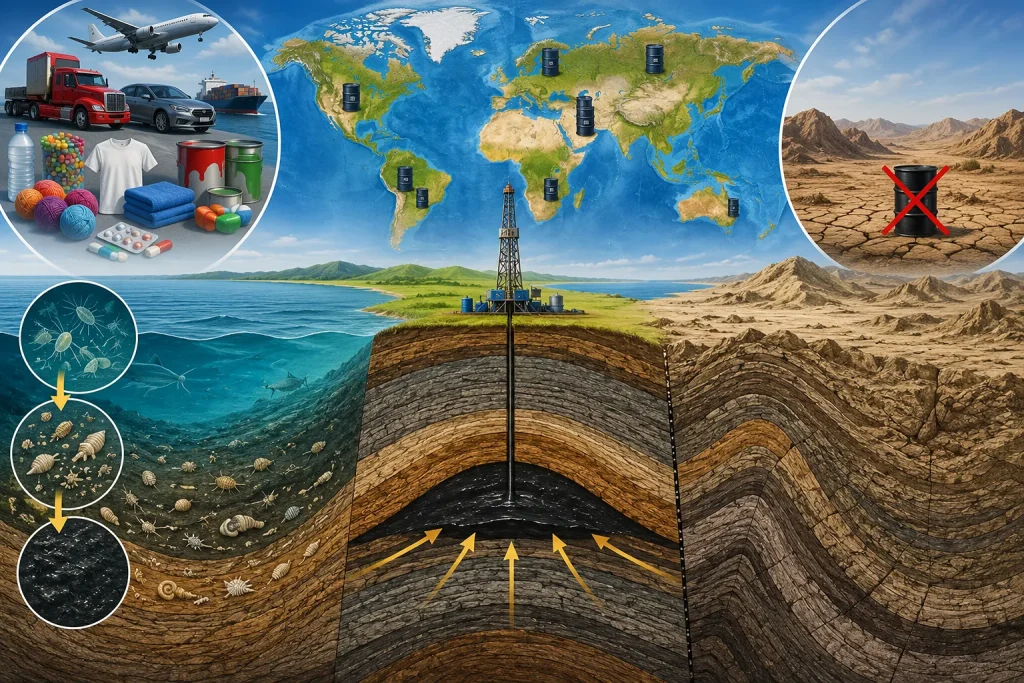
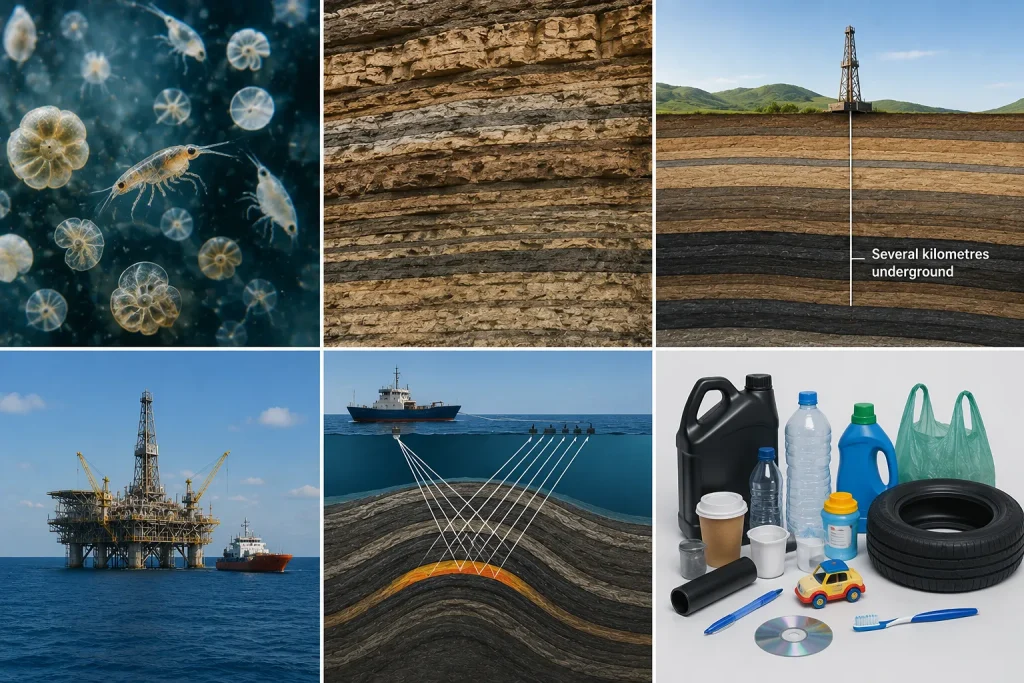
Petroleum is a fossil fuel formed from the remains of tiny marine plants and animals that lived millions of years ago.
When these organisms died, many sank to the bottoms of ancient seas and oceans.
Over long periods, layers of mud, sand, and sediment buried these remains.
As more layers built up, heat and pressure increased deep underground.
Eventually, the buried organic material slowly transformed into petroleum and natural gas.
It All Starts with Ancient Oceans
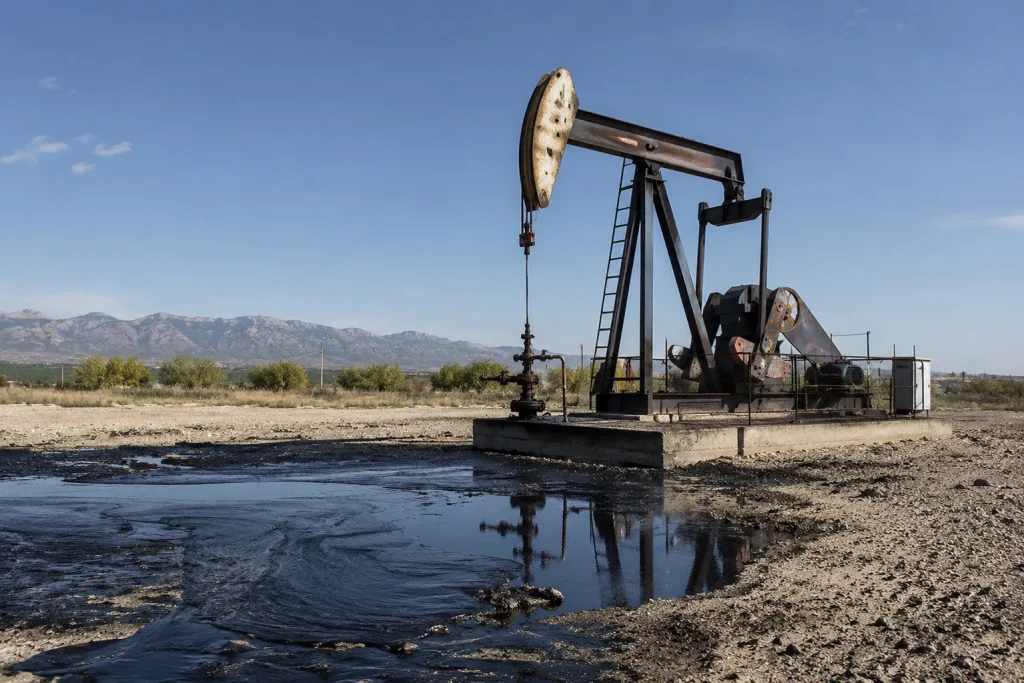
One of the biggest reasons petroleum is unevenly distributed is that not every place on Earth had the same ancient environment.
Millions of years ago, some regions were covered by shallow seas filled with tiny organisms.
These areas provided the ideal conditions for petroleum formation.
Other regions may have been:
- Mountains
- Deserts
- Dry land
- Areas with little marine life
Without large amounts of buried organic material, petroleum could not form there.
In simple terms, places that once had the right ancient oceans are more likely to contain petroleum today.
The Importance of Sedimentary Rocks
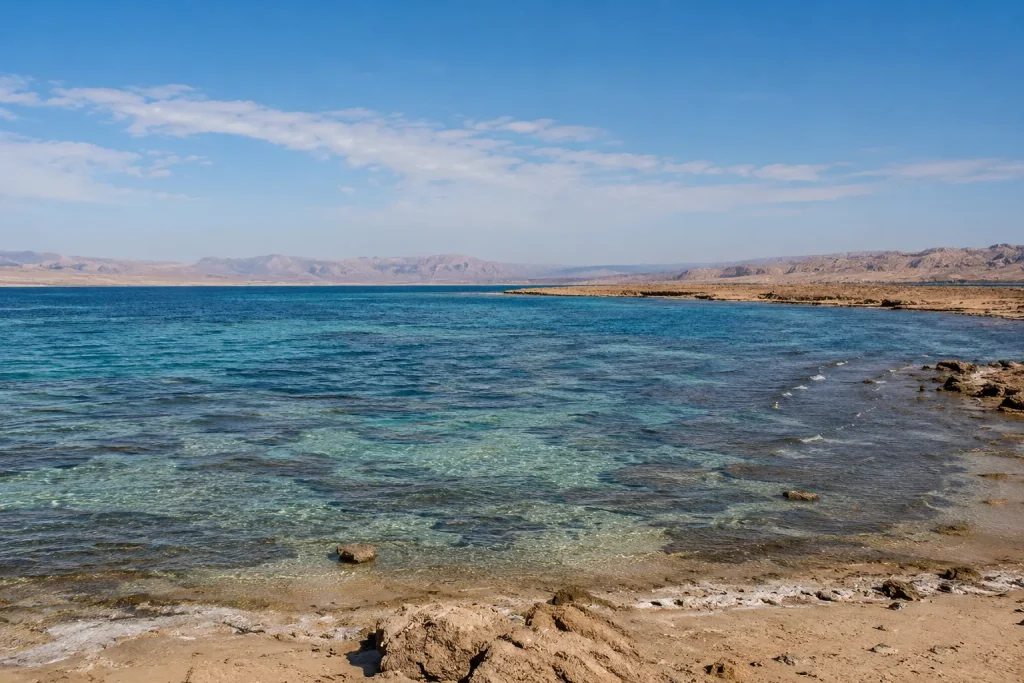
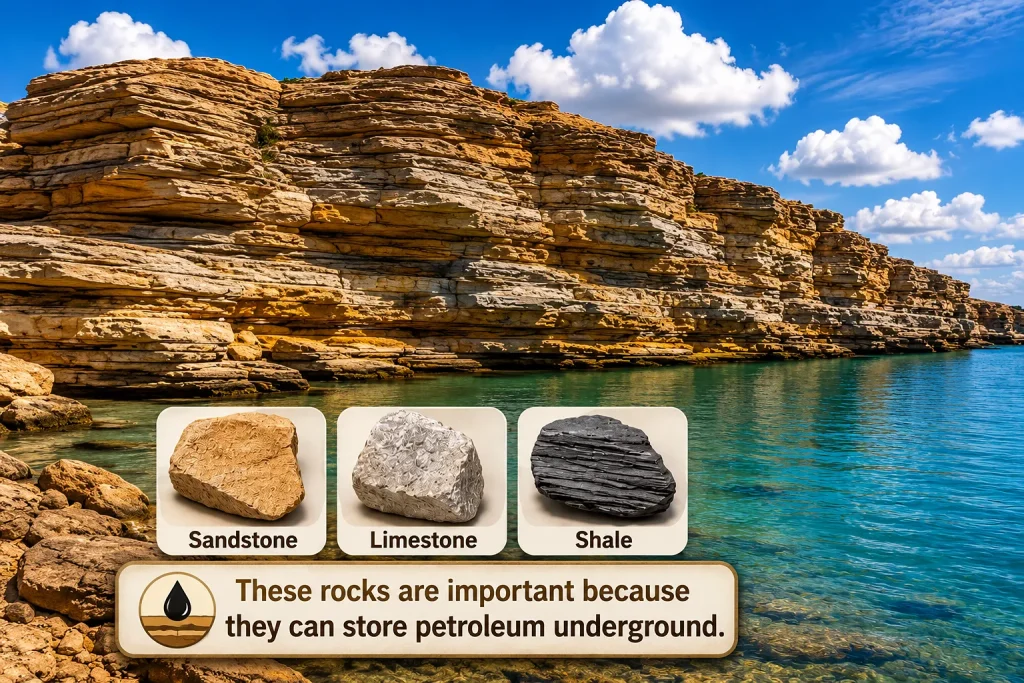
Petroleum is usually found in sedimentary rock.
These rocks form when layers of sand, mud, and other materials build up over time.
Examples include:
- Sandstone
- Limestone
- Shale
These rocks are important because they can store petroleum underground.
Areas with thick layers of sedimentary rocks are often more likely to contain oil and gas reserves.
By contrast, regions dominated by volcanic or very old crystalline rocks may contain little or no petroleum.
Petroleum Needs a “Storage Tank”
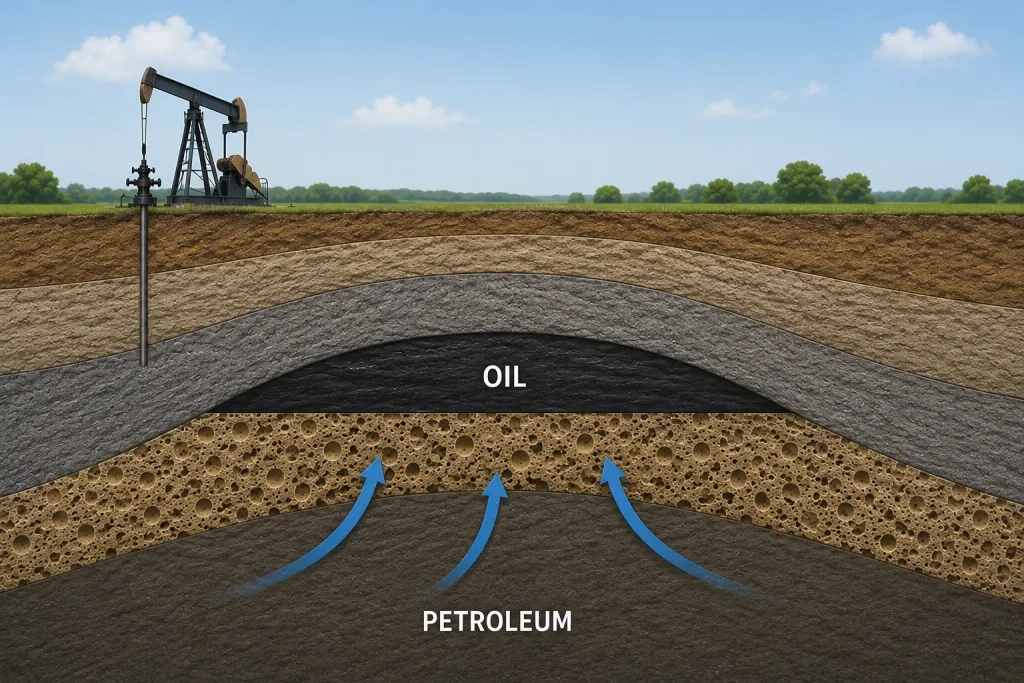
Even after petroleum forms, it needs somewhere to collect.
Imagine pouring water into a sponge. The water fills tiny spaces inside the sponge.
Certain underground rocks work similarly.
These porous rocks contain tiny spaces where petroleum can accumulate.
Scientists call these rocks reservoir rocks.
Without suitable reservoir rocks, petroleum may not accumulate in sufficient quantities to be extracted.
Petroleum Needs a Trap
Petroleum naturally tries to move upwards through rock layers.
If nothing stops it, it may eventually escape to the surface.
For a large oil field to form, there must be a geological trap.
These traps act like underground containers.
A trap usually includes:
- Reservoir rock to hold the petroleum
- Impermeable rock above it
- A structure that prevents the oil from escaping
Without these traps, petroleum may leak away over millions of years.
Timing Matters
Petroleum formation requires an incredible amount of time.
The process often takes tens of millions of years.
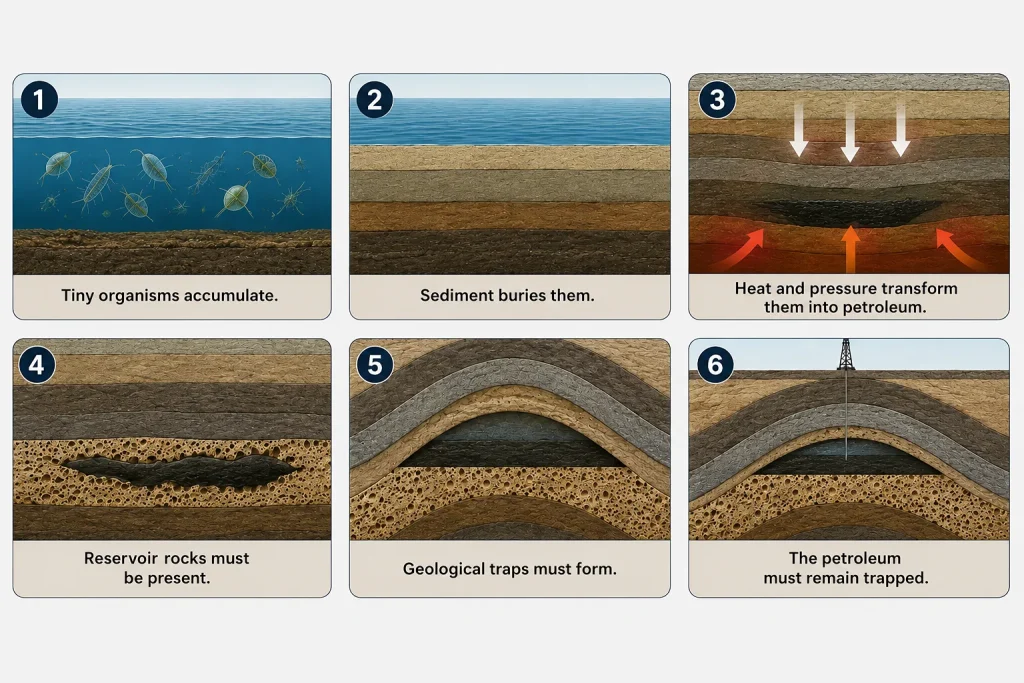
For a large oil field to develop, several things must happen in the correct order:
- Tiny organisms must accumulate.
- Sediment must bury them.
- Heat and pressure must transform them into petroleum.
- Reservoir rocks must be present.
- Geological traps must form.
- The petroleum must remain trapped.
If even one of these steps is missing, significant petroleum deposits may never develop.
Why Do Some Countries Have More Petroleum?
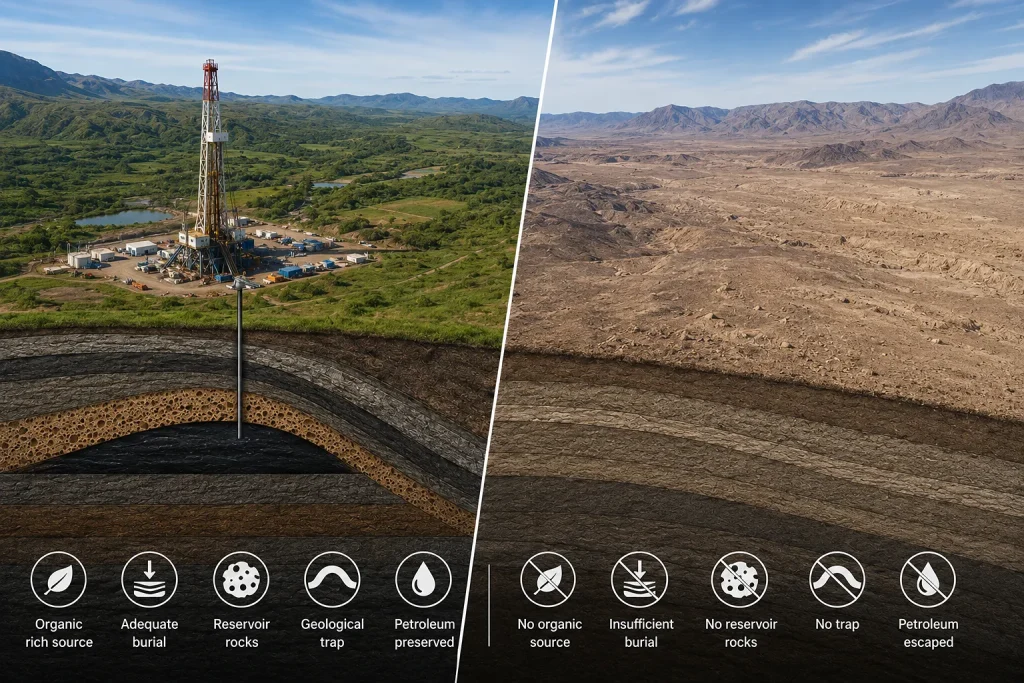
Some areas did not experience the right geological conditions.
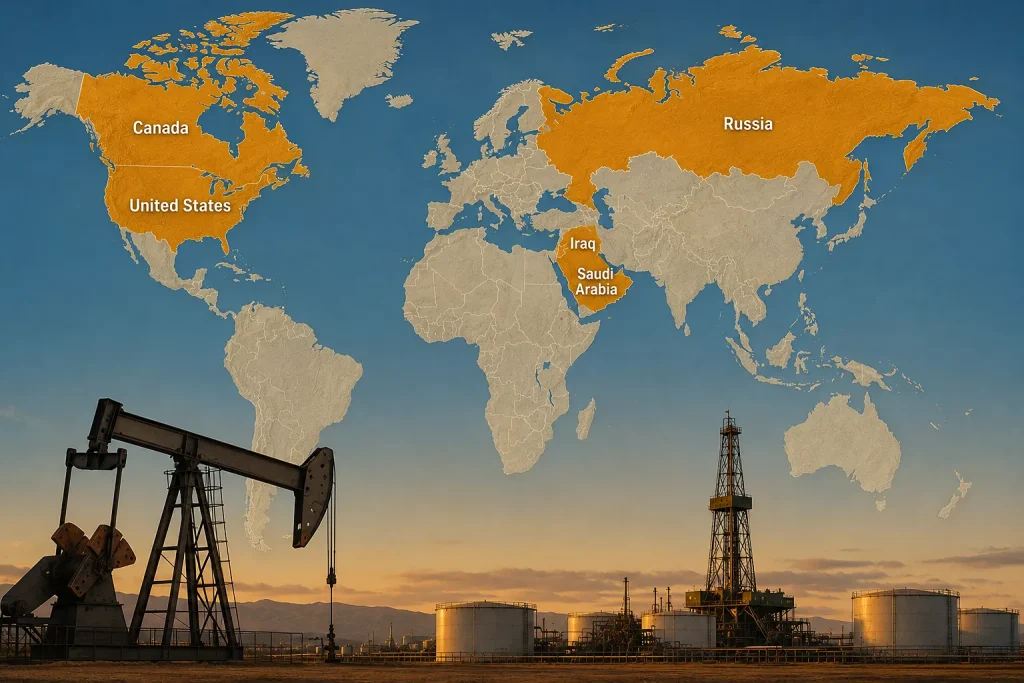
Large petroleum reserves are found in places such as:
- Saudi Arabia
- Iraq
- United States
- Canada
- Russia
These regions contain extensive sedimentary basins and geological structures that helped preserve petroleum over millions of years.
Why Do Some Areas Have Almost None?
Some areas simply did not experience the right geological conditions.
Possible reasons include:
- No ancient seas rich in organic material
- Insufficient burial of sediments
- Lack of suitable reservoir rocks
- Absence of geological traps
- Petroleum escaped long ago
Even neighbouring regions can have very different amounts of petroleum because their geological histories may differ significantly.
Finding Petroleum Is Like Solving a Puzzle
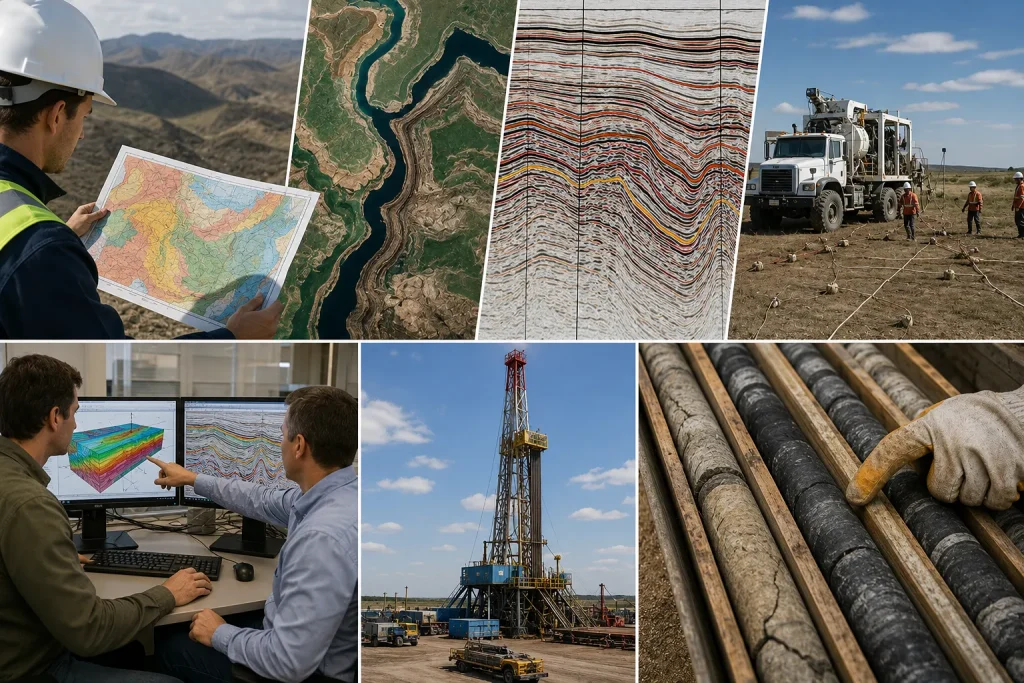
Petroleum geologists are scientists who study rocks and underground structures.
They use tools such as:
- Satellite images
- Geological maps
- Seismic surveys
- Drilling equipment
Their job is to identify places where all the necessary conditions for petroleum might exist.
Even with advanced technology, finding oil is not always easy.
Some wells discover large reserves, while others find very little.
What About Offshore Oil?
Not all petroleum is found on land.
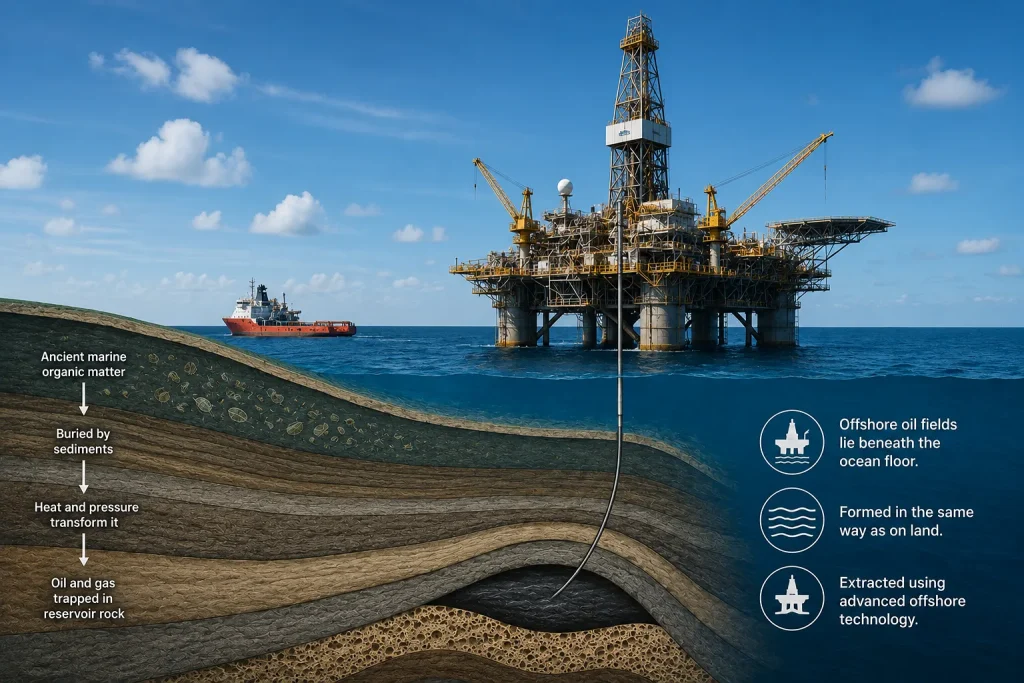
Many important oil fields are located beneath the ocean floor.
Offshore petroleum formed in much the same way as petroleum on land.
Ancient marine environments created organic-rich sediments that were later buried and transformed into oil and gas.
Today, engineers use large offshore platforms to extract these resources.
Will Petroleum Last Forever?
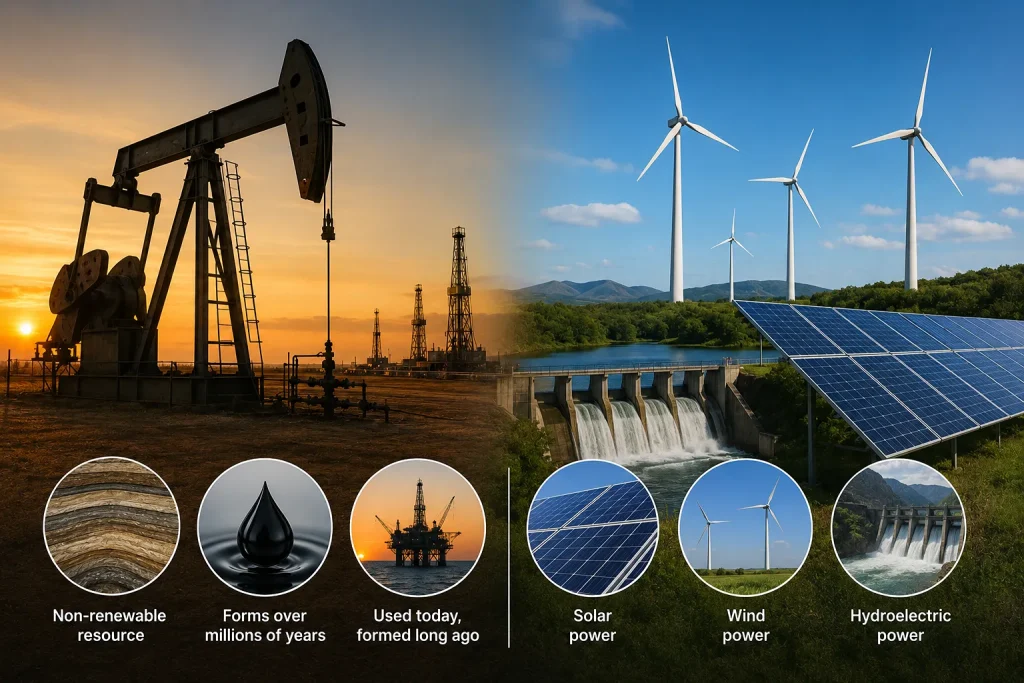
Petroleum is considered a non-renewable resource.
This means it forms so slowly that humans cannot replace it within a useful timescale.
While new deposits are sometimes discovered, the petroleum being used today mostly formed millions of years ago.
Because of this, many countries are also investing in alternative energy sources such as:
- Solar power
- Wind power
- Hydroelectric power
These energy sources can help reduce dependence on fossil fuels.
Fun Facts About Petroleum
- Petroleum began forming from tiny marine organisms millions of years ago.
- Most oil is found in sedimentary rock formations.
- Some petroleum reservoirs are located several kilometres underground.
- Offshore oil fields can lie beneath deep oceans.
- Geologists use seismic waves to search for underground oil deposits.
- Thousands of everyday products are made using petroleum-based materials.
Conclusion
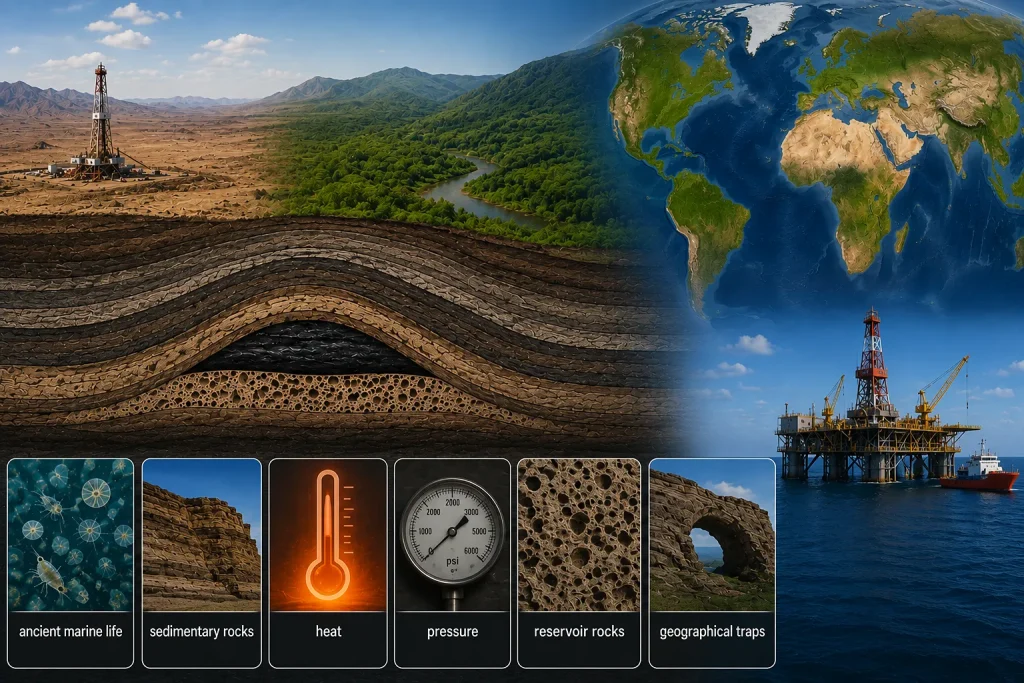
Some areas have abundant petroleum, while others have almost none, because Earth’s geological history varies from place to place. To create large petroleum deposits, a region needs the right combination of ancient marine life, sedimentary rocks, heat, pressure, reservoir rocks, and geological traps.
These conditions developed in some parts of the world but not in others. As a result, petroleum is unevenly distributed across our planet.
The next time you hear about an oil field or an offshore drilling platform, remember that it is the result of millions of years of Earth’s history working together to create one of the world’s most important natural resources.
For more interesting articles, please visit www.kidzherald.com