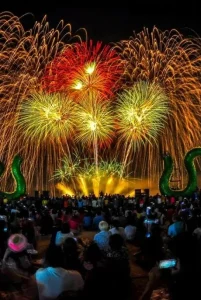
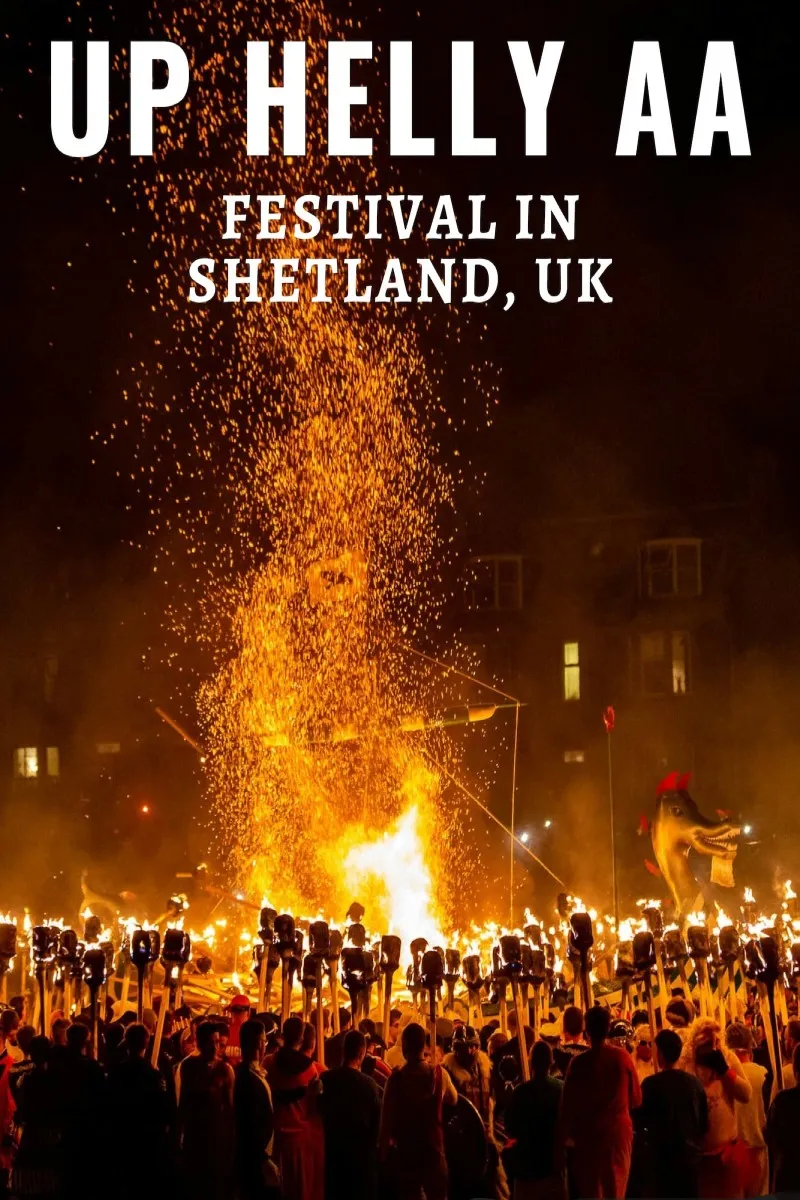
Have you ever imagined a festival where people dress up like Vikings, carry burning torches and set a big wooden ship on fire? That amazing and dramatic celebration really happens every year in the Shetland Islands, Scotland — and it’s called Up-Helly-Aa! This festival is full of fire, history, community spirit and a whole lot of excitement.
Where and When Is It Held?
Up-Helly-Aa is a fire festival celebrated in many communities across the Shetland Islands, which lie off the north coast of Scotland. The largest and most famous version takes place in Lerwick, the capital of Shetland.
The festival runs from January to March, but the main Lerwick celebration is always on the last Tuesday of January — a date that marks the end of the long winter and the Yule season (similar to the middle of winter before spring begins).
What Is Up-Helly-Aa All About?
Up-Helly-Aa is a mix of history, tradition and community celebration. The name itself comes from Shetland’s local dialect: “Up Helly Aa” means something like ending the holy days, a way of saying that the festive Yule season is over.
Although the festival draws on Viking themes, it is not an ancient Viking event. Instead, the modern festival began in the late 1800s, when people sought a safer, more organised way to celebrate in winter. Back then, spooky winter weather could make people mischievous, and earlier celebrations involved dragging burning tar barrels through the streets. That was dangerous and led to damage, so local leaders transformed the tradition into the fire festival we know today — with torches and Viking-style celebrations.
Today, Up-Helly-Aa is both a celebration of the islanders’ community spirit and a way to remember Shetland’s long connection to Norse and Viking culture.
Who Takes Part?
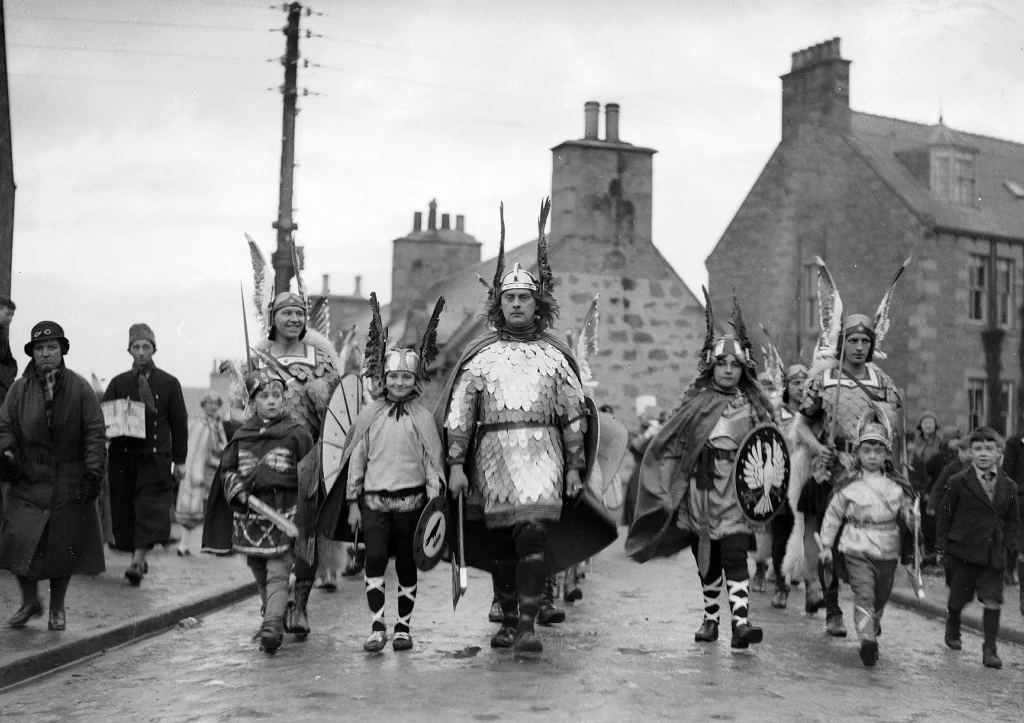
Anyone in Shetland can be part of Up-Helly-Aa, but there is a special hero of the festival called the Guizer Jarl. This person is like the parade leader. Members of the Guizer Jarl’s squad train and prepare for months — building costumes, learning marches and practicing the songs they will sing during the day.
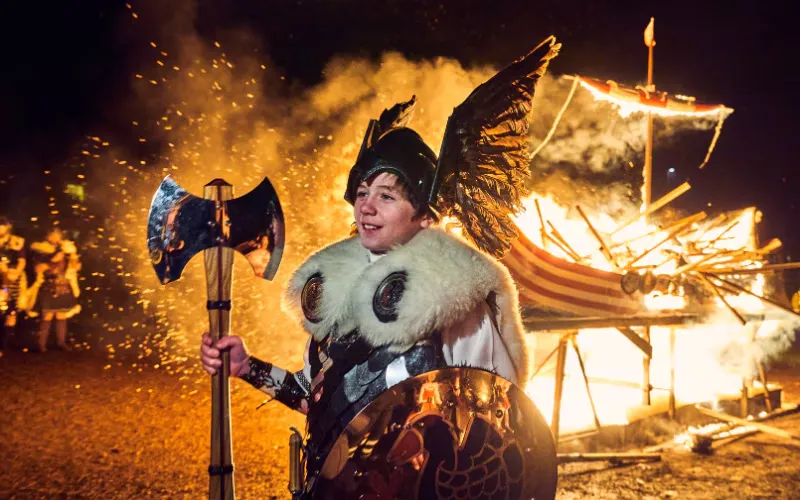
Traditionally, squads of men — called guizers — dress up in Viking-style costumes with helmets, shields and even fur. In recent years, the festival has become more inclusive, and women and girls have been allowed to take part in the main procession in Lerwick too, breaking old traditions to make the festival more welcoming for everyone.
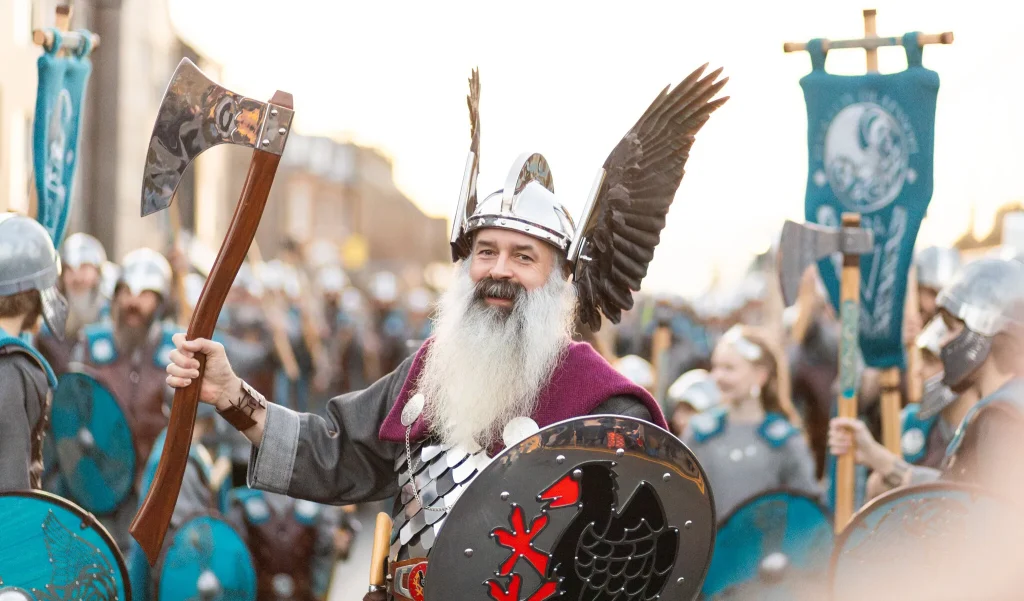
Lights, Torches and Viking Longships!
One of the most exciting parts of Up-Helly-Aa is the torchlit procession. As night falls, hundreds — sometimes more than a thousand — of guizers carry burning torches through the streets of Lerwick. The sight of flames winding through the dark streets is truly spectacular, and people from all over the world come to watch.
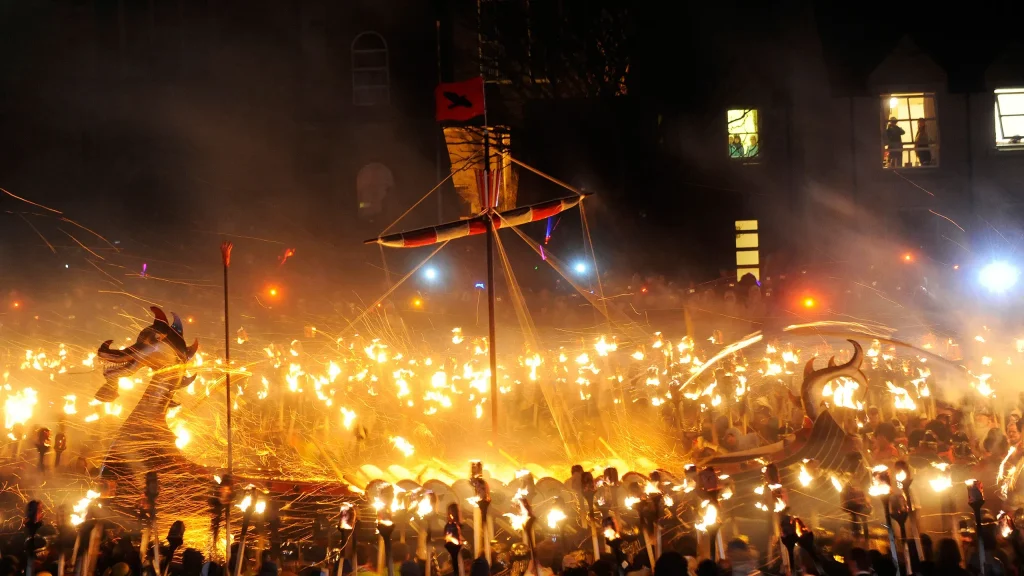
At the end of the parade, the torches are thrown into a replica Viking longship (a galley) that has been carefully built over the past year. Then the longship is set on fire and slowly burns to ashes — a dramatic and impressive moment that symbolises renewal and the ending of the dark winter.
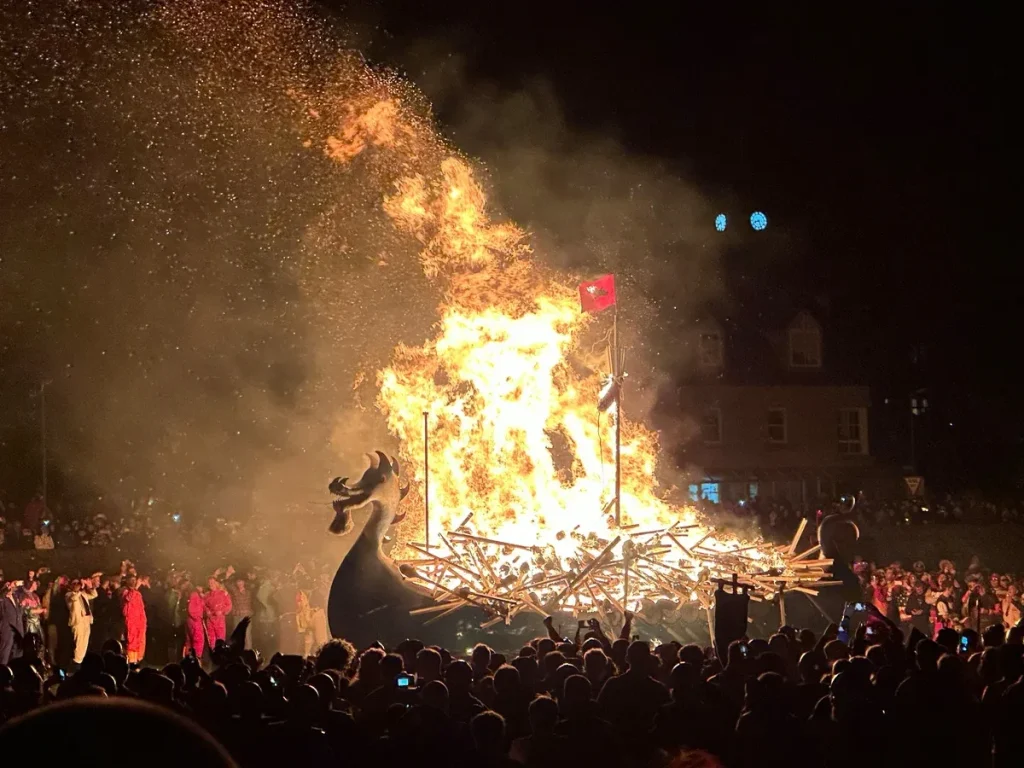
Many people come not just from Shetland but from other parts of Scotland, the UK and even overseas to see this amazing sight.
What Happens During the Day?
Up-Helly-Aa is more than just fire and flashes. The festival lasts all day and into the night:
- Morning visits — the Jarl’s squad often visits local schools, care homes and community centres with their torches and songs.
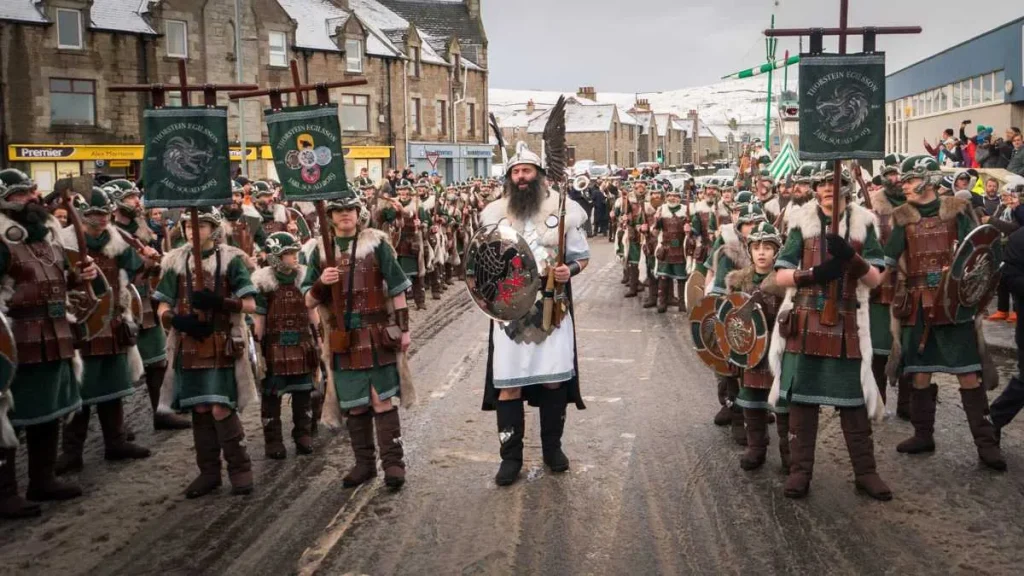
- Procession in the evening — hundreds of guizers march through the streets in their Viking costumes, singing traditional songs and waving flaming torches.
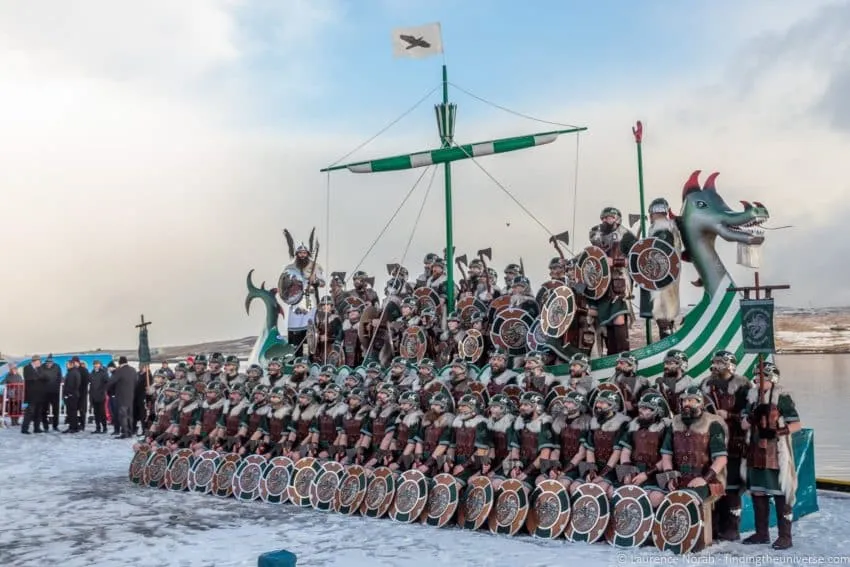
- Burning of the Galley — this is the climax of the festival, when the crowd gathers to watch the great ship burn.
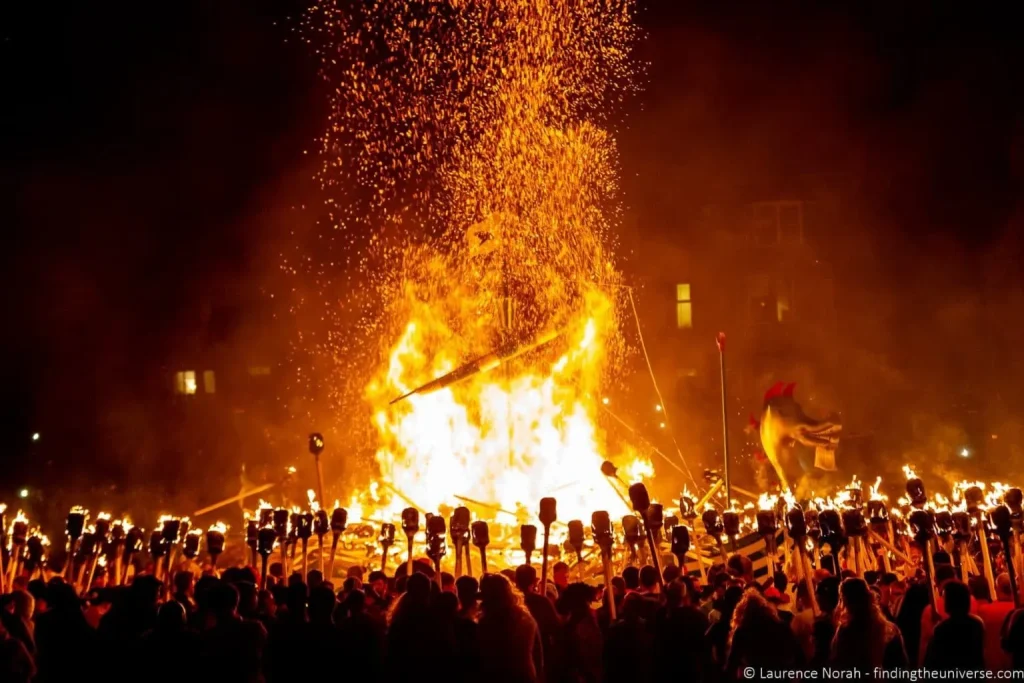
- After-party celebrations — once the ship has burnt down, people head to community halls for concerts, dancing, music, plays and sharing of food that lasts until the early hours of the morning.
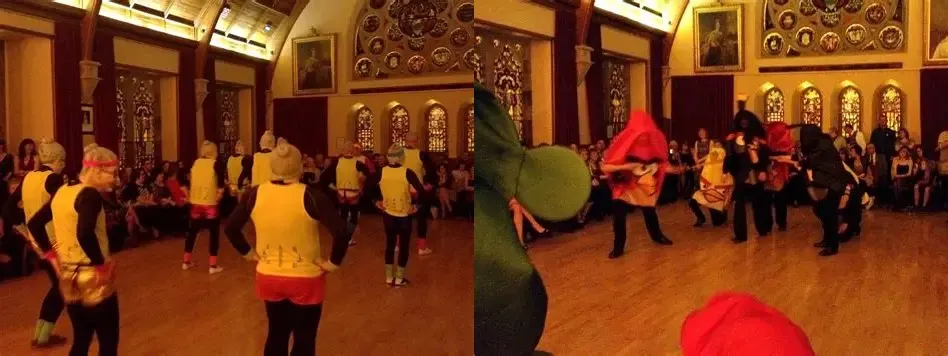
These celebrations bring friends, families and neighbours together. It’s a time when people enjoy each other’s company, share local pride and have a lot of fun even in the cold Shetland winter!
How Long Does It Take to Prepare?
Up-Helly-Aa isn’t just one night of fun — it takes many months of planning and teamwork to make it happen. The longship must be designed and built, costumes must be made, songs practised, and volunteers must coordinate the whole programme of events. It’s a real example of how people in a community can work together and create something magical.
Other Up-Helly-Aa Festivals in Shetland
While the Lerwick Up-Helly-Aa is the biggest and most famous, there are other Up-Helly-Aa festivals held around Shetland from January to March. Places like Bressay and Delting have their own celebrations with torches, galley burnings and music. These smaller versions are just as friendly and community-focused, with lots of colour and excitement.
Each festival has its own local character, but all share the same love of fire, heritage, music and tradition.
What Does Up-Helly-Aa Mean Today?
Up-Helly-Aa is much more than a festival — it’s a way for the people of Shetland to remember their history, enjoy each other’s company and celebrate the end of winter. It blends old storytelling, the Viking past and modern community spirit into a night no one who watches will ever forget.
For islanders, it’s also a way to light up the dark winter months — bringing warmth, excitement and brightness to long January nights. Thousands of visitors come each year to see the torches, hear the songs, and feel the thrill of the burning longship — all symbols of strength, friendship and tradition.
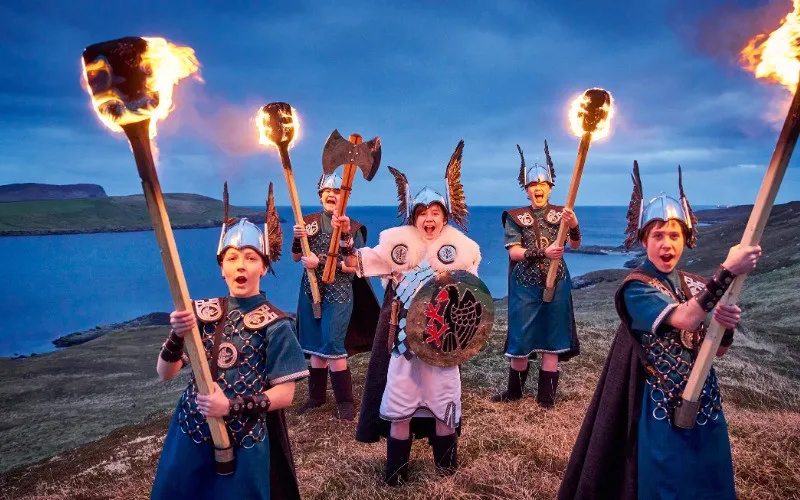
Final Thoughts
If you love festivals, history, fire, and fun, Up-Helly-Aa is one of the most spectacular events you could ever see. It’s a reminder that even in the coldest, darkest time of year, people can come together to create something unforgettable — with flames, costumes, stories and laughter lighting up the night in the far north of Scotland.
For more interesting articles, please visit www.kidzherald.com