
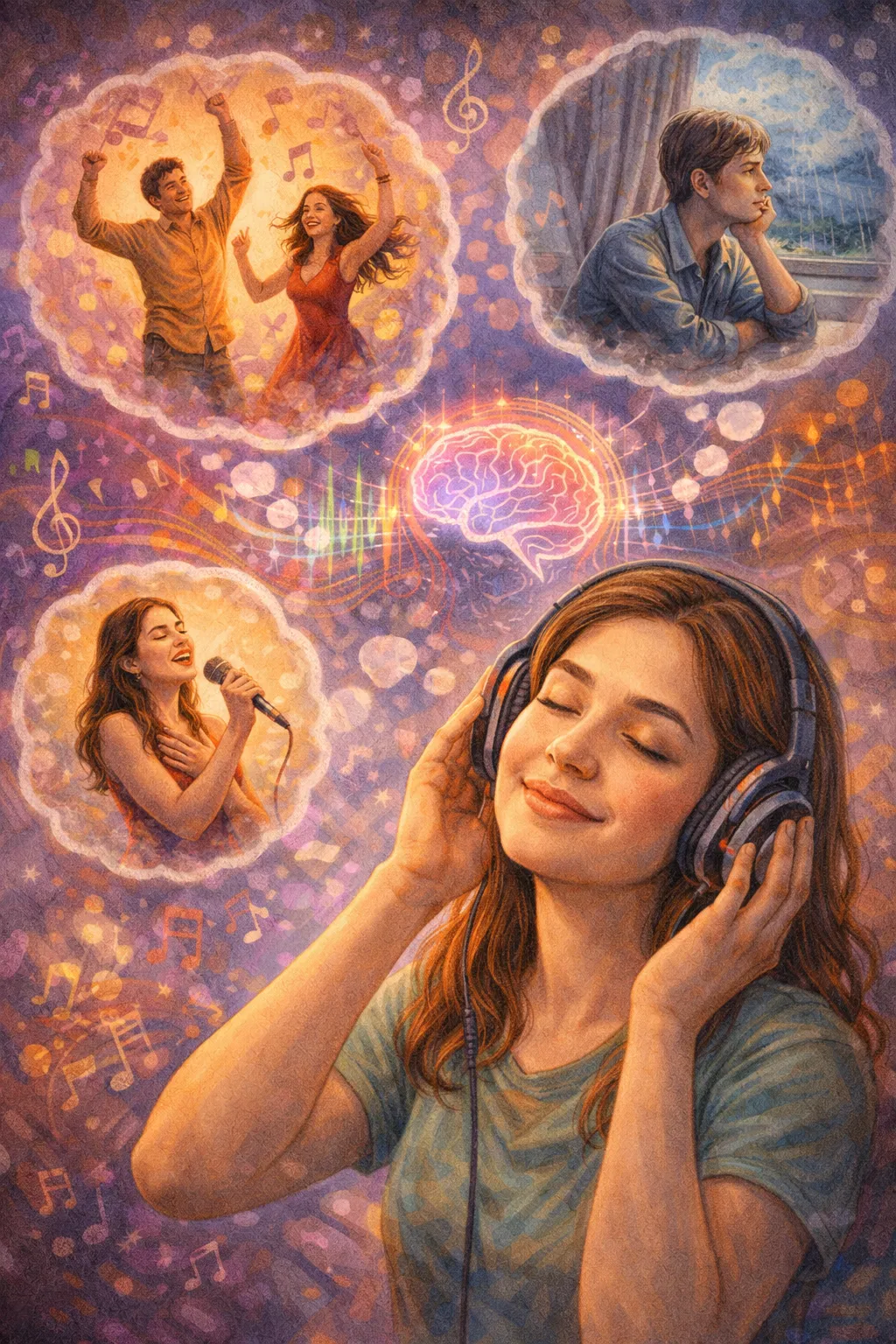
Have you ever put on a favourite song and suddenly felt happy, excited, or even a little sad? Music has a special power — it can make us feel things deep inside our hearts and minds. Let’s explore why music shapes our mood, why it makes us feel different emotions, and how it affects our body and brain.
What Is Music’s Emotional Power?
Music isn’t just sounds or noise — it’s a combination of melody, rhythm, harmony and tempo that our brain listens to and responds to in many ways. Scientists have studied how music affects our emotions, and they’ve found that it can elicit strong emotional responses in listeners. That means it doesn’t just remind us of feelings—it can make us feel something, like joy or calm.
For example:
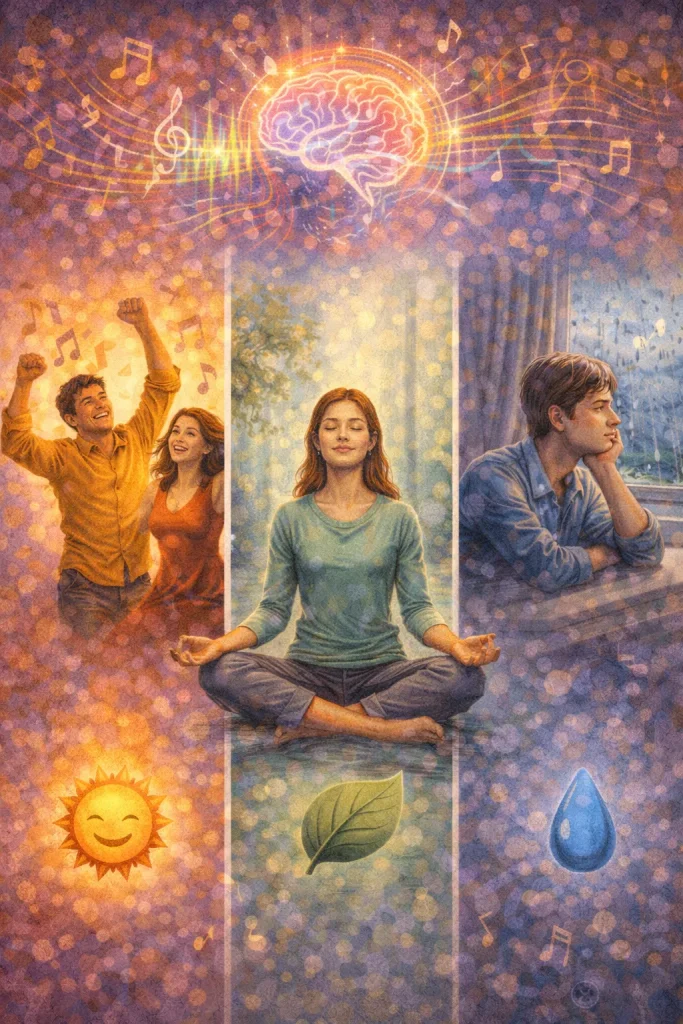
- Listening to a happy, upbeat song can make you feel joyful and energised.
- A slow, soft tune can make you feel calm or peaceful.
- A sad melody might make you feel thoughtful or even a bit teary.
Music and the Brain
Music doesn’t just stay in our ears — it travels right into our brains! When we listen to music:
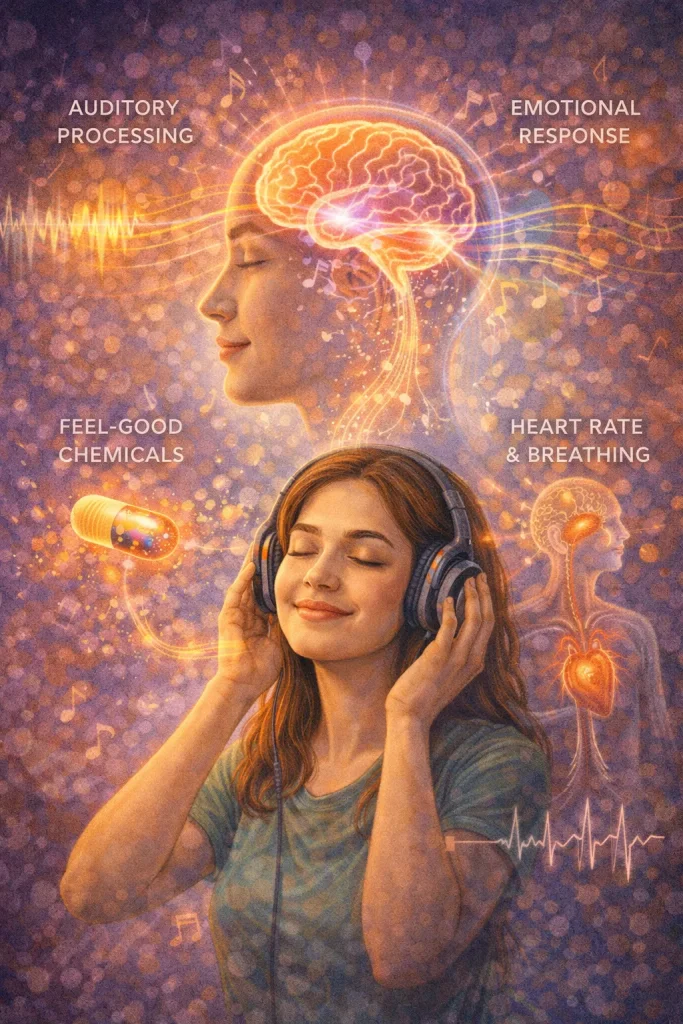
- The auditory part of the brain decodes the sounds.
- The emotional part of the brain (such as the limbic system) responds to the feelings in the music.
- The brain releases chemicals like dopamine, which is sometimes called the “feel-good” chemical.
Dopamine is released when we enjoy something — like eating chocolate or getting a compliment — and music can trigger that same pleasure reward system. That’s why your favourite song can make you smile or even dance.
Music can also influence our physiology — for example, heart rate and breathing. For example, a fast beat can make your heart beat a little faster, while slow music can help your heart slow down and your body relax.
Why Does Music Make Us Feel Things?
1. Rhythm and Tempo
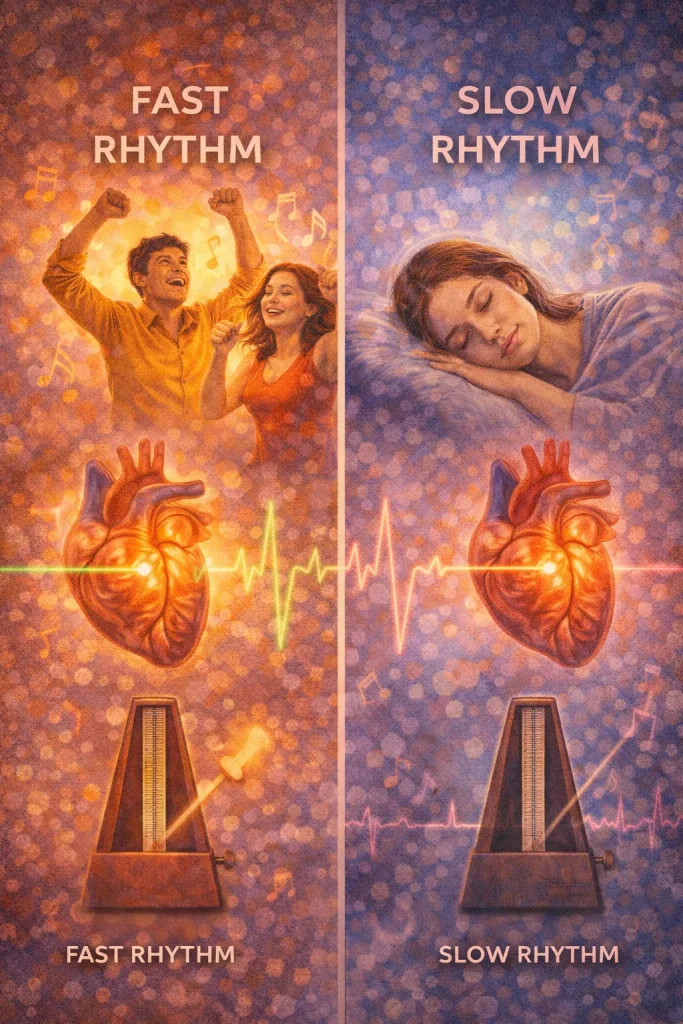
The pattern and speed of a song (called the tempo) affect how we feel:
- Fast rhythms and beats can make us feel excited or happy.
- Slow rhythms can make us feel calm or even sleepy.
It’s a bit like how a fast heartbeat is linked to excitement and a slow heartbeat to calm. Music mirrors these patterns, so our brains often mirror the feelings too.
2. Melody and Harmony
Melody (the tune you hum) and harmony (notes played together) influence mood too:
- Major keys usually sound happy and bright.
- Minor keys often sound sad or thoughtful.
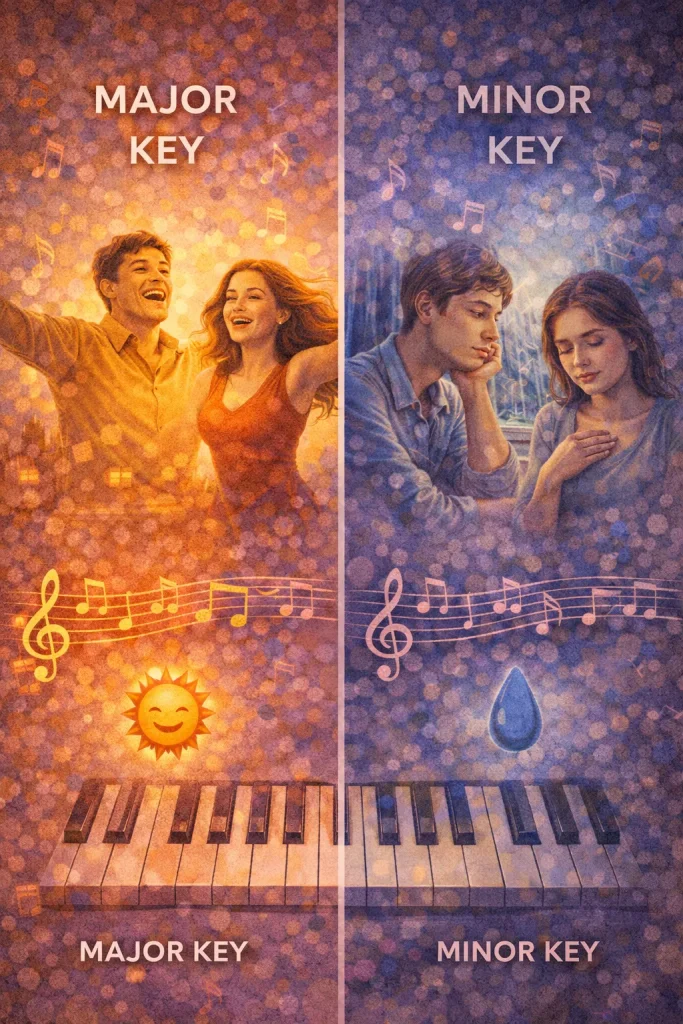
That’s why sad songs often have a different “feel” than happy ones, even if the lyrics aren’t about sad topics at all.
3. Music and Memory
When we hear a song, we’ve heard before, it can bring back memories. A song might remind you of:
- A special moment with friends.
- A fun time on holiday.
- A calm evening at home.
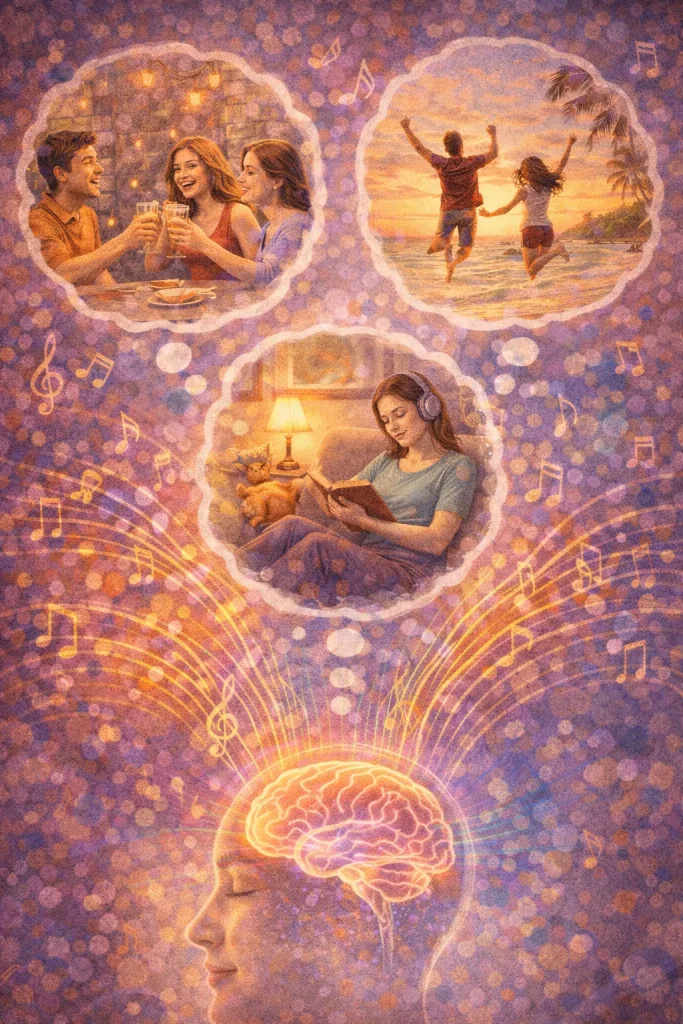
That’s because music is connected to memory areas of our brain, and hearing a familiar melody can bring back the feelings associated with that memory.
How We Use Music Every Day
Music isn’t just for concerts or dance parties — it plays a role in daily life too! Here are some ways music shapes our mood:
1. Boosting Happiness
When we’re feeling happy, we might play upbeat music to keep that feeling going. Even when we feel a bit low, listening to happy music can lift our spirits.
2. Helping Us Relax or Focus
Soft, calm music can help us relax after school or focus when doing homework. That’s because it can help reduce stress and make it easier to concentrate.
3. Calming Before Sleep
Many people like to listen to gentle music before bed because it can slow their heart rate and help their minds settle. That’s a powerful way to use music to change mood in a peaceful direction.
4. Feeling Energised
Dance music or songs with strong beats can make people want to move, dance, and feel energised. The brain responds to rhythm, and that makes our bodies want to move too!
Music and Feelings — More Than Just Sound
Sometimes music doesn’t just match our mood — it helps us express emotions we can’t easily put into words. That’s why people might listen to sad music when they feel sad, or happy songs when they want to celebrate. Music gives feelings a voice.
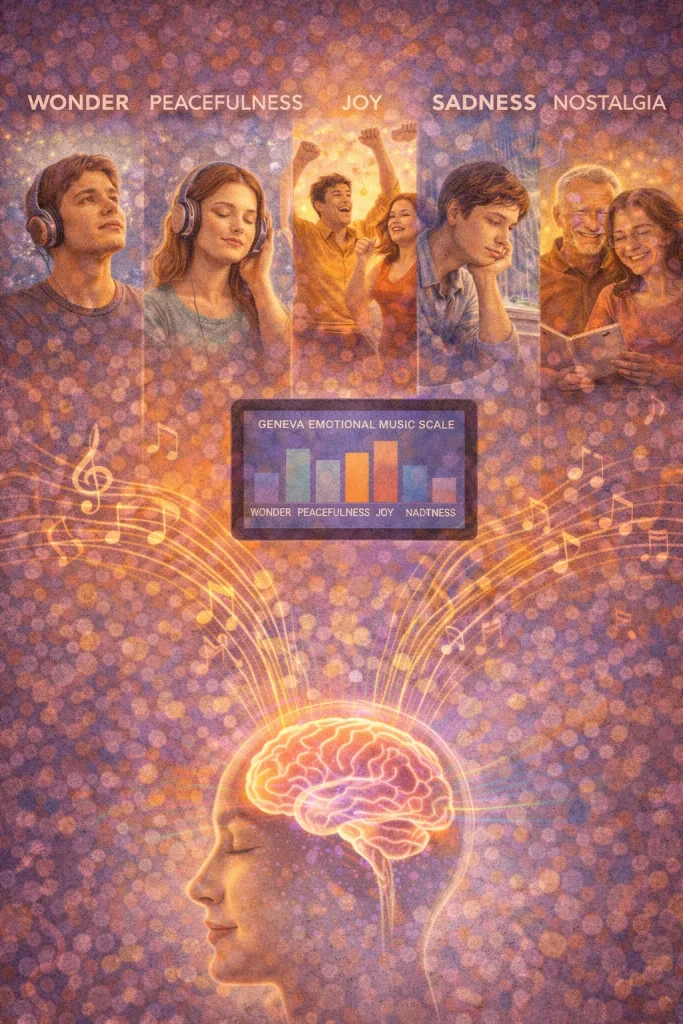
Some scientists even try to measure the emotional effects of music. Tools like the Geneva Emotional Music Scale help researchers understand how music can evoke emotions such as wonder, peacefulness, joy, sadness, or nostalgia.
And because music involves so many parts of our brain at once — memory, rhythm, movement, emotion — it can have a powerful and lasting impact on how we feel physically and emotionally.
Fun Ways Kids Use Music for Mood
Here are some ways you might already be using music to help with your mood — even if you didn’t realise it!
- Making a happy playlist to sing and dance to.
- Listening to calm music before bedtime or when you’re upset.
- Sharing songs with friends that remind you of fun times.
- Playing an instrument to express your creativity and feelings.

Music is like a friend that can match your mood, change it, or help you understand it better.
Final Thoughts
Music isn’t just sound — its emotion made audible. It speaks to our hearts, connects with our memories, influences our bodies, and even helps shape how we think and feel. Whether it makes you want to dance, relax, laugh, cry, or remember something special, music helps make life richer and more colourful.
Next time you press “play” on your favourite song, take a moment to notice how your body feels, how your mind responds, and how music seems to change your mood — that’s the magic of music at work.
For more interesting articles, please visit www.kidzherald.com


