
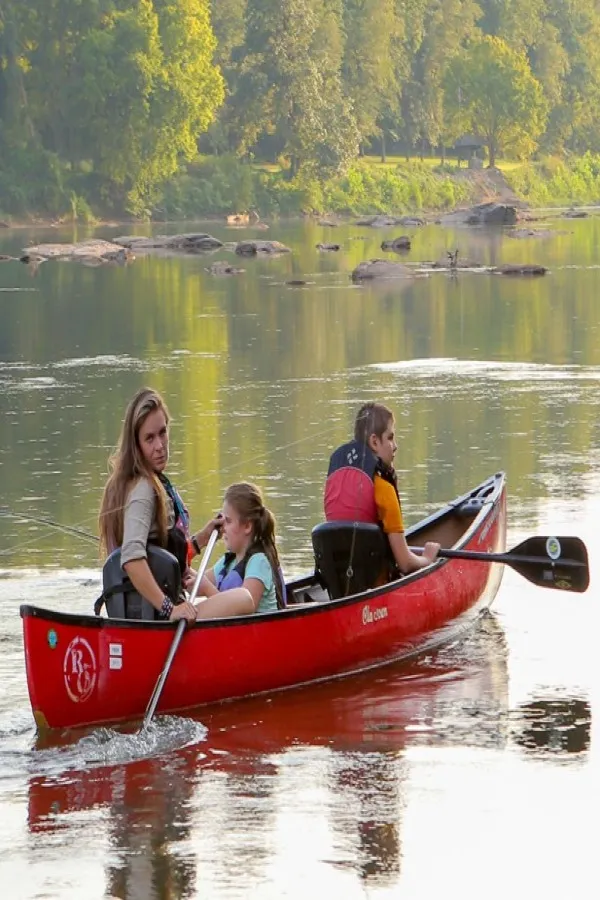
Have you ever imagined gliding gently across water in a small boat, paddling with a paddle and feeling the splash beneath you? That’s what Canoeing is all about — a wonderful water sport and pastime loved by people all over the world.
In simple words, canoeing means using a canoe (or sometimes a kayak) — a narrow, lightweight boat often pointed at both ends — and paddling it with a single-bladed paddle to move through water. Sometimes “canoeing” is used to refer also to kayaking or similar paddling sports.
A Bit of History
People have used canoes and similar small boats for thousands of years — for travel, fishing, trade and exploration. Over time, canoeing also became a means of enjoying nature, exploring rivers and lakes, and undertaking adventures.
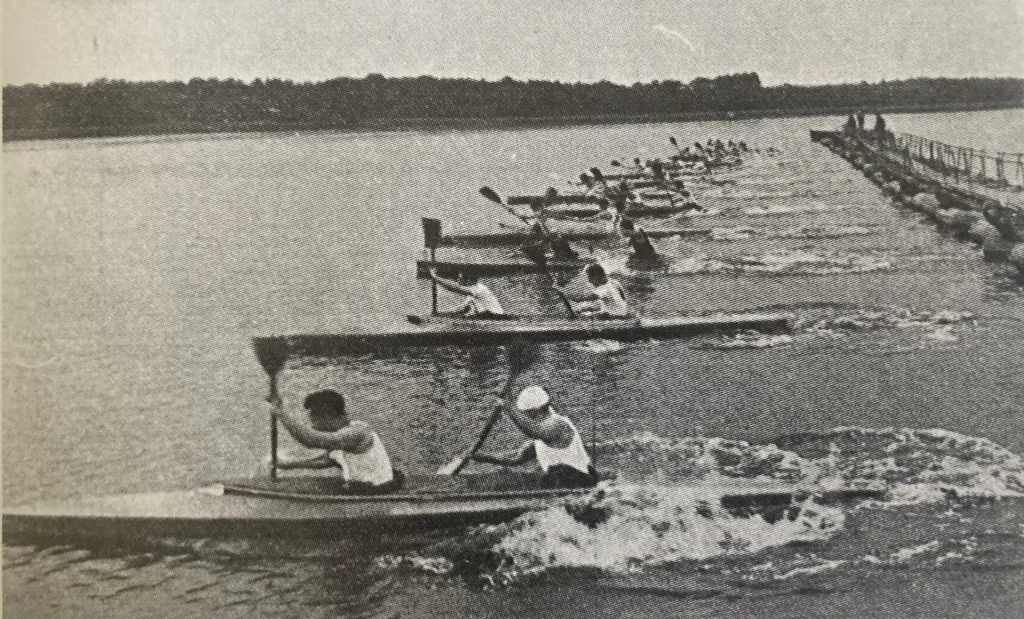
By the late 1800s, canoeing had become more organised as a leisure and sporting activity. In 1936, canoeing events first appeared in the Olympic Games — a sign that canoeing had become a serious sport, not just a fun hobby.
Different Types of Canoeing
Canoeing isn’t always the same — depending on water, boat, and purpose, there are a few popular types:
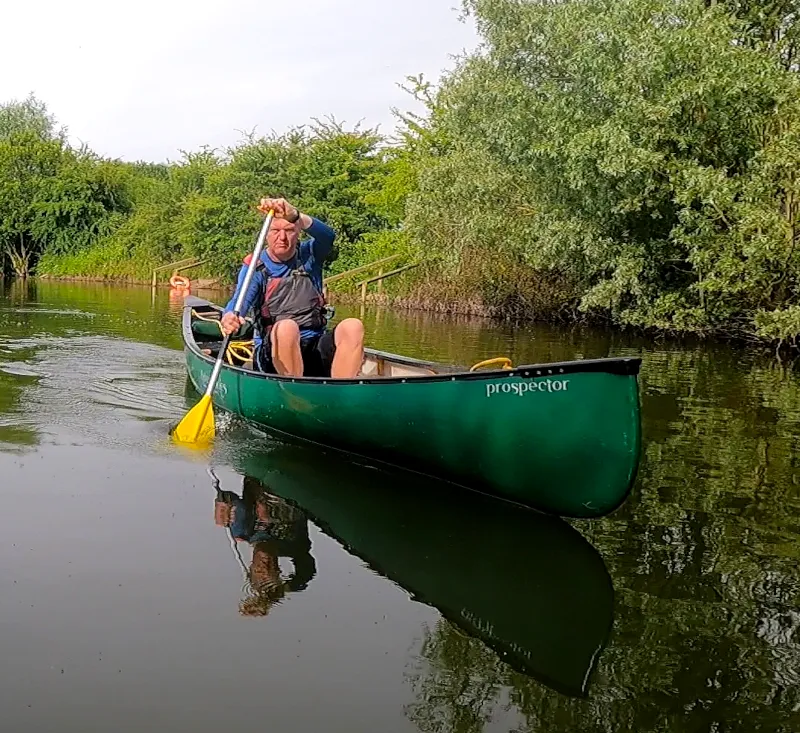
- Recreational/Touring Canoeing: This is when individuals paddle leisurely on calm lakes, gentle rivers, or coastal waters. It’s relaxed, peaceful, and a great way to explore nature.
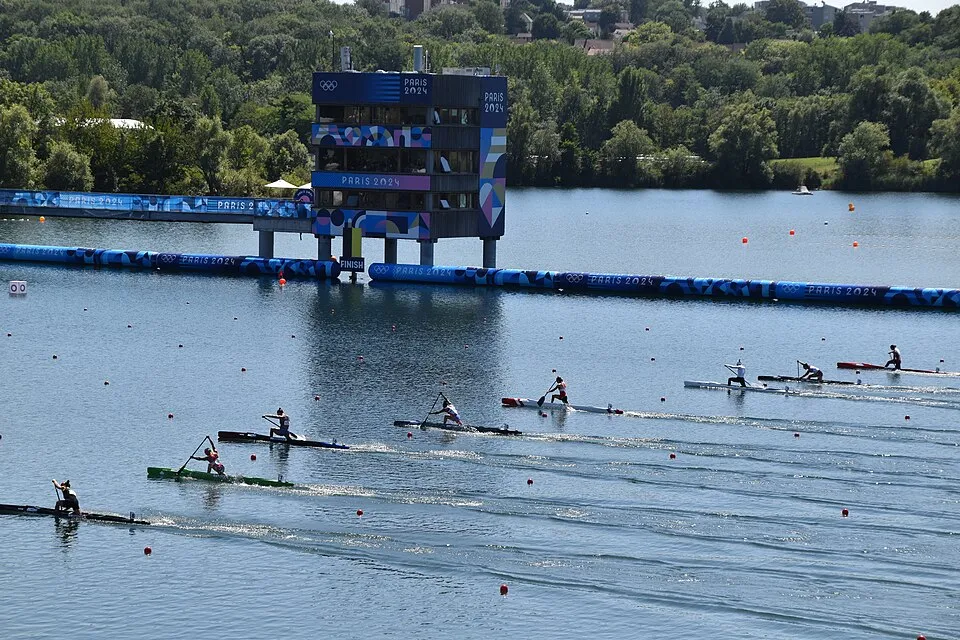
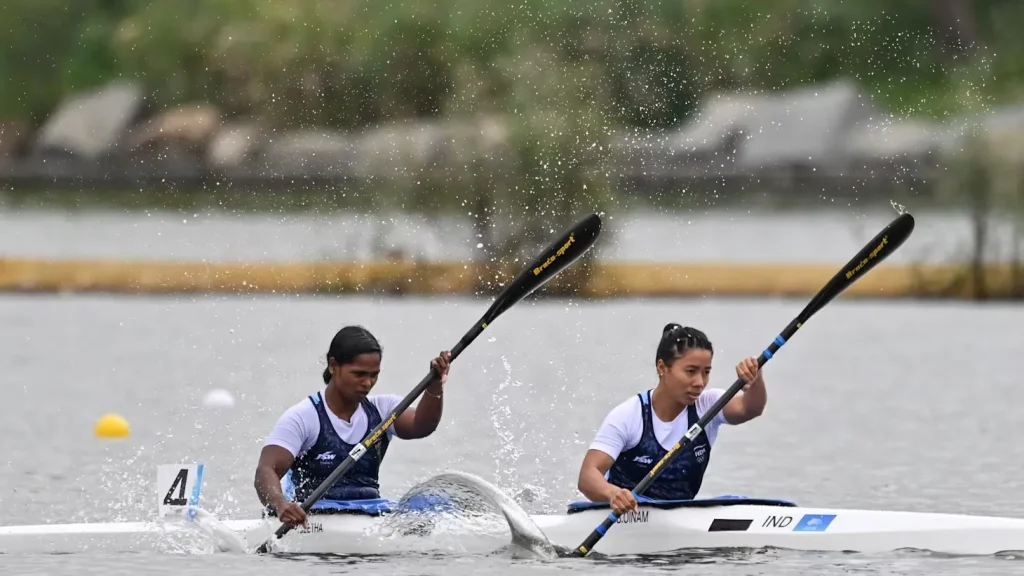
- Canoe Sprint (Flat-water Racing): In this competitive form, paddlers race on smooth water over set distances (e.g., 200 m, 500 m, 1000 m) to be the first to the finish line. There may be single paddlers, or teams of two or four.
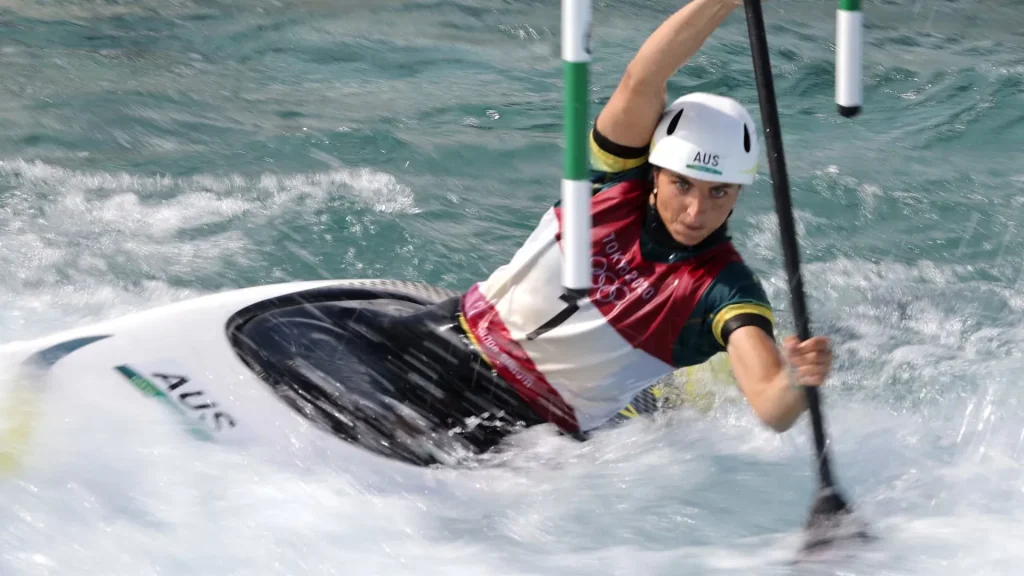
- Canoe Slalom & Whitewater Canoeing: Here, paddlers navigate rivers with rapids, currents and obstacles. Often the boat must pass through gates (much like slalom skiing) while dealing with fast water — it’s thrilling and needs skill!
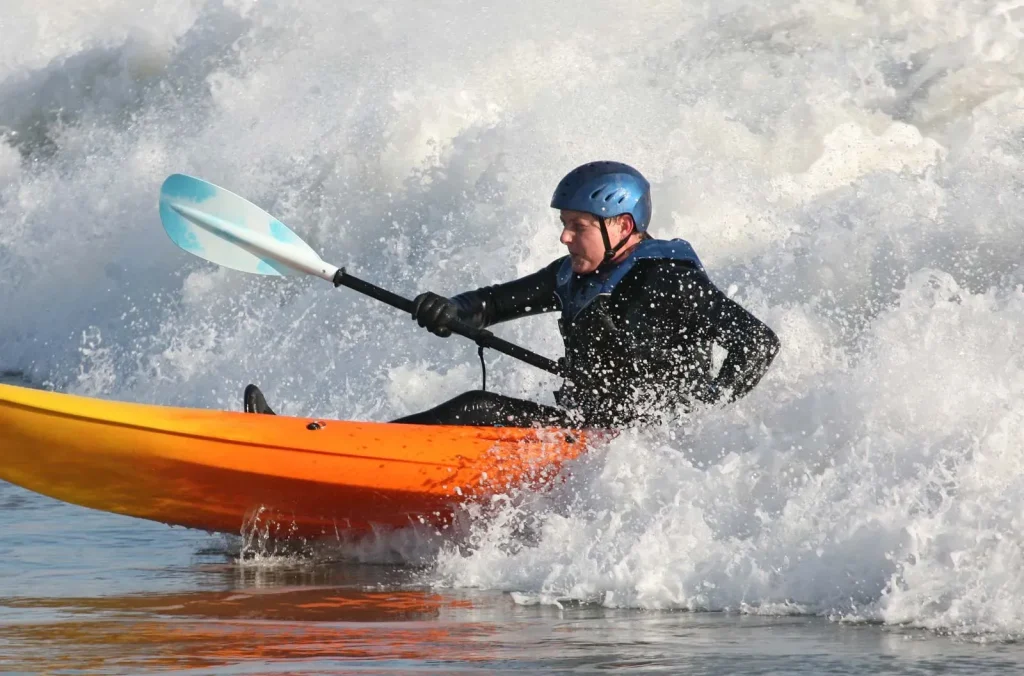
Because of this variety, canoeing can be gentle and fun, or fast and exciting — there’s something for everyone.
Canoeing at the Olympics
Canoeing has been part of the Summer Olympics since 1936 for men, and since 1948 for women.
There are two main canoeing disciplines at the Olympics:
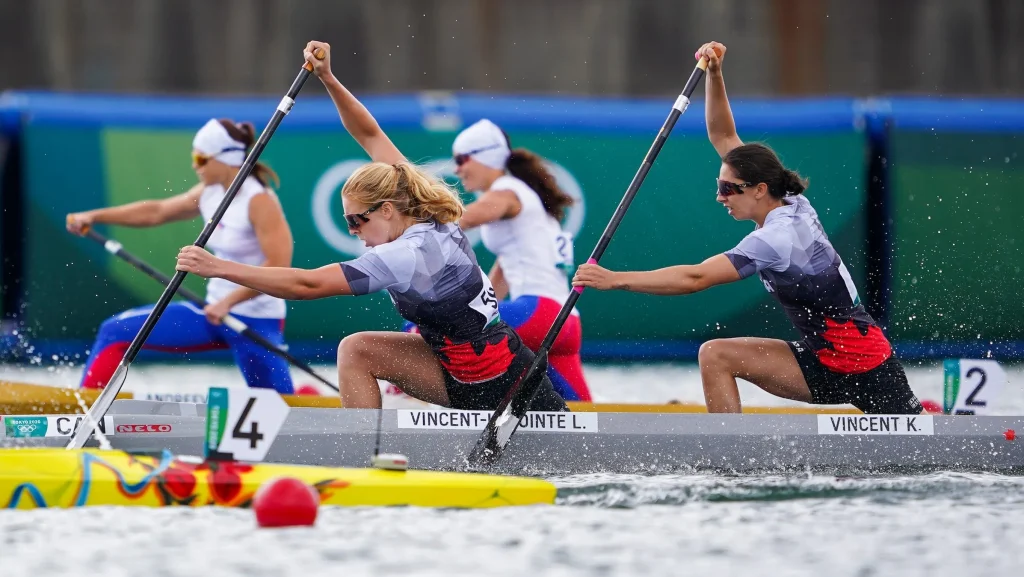
- Canoe Sprint — races on flat water over fixed distances.
- Canoe Slalom — paddling through rapids and obstacles in a timed race.
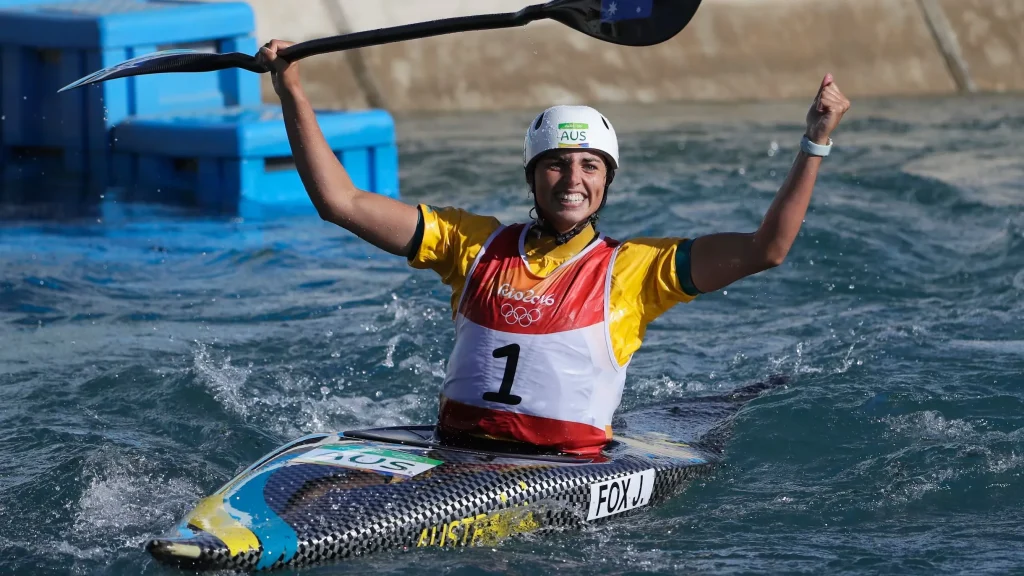
In these events, boats are labelled by a letter and number: “C” stands for canoe, “K” for kayak. A “C1” means a single-person canoe; “K2” means a two-person kayak, and so on.
When you see paddlers in the Olympics sliding across calm water or navigating wild rivers, that’s canoeing — a sport full of strength, skill, and fun!
Why Canoeing Is Great for Kids
Canoeing isn’t just for grown-ups — it’s a fun, healthy and adventurous sport for kids too! Here’s why it’s a great choice:
- You get exercise — paddling is a full-body activity that helps build strength, especially in arms, back and core, and improves fitness.
- It’s nature-friendly — you get to enjoy lakes, rivers, forests and sometimes even wildlife. It connects you with nature.
- It’s calming and fun — quiet rowing on gentle water can be peaceful and a nice break from busy life.
- It’s adventurous — for those who love a challenge, racing or white-water canoeing brings excitement, teamwork and skill.
- It teaches skills — balance, coordination, focus, patience, and water-safety awareness.
So, whether you want a relaxed paddle with friends, or dream of racing in canoes someday — canoeing has something for you.
What Do You Need for Canoeing
If you want to try canoeing, these are the basic things you need:
- A canoe or kayak — a slim boat designed to glide on water.
- A paddle— usually a single-bladed one—is used for canoeing. In kayaking, it’s a double-bladed paddle.
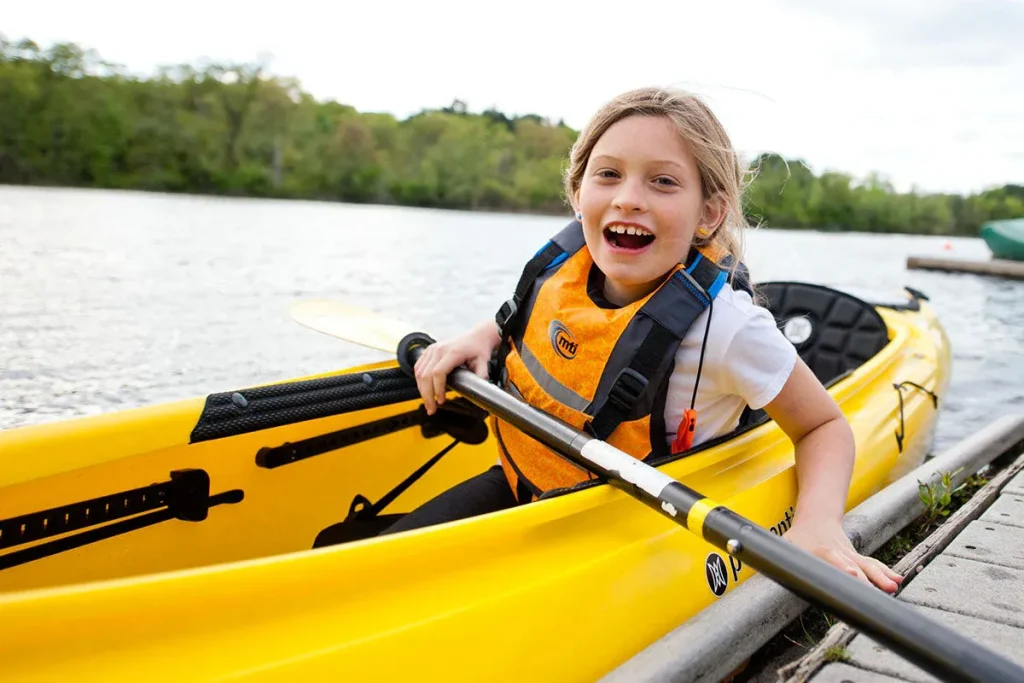
- A life-jacket or buoyancy aid — very important for safety.
- If you go on rivers, perhaps a helmet and safety gear — especially for whitewater or rapid canoeing.
- Sometimes special clothes (waterproof or quick-dry), and shoes that can get wet.
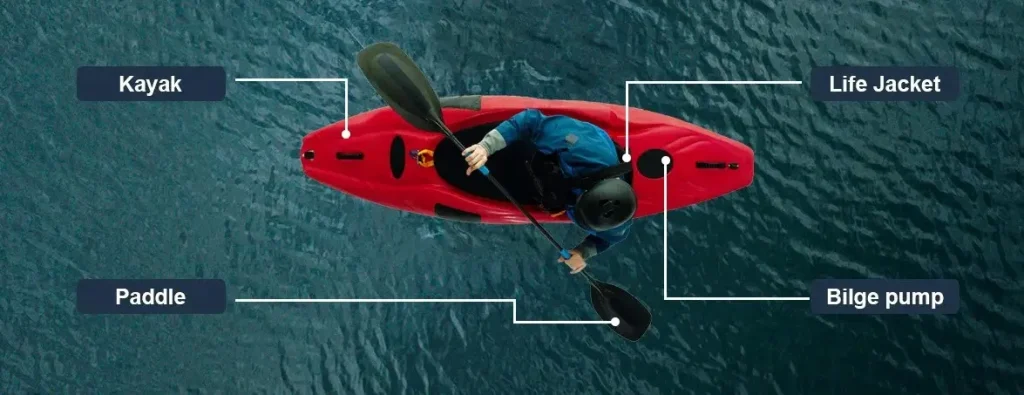
Always ensure you have an adult or a trained instructor — especially when you are new or paddling on rivers.
What Paddling Looks Like
Here’s a simple idea of what happens when you go canoeing:
- You get into the canoe, sit or kneel (depending on the type).
- Hold the paddle properly — one hand on top, the other further down.
- You dip the paddle blade into the water and pull — this makes the canoe move forward. Switch sides to go straight.
- When you need to turn or steer, you paddle differently or use gentle strokes.
- If it’s a calm lake — it’s peaceful. If it’s a fast river — you paddle carefully and use skill to balance.
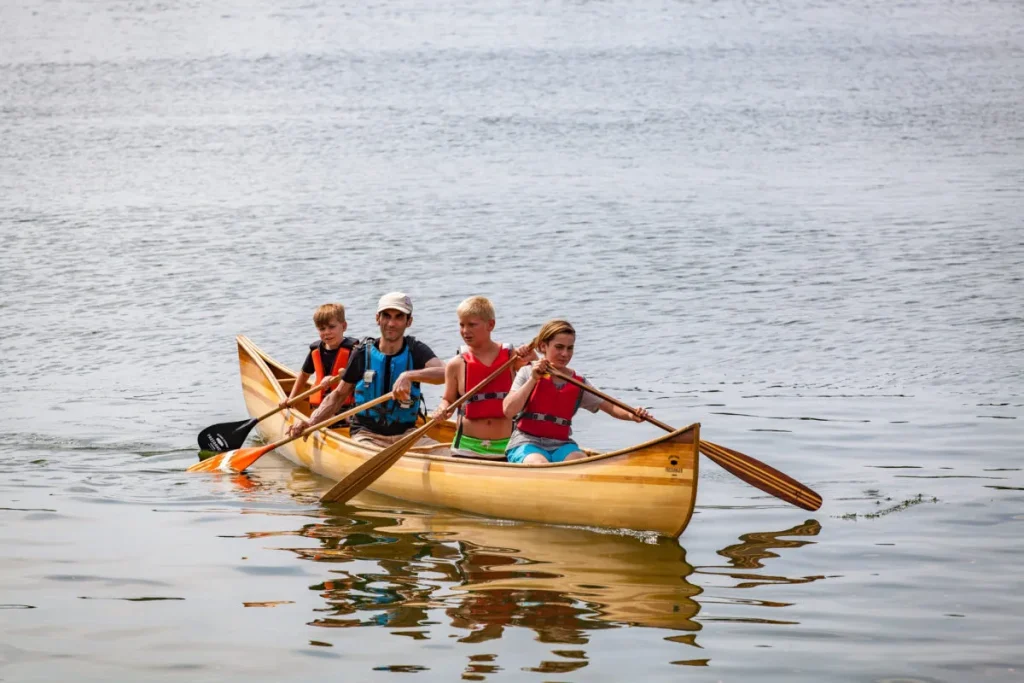
It’s like riding a bicycle on water — fun, gentle, and a bit magical!
Where People Canoe
Canoeing can happen almost anywhere there is water:
- Calm lakes, ponds or canals — good for beginners or casual paddling.
- Wide rivers or slow-flowing rivers — good for a longer boat trip or adventure.
- Sea-coasts or large water bodies — for experienced kayakers or for nice sea-canoe trips.
- Rapids or white-water rivers — for thrill and challenge (but needs safety gear and guidance).
This makes canoeing a versatile activity — whether for fun, for competition, or for discovery.
How Canoeing Competitions Work
If you like a challenge, canoeing has exciting racing and competitive events. Some common competition formats:
- Sprint Races: Boats race in lanes over calm water. Paddlers aim to finish first. Events vary: single (C-1 or K-1), doubles (C-2, K-2), or even four-person boats (K-4).
- Slalom Races: Boats (canoe or kayak) navigate through a water course with gates, rapids and obstacles — skimming fast currents and sharp turns. The fastest competitor passing all gates correctly wins.
- Marathon or Long-Distance Canoeing: For experienced paddlers — a long trip on lakes or rivers, sometimes with camping and exploring involved.
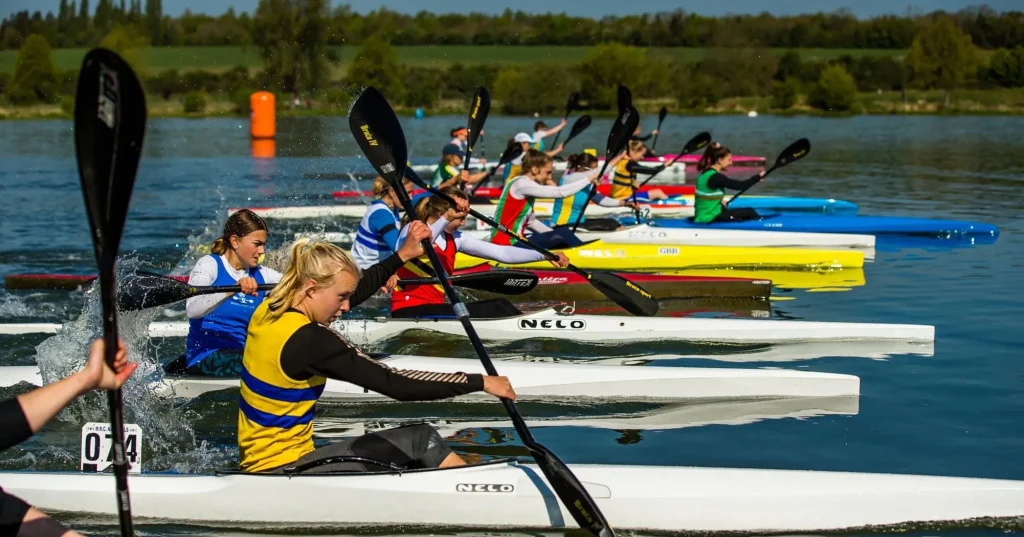
Success in competitions comes from strength, technique, balance, teamwork (if in pairs or fours), and determination.
Why Canoeing Is More Than Just a Sport
Canoeing gives more than just fun or medals — it teaches life skills too:
- Respect for nature — you learn to appreciate water, rivers, lakes.
- Patience and teamwork — especially in multi-person boats, paddlers must coordinate and help each other.
- Fitness and health — paddling is good for the body, builds muscles and stamina.
- Adventure and confidence — sometimes you’re far from shore, navigating water — it feels daring and brave!
- Calmness and peace — paddling gently on calm water can be very relaxing and good for mind.
How Kids Can Try Canoeing
If you are 7–14 and want to try canoeing, here’s how you could start:
- Ask an adult or parent to find a safe lake or calm water area.
- Go with a club or instructor — many cities and towns have water-sports clubs that teach canoeing.
- Always wear a life-jacket, even if you know swimming.
- Start with small, stable canoes or kayaks — practise balancing and paddling.
- Learn basic paddling strokes — straight stroke, turning stroke, stopping stroke.
- Have fun and take it slow — over time you can get confident and maybe even try new waters or go for a race!
Final Thoughts
Canoeing is a fantastic mix of sport, adventure, nature and fun. Whether you want a quiet paddle on a lake, a racing challenge, or a wild river journey — canoeing offers many ways to enjoy water.
It teaches you strength, balance, teamwork and respect for nature. It’s a way to explore beautiful places, make memories with friends, and maybe even compete like Olympic athletes someday!
If you ever get the chance — hop in a canoe, hold a paddle, feel the water splash — you might find your next favourite sport.
For more interesting articles, please visit www.kidzherald.com


