Have you ever heard someone say, “You need a token”?
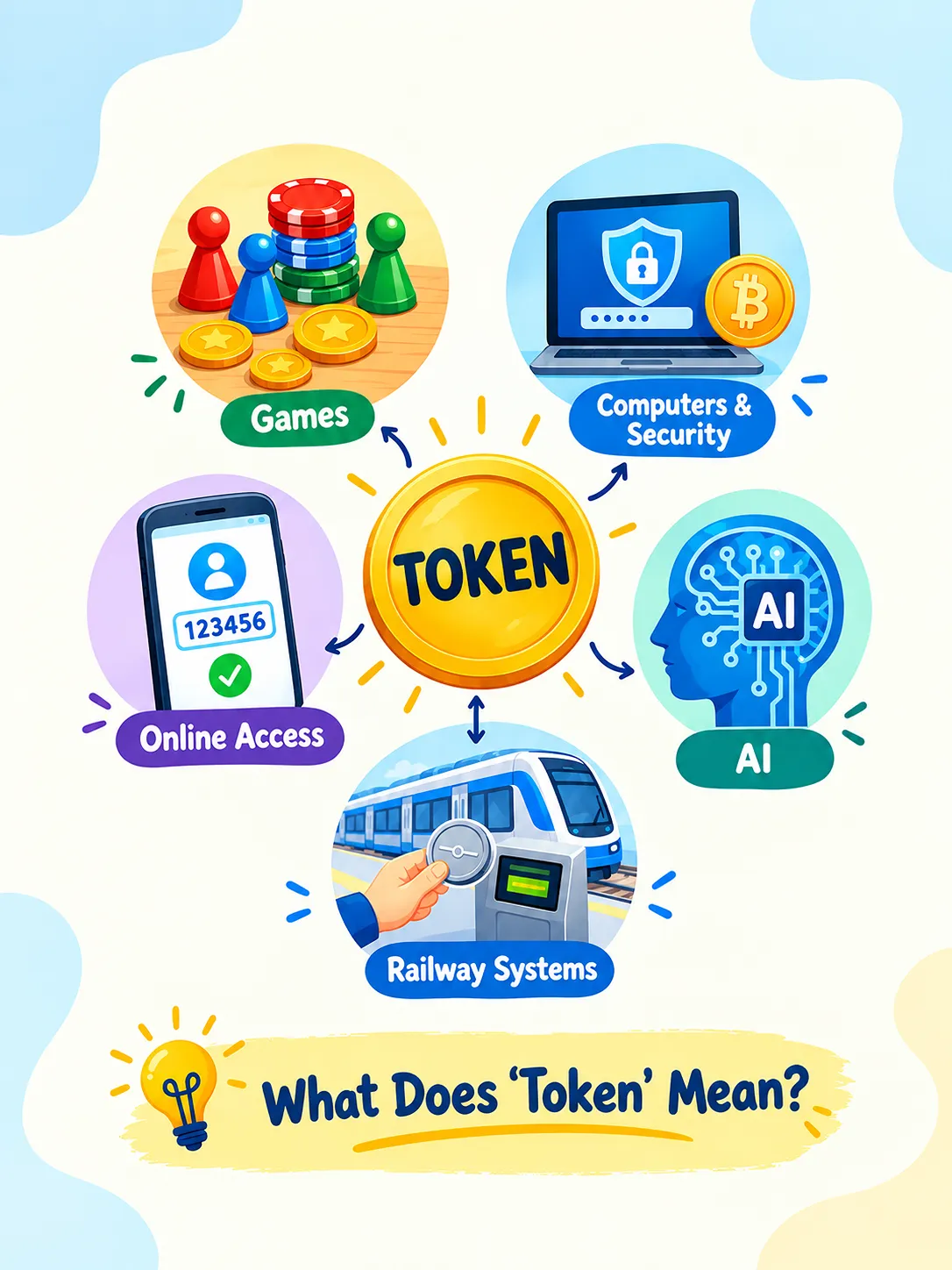
The word “token” can be confusing because it has several meanings. You might find tokens in games, on computers, in online security, in artificial intelligence (AI), and even in railway systems.
The basic idea is quite simple:
A token is something that represents something else or gives you a particular right, meaning or access.
Let’s explore some of the most interesting meanings of the word token.
What Is a Token?
Originally, a token could be a small object used to represent something.
For example, imagine playing a board game. Instead of moving yourself around the board, you might move a small plastic piece. That piece is a token because it represents you in the game.
Tokens can therefore act as symbols or representatives.
But as technology developed, the word gained many new meanings.
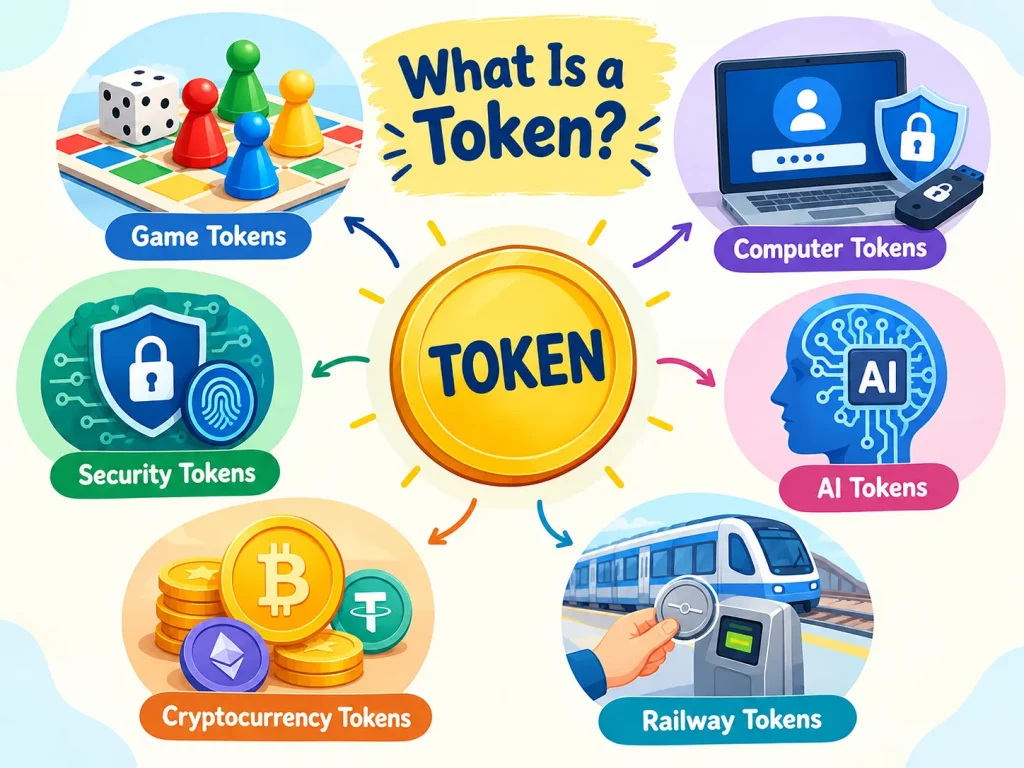
Today, you might hear people talking about:
- Game tokens
- Computer tokens
- Security tokens
- AI tokens
- Cryptocurrency tokens
- Railway tokens
Although these sound completely different, they all have something in common: they represent something or provide a particular function.
Tokens in Games
One of the easiest ways to understand a token is to think about a game.
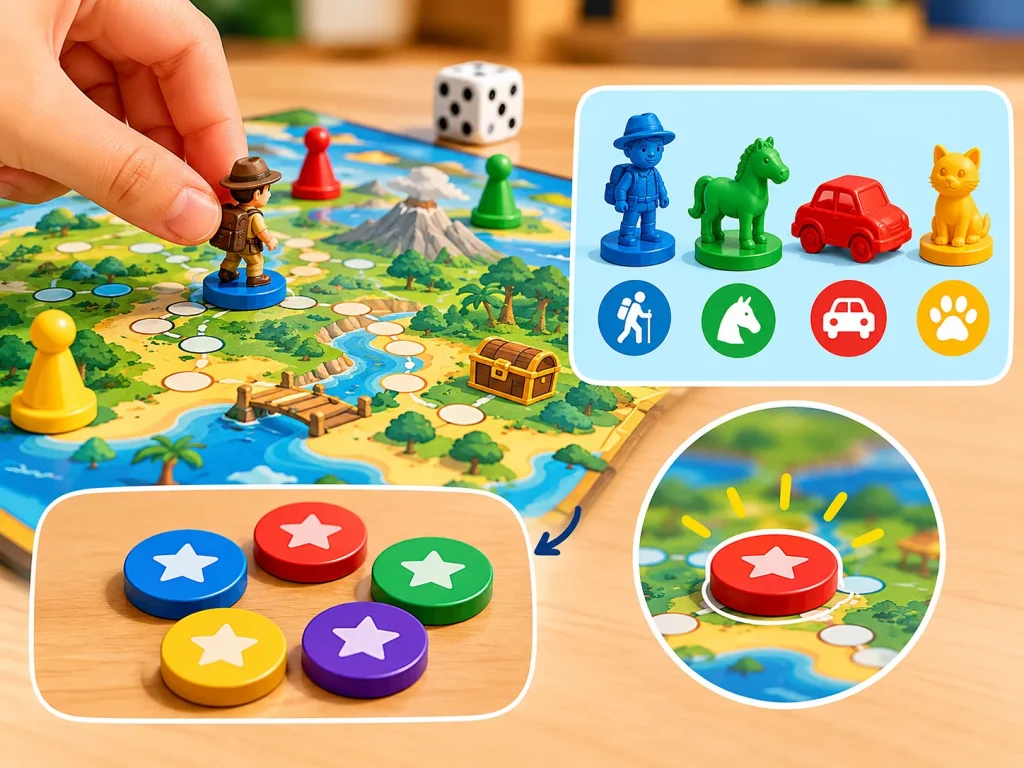
In some board games, a small piece represents a player, an animal, a vehicle, or another character.
For example, imagine a game where you are exploring a mysterious island. Your token might be a little plastic explorer. Moving the token around the board represents your journey.
Tokens can also be used as counters.
A game might give you five tokens, with each one representing a chance, point or special ability.
These physical tokens are simple, but they illustrate the main idea: each token represents something else.
Tokens in Computers
In computing, the word token has several meanings.
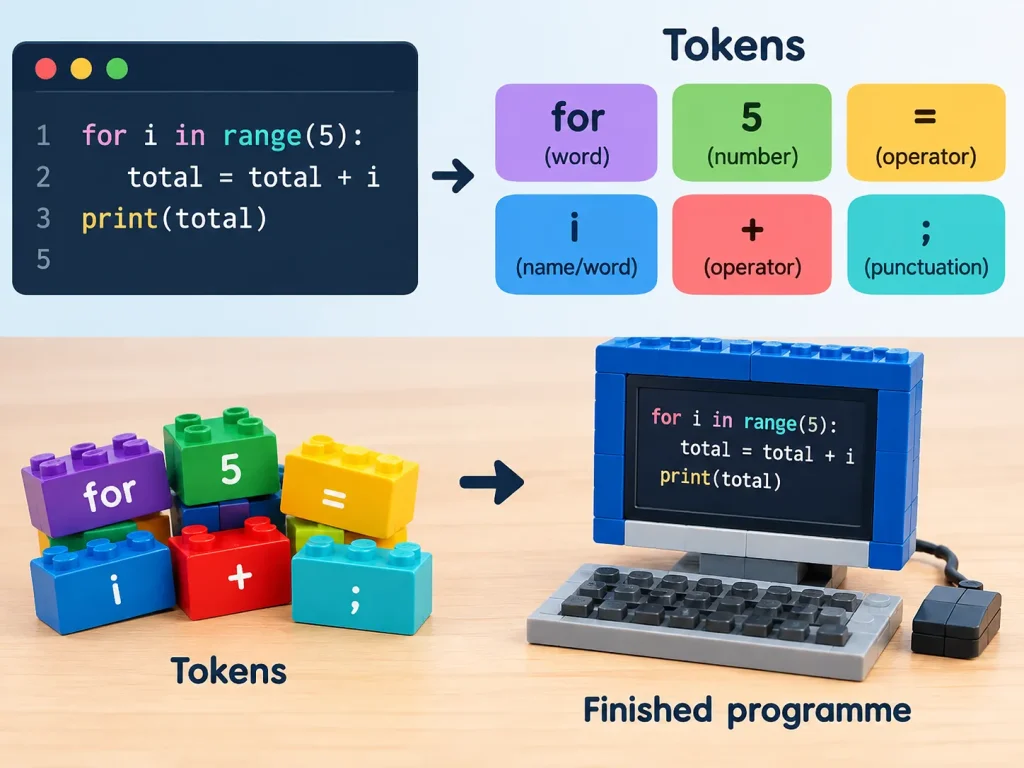
One type is called a lexical token.
When a computer programme is written, the computer needs to break the instructions into smaller parts that it can analyse.
For example, a line of computer code contains things such as:
- Words
- Numbers
- Symbols
- Operators
- Punctuation
These pieces can be treated as tokens during the process of analysing the programme.
Think of it like building a sentence with LEGO bricks.
The whole programme is the finished LEGO model, while the individual pieces are like tokens that the computer can examine.
What Is a Token in AI?
If you have been learning about artificial intelligence, you may have heard the word token quite often.
AI systems that work with language do not always process text as complete words.
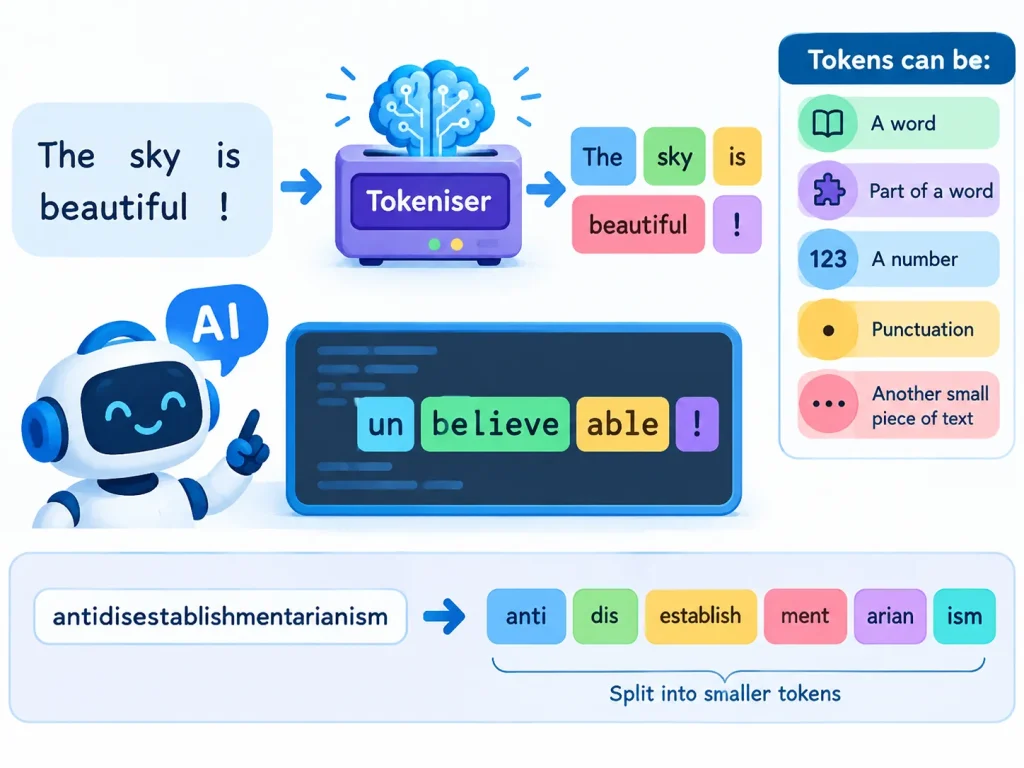
Instead, a system called a tokeniser breaks text into smaller pieces called tokens.
A token might be:
- A complete word
- Part of a word
- A number
- A punctuation mark
- Another small piece of text
For example, a long or unusual word might be divided into several smaller pieces.
This allows an AI system to work with a very large vocabulary without needing a separate item for every possible word.
Modern language models process information using these kinds of text tokens.
Are Tokens the Same as Words?
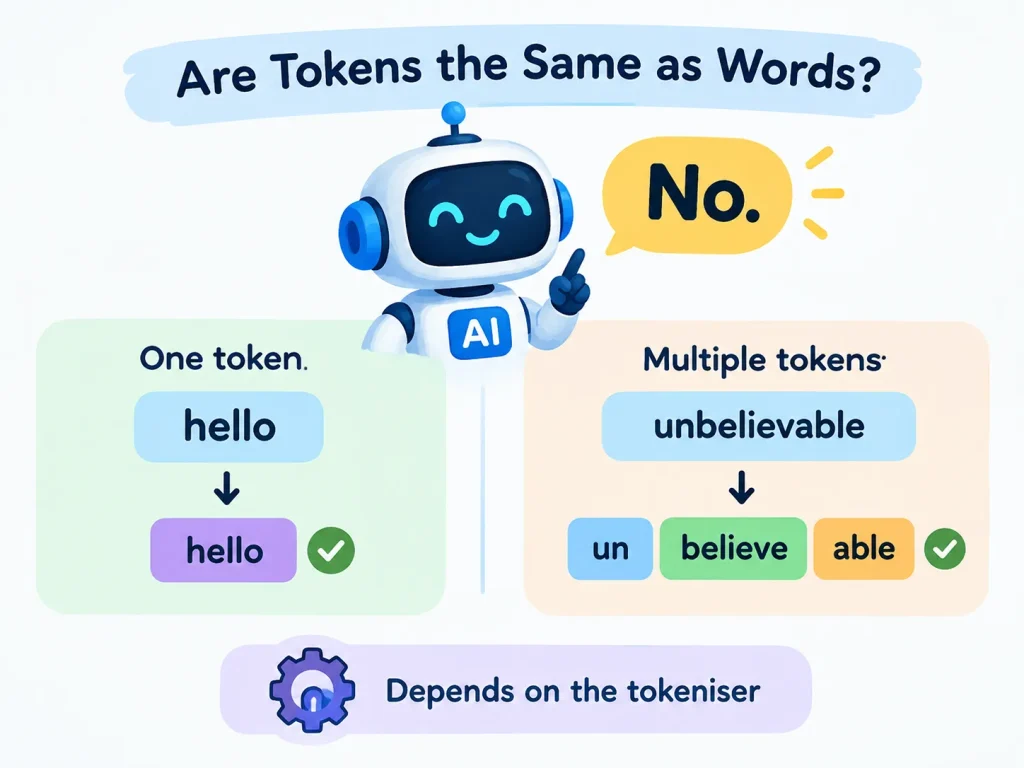
No.
This is an important point.
One word can sometimes be represented by one token, but another word may be split into several tokens.
The exact way text is divided depends on the particular AI system and its tokeniser.
That’s why one token does not always equal one word.
Why Do AI Systems Use Tokens?
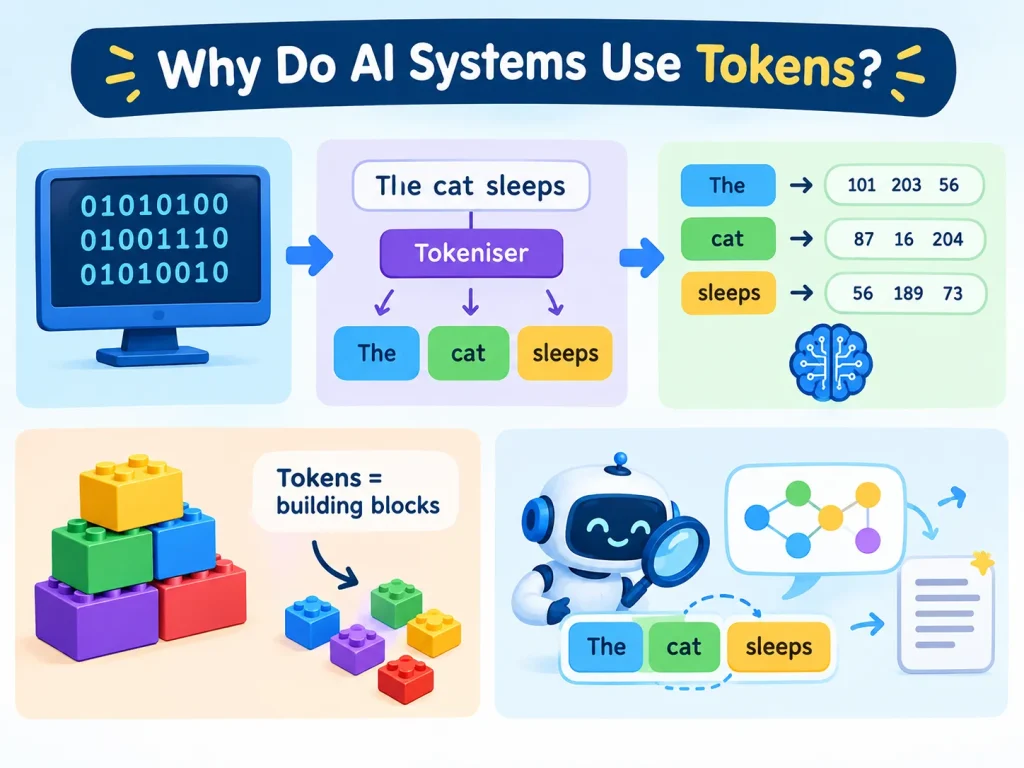
Computers work with numbers extremely well.
AI systems therefore convert pieces of text into numerical representations that their models can process.
Breaking language into tokens gives the system manageable pieces to work with.
You can think of tokens as building blocks of language.
A sentence is like a large structure, while tokens are the smaller blocks used to construct it.
The AI can examine patterns among these blocks and use them when processing or generating text.
What Is a Security Token?
Another important meaning of token appears in computer security.
Imagine you log into a website with your username and password.
After checking your login, the computer system might provide a digital token that represents your authenticated session.
The token can then be used to show that you have already been authenticated, rather than sending your password repeatedly.
Security tokens can be digital or physical devices. They are used to help confirm identity and control access to computer systems.
For example, some security devices can generate temporary codes that help prove that the person logging in has the correct device.
This is one reason tokens are important for keeping computer systems secure.
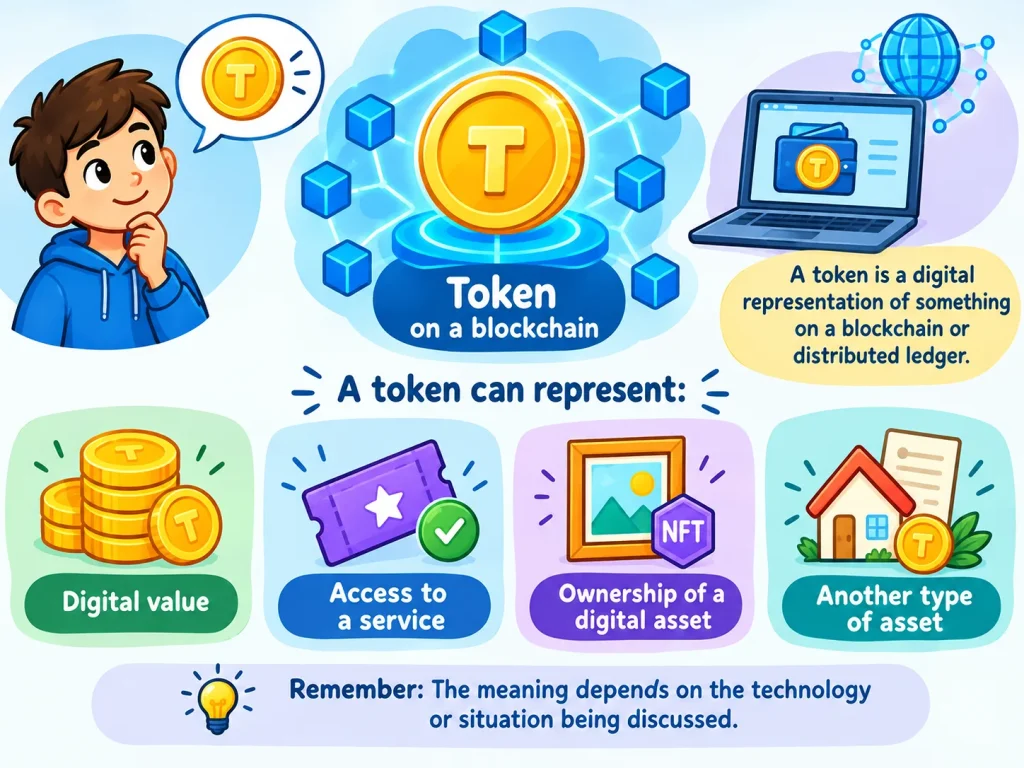
What Is a Cryptocurrency Token?
You may also hear about tokens in cryptocurrency and blockchain technology.
In this context, a token can represent something that exists digitally on a blockchain or another distributed ledger.
A token might represent digital value, access to a service, ownership of a digital asset, or another type of asset.
The word can therefore have a very broad meaning in the world of digital currencies.
It is worth remembering that not every use of the word “token” means the same thing. The meaning depends on the technology or situation being discussed.
Tokens in Railways
Here’s a particularly interesting example.
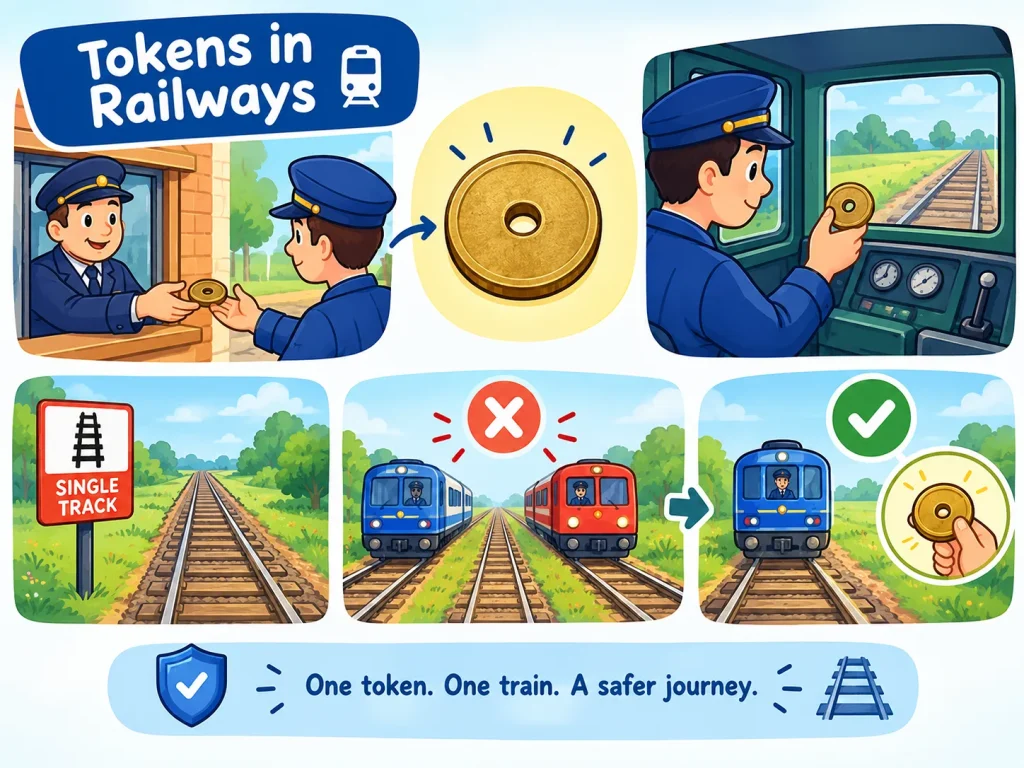
Before modern railway signalling systems became widespread, some railways used a physical token to control access to a section of single-track railway.
The token acted as permission for a train driver to use that section.
The basic idea was that only the train holding the correct token was allowed to enter that section.
This helped reduce the likelihood of two trains entering the same single-track section simultaneously.
So, a token could be a small physical object with a very important job.
Why Are There So Many Meanings?
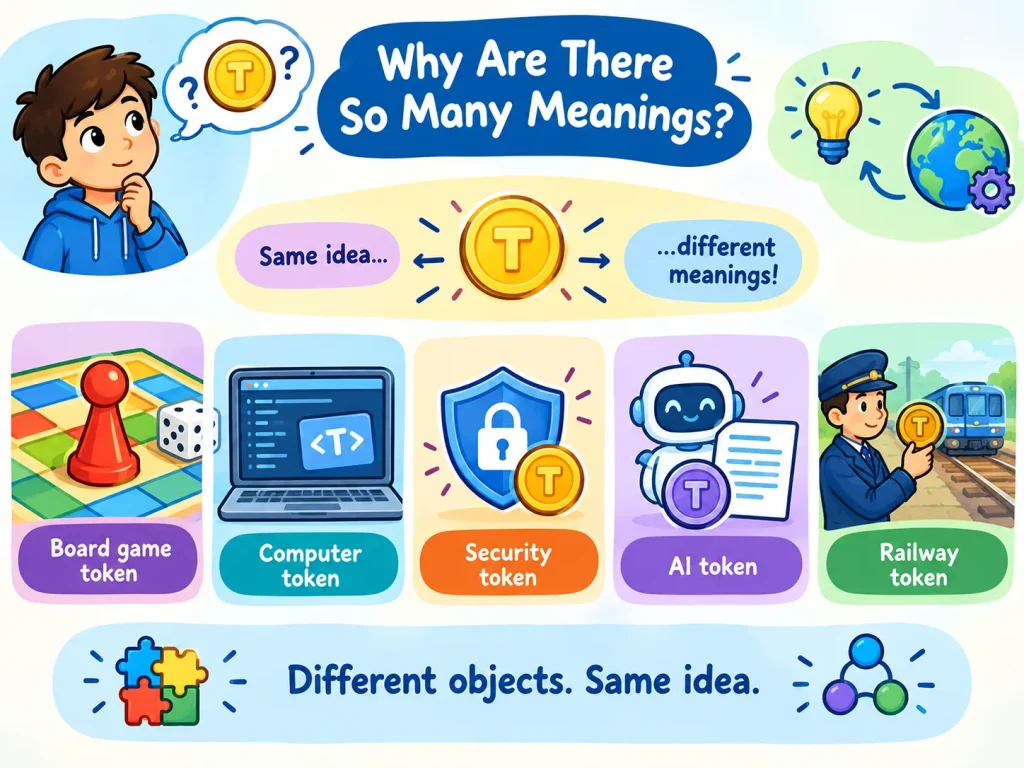
You might be wondering why one word can mean so many things.
Language changes as humans invent new technologies and ideas.
The original concept of a token — something that represents somethingelse — can be adapted to new situations.
A board-game token represents a player.
A computer token represents a piece of information.
A security token can represent authenticated access.
An AI token represents a piece of text that the model processes.
A railway token can represent permission to use a particular section of track.
The objects and technologies are completely different, but the underlying idea is similar.
A Simple Way to Remember
Here’s an easy trick:
Token = Representation or Permission
When you hear the word token, ask:
“What does this token represent or allow?”
For example:
| Type of token | What it does |
| Game token | Represents a player or game item |
| Computer token | Represents a piece of code or information |
| AI token | Represents a piece of text processed by an AI system |
| Security token | Helps prove identity or provide access |
| Blockchain token | Represents digital value, an asset or another function |
| Railway token | Can represent permission to use a section of track |
Why Are Tokens Important?
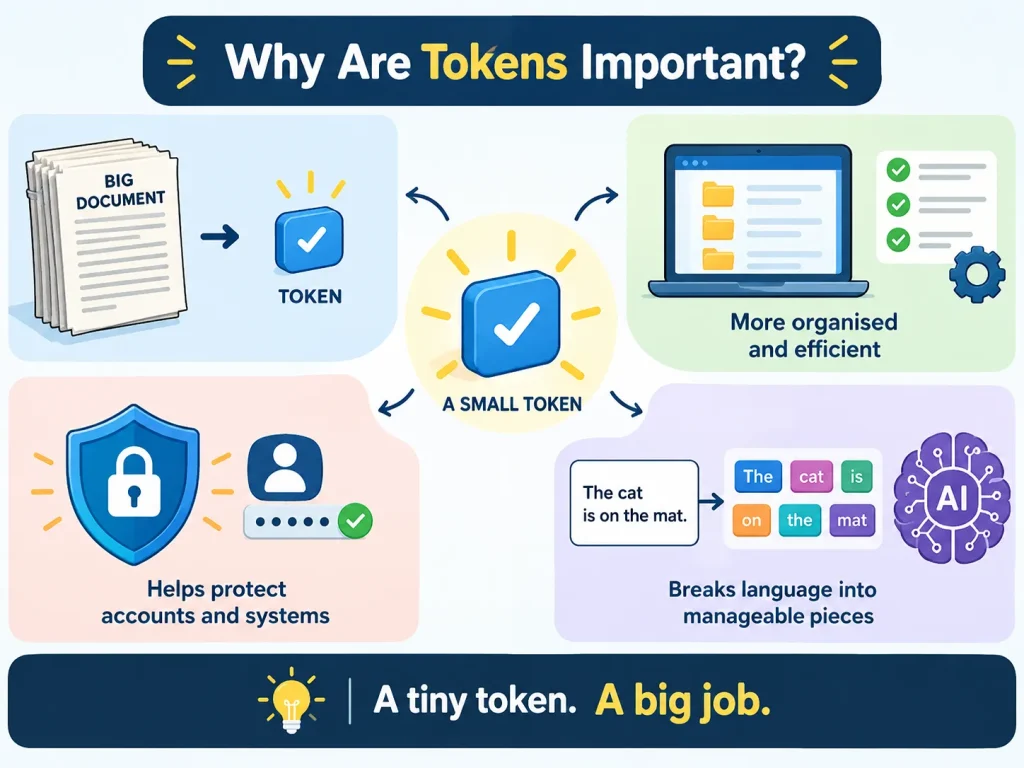
Tokens are useful because they allow complicated systems to work with simpler representations.
Imagine having to carry around a huge document every time you wanted to prove something.
Instead, a small token could represent that information or permission.
In computing, this can make systems more organised and efficient. In security, tokens can help protect accounts and systems. In AI, tokens allow language to be broken into manageable pieces.
So, although a token might look like a tiny idea, it can have a very important job.
Conclusion
The word “token” has many meanings, but the main idea is surprisingly simple.
A token is something that represents something else, carries information, or provides a particular right or permission.
It could be a plastic game piece, a piece of computer code, a digital security credential, a piece of text processed by AI, or a digital asset.
The next time you hear someone mention a token, don’t immediately think of one object.
Instead, ask:
“What does this token represent, and what is it being used for?”
Once you understand that, the meaning usually becomes much clearer!
For more interesting articles, please visit www.kidzherald.com