
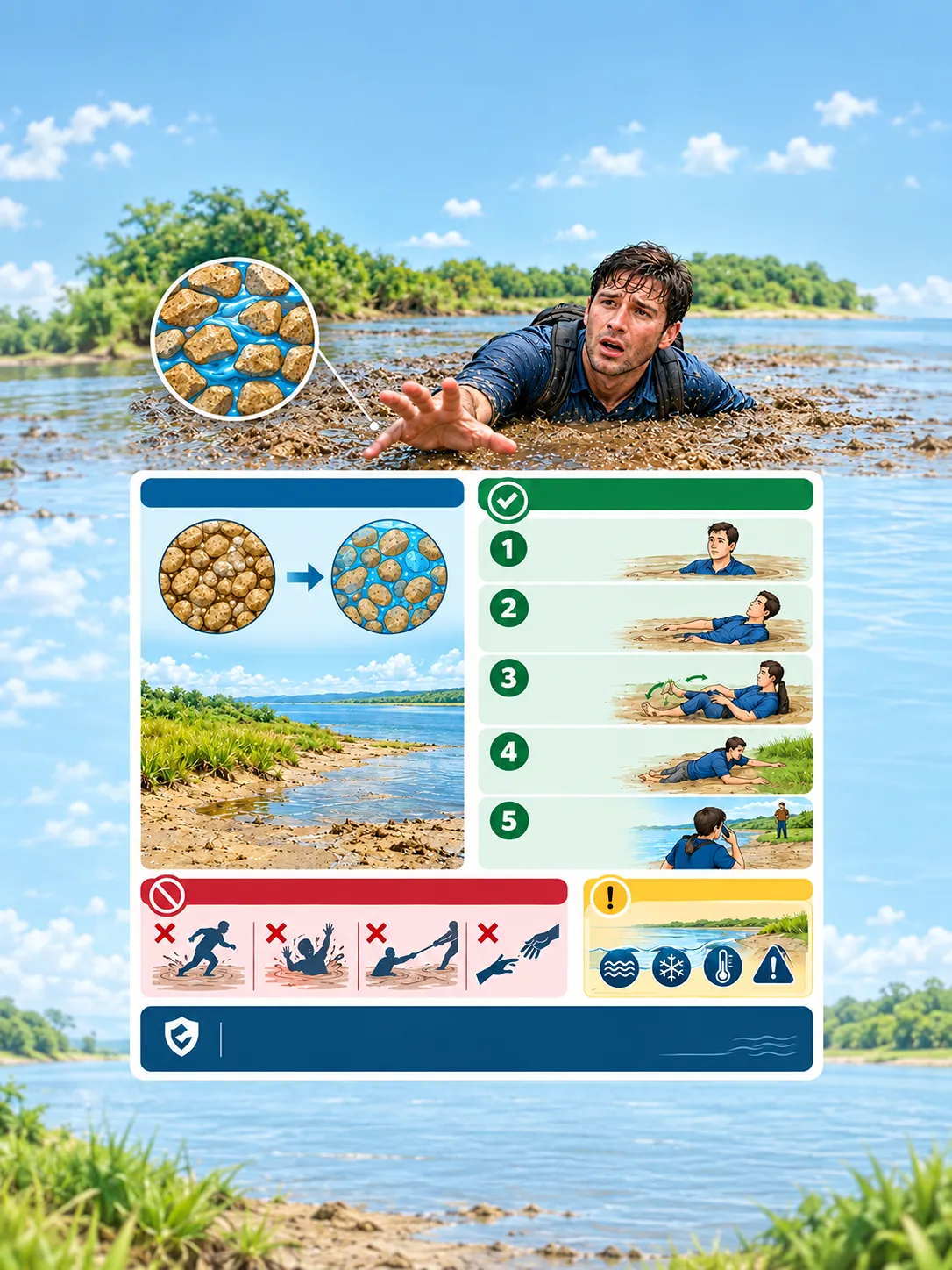
Quicksand is one of those things that sounds much more frightening in films than it usually is in real life. In movies, people sometimes appear to disappear completely into enormous pools of sand. Thankfully, real quicksand normally does not behave like that.
However, quicksand can still be dangerous, particularly near rivers, beaches, tidal areas, or other places where water levels can change.
So, what exactly is quicksand, and what should you do if you accidentally become stuck?
Let’s explore the science and learn some important safety tips.
What Is Quicksand?
Quicksand is not a special type of sand. It is ordinary sand or another fine sediment that has become mixed with enough water to behave differently from normal solid ground.
It can form when water moves upwards through loose sand, reducing the friction between the grains. The ground can then become soft and unstable.
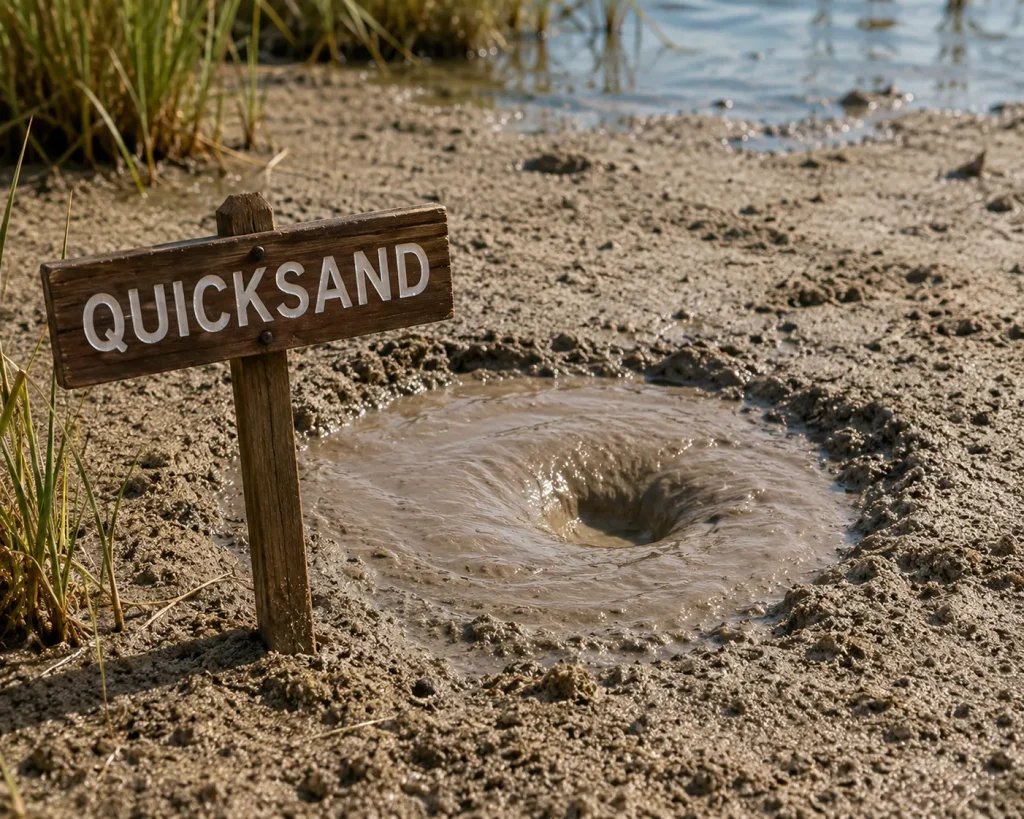
Quicksand may look like ordinary wet sand at the surface, making it difficult to recognise.
The National Park Service warns that potentially unstable ground can occur in wet or loose areas, low spots, shorelines and places where water has recently changed the ground.
Can You Really Sink Completely?
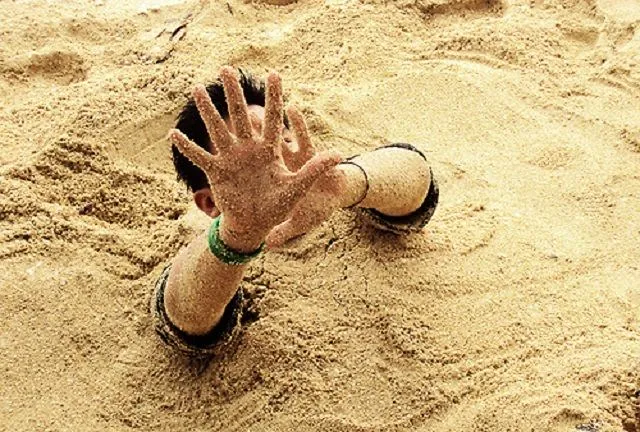
One of the biggest myths about quicksand is that a person will automatically disappear beneath the surface.
In reality, your body has buoyancy, meaning the surrounding material can support it. This makes complete sinking much less likely than films often suggest.
The bigger problem is that the sediment grips your legs, making them difficult to move.
There can also be danger if quicksand is near deep or moving water, because tides, currents or rising water can create additional hazards.
Why Does Quicksand Trap Your Feet?
Imagine trying to pull your foot out of thick mud.
The material around your foot can resist the movement. Quicksand can behave similarly.
If you suddenly pull upwards, the sediment may not move easily with your leg. Water and sand must move around your foot before the leg can come free.
This is why slow and controlled movement is much better than struggling wildly.
The National Park Service advises avoiding sudden movements and gradually working the legs free.
Step 1: Stay Calm
If you realise that you are stuck, your first reaction might be panic.
Try to stay calm.
Take a breath and look around you. Check whether there is firm ground nearby and whether other people are present.
Panic can cause you to move suddenly and expend a lot of energy. Remaining calm gives you more time to think clearly.
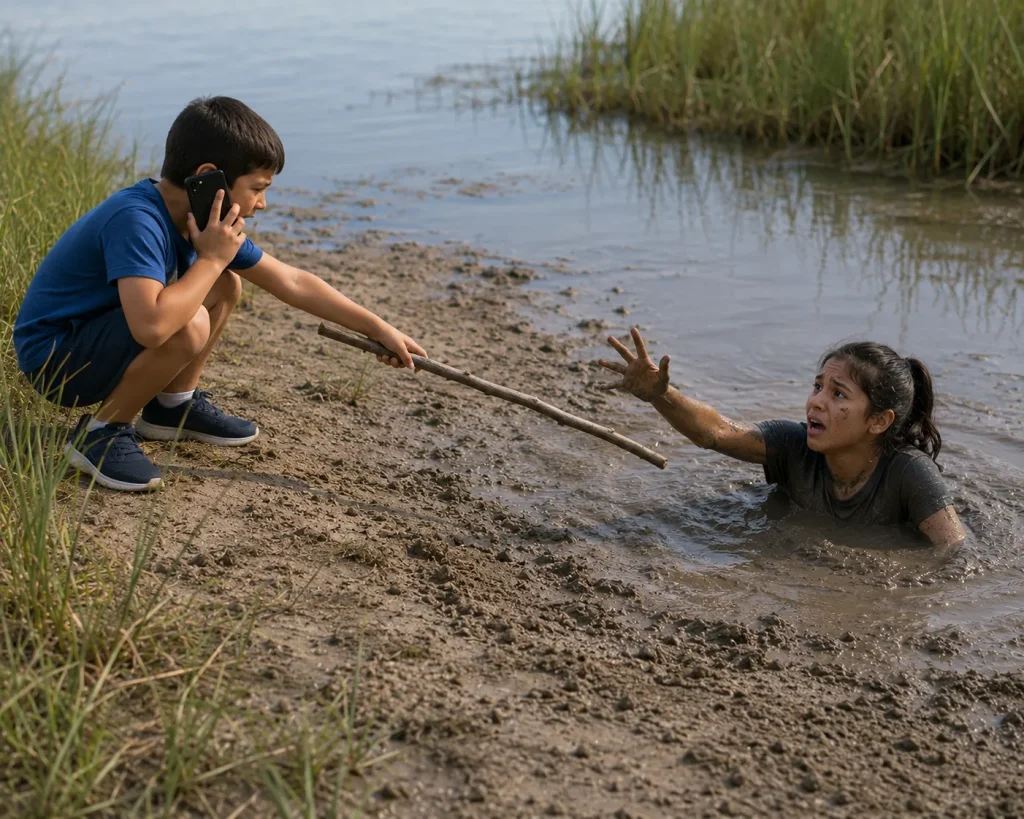
If you are a child or young person, call out for a nearby adult immediately.
If you have a phone and it is safe to use it, contact emergency services when necessary.
Step 2: Do Not Thrash About
It might seem logical to struggle as hard as possible.
However, that can make the situation more difficult.
Fast movements can disturb the sediment, making it harder to free your legs. They also use up energy.
Instead, make your movements slow and gentle.
The National Park Service specifically recommends avoiding sudden movements when trapped in quicksand.
Step 3: Spread Out Your Weight
One useful principle is to avoid putting all your weight directly downwards.
If possible, gradually lean backwards so that the surface supports more of your body.
This increases the area over which your weight is spread.
Think about lying on a soft mattress. A person standing on one foot puts lots of pressure on a small area. Lying down spreads the same weight over a much larger area.
The same basic idea can help reduce downward pressure in unstable sediment.
The National Park Service recommends leaning back to increase the body’s surface area.
Step 4: Slowly Free One Leg
Once you are in a stable position, work on freeing your legs one at a time.
Move very slowly.
Small movements can allow water to move around the trapped leg and loosen the sediment.
Gently moving or rotating a foot can help create space around it. Do not yank your leg upwards suddenly.
If something feels firmly trapped, stop and get help rather than using greater force.
Step 5: Move Towards Firm Ground
Once your legs are free, continue to keep your weight spread out.
Slowly work your way towards firmer ground.
Do not immediately stand upright if the ground around you is still unstable.
If a sturdy object such as a branch or walking pole is already available, it may provide useful support. However, never ask another person to step into the quicksand to rescue you.
The National Park Service recommends using a sturdy object for assistance rather than having another person put themselves directly into the unstable area.

What If Someone Else Is Trapped?
This is especially important for children.
Do not rush into the quicksand yourself.
You could become trapped too.
Instead:
- Stay on firm ground.
- Call an adult or another responsible person.
- Contact emergency services if the situation is serious.
- Keep the trapped person calm.
- If appropriate, extend a sturdy object from safe ground rather than entering the unstable area yourself.
Rescuing someone from unstable ground can be dangerous, so trained rescuers should handle difficult situations.
Water Can Make Quicksand More Dangerous
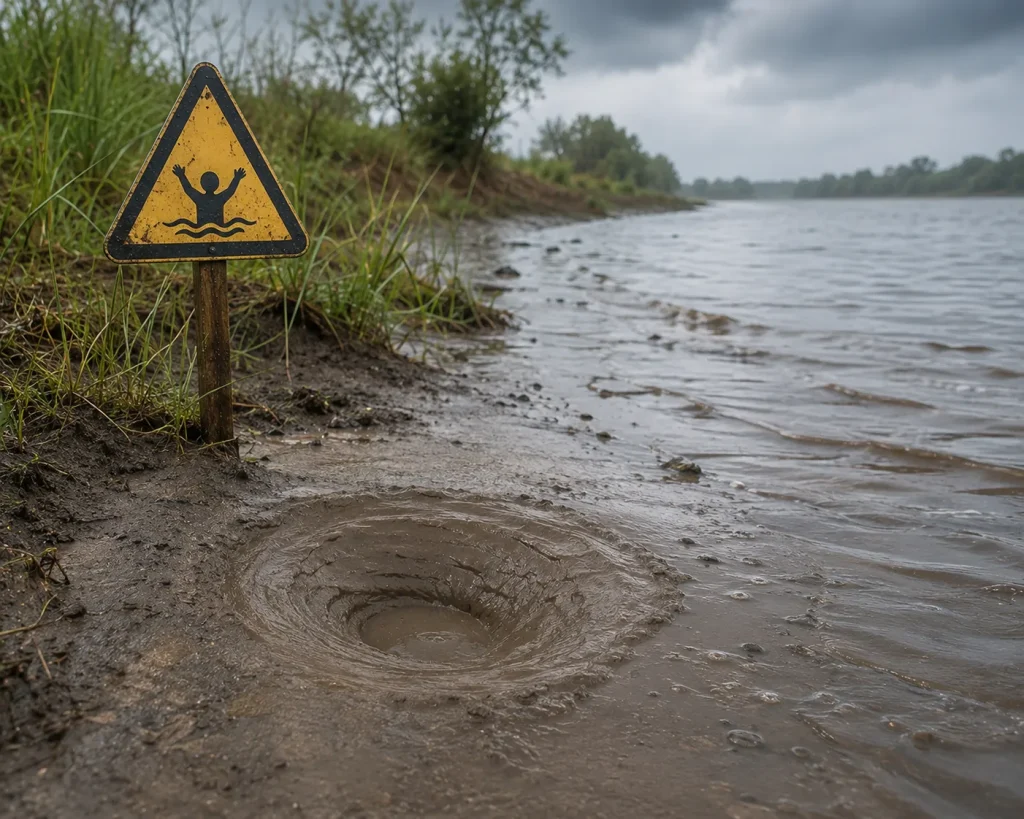
Quicksand near water deserves extra caution.
A beach, riverbank or muddy area might appear safe, but water levels can change.
For example, tides can rise, rivers can become stronger, and heavy rain can change the ground.
This means the biggest danger may not be the quicksand itself but the surrounding water.
The National Park Service warns that natural waters can contain hidden hazards and that conditions can change quickly.
If quicksand is near water, get help immediately and move towards safety only when it can be done without entering deeper unstable ground.
How Can You Avoid Quicksand?
The best way to survive a dangerous situation is to avoid getting into it in the first place.
When exploring beaches, rivers, wetlands or muddy areas:
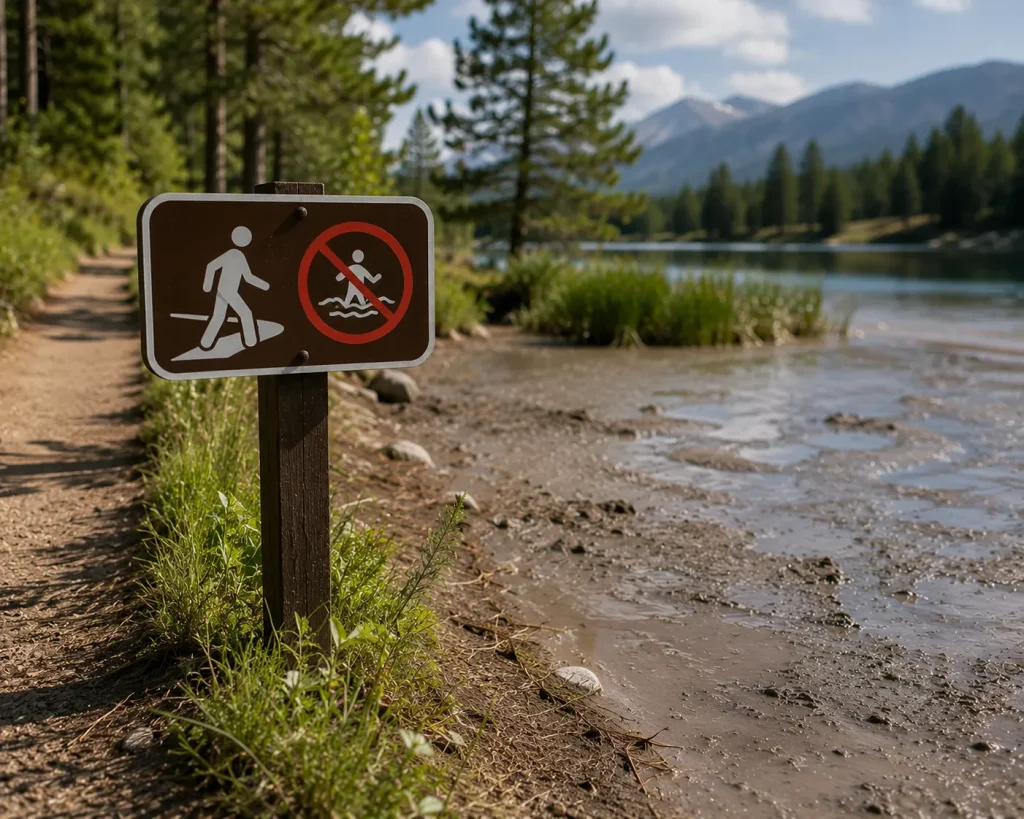
- Stay on marked paths where possible.
- Follow warning signs.
- Listen to park rangers and adults.
- Avoid areas that look unusually wet or unstable.
- Do not walk across unknown mud or sediment.
- Never deliberately test quicksand by stepping into it.
The National Park Service recommends staying on established trails and paying attention to local safety information in outdoor areas.
Common Quicksand Myths
Myth 1: Quicksand is everywhere.
False. Quicksand requires conditions involving loose sediment and water.
Myth 2: You will instantly disappear.
False. Your body’s buoyancy normally prevents the dramatic sinking shown in films.
Myth 3: You should struggle as hard as possible.
False. Sudden movements can escape harder and waste energy.
Myth 4: Someone should jump in to rescue you.
Definitely not. The rescuer could become trapped as well.
Myth 5: All quicksand looks the same.
False. Unstable ground can sometimes look surprisingly ordinary.
The Science Behind Staying Safe
Quicksand teaches us an interesting lesson about physics.
Your body pushes down on the sediment, while the sediment and water provide forces that can support you.
Spreading your weight over a larger area reduces the pressure on any one part of the ground.
Slow movement also gives water and sediment time to move around your legs.
This is why staying calm, spreading out your weight and moving carefully can be much more useful than trying to fight your way out.
Conclusion
Quicksand may look terrifying in films, but real quicksand usually does not swallow people completely.
Nevertheless, it is important to take unstable ground seriously.
If you accidentally become trapped, stay calm, avoid sudden movements, spread out your weight, slowly work towards freeing yourself and get help. If you are near water or cannot escape easily, call for assistance rather than taking unnecessary risks.
Most importantly, never deliberately enter quicksand to test it. Nature can be unpredictable, and an adventure is much more fun when everyone gets home safely!
For more interesting articles, please visit www.kidzherald.com