
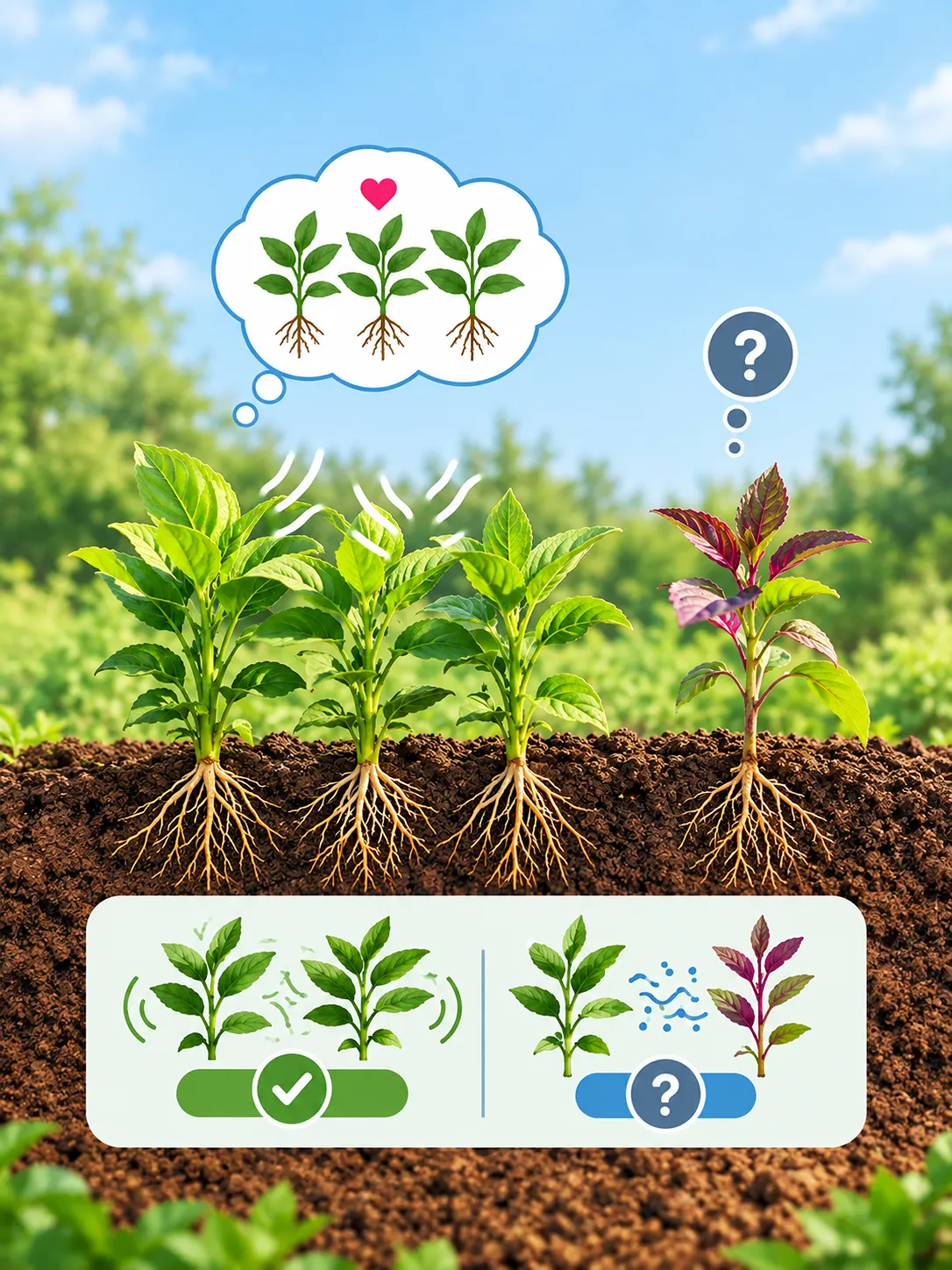
When you think about a family recognising one another, you might imagine people, dogs, cats or other animals. But what about plants?
Plants do not have eyes, ears or brains as we do. Yet scientists have discovered something rather surprising: some plants appear to be able to distinguish relatives from unrelated plants.
This does not mean that a plant looks at another plant and thinks, “That is my sister!”
Instead, plants can respond to chemical and environmental signals around them. In some experiments, plants growing near relatives have behaved differently from plants growing near unrelated neighbours. Scientists call this kin recognition.
So, how could a plant possibly recognise its family?
What Does “Plant Family” Mean?
Before we investigate, we need to understand what scientists mean by “relatives”.
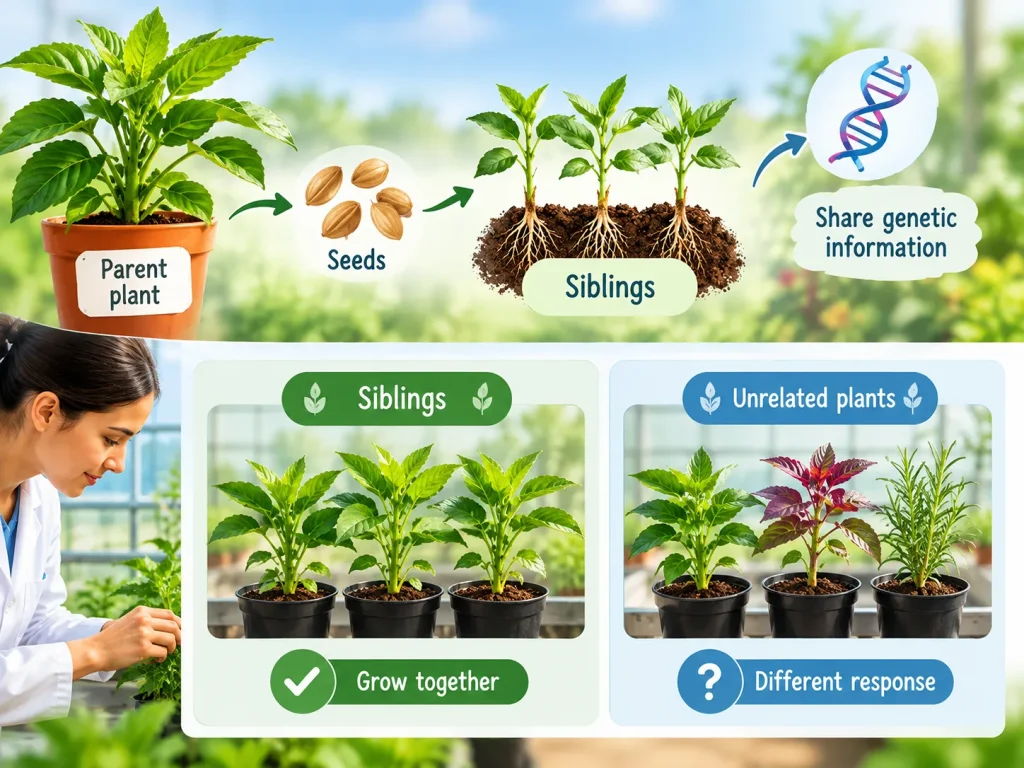
A plant’s relatives are other plants that share genetic information with it. For example, two plants that grew from seeds produced by the same parent plant may be siblings.
Scientists can grow plants from known families and place them together in experiments. They can then compare what happens when plants grow alongside their siblings and when they grow beside unrelated plants.
This has produced some fascinating results.
The Secret May Be Underground
One of the most interesting places for plant communication is under the soil.
Plants have roots that spread through the ground searching for water and nutrients. But roots do more than collect resources.
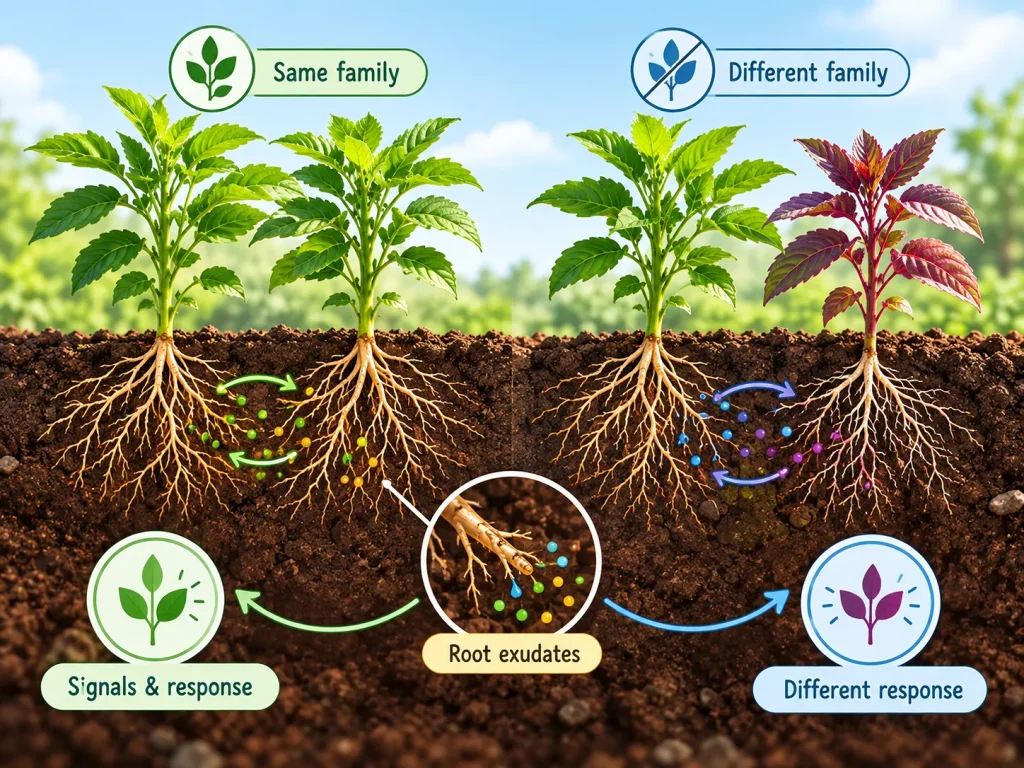
Roots can release chemical substances into the surrounding soil. These substances are sometimes called root exudates. They can affect nearby organisms and plants.
Scientists think that, in some species, these chemical signals may help plants gather information about their neighbours. Research has found evidence that root interactions and substances released by roots can be involved in recognising relatives.
Imagine two plants growing next to each other.
Their roots are exploring the same patch of soil. Instead of simply growing as much as possible, the plants may respond differently depending on who their neighbour is.
It is almost like having a secret conversation beneath the ground — although it is really a series of chemical and biological signals rather than words!
A Famous Experiment with Sea Rocket
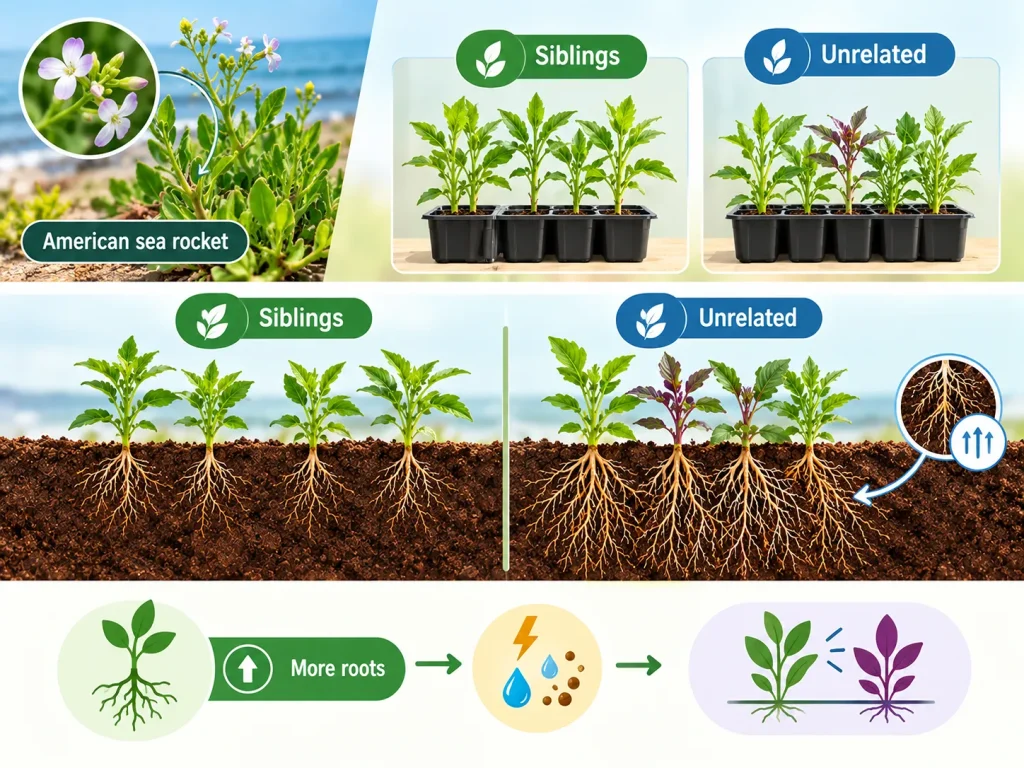
One of the best-known experiments involved a small plant called American sea rocket, or Cakile edentula.
Researchers Susan Dudley and Amanda File grew groups of these plants together. Some groups contained siblings, while other groups contained unrelated plants.
The researchers found an interesting difference.
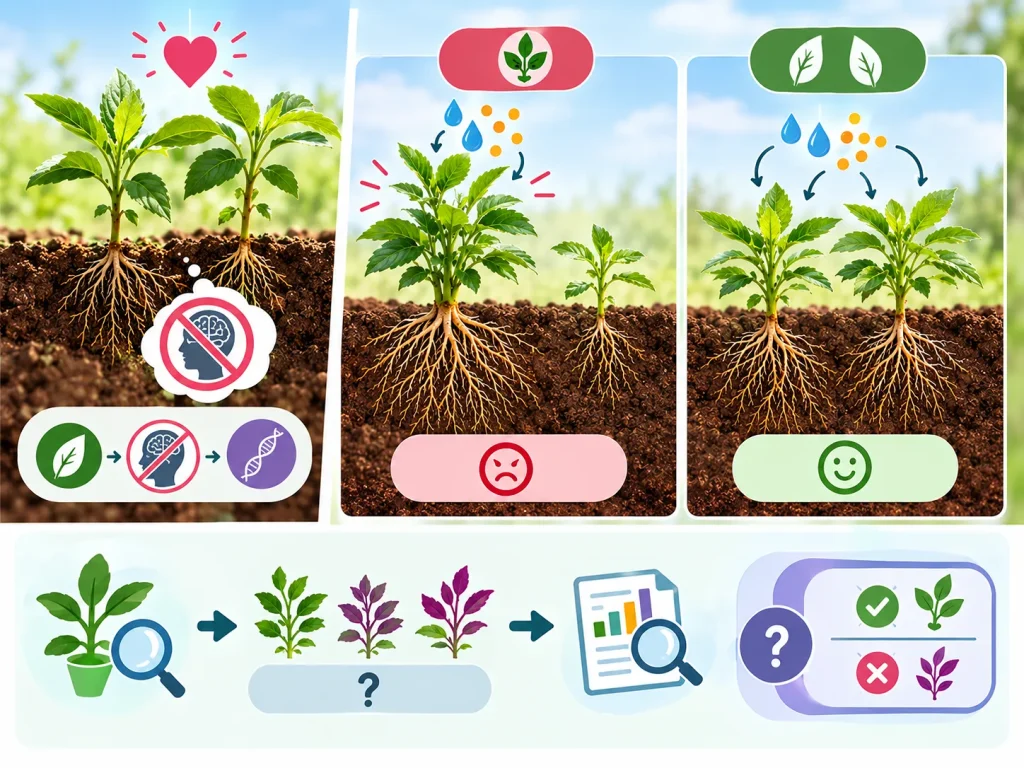
When unrelated plants grew together, they produced more roots. When siblings grew together, they did not show the same increase in root growth.
Why might that matter?
Producing roots requires energy. Roots help a plant obtain water and nutrients, but growing lots of roots can also be part of competing with nearby plants.
The researchers suggested that the plants might be responding differently to relatives and strangers.
This study helped spark much more research into plant kin recognition.
Does This Mean Plants Are Being “Kind”?
It is tempting to say that plants are being friendly to their brothers and sisters.
But scientists must be careful with words like “kind” or “helpful”.
Plants do not necessarily have feelings or thoughts as humans do.
Instead, their behaviour can be explained by evolution.
Imagine two closely related plants. If one plant grows extremely aggressively and takes nearly all the water and nutrients, its relative may suffer.
In some circumstances, it could be beneficial for plants to reduce competition with relatives.
However, scientists have not found the same result in every plant species or every experiment. Some research has produced mixed results, so we should not assume that all plants recognise their relatives or always cooperate with them.
Plants Can Still Compete
Plants may recognise relatives, but that does not mean they stop competing.
Plants need sunlight, water, minerals and space. If several plants are growing close together, they still must obtain the resources they need.
In some situations, plants growing next to unrelated neighbours may produce more roots or change other growth patterns.
This could help them compete for resources.
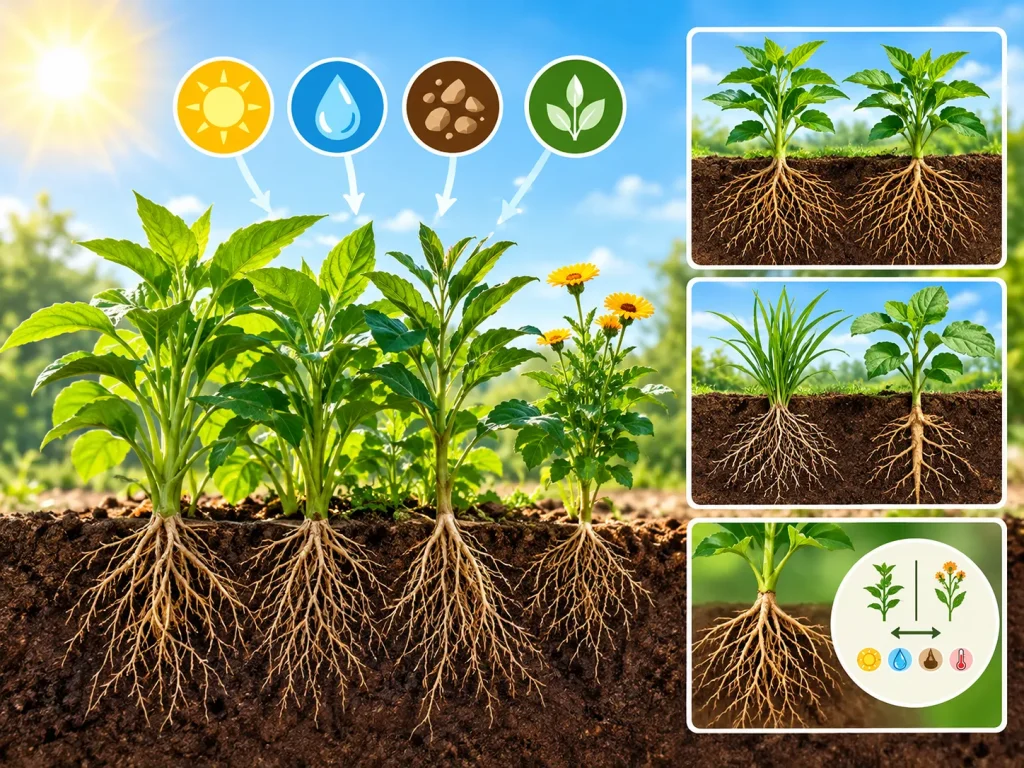
Researchers have found that plants can change traits such as root growth depending on whether their neighbours are relatives or strangers. However, the exact effect can vary between species and environmental conditions.
So the plant world is not simply divided into “friends” and “enemies”.
It is much more complicated.
What About Their Leaves?
Roots are not the only possible source of information.
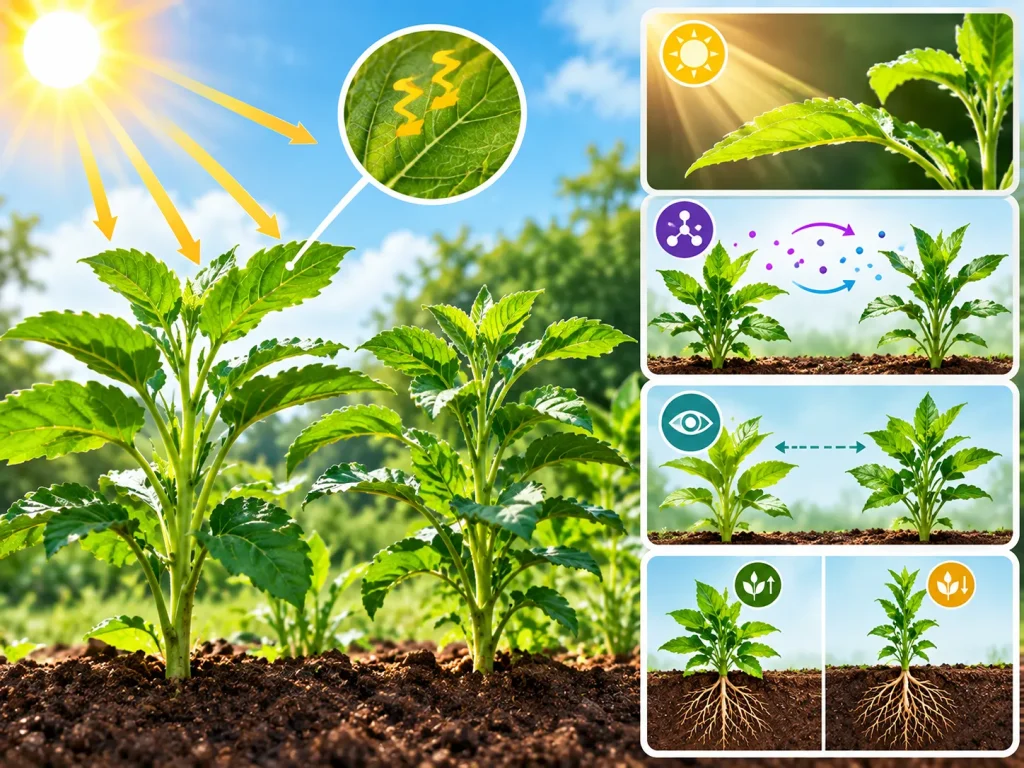
Plants can detect light, chemicals and other environmental signals around them. For example, when another plant is nearby, it can change the amount and type of light reaching its neighbours.
Plants have special systems for detecting changes in light. These signals can influence how they grow.
Researchers have therefore investigated whether plants can use information from light, as well as signals from around their roots, to respond differently to different neighbours.
This shows just how complicated plant communication can be.
Do Plants Have a Brain?
No.
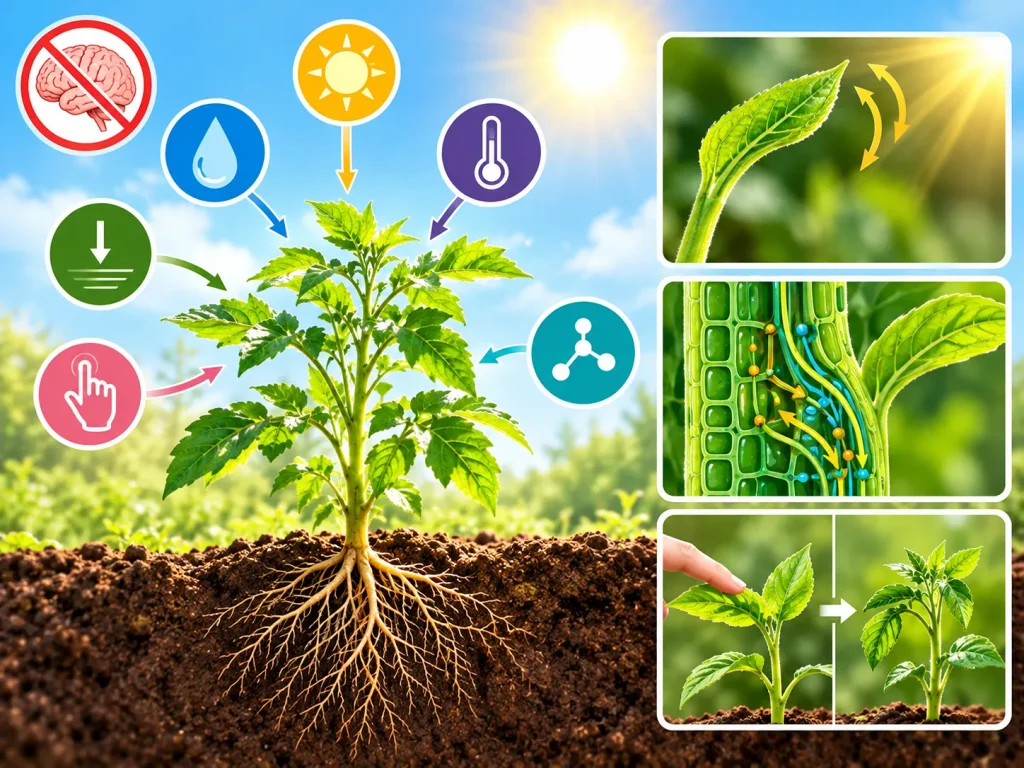
Plants do not have brains or nervous systems like humans and other animals.
Instead, plants have networks of cells and chemical signalling systems that allow different parts of the plant to respond to changes in their surroundings.
A plant can detect things such as light, gravity, touch, temperature, water availability and chemicals.
These signals can cause changes in growth.
That is why scientists are interested in plant behaviour. Plants may not think in the way humans do, but they can still sense information and change their responses.
It is important not to confuse this with human intelligence. Scientists are still learning exactly what these plant responses mean.
Why Would Recognising Relatives Be Useful?
Imagine a patch of soil containing many young plants.
If a plant can detect that a nearby plant is closely related, it might adjust its growth to reduce unnecessary competition.
For example, investing less energy in competing roots could leave more energy available for leaves, stems, flowers, or seeds.
Researchers have suggested that kin recognition could have important effects on plant populations and ecosystems. It might even become useful in agriculture if scientists learn more about how plants respond to their relatives.
However, there is still plenty to discover.
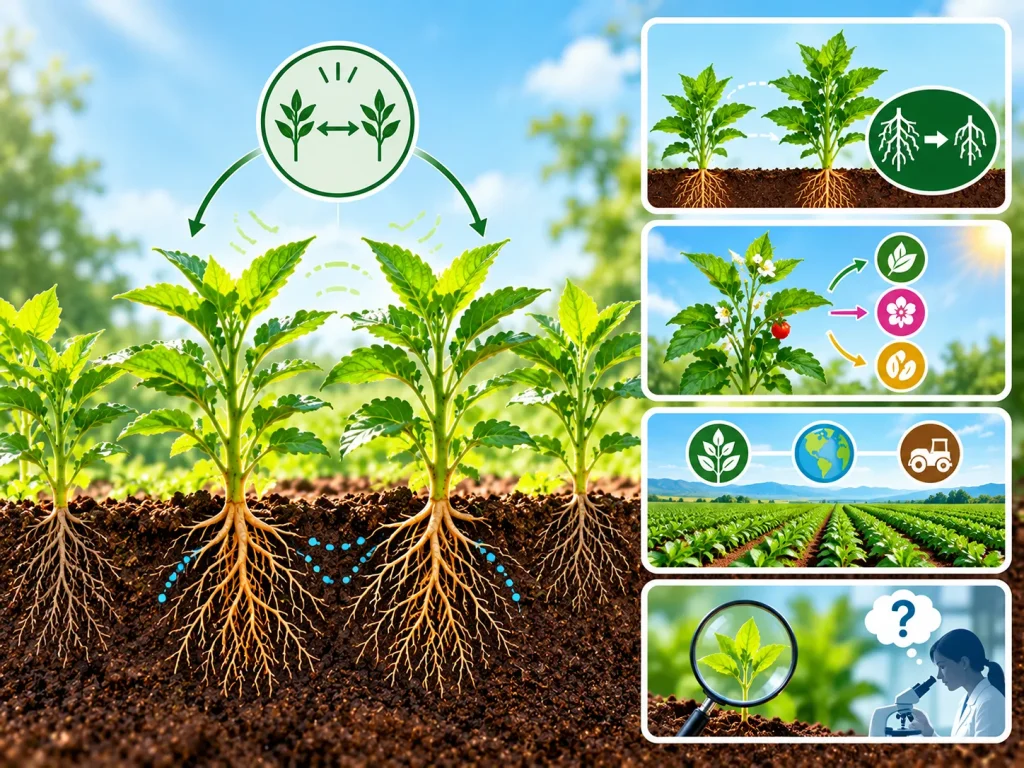
Is It Proven for Every Plant?
Definitely not.
This is one of the most important things to remember.
Research has found evidence of kin recognition in several plant species, but the results are not always the same. A 2025 review described plant kin recognition as an area with mixed evidence, with scientists still investigating how consistently plants distinguish relatives from unrelated neighbours and under which conditions.
Different plants live in different environments.
A plant growing in a desert has different problems from a plant growing in a rainforest. A plant growing in nutrient-poor soil faces different challenges from one growing in a rich garden.
All these factors can affect how plants respond to their neighbours.
Could Plants Be Communicating?
Plants certainly exchange information with their surroundings.
They can release chemicals, respond to chemicals from other organisms and react to environmental signals. Plants can also interact with fungi and other organisms living around their roots. Researchers are investigating how these underground networks may influence relationships between plants.
But it would be misleading to imagine plants having conversations in the same way that people do.
Plant communication is better understood as a collection of chemical, physical and biological signals.
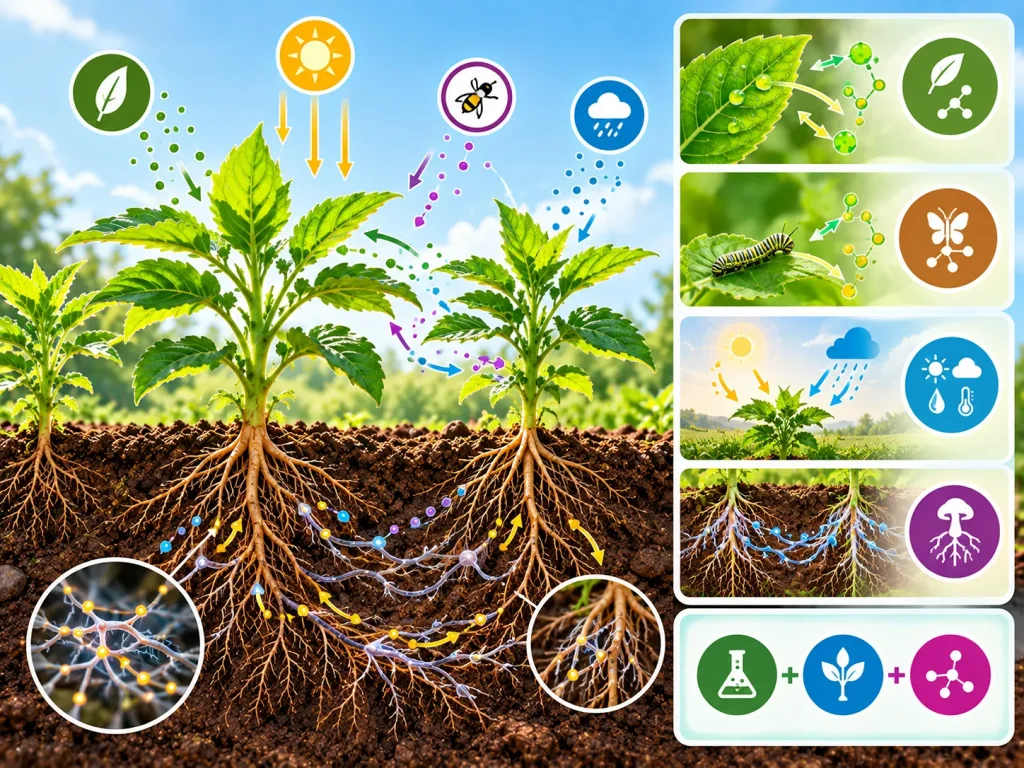
The Amazing World Beneath Our Feet
The next time you see several plants growing close together, remember that there may be much more happening beneath the soil than you can see.
Their roots are exploring the ground.
Chemical signals may be moving through the soil.
Plants detect changes in light and in their surroundings.
And in some species, plants may even respond differently to relatives and unrelated neighbours.
We still do not know all the answers.
That is what makes science so exciting!
The Big Idea
Some plants can distinguish relatives from unrelated plants.
Roots and chemical signals may help plants gather information about their neighbours.
Plants can change their growth depending on the plants around them.
Scientists have found evidence for kin recognition, but it does not happen in the same way in every plant.
Plants do not have brains like humans, so plant “recognition” should not be confused with human thoughts or feelings.
The next time you look at a garden, a forest or even a tiny pot plant, remember: the plant world may be far more socially complicated than it looks!
For more interesting articles, please visit www.kidzherald.com