
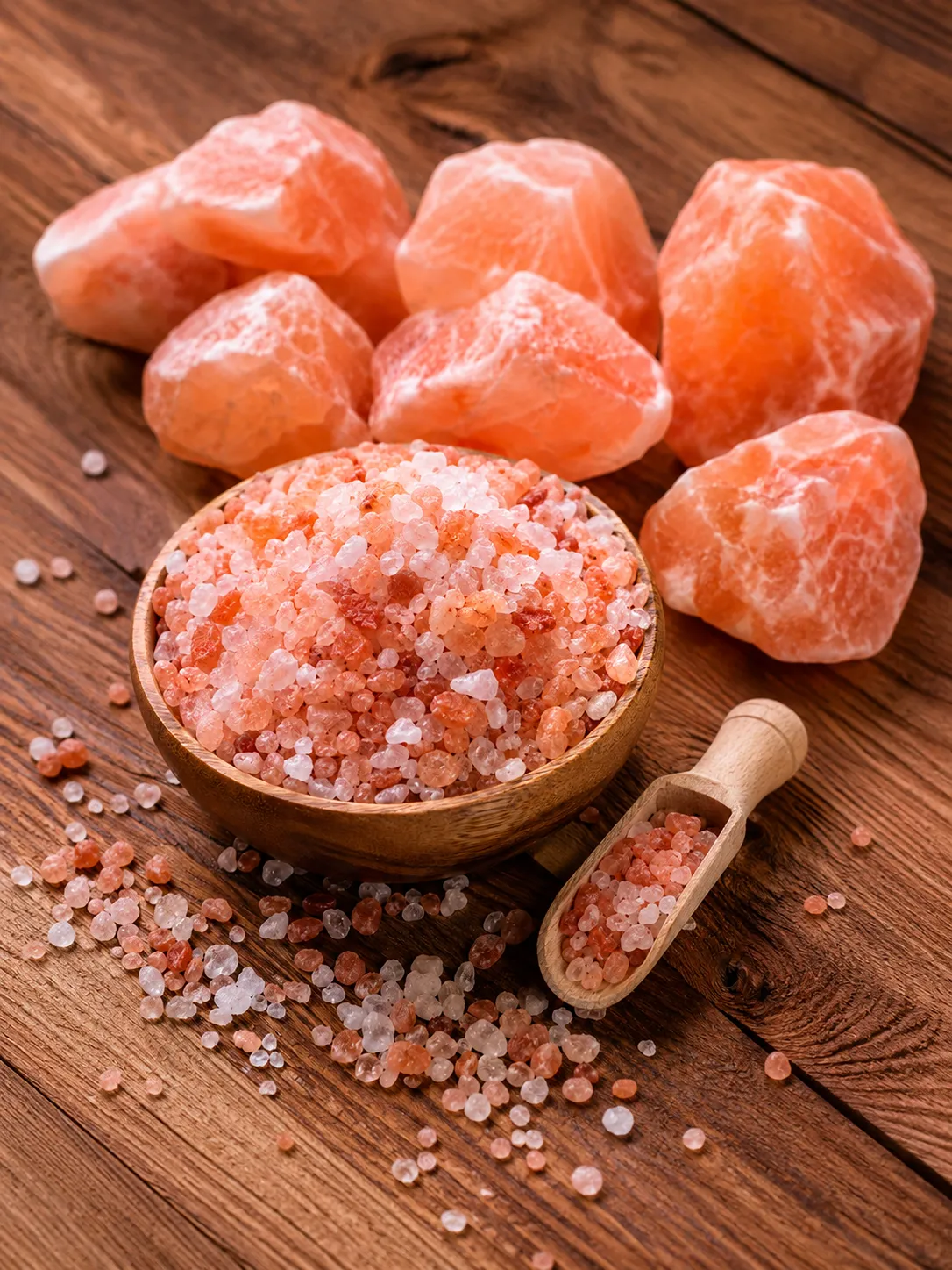
Have you ever seen pink salt on a dining table or in a shop and wondered why it is pink instead of white?
Most of us are used to seeing ordinary table salt, which is usually bright white. Himalayan salt, however, has a beautiful pink colour that makes it stand out. Some pieces are light pink, while others can be dark pink or even slightly orange.
But what makes this salt pink? Is it dyed? Is it made differently? Let’s discover the fascinating story behind Himalayan salt and its unusual colour.
What Is Himalayan Salt?
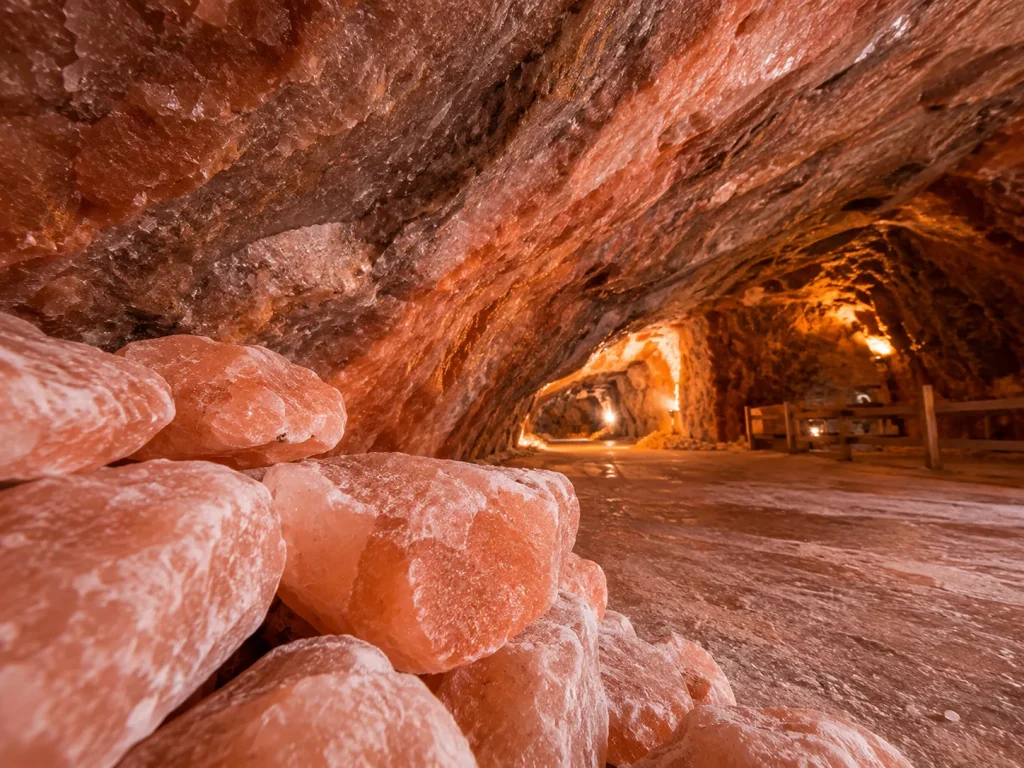
Himalayan salt is a type of rock salt. It comes from ancient salt deposits that formed millions of years ago when large inland seas covered parts of the Earth.
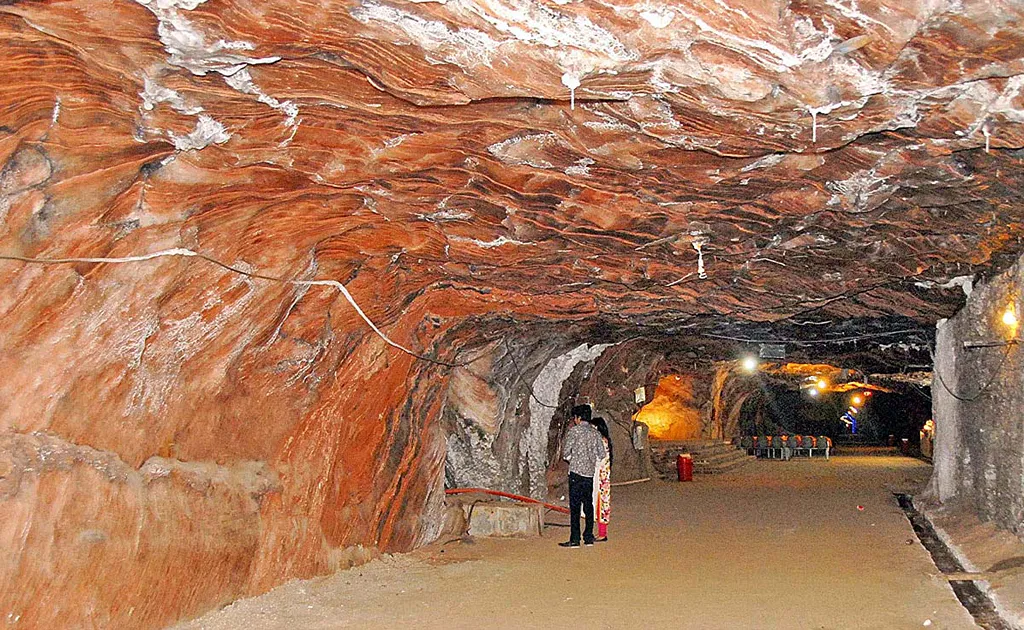
Today, most Himalayan salt is mined from the famous Khewra Salt Mine, one of the world’s largest and oldest salt mines.
Even though it is called “Himalayan” salt, it does not come directly from the Himalayas. Instead, it comes from salt deposits near the foothills of the mountain range.
The salt was created long before humans existed. Over millions of years, water from ancient seas evaporated, leaving behind thick layers of salt underground.
Why Is It Pink?
The simple answer is minerals.
Regular table salt is made mostly of sodium chloride, which is naturally colourless or white when purified.
Himalayan salt also contains sodium chloride, but it also contains tiny amounts of other minerals. These minerals give the salt its pink colour.
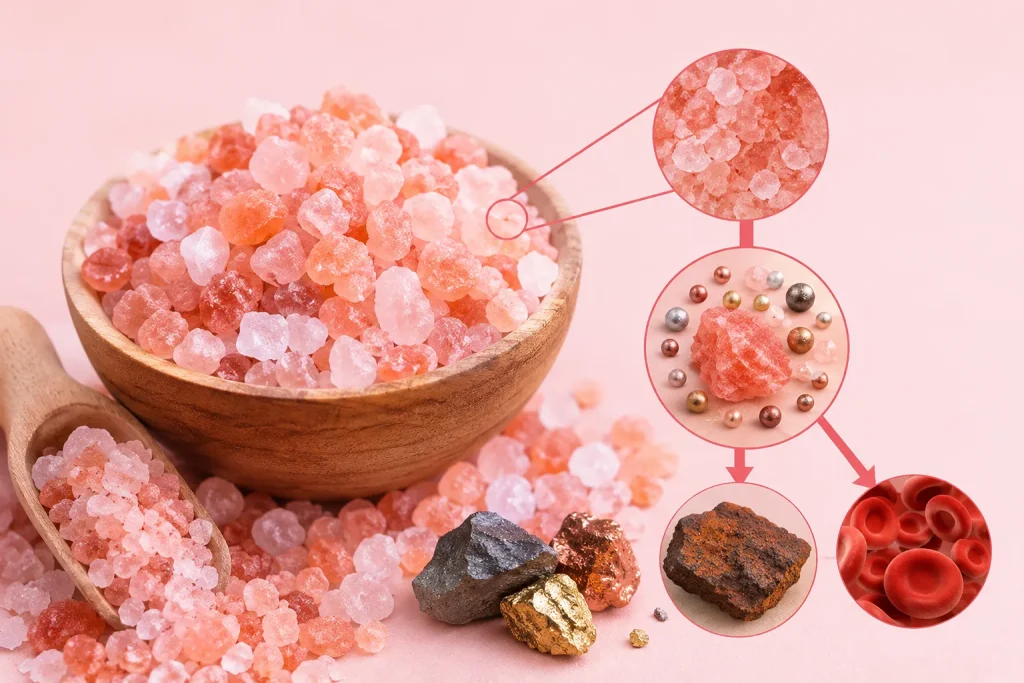
The most important mineral responsible for the colour is iron.
Yes, the same element that helps make blood red and can cause metal to rust.
When iron is present in small amounts within the salt crystals, it creates shades of pink, orange, and red.
Think of it like adding a drop of paint to a glass of water. Even a tiny amount can change the colour.
How Much Iron Is in Himalayan Salt?
Not very much.
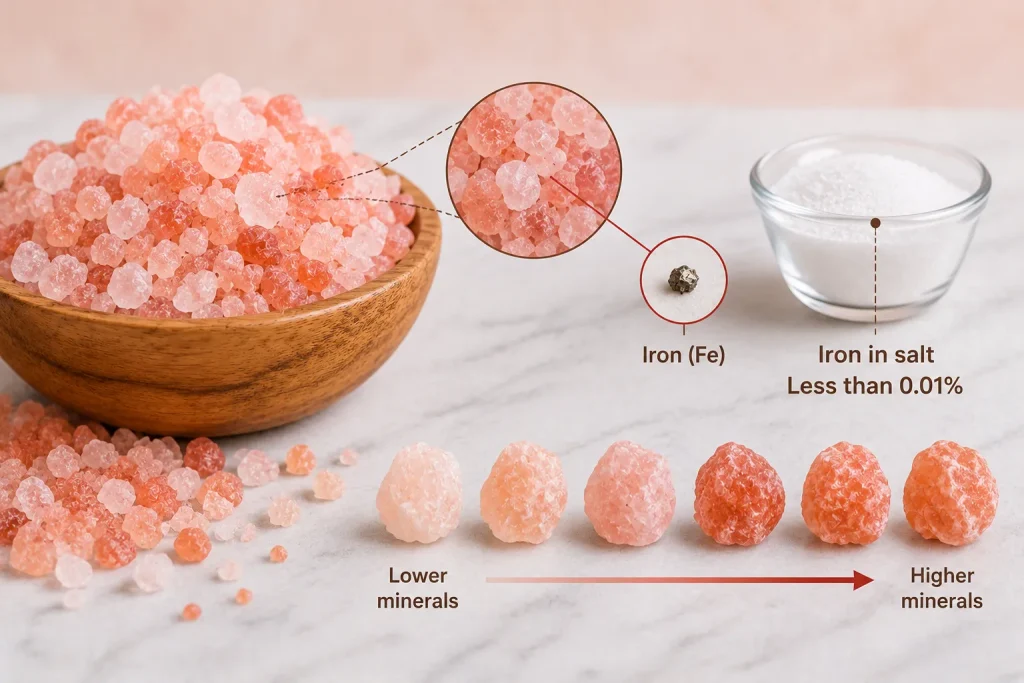
Although iron helps create the pink colour, it is only present in small quantities. The colour may look strong, but the amount of iron is quite tiny compared with the amount of salt.
Different pieces of Himalayan salt can contain slightly different amounts of minerals. That is why some crystals are pale pink while others are darker.
What Other Minerals Are Found in Himalayan Salt?
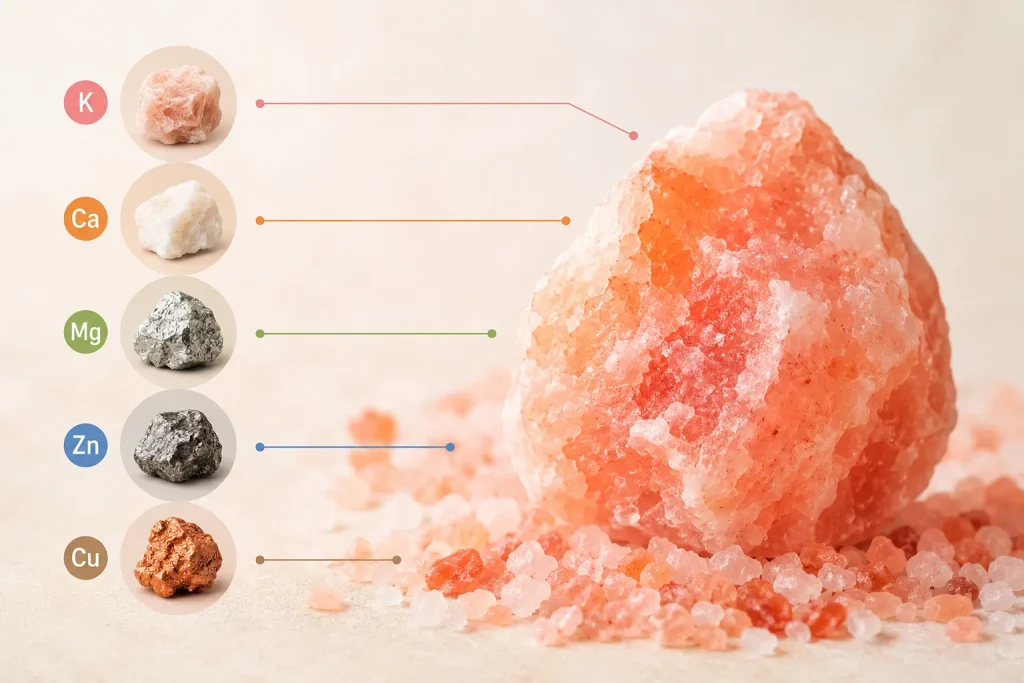
Besides iron, Himalayan salt contains small amounts of other minerals, including:
- Potassium
- Calcium
- Magnesium
- Zinc
- Copper
These minerals can slightly affect the colour and appearance of the salt.
Together, they help create the beautiful range of pink, peach, orange, and reddish shades seen in different salt crystals.
How Did These Minerals Get There?
Millions of years ago, ancient seas contained many dissolved minerals.
As the seawater slowly evaporated, layers of salt formed on the seabed. Small amounts of minerals became trapped within the salt crystals.
Over time, these deposits were buried deep underground. Pressure from rocks above helped preserve them for millions of years.
When miners dig into the salt deposits today, they uncover salt that has remained hidden since prehistoric times.
Is Himalayan Salt Healthier Than Ordinary Salt?
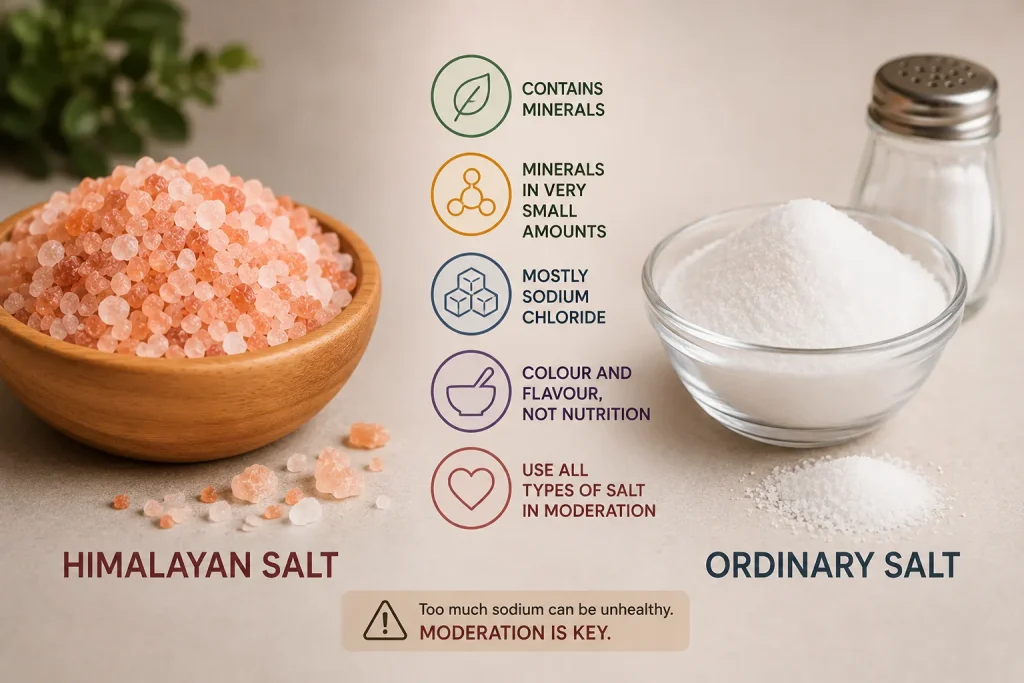
Many people believe Himalayan salt is healthier because it contains extra minerals.
While it is true that Himalayan salt contains more minerals than refined table salt, the amounts are usually very small.
Most of the salt is still sodium chloride, just like ordinary salt.
The extra minerals contribute to the colour and flavour, but they do not provide significant nutritional value.
Health experts generally recommend using all types of salt in moderation, as consuming too much can be unhealthy.
Why Do People Like Using Himalayan Salt?
People enjoy Himalayan salt for several reasons:
1. Its Beautiful Colour
The pink crystals look attractive in kitchens and on dining tables.
2. Its Unique Taste
Some people say it has a slightly different flavour because of the trace minerals it contains.
3. Decorative Uses
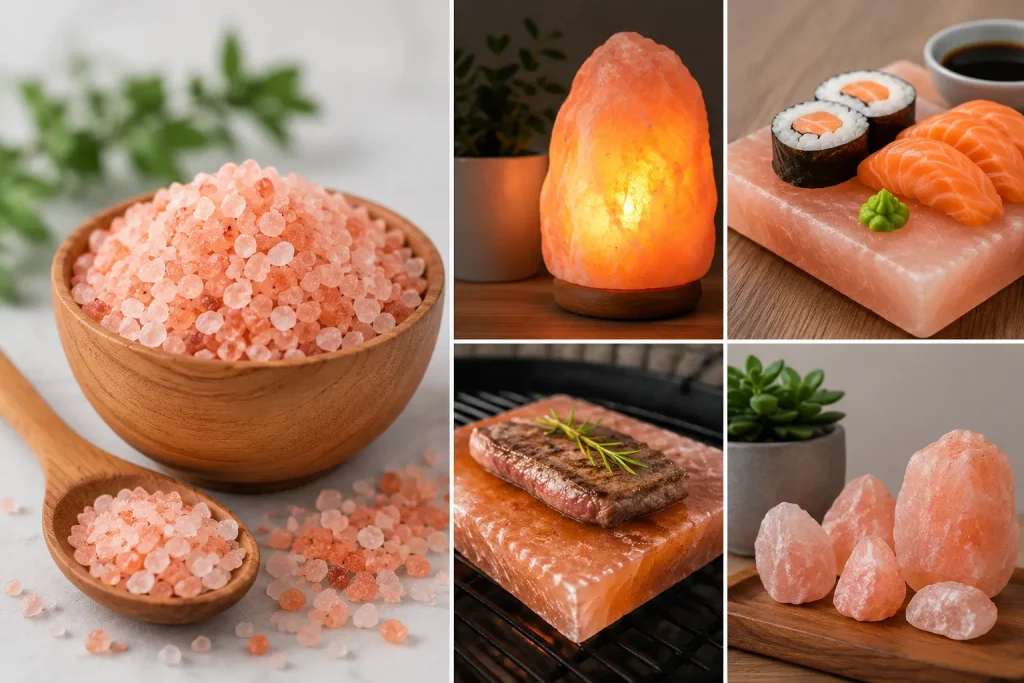
Large blocks of Himalayan salt are often used to make:
- Salt lamps
- Serving plates
- Cooking blocks
- Decorative ornaments
These products are popular because of their warm pink glow.
Can Salt Be Other Colours Too?
Yes!
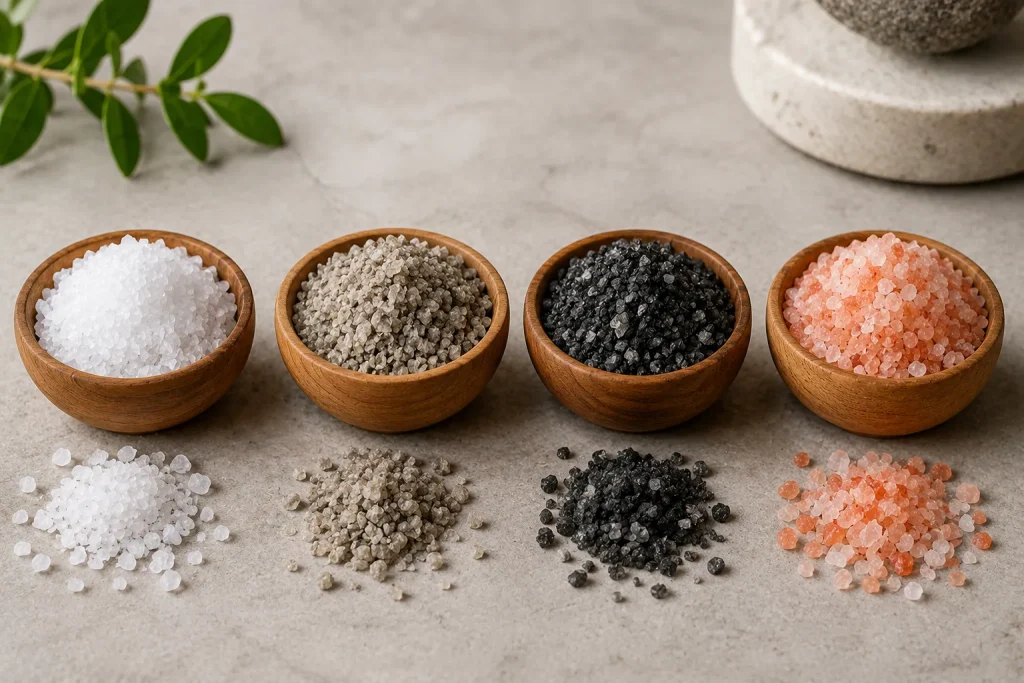
Different minerals can give salt different colours.
For example:
- White salt contains very few impurities.
- Grey salt may contain clay minerals.
- Black salt can contain sulphur compounds.
- Pink salt contains iron and other trace minerals.
Nature creates many different colours depending on what minerals become trapped inside the salt.
A Fun Experiment
Imagine you have a box of white building blocks.
Now imagine adding a few red, orange, and yellow blocks.
The box would still mostly contain white blocks, but the overall appearance would begin to change.
That is similar to Himalayan salt. Most of it is ordinary salt, but tiny amounts of minerals change its colour.
Amazing Facts About Himalayan Salt
- The salt deposits are hundreds of millions of years old.
- Some salt crystals are almost transparent.
- The largest Himalayan salt mine is the Khewra Salt Mine.
- Himalayan salt is often sold as coarse crystals, fine powder, or large decorative blocks.
- The pink colour comes mainly from iron-containing minerals.
Conclusion
So, why is Himalayan salt pink?
The answer is simple: tiny amounts of minerals, especially iron, are trapped inside the salt crystals. These minerals give the salt its famous pink, orange, and reddish colours.
Without those minerals, Himalayan salt would look much like ordinary white salt.
The next time you see a pink salt crystal, remember that its colour is a reminder of ancient seas that existed millions of years ago. Hidden beneath the ground for ages, those minerals have given Himalayan salt its beautiful and distinctive appearance.
For more interesting articles, please visit www.kidzherald.com