
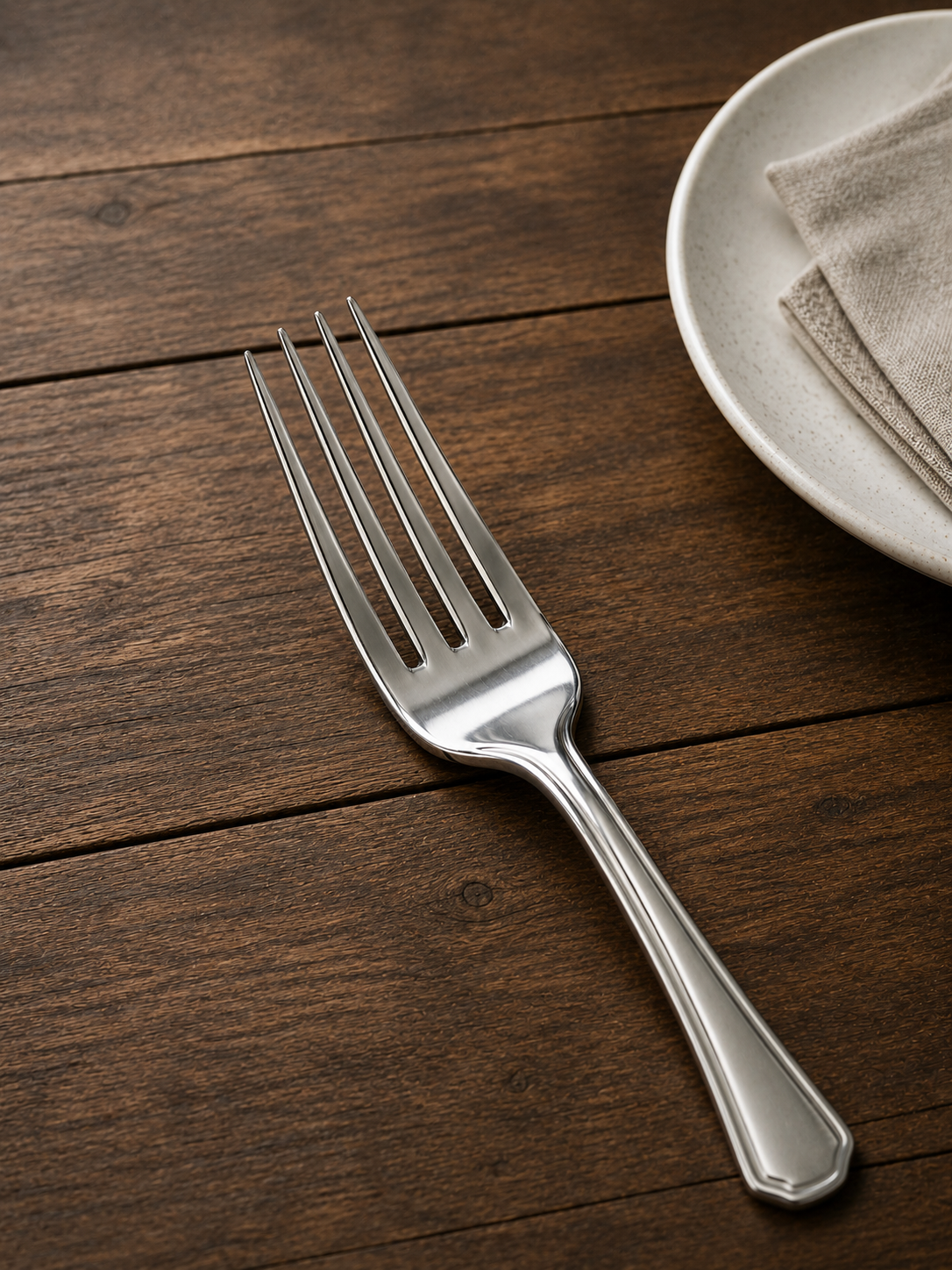
Have you ever looked at your fork and wondered… why does it have four tines (those pointy prongs)?
Why not three? Or five?
It might seem like a small detail, but the shape of a fork has a long and fascinating history. Let’s explore how this everyday object became perfectly designed!
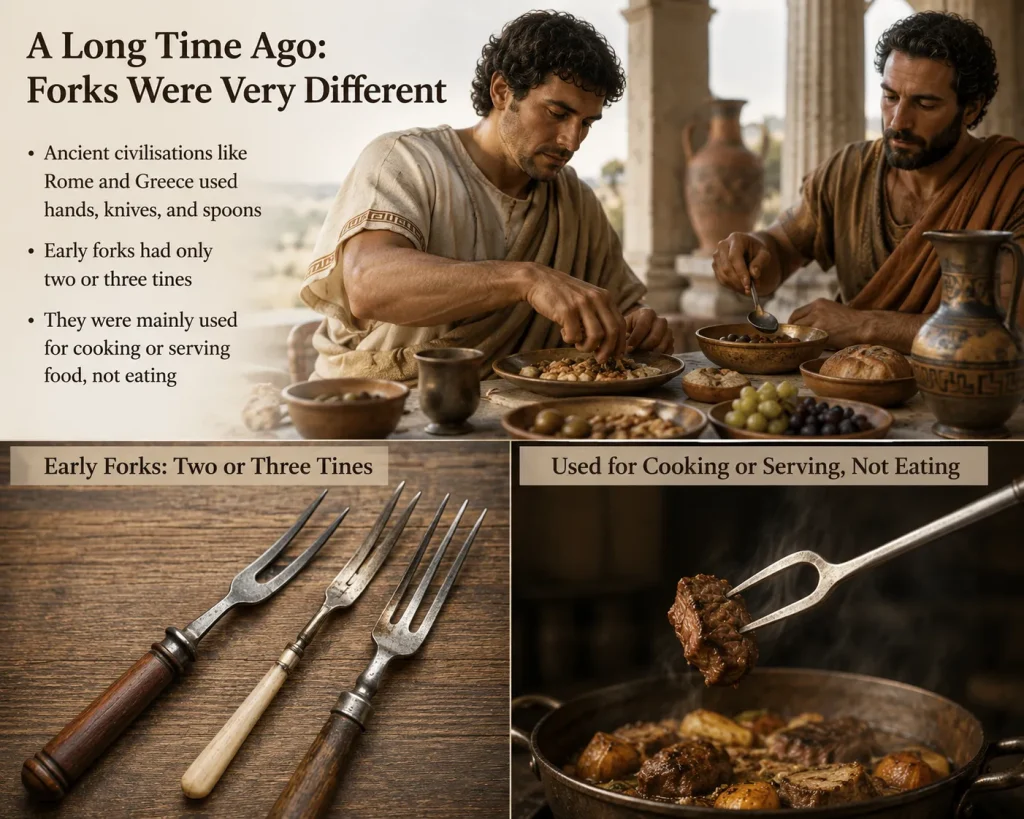
A Long Time Ago: Forks Were Very Different
Long ago, people didn’t even use forks to eat!
- Ancient civilisations like Rome and Greece used hands, knives, and spoons
- Early forks had only two or three tines
- They were mainly used for cooking or serving food, not eating
Later, forks slowly became popular in Europe, but many people thought they were strange or unnecessary!
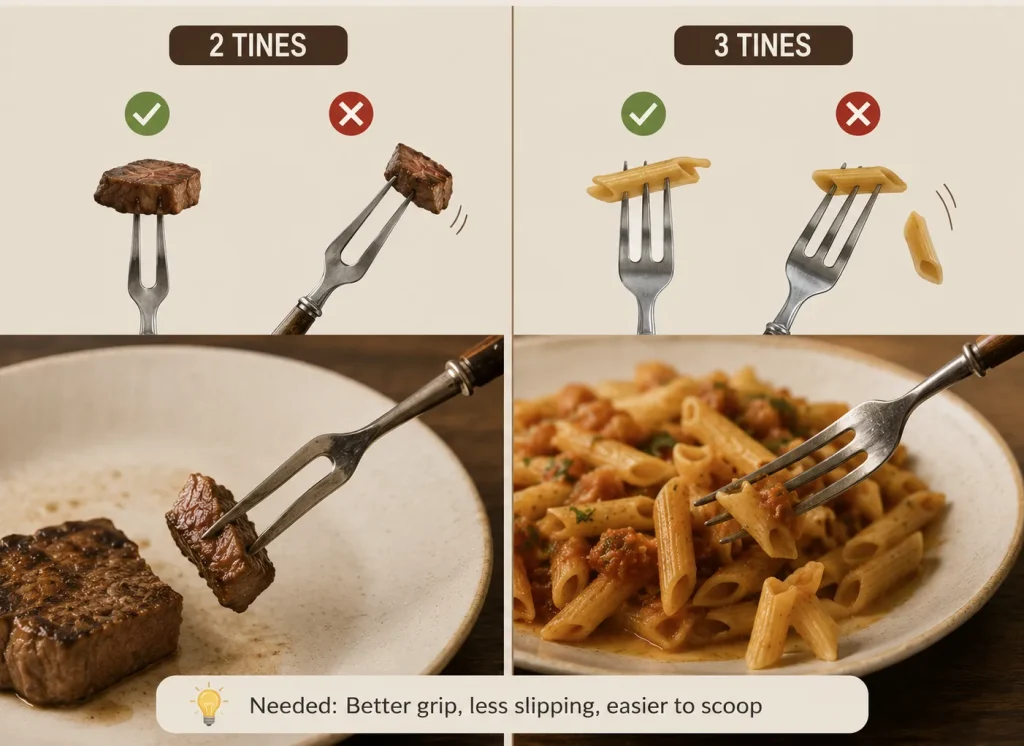
The Problem with Two or Three Tines
Early forks didn’t work very well.
Two Tines
- Good for stabbing food
- But food often slipped off
Three Tines
- Slightly better
- Still not great for scooping or holding food
People realised they needed something better—especially for foods like pasta or small pieces!
The Perfect Balance: Four Tines
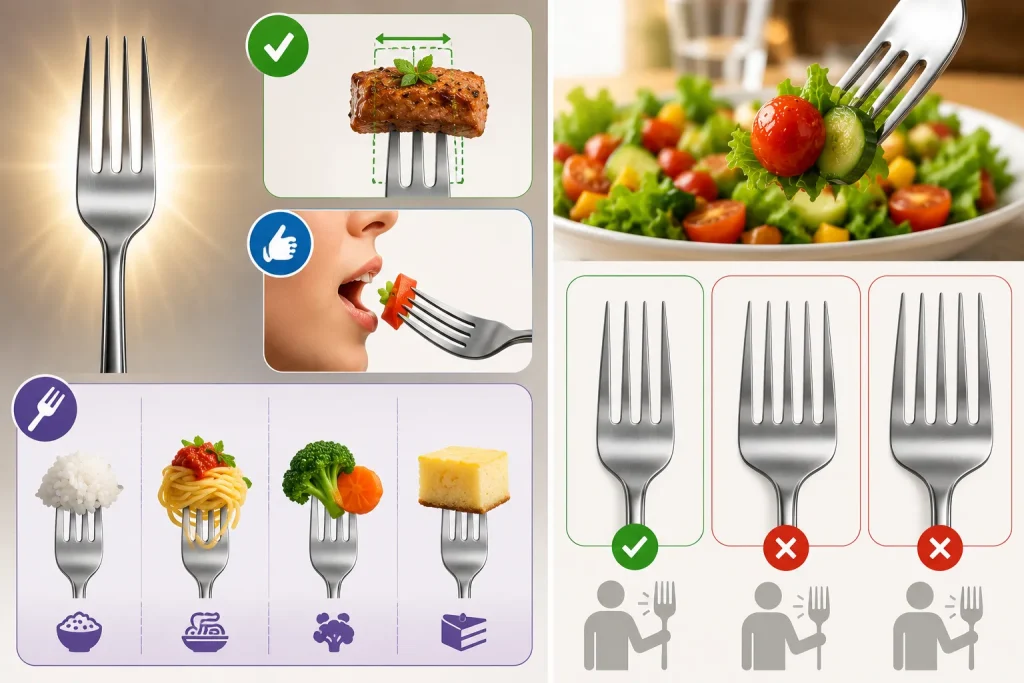
Finally, designers discovered that four tines worked best.
Here’s why:
Holds Food Better
Four tines create a wider surface, so food doesn’t fall off easily.
Easy to Use
It’s comfortable to put in your mouth—not too big or too sharp.
Works for Many Foods
You can:
- Pick up rice
- Twirl pasta
- Hold vegetables
- Cut soft food
In fact, forks with more tines (like five or six) were tried, but they were too large and awkward to use!
A Smart Design Choice
The four-tine fork is a great example of smart design.
It is:
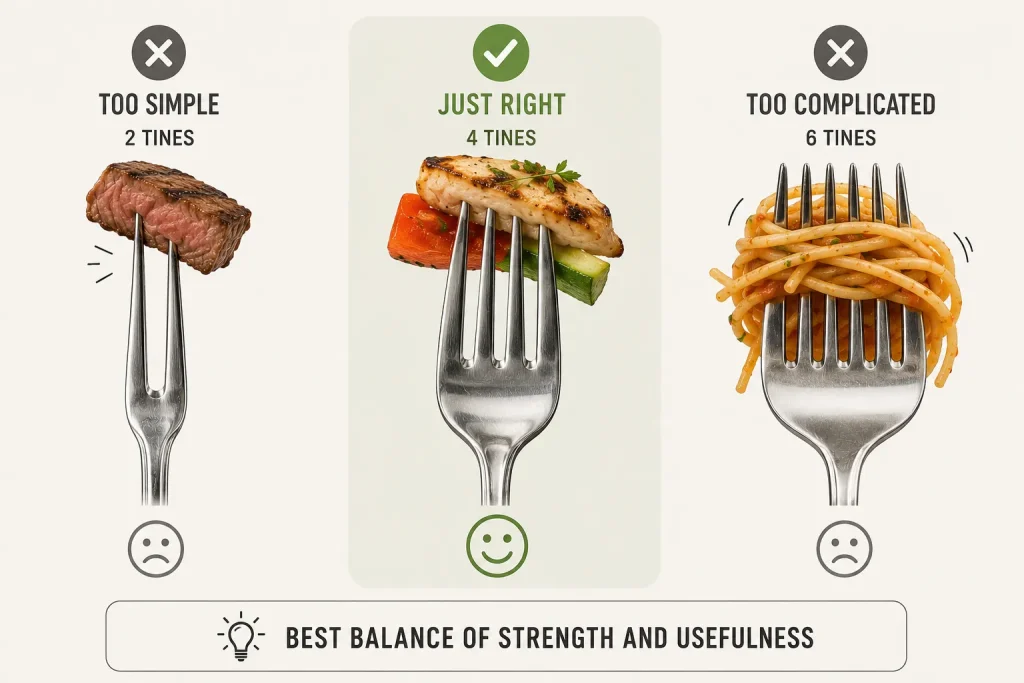
- Not too simple (like 2 tines)
- Not too complicated (like 6 tines)
- Just right for everyday use
Designers tested many versions over time and found that four tines give the best balance between strength and usefulness.
But Not All Forks Have Four Tines!
Even today, not all forks are the same!
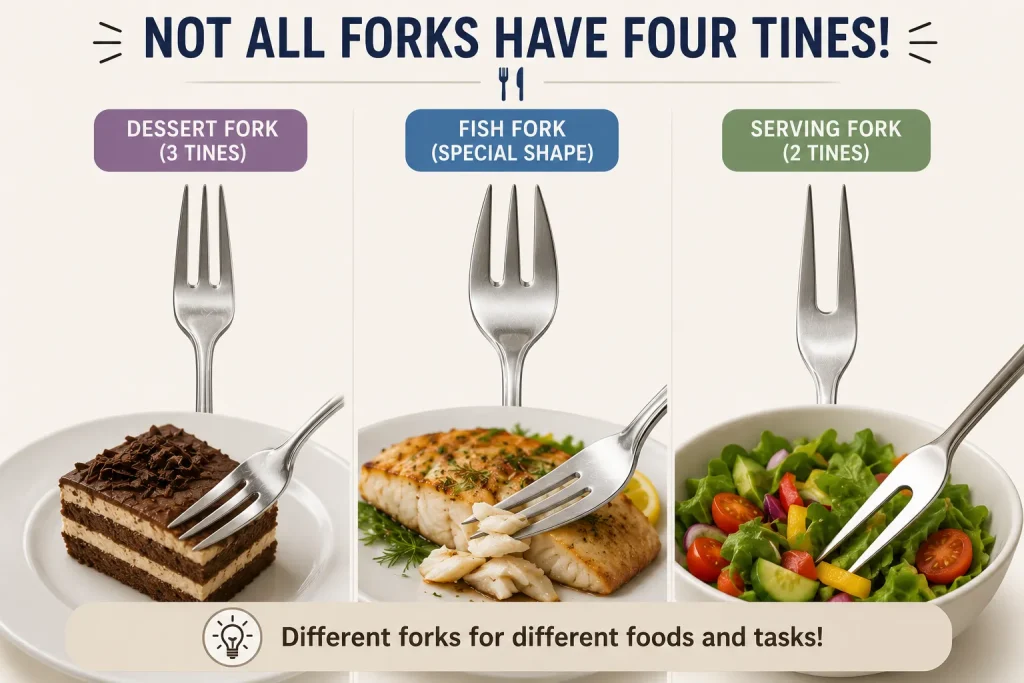
- Dessert forks often have 3 tines
- Fish forks may have special shapes
- Serving forks can have 2 tines
These are designed for specific foods and tasks.
A Tool That Changed How We Eat
The fork didn’t just change how we eat—it changed table manners and culture too.
- People started eating more neatly
- Food became easier to handle
- Dining became more organised
Today, the fork is one of the most important tools at the table!
Fun Fact!
Did you know?
Some people once believed forks were “devilish tools” and refused to use them! Over time, however, they became a normal part of everyday life.
Conclusion
So, why does a fork have exactly four tines?
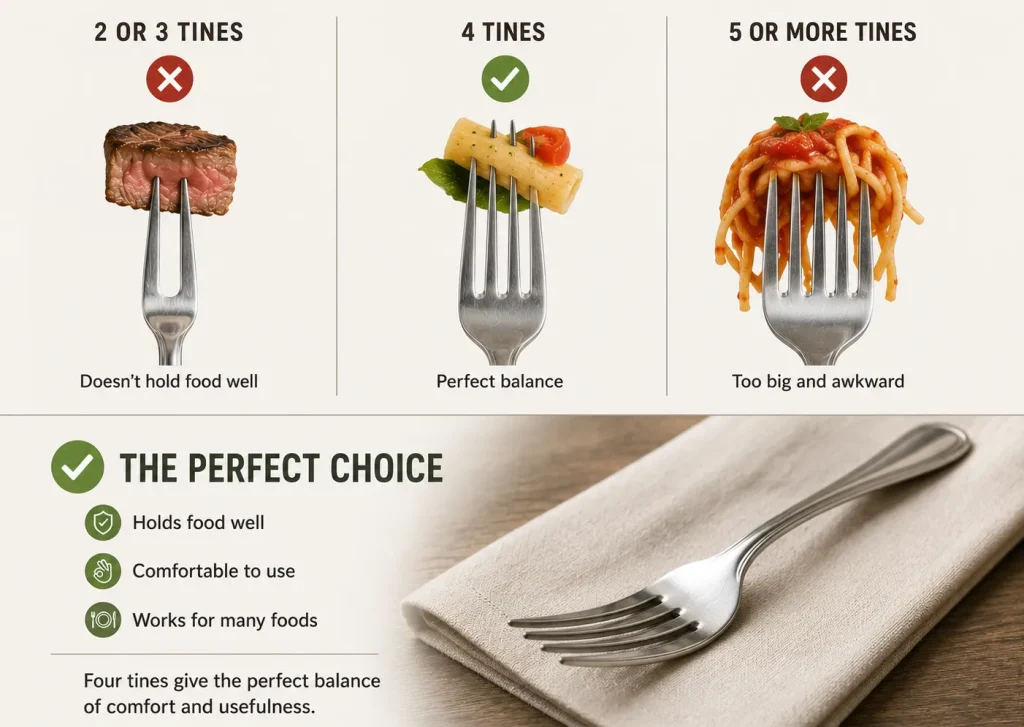
- Two or three tines didn’t hold food well
- More than four made the fork too big
- Four tines give the perfect balance of comfort and usefulness
That’s why, after hundreds of years of changes, the four-tined fork became the design we use today.
Next time you pick up a fork, remember—you’re holding a tool that was carefully designed to be just right!
For more interesting articles, please visit www.kidzherald.com