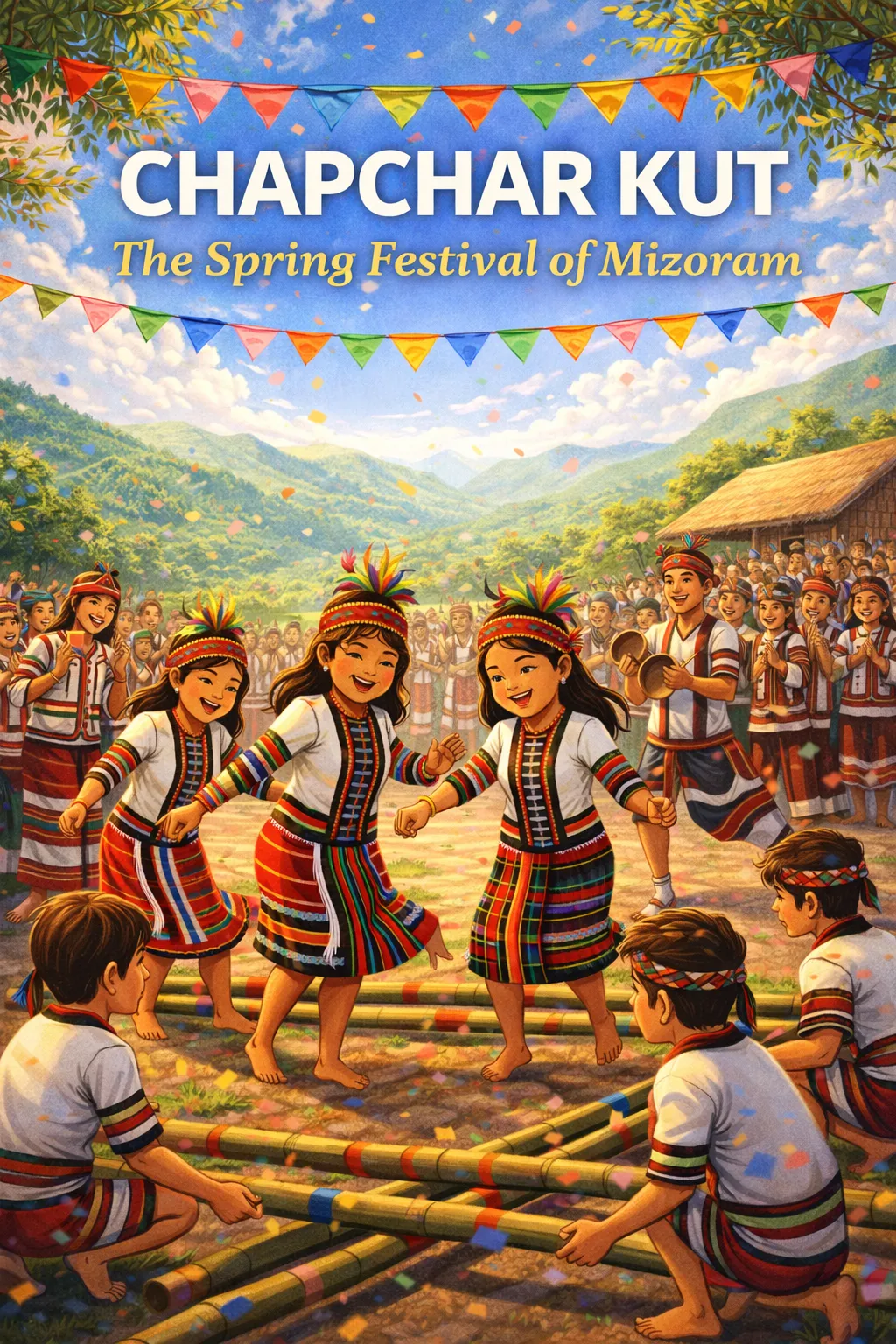
Have you ever wondered how people in a hilly, green part of India celebrate the arrival of spring? In the state of Mizoram, in northeast India, people celebrate a colourful, joyful festival called Chapchar Kut — a time of dance, music, community and cultural pride. It’s a festival full of life and tradition, and kids and adults alike look forward to celebrating each year!
What Is Chapchar Kut?
Chapchar Kut is a traditional spring festival celebrated by the Mizo people of Mizoram. It is one of the oldest and most important cultural festivals in the state, and it normally takes place in March, especially during the first week of the month, often on the first Friday.
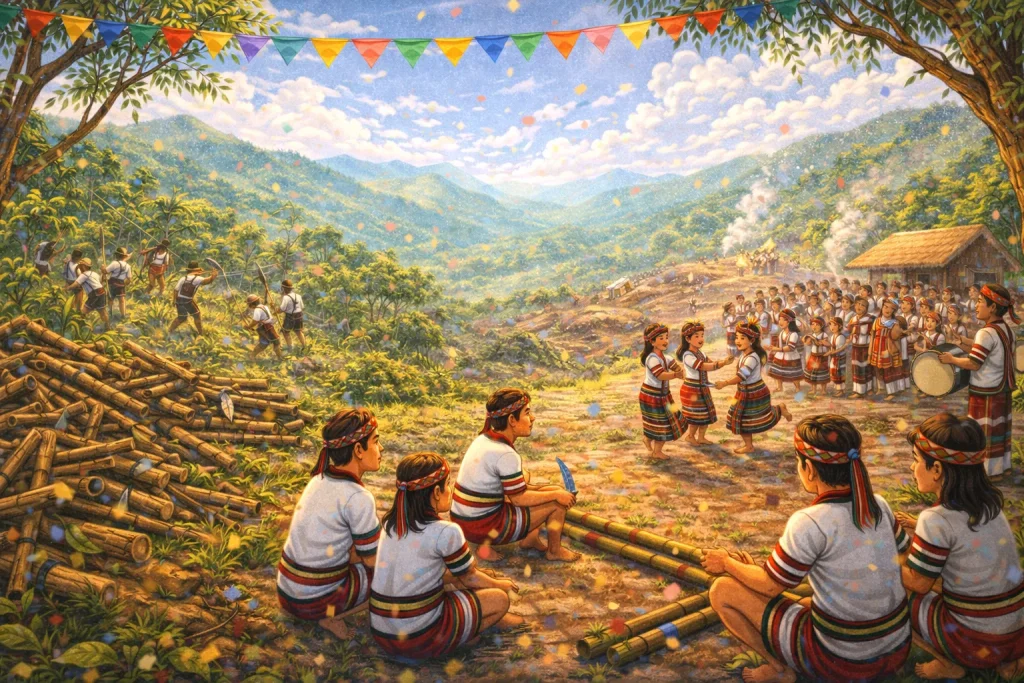
The name Chapchar Kut comes from the Mizo words “chapchar” (meaning bamboo and tree clearing for cultivation) and “kut” (meaning festival). It marks the time when the hard work of clearing the forests and fields for “jhum” (a traditional form of shifting cultivation) is nearly finished, and people can finally take a break and celebrate.
A Bit of History
Chapchar Kut has a long history, going back several hundred years (around 1450–1700 A.D.) when the Mizo ancestors (from a village called Seipui) began celebrating to turn disappointment into joy. One spring, when hunters returned empty-handed, the village chief organised a feast and celebration that lifted everyone’s spirits. It was so cheerful that the villagers repeated the event each year, and over time it grew into the Chapchar Kut festival we know today.
Originally, it was a time when the intense cold of winter was over and the warmer days of spring were just beginning. After the hard forest-clearing work, people looked forward to this break to rest, sing, dance and feast. Many traditional dances, songs and community activities started during this time.
When and How Is It Celebrated?
Chapchar Kut is celebrated once a year, usually in March, after the most difficult part of jhum cultivation — clearing the forest and leaving bamboo and wood to dry in the sun for burning later. Because this is a rare break in a year filled with hard work, everyone — young and old — enjoys the festivities with great energy and enthusiasm.
Traditional Dress
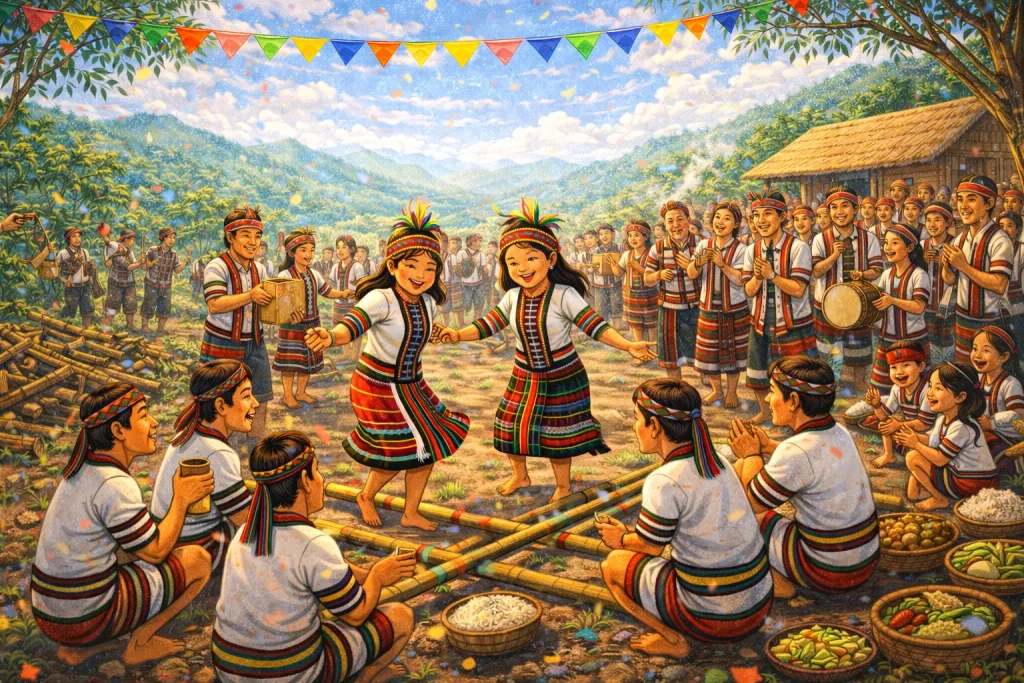
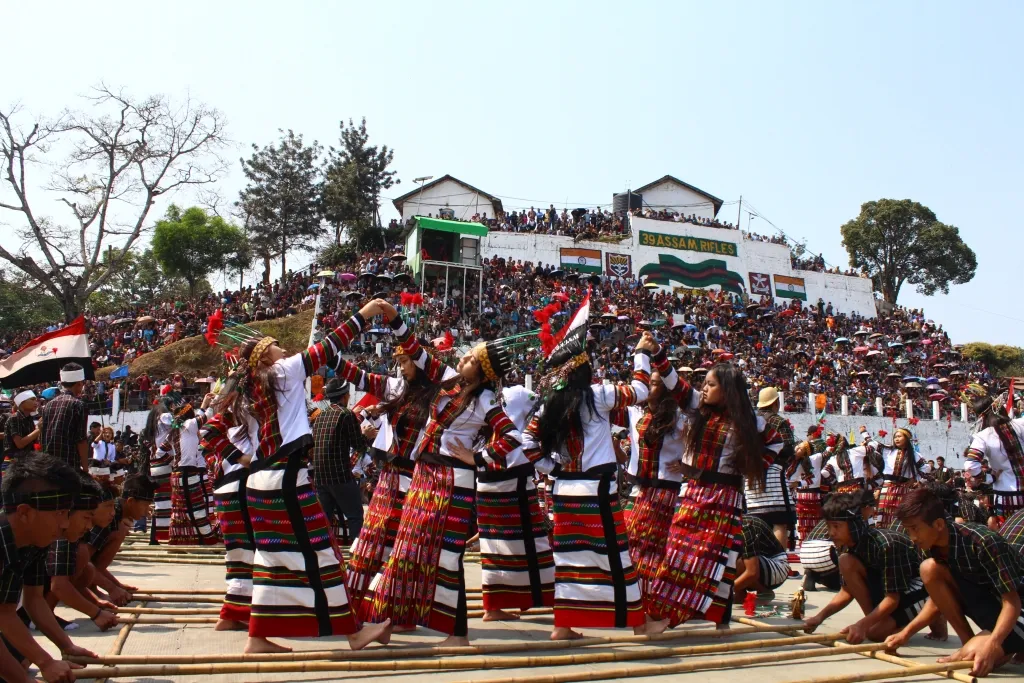
During Chapchar Kut, people wear bright and colourful traditional Mizo clothing. Boys and girls, men and women, all dress in special outfits that reflect Mizo culture. This makes the festival not just joyful but also very beautiful to watch!
Music and Dance
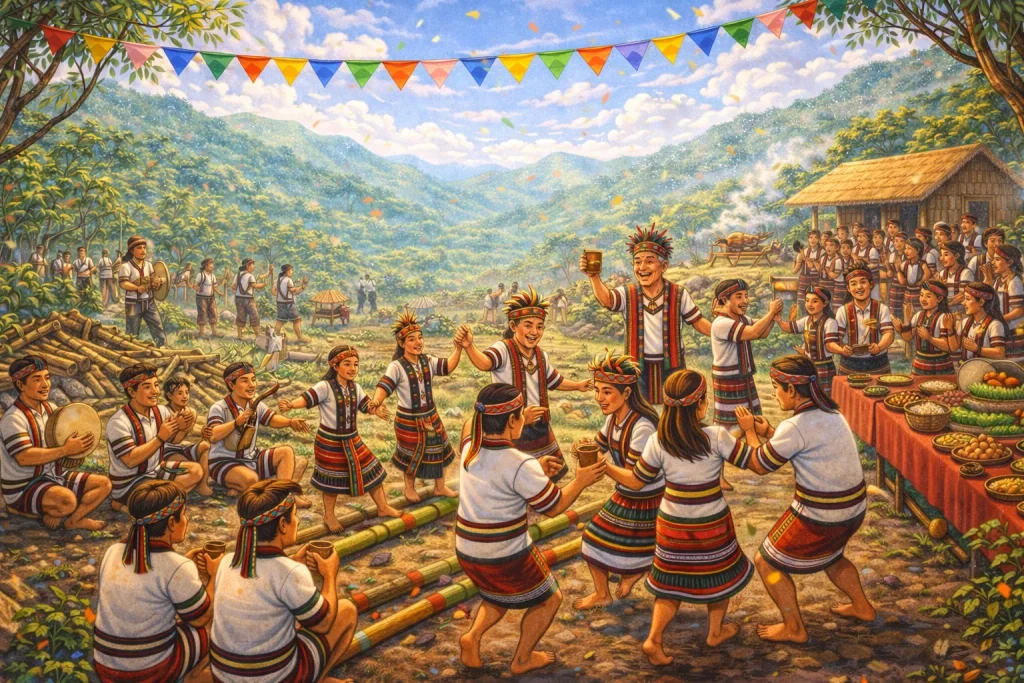
Music and dance are the heart of Chapchar Kut. Many traditional folk dances and performances are part of the celebrations, including the Cheraw Dance, also known as the famous bamboo dance. In this dance, performers skillfully step between moving bamboo sticks that are tapped together in rhythm. It’s exciting to watch and takes great coordination!
Other traditional dances and performances may include singing, folk music with drums, gongs and other instruments, and group dances where everyone — from young children to elders — joins in the fun.
Food and Fun
Chapchar Kut also involves lots of feasting and sharing food with family, friends and neighbours. Local dishes and special foods are prepared, and people enjoy eating together — a wonderful way to share joy and community spirit.
Traditional customs such as Chhawnghnawh — playfully feeding boiled eggs to each other — show how playful and friendly the festival can be.
Community and Togetherness
One of the most beautiful things about Chapchar Kut is that it brings people together. Whether villagers live close by or far apart, they gather to celebrate as a community — dancing, singing, watching performances, and enjoying each other’s company. The festival isn’t just about entertainment: it’s about friendship, unity, cultural pride and respect for traditions.
Children are also part of the celebration. They often take part in special performances, learn traditional dances, and help elders prepare for the festival. This means Chapchar Kut helps preserve culture and traditions for the next generation.
Why Chapchar Kut Is Special
Chapchar Kut isn’t just a party — it has a deeper meaning for the people of Mizoram:
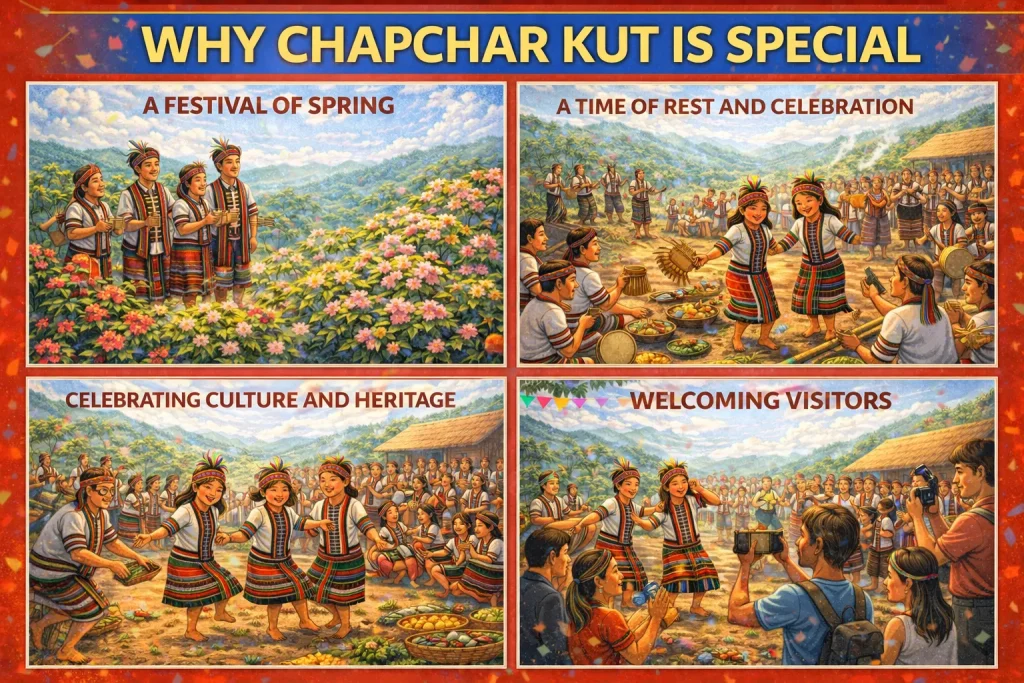
A Festival of Spring
Chapchar Kut celebrates the arrival of spring, when winter’s cold melts away, and nature begins to flourish again. This is an important time for farmers and for everyone living close to the land.
A Time of Rest and Celebration
Since the festival takes place after weeks of hard work clearing the forests for crops, it gives people time to rest and enjoy life together. For many, it’s a much-loved tradition that shows how hard work and celebration go hand in hand.
Celebrating Culture and Heritage
Chapchar Kut keeps Mizo traditions alive. Through traditional music, folk dances and costumes, young and old alike remember their history and stay connected to their roots. It is a time to share cultural stories, songs and games that have been part of Mizo life for hundreds of years.
Welcoming Visitors
Today, Chapchar Kut is also a reason for people from other parts of India and the world to visit Mizoram. Tourists come to see the music, dance, colourful costumes and lively celebrations, making it an event that showcases Mizoram’s unique culture to the world.
Fun Facts About Chapchar Kut
Here are some interesting things about this festival:
- Chapchar Kut originated in an ancient village story in which people turned disappointment into dancing and joy, and it became an annual tradition.
- It is one of the oldest festivals in Mizoram and is often called the spring festival or even the Mizo New Year by some people.
- People from different tribes and communities in Mizoram celebrate it together, demonstrating how festivals can unite people of all backgrounds.
- Even children take part in performances and traditional games during the festival, making it a joyful time for families.
Final Thoughts
Chapchar Kut is much more than just a colourful festival. It’s a time when Mizo people celebrate nature, culture and each other. It marks the end of hard work in the fields, the start of spring, and a moment to enjoy life with family and friends. Whether you watch the lively dances, hear the cheerful music, or taste the delicious traditional foods, this festival shows how powerful and joyful cultural traditions can be — and how they help connect generations together.
For more interesting articles, please visit www.kidzherald.com